


Blue White Delft Pot
A blue white delft pot brings tin-glazed earthenware and cobalt pigment together in vessels shaped for flowers, liquids, and storage.

Blue White Delft Pot
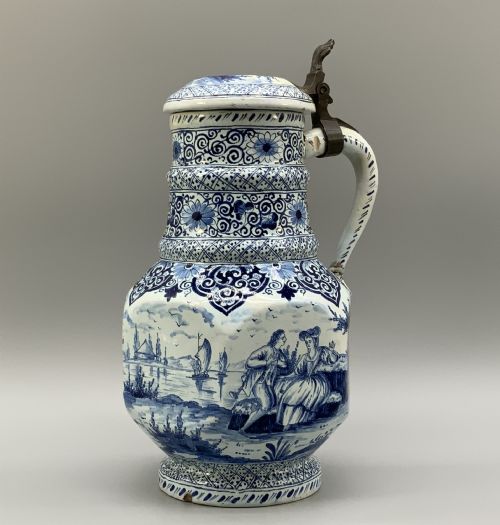
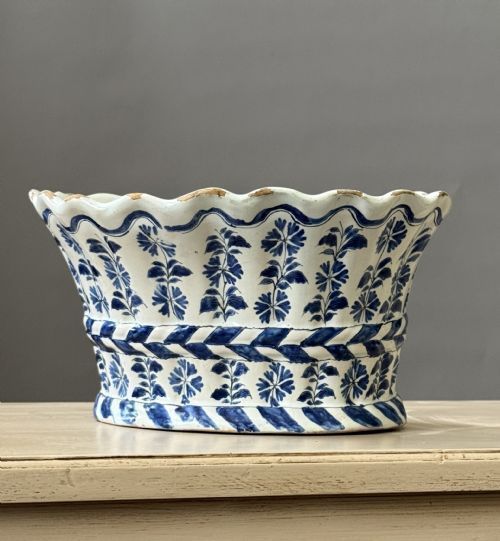
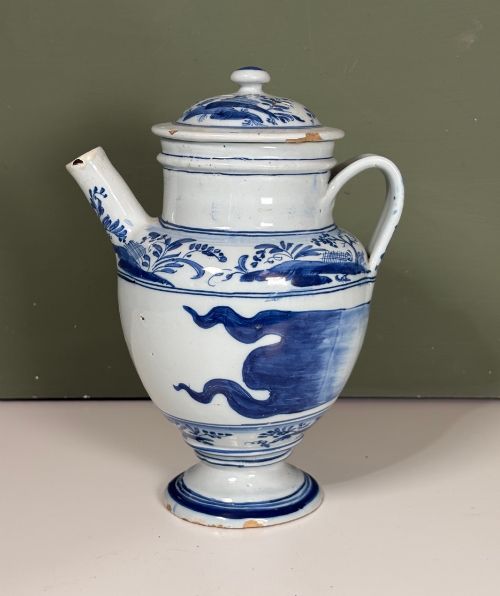
A blue white delft pot encompasses utilitarian and decorative vessels fashioned from earthenware during the seventeenth and eighteenth centuries. The pieces on this page span forms such as apothecary jars, tobacco jars, bough pots, posset pots, and garden urns.
Dutch and English centres produced the majority of these ceramics, alongside French examples in related styles. Buyers meeting these pieces will encounter hand-painted cobalt decoration on tin-glazed bodies, sometimes finished with pewter or brass lids.
How they were made
Potters shaped earthenware bodies and coated them in tin glaze to create a white, opaque surface suitable for painting. Artisans applied cobalt pigment directly onto this unfired or low-fired glaze before a final kiln run fixed the deep blue patterns.
Many hollow vessels required fitted metal mounts, incorporating pewter or brass for lids and rims on jugs and jars. This combination of ceramic body and metal hardware defined the construction of lidded pitchers and apothecary vessels.
Early potters painted intricate blue posset pots for guests who drank spiced wine while propped up in bed.
What varies in quality
The precision and fluidity of the cobalt brushwork distinguish finer examples from simpler production. Subtle variations in the opacity of the tin glaze and the crispness of the moulded or thrown ceramic body alter the visual weight of each vessel.
The survival of original components, such as matching pewter or brass lids on jugs and posset pots, elevates a piece. Early dates and documented regional origins further separate standard domestic wares from exceptional survivals.
The Blue White Delft Pot Glossary
- Tin-Glazed Earthenware
- Pottery coated in a glaze containing tin oxide to produce a white and opaque finish. This surface served as the canvas for cobalt blue painting.
- Cobalt Pigment
- A metallic oxide used under the glaze to create intense blue decoration on ceramics. It reacts to kiln temperatures by turning shades from pale sapphire to deep navy.
- Bough Pot
- A vessel specifically designed to hold cut branches or flower arrangements. These containers often featured multiple apertures across the top.
- Posset Pot
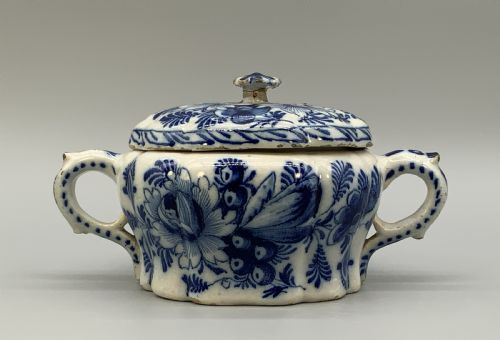
- A two-handled lidded vessel used for serving a traditional hot drink made of curdled milk and wine or ale. They date primarily to the seventeenth century.
- Apothecary Jar
- A cylindrical or waisted container utilised by chemists to store dried herbs, ointments, or medicines. Many bore painted labels identifying their contents.
Blue White Delft Pot: Frequently Asked Questions
What is a delft posset pot?
A posset pot is a lidded vessel with two handles, produced in tin-glazed earthenware during the seventeenth and eighteenth centuries. These pieces were used to hold a traditional spiced drink of hot milk curdled with wine.
Surviving examples demonstrate the domestic functions of early ceramics, combining cobalt blue floral or figurative painting on a white tin glaze.
How do I identify an 18th century delft jar?
Eighteenth-century delft jars show tin-glazed earthenware bodies decorated in cobalt pigment, often displaying Dutch or English forms. These pieces include tobacco jars, apothecary vessels, and storage jars.
Closer inspection reveals hand-painted motifs and the characteristic weight of soft-paste earthenware beneath opaque white glaze.
Were these pots made in England or Holland?
Production centres for these vessels operated across both England and the Netherlands, alongside continental European kilns. English delftware and Dutch delft share similar tin-glazed techniques and cobalt colour palettes.
Distinguishing between them often relies on specific potting traits, form variations, and glaze characteristics recorded in the evidence.
How should I clean a tin-glazed pot?
Tin-glazed earthenware requires gentle handling due to the porous nature of the ceramic body and the fragility of the tin glaze. Dusting with a dry, soft cloth preserves the surface without introducing moisture.
Harsh cleaning agents and immersion in water should be avoided to protect antique glazes and any attached metal elements like pewter lids.