
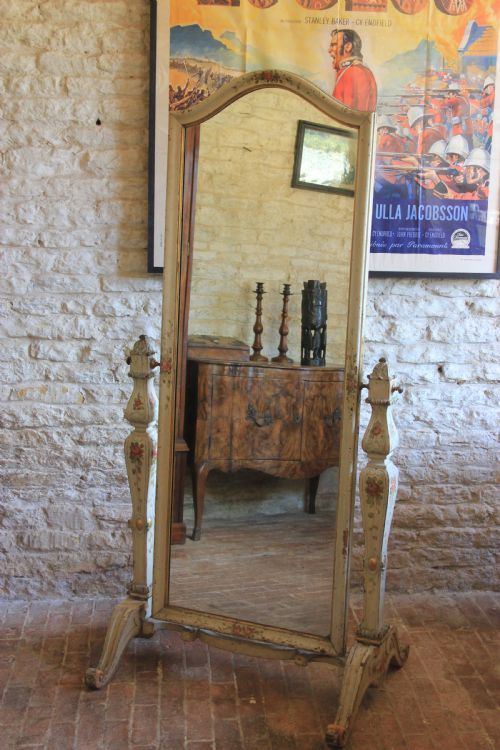


Tilting Full Length Mirror
A tilting full length mirror is a stately floor-standing glass that pivots to show your whole figure, offering both daily utility and grand presence.
Tilting Full Length Mirror
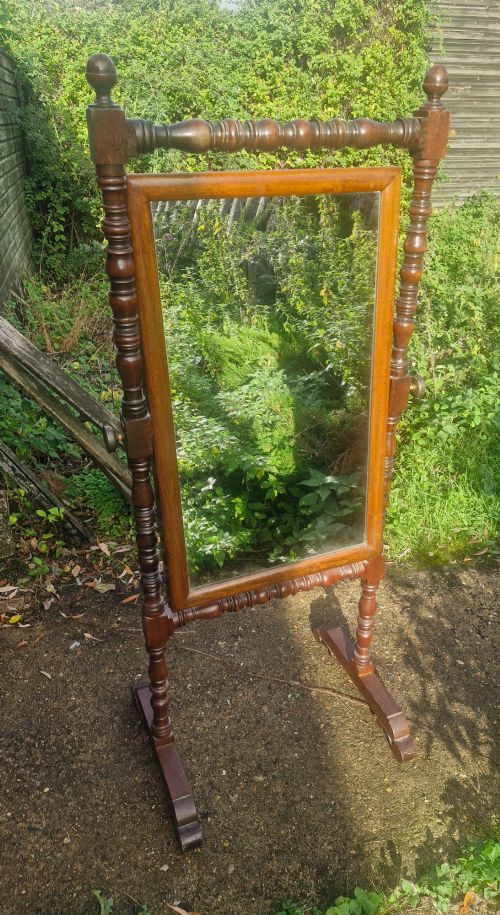
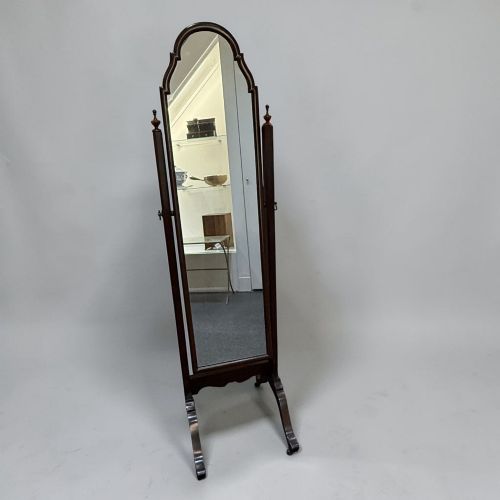
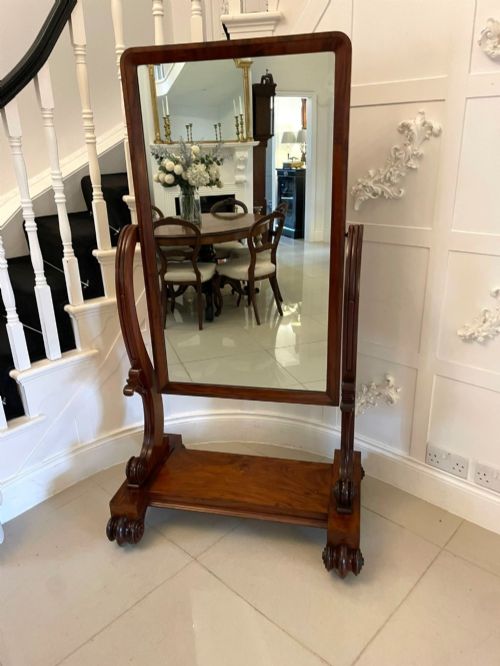
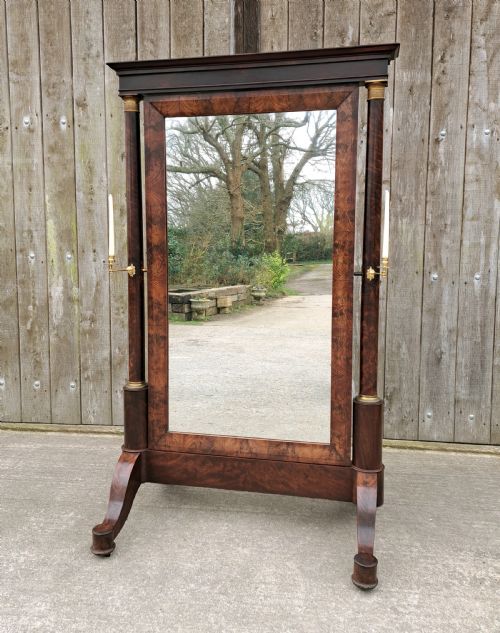
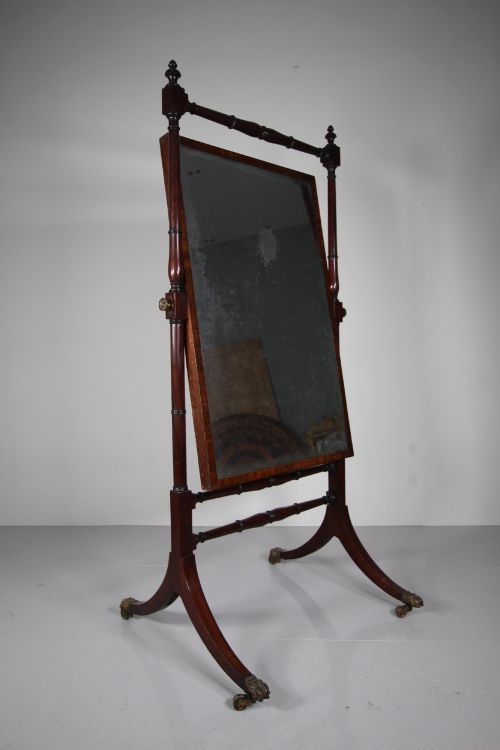
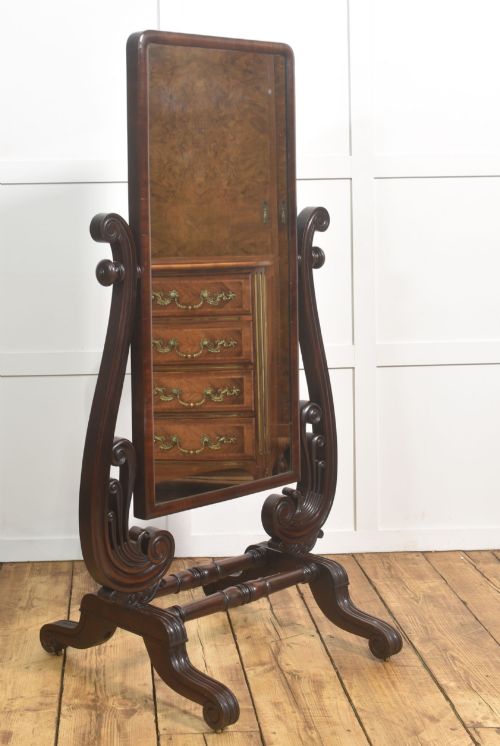
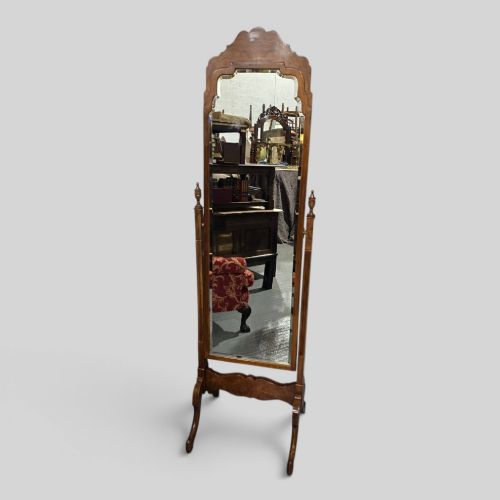
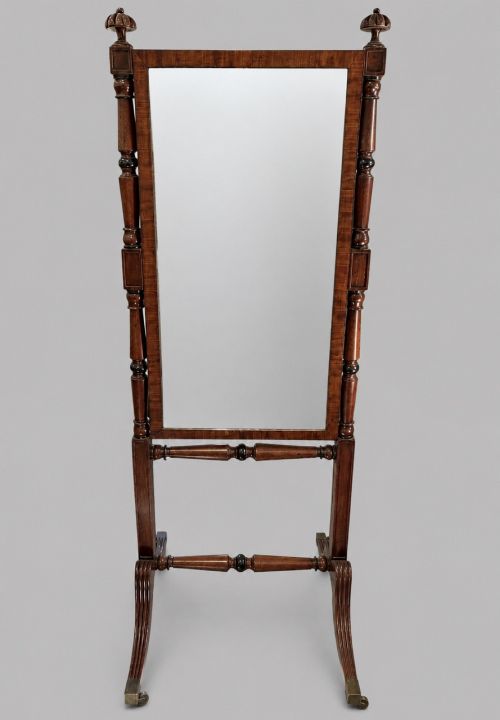
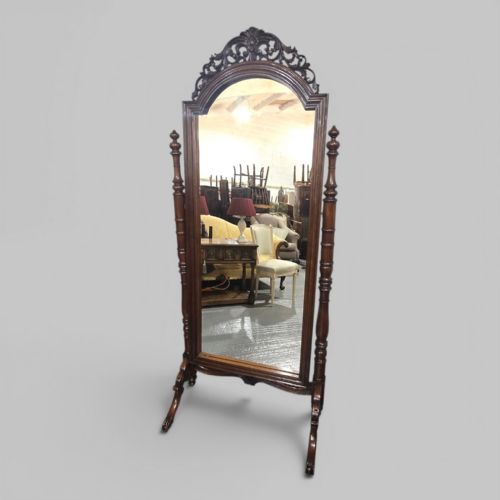
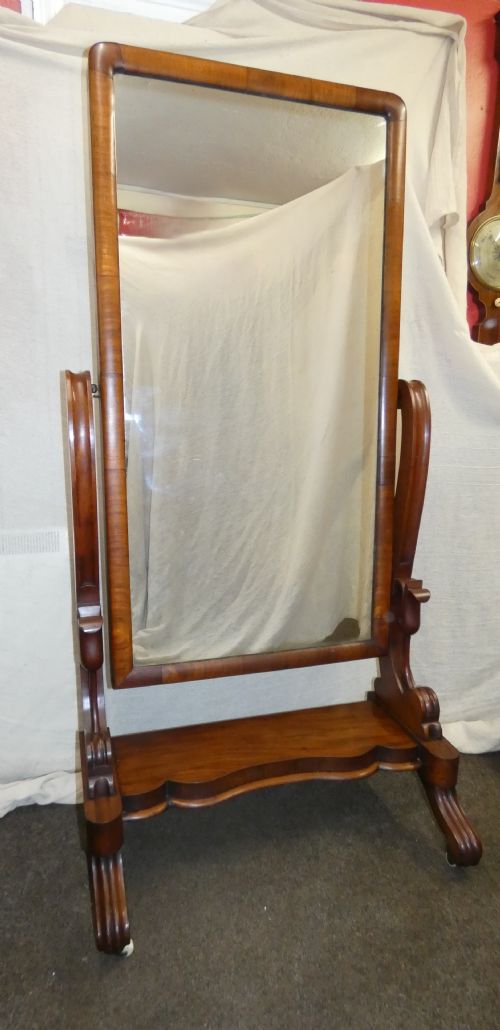
A tilting full length mirror, often called a cheval mirror, stands independently on a floor-standing frame rather than hanging on a wall. When you search for a tilting full length mirror, you encounter pieces designed to pivot smoothly within vertical uprights, letting you adjust the angle of the glass entirely to your liking.
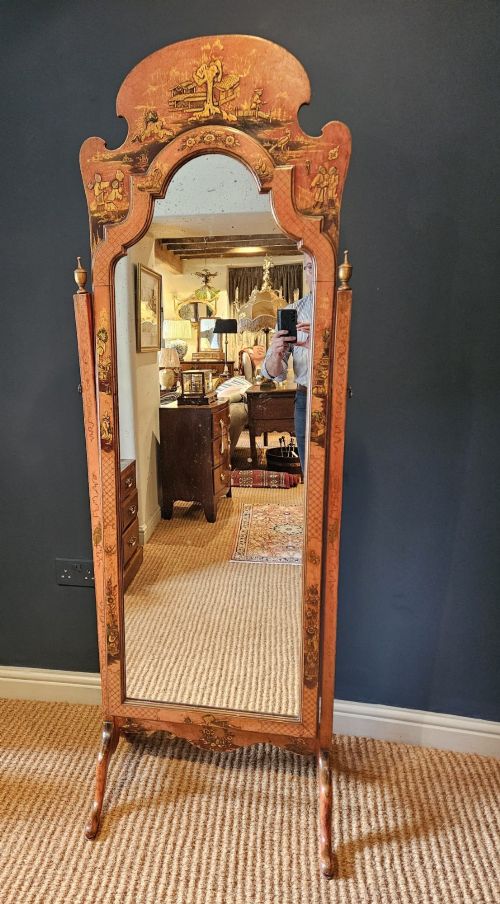
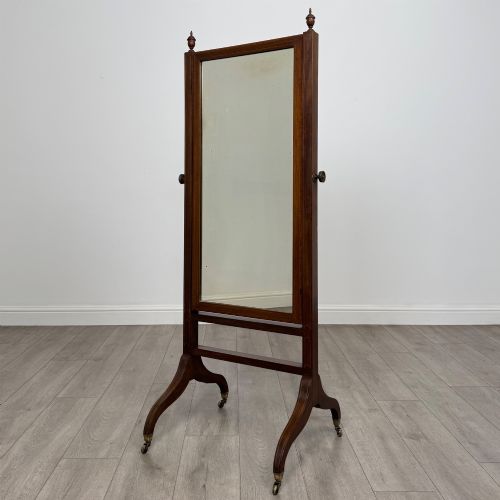
The versions most common on this page are substantial mahogany constructions dating from the nineteenth century, including Georgian, Regency, William IV, and Victorian iterations. Alongside these mahogany pieces, you find Edwardian examples, occasional 1920s interpretations like Chinoiserie and burr walnut, and French Empire designs.
These floor-standing glasses primarily serve dressing rooms and bedrooms. They combine practical full-length reflection with architectural presence through scrolled legs, sabre supports, and brass castors.
How they were made
Cabinet makers relied predominantly on solid mahogany and flame mahogany veneers, sometimes incorporating burr walnut, oak, or pitch pine. The wooden frames were shaped, turned, and polished to highlight natural grain patterns.
Pivoting mechanisms relied on brass pins, screws, and hardware, often complemented by brass sabots and castors on the feet to ease movement across a floor. Mirror glass was set securely within the swinging frame, balanced to hold its tilt without slipping.
Listings feature periods spanning the Georgian, Regency, William IV, Victorian, and Edwardian eras, executed mainly in mahogany, walnut, and pitch pine.
What varies in quality
The distinction between standard examples and the finest pieces rests on the choice of timber and the sophistication of the joinery. Figures in flame mahogany or intricate burr walnut elevate a frame, while restrained carving and crisp turning denote superior workshop practice.
Hardware quality marks the upper tier, seen in heavy cast brass mounts, original pivoting pivots, and well-cast sabots. Proportion also dictates worth; the best mirrors balance height and width harmoniously without appearing clumsy on their supporting legs.
Waring and Gillow
The Tilting Full Length Mirror Glossary
- Cheval mirror
- A large floor-standing swing mirror supported in a frame. The term derives from the French word for horse, referencing the four-legged trestle stands.
- Sabre leg
- A curving, outward-flaring leg tapering towards the foot, typical of Regency furniture design. These legs provide stability for heavy floor-standing frames.
- Sabot
- A metal sleeve or shoe fitted over the foot of a furniture leg for protection and decoration. Brass is the most common metal used on these frames.
- Chinoiserie
- European decorative style inspired by Chinese artistic traditions and motifs. Pieces featuring this style often display painted or lacquered oriental scenes.
- Flame mahogany
- Mahogany timber cut to reveal a fiery, undulating grain pattern. Cabinet makers reserved this veneer for the most prominent display surfaces.
Tilting Full Length Mirror: Frequently Asked Questions
What is a cheval mirror?
A cheval mirror is a tall, floor-standing glass mounted on a swiveling frame that lets you adjust the viewing angle.
These pieces were traditionally placed in bedrooms and dressing rooms to provide a complete view of an outfit.
How do I date a mahogany mirror?
Dating relies on stylistic clues like leg shape, timber choice, and construction methods. Regency pieces often feature sabre legs, while Victorian examples lean towards heavier turned supports.
Examining the backboards and the type of mirror glass also helps narrow down the manufacturing decade.
Can these mirrors be adjusted?
Yes, the glass swings between two vertical posts on pivot screws or pins. You simply tilt the frame to your preferred angle.
Original brass hardware ensures the glass stays in position once adjusted.
Where should I place it?
These mirrors need floor space and clearance to tilt forward or backward without hitting walls or furniture. Bedrooms and dressing areas suit them best.
Positioning them near natural light helps make the most of the reflective glass.