
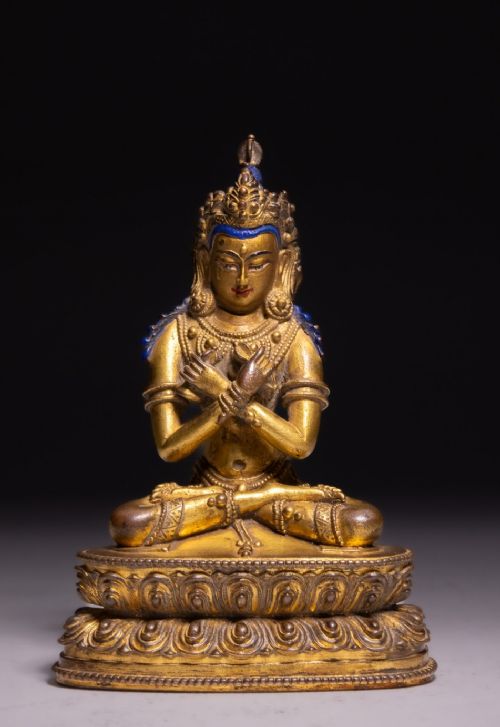


Tibetan Buddhist Statue
A tibetan buddhist statue brings centuries of ritual history into a room, cast in bronze and gilt metals.
Tibetan Buddhist Statue
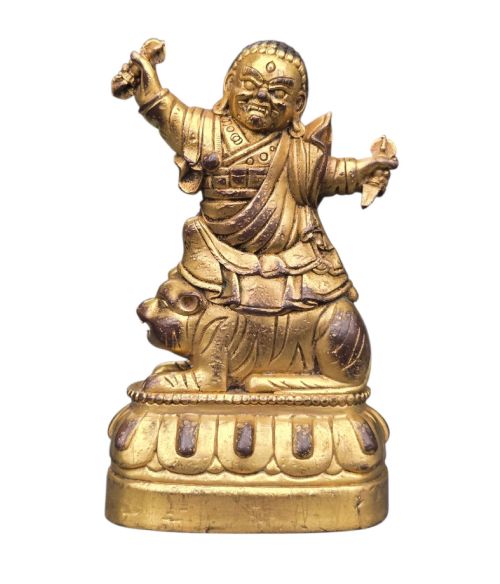
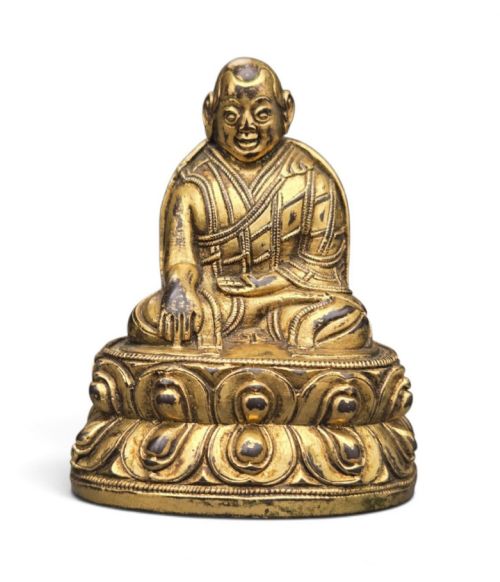
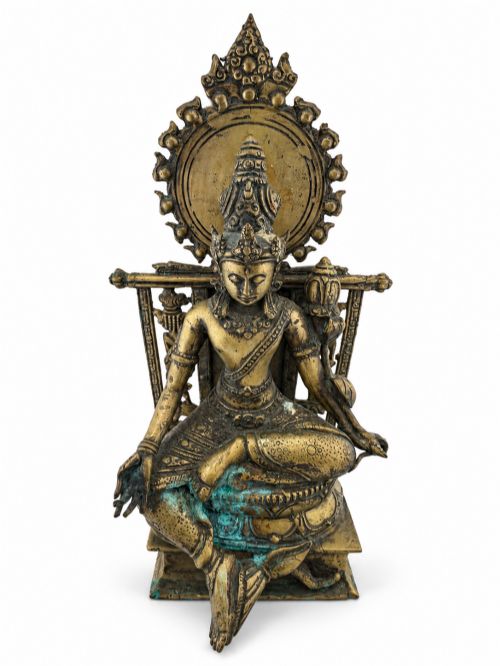
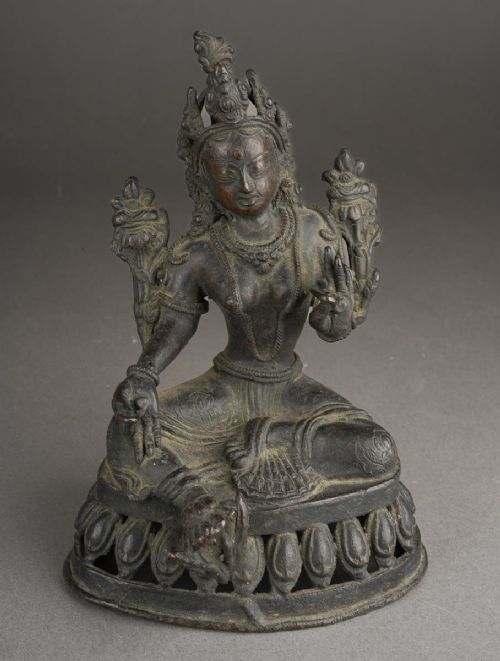
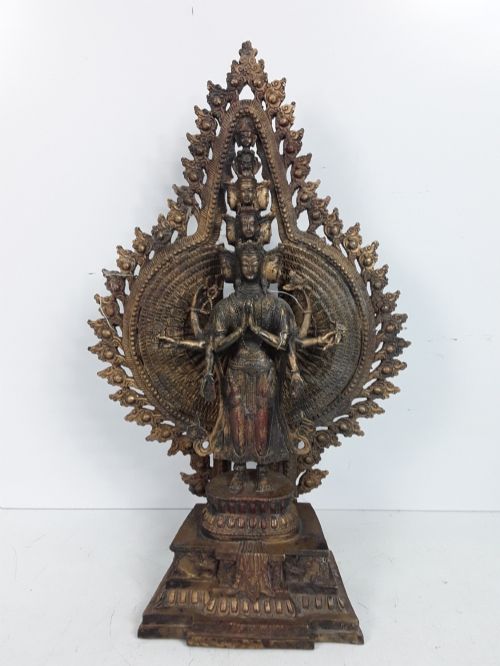
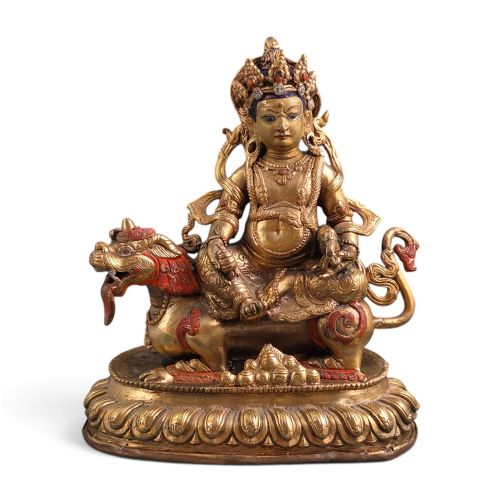
A tibetan buddhist statue represents sacred figures, deities, and temple guardians from Himalayan and Sino-Tibetan traditions. These sculptures take the form of seated Buddhas, multi-armed deities, and temple lions intended for shrines and devotional spaces.
The pieces appearing on this page span the seventeenth century through to the early twentieth century. Bronze, copper alloy, and gilt bronze dominate the selection, alongside occasional carved wood examples.
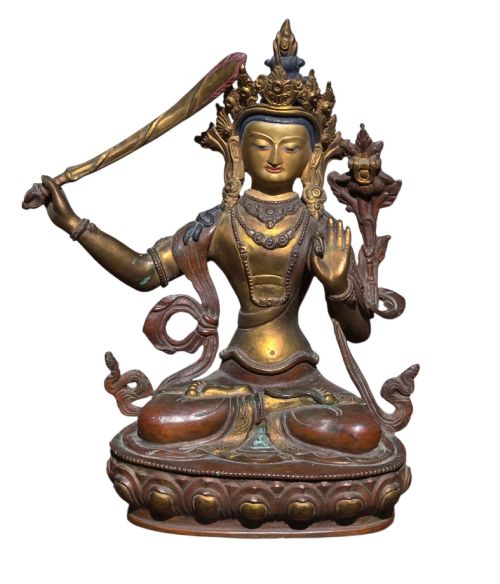
Figures such as Tara, Avalokiteshvara, and Manjushri recur frequently among the listings. Collectors encounter both refined gilt-metal devotional objects and larger folk art pieces.
Materials and casting methods
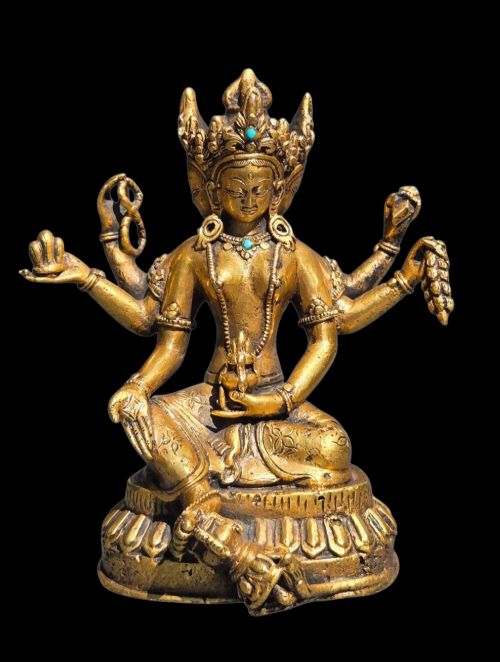
Many sculptures are cast in bronze or copper alloy, frequently finished with a layer of fire-gilding. Artisans often enhanced these metal surfaces with applied pigment and mineral inlays such as turquoise.
Wood serves as an alternative medium for larger devotional figures and architectural elements. These wooden works frequently retain traces of polychrome paint and carved detail.
Listings feature periods spanning from the 17th century to the early 20th century, executed primarily in bronze, gilt bronze, and wood.
Evaluating craftsmanship and age
The precision of the casting and the crispness of facial expressions distinguish finer works from simpler objects. Master metalworkers achieved great fluidity in drapery and ornamentation.
The preservation of original gilding and mineral inlays influences the character of a piece. Traces of ritual pigments and age-related patination offer evidence of prolonged use in shrines.
The Tibetan Buddhist Statue Glossary
- Gilt bronze
- Metal cast with a layer of gold applied to the surface. This technique creates a luminous finish characteristic of important devotional pieces.
- Bodhisattva
- An enlightened being who defers nirvana to help others. These figures are often depicted with ornate jewellery and crowns.
- Sino-Tibetan
- A stylistic classification combining Chinese imperial craftsmanship with Tibetan iconography. Such works often date to periods of close political and religious exchange.
- Polychrome
- Painted in several colours. This term describes statues finished with pigments applied directly to wood or metal.
Tibetan Buddhist Statue: Frequently Asked Questions
How old are these statues?
The pieces available range from the seventeenth century through to the early twentieth century. Many date specifically to the nineteenth and early twentieth centuries.
Dates are determined through material analysis, stylistic conventions, and historical casting techniques associated with Tibetan and Sino-Tibetan workshops.
What materials were used?
Bronze, copper alloy, and gilt bronze are the primary metals utilised by makers. Artisans frequently added mineral inlays and applied pigments to enhance the visual impact.
Wood appears in specific sculptural works, often accompanied by polychrome finishes.
How do I identify different deities?
Deities are recognised through specific attributes, hand gestures, and postures. Figures such as Tara and Avalokiteshvara display characteristic iconographic symbols.
Multi-armed forms and seated postures provide further clues to the specific identity of the Buddhist or Hindu deity.
Where were these sculptures kept?
These figures were created for domestic shrines, monasteries, and temples in the Himalayan region. They served as focal points for meditation and ritual devotion.
Temple lions and guardian figures were typically placed near entrances to protect sacred spaces.