
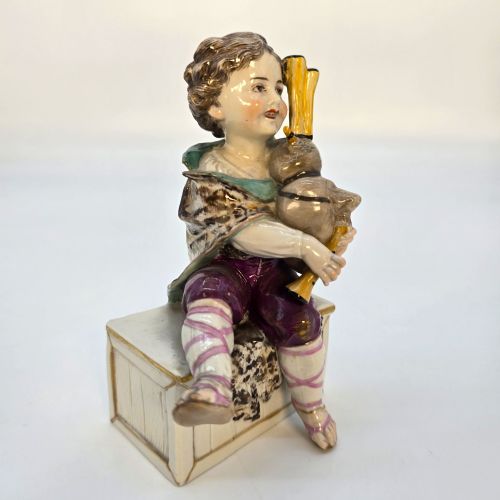


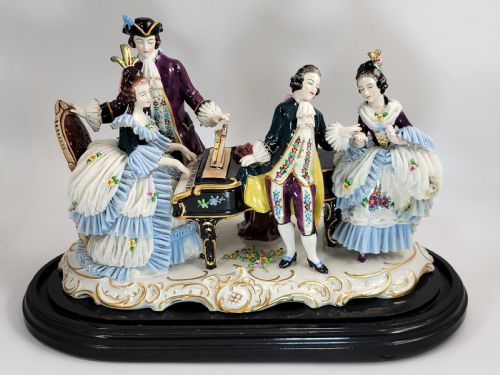


Thuringian Porcelain Figurine
A thuringian porcelain figurine brings miniature theatre and delicate modelling into a room, capturing centuries of German kiln work.
Thuringian Porcelain Figurine
When you search for a thuringian porcelain figurine, you encounter handcrafted figures and sweetmeat dishes originating from German factories such as Volkstedt, Limbach, Ernst Bohne Söhne, and Sitzendorf. These pieces span from the eighteenth century into the late nineteenth century, encompassing Georgian, Victorian, Rococo, and Rococo Revival styles.
You are most likely to meet nineteenth-century pairs and solo figures on this page, often depicting musicians, gardeners, skaters, and couples with instruments or baskets. These objects reflect the enduring regional skill of Thuringia in shaping detailed ceramic characters.
The forms range from simple decorative figures to functional sweetmeat dishes and complex lace figural groups. Each piece relies on historical moulds and regional kiln traditions to create enduring decorative appeal.
How they were made
The makers formed these pieces using hard-paste porcelain, shaping the clay into intricate figures, musicians, and sweetmeat dishes. Kiln firing fixed the hard-paste body before artisans applied detailed surface decoration.
Enamel colours and glaze brought the figures to life, often accented with gold leaf to highlight clothing and accessories. Some advanced groups incorporated actual fabric dipped in slip to create delicate porcelain lace garments.
The inventory includes figures dressed in Rococo Revival styles alongside Victorian pairs engaged in music and gardening.
What varies in quality
Quality in these figures rests on the crispness of the modelling and the precision of the hand-painted enamel work. Earlier eighteenth-century examples and major factory outputs show finer facial expressions and more carefully weighted stances than later commercial repetitions.
The application of gold leaf and the preservation of delicate elements, such as applied porcelain lace and fingers, distinguish superior examples. Finer pieces maintain clean glaze surfaces and sharply defined details across every fold of drapery.
Volkstedt Rudolstadt Factory·Volkstedt Richard Eckert·Limbach·Ernst Bohne Soehne·Gotthelf Greiner·Sitzendorf
The Thuringian Porcelain Figurine Glossary
- Hard-paste porcelain
- A durable ceramic composition fired at very high temperatures, composed of kaolin and petuntse. It provides the strong, vitrified base for traditional German figures.
- Sweetmeat dish
- A small decorative vessel designed for holding sweet confections or nuts at a table. These dishes often incorporate seated figures holding bowls.
- Rococo Revival
- A nineteenth-century design movement drawing inspiration from the asymmetrical curves and scrollwork of the eighteenth century. This style heavily influences the bases and garments of many Victorian figures.
- Porcelain lace
- Real textile dipped in liquid porcelain slip and fired until the fabric burns away, leaving a delicate ceramic mesh. This technique appears on elaborate nineteenth-century figural groups.
Thuringian Porcelain Figurine: Frequently Asked Questions
How old are these figurines?
The pieces span from the late eighteenth century through the nineteenth century, including Georgian and Victorian examples.
Specific dates depend on the factory marks and the stylistic period of the modelling, ranging from the seventeen-seventies to the nineteen-hundreds.
How should I clean porcelain lace?
Porcelain lace requires extreme caution due to the extreme fragility of the fired ceramic mesh.
Dust gently with a very soft, dry brush, avoiding water or pressure that could fracture the delicate threads.
How do I identify factory marks?
Factories stamped, incised, or painted their specific symbols, crowns, or initials onto the unglazed bases of the porcelain.
Comparing these bottom marks against standard ceramic reference guides helps determine the exact workshop and approximate decade of production.