


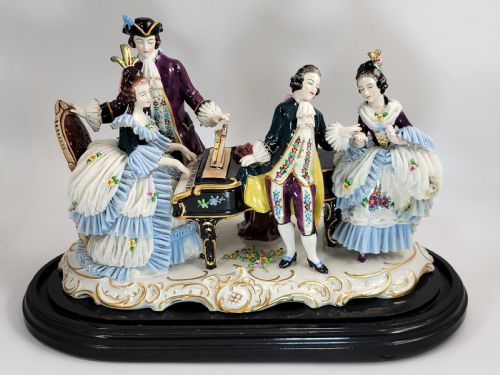


Dresden Style Figurine
A dresden style figurine brings ornate continental character to a room, capturing romantic pastoral scenes in porcelain.
Dresden Style Figurine
When you search for a dresden style figurine, you encounter highly decorative continental ceramic sculpture originating largely from German factories and studios during the nineteenth century. These objects typically depict romantic couples, pastoral workers, children, and mythological groups arranged in elaborate theatrical poses.
The pieces you meet most often on this page date from the nineteenth century, including works from the eighteen-eighties and eighteen-nineties, alongside later twentieth-century German porcelain. They range from single figures to pairs of candlesticks, candelabra, and centrepiece bowls decorated with applied flowers.
Makers such as Helena Wolfsohn and Carl Thieme defined this aesthetic, often producing intricately modelled pieces that drew inspiration from earlier eighteenth-century Meissen and Chelsea-Derby models. Many examples display rococo revival and Victorian styling, combining scrolling bases with delicate sculptural details.
How they were made
Gilt, gold leaf, and gold gilt accents highlight the moulded scrollwork, rococo bases, and clothing details. Certain specialised workshops also incorporated real textile lace dipped in liquid porcelain before firing, burning away the fabric to leave delicate ceramic garments.
The selection includes rococo revival and Victorian figures, candlesticks, candelabra, and centrepiece bowls with applied flowers.
What varies in quality
The sculptural ambition of the modelling dictates the standard of the piece, separating static figures from dynamic groups with deep undercut folds and expressive faces. Finer examples display meticulous hand-applied flower petals and foliage rather than flat, heavy-handed moulding.
Painting precision also marks the distinction between ordinary production and superior work. Skilled artists rendered facial expressions, hair, and multi-coloured enamel patterns with subtle shading and fine brushwork.
Meissen·Ernst Bohne Sohne·Helena Wolfsohn·Carl Thieme·Sitzendorf
The Dresden Style Figurine Glossary
- Hard-paste porcelain
- A durable ceramic paste composed of kaolin and petuntse, fired at high temperatures to create a vitrified body.
- Enamel
- Vitreous pigments applied over the glazed porcelain surface and fixed by a lower-temperature secondary firing to add colour.
- Gilt
- A thin layer of gold or gold leaf applied to highlights, edges, and bases to enhance decorative richness.
- Rococo revival
- A nineteenth-century design style drawing on eighteenth-century motifs of asymmetrical scrolls, C-curves, and naturalistic shell forms.
- Figural group
- A multi-figure ceramic composition telling a narrative story or depicting a social scene rather than standing as a single subject.
Dresden Style Figurine: Frequently Asked Questions
What is a dresden style figurine?
A dresden style figurine is an ornate German porcelain sculpture typically depicting pastoral figures, romantic couples, or children in elaborate nineteenth-century settings. These decorative objects draw heavily on historical rococo aesthetics and embrace detailed hand-painted finishes.
Such pieces often incorporate applied floral work, gilded scroll bases, and expressive character groupings designed for display on mantelpieces and tables.
How do I date an antique porcelain figure?
Dating these pieces involves examining the factory marks stamped or painted on the underside, alongside stylistic cues such as Victorian or rococo revival aesthetics. Nineteenth-century examples often exhibit specific modelling techniques and hand-mixed enamel palettes distinct from later twentieth-century production.
Comparing the style of the base, the crispness of the porcelain moulding, and known historical periods associated with specific makers helps narrow down the decade of creation.
Were these figures meant for display?
These pieces served primarily as decorative ornaments for middle-class and wealthy Victorian interiors, displayed on drawing-room mantelpieces, cabinets, and dining tables. Some versions, such as figural candlesticks and candelabra, combined ornamental sculptural qualities with functional lighting.
Centrepiece bowls and elaborate groupings also functioned as table centrepieces for formal dining, reflecting contemporary tastes for narrative ceramics.
How do I care for antique porcelain?
Antique porcelain requires gentle handling to protect fragile applied elements like lace, delicate fingers, and hand-modelled flower petals. Dusting with a soft, dry brush prevents the accumulation of dirt without risking abrasion to the enamel paint or gold leaf.
Keeping these figures away from direct sunlight and areas prone to heavy vibrations ensures the delicate hard-paste body remains stable over time.