
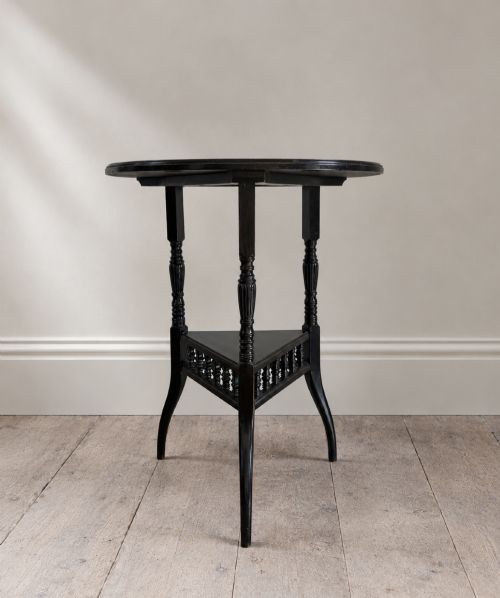
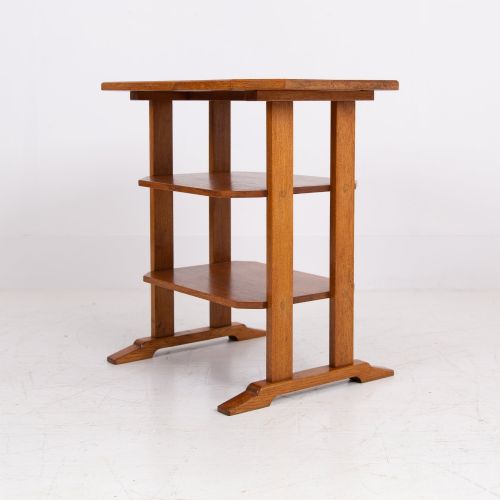
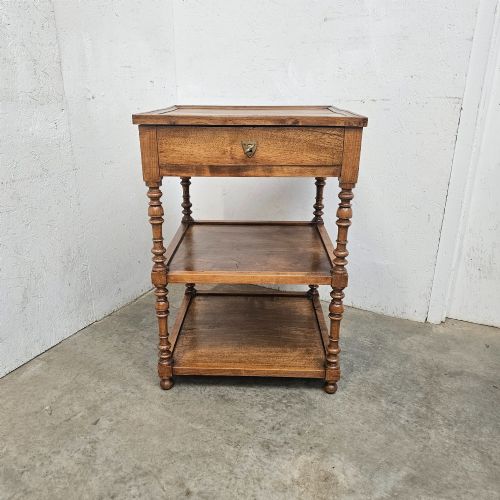


Three Tier Plant Table
These multi-level stands, known as a three tier plant table, elevate greenery and display objects across multiple platforms with distinct historical character.
Three Tier Plant Table
A three tier plant table provides stacked horizontal surfaces designed to hold plants, lamps, and decorative items within domestic spaces. When you search for this phrase, you encounter forms spanning the nineteenth and early twentieth centuries, including etageres, whatnots, and dumb waiters repurposed for botanical display.
The pieces on this page originate from diverse design traditions, ranging from English oak and mahogany examples to French walnut and Chinese marble-topped variants. You will frequently find tiered tables influenced by Edwardian, Arts and Crafts, and Victorian aesthetics, offering distinct profiles from circular to octagonal.
Makers and designers of these multi-level stands utilised graduating platforms supported by turned legs, pedestals, or bamboo frames. Each tier allows light to reach plants at different levels while creating an organised focal point in a room.
How they were made
Cabinetmakers constructed these tiered stands using dense hardwoods such as mahogany, oak, walnut, and ebonised wood, often incorporating contrasting materials like inset marble tops and brass mounts. Joinery techniques varied from traditional mortise and tenon joints to delicate turned uprights supporting each individual shelf.
Decorative surface treatments included marquetry inlay, hand-painted details, and polished veneers that highlighted the natural grain of the timber. Bamboo and canework also appear in specific aesthetic movement pieces, demonstrating diverse craftsmanship across different regional workshops.
Bamboo occasional tables bring a touch of nineteenth-century botanical enthusiasm straight to your indoor jungle.
What varies in quality
The distinction between standard utility items and finer examples lies in the selection of timber veneers, the precision of inlaid marquetry, and the structural integrity of the tier supports. Higher quality pieces demonstrate careful attention to wood grain alignment and robust joinery that prevents wobble across the stacked platforms.
Refined surface finishing and original decorative elements, such as brass mounts or specialised turning, elevate the overall character of the stand. The integration of inset materials like marble or cane further separates standard production pieces from more ambitious workshop creations.
Michel Dufet·EW Godwin
The Three Tier Plant Table Glossary
- Etagere
- A piece of furniture consisting of a set of open shelves for displaying small objects. These tiered stands provide multiple open levels for decorative use.
- Whatnot
- An open multi-shelved piece of furniture used for displaying ornaments or books. It shares a similar multi-tiered form with plant tables.
- Dumb Waiter
- A tiered stand traditionally used for holding food or tableware. Many historical examples now serve as multi-level display tables for plants and objects.
- Marquetry
- Decorative inlay work where pieces of wood veneer are fitted into a background to form geometric or floral designs. This technique frequently enhances tabletop surfaces.
- Gueridon
- A small French table supported by one or more columns or figures. These circular or occasional tables often feature multiple tiers in modernist or revival styles.
Three Tier Plant Table: Frequently Asked Questions
What is a three tier plant table used for?
These tiered stands provide multiple stacked surfaces to hold potted plants, trailing foliage, and decorative ornaments in domestic interiors.
By utilising vertical space rather than a single horizontal footprint, they allow multiple plants to catch the light while keeping floor areas clear.
Can these tables support heavy plants?
Most antique tiered tables are constructed from solid hardwoods like oak, mahogany, or walnut designed to bear moderate weight across their platforms.
However, lighter pieces utilising bamboo, canework, or slender turned legs are better suited for smaller potted plants and delicate decorative items.
How do I date a three tier plant table?
Dating relies on observing the timber species, joinery methods, decorative motifs, and the overarching stylistic period of the piece.
Victorian and Edwardian examples often feature heavier turned supports or inlaid marquetry, while earlier pieces display Georgian proportions and later twentieth-century items show modernist influences.