

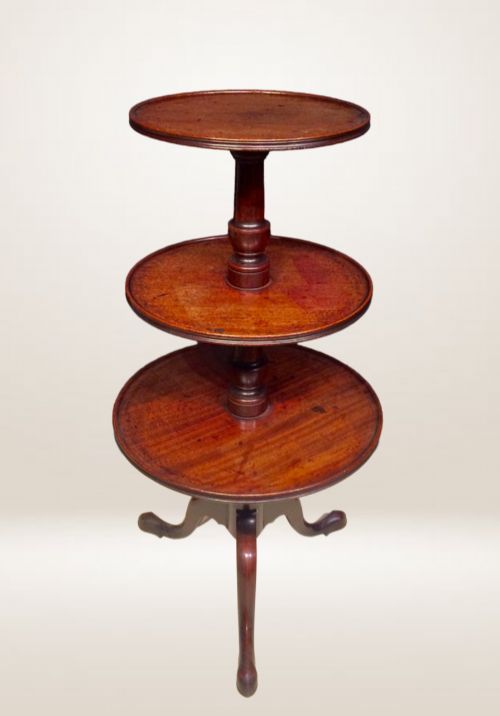


Circular Tiered Stand
A circular tiered stand brings multiple levels of display or service into a room, uniting utility with compact floor space.
Circular Tiered Stand
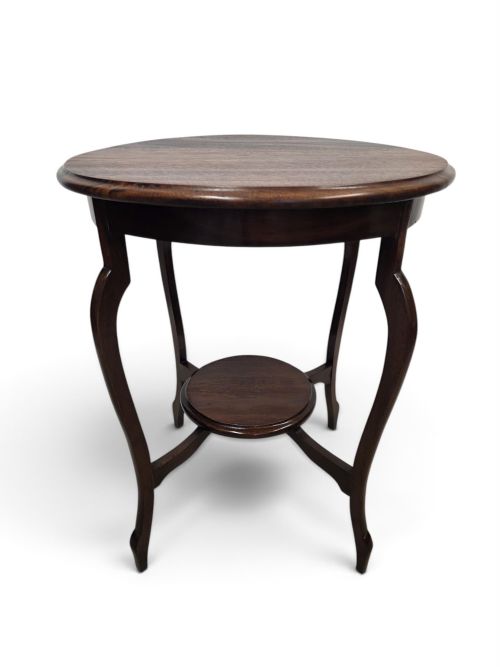
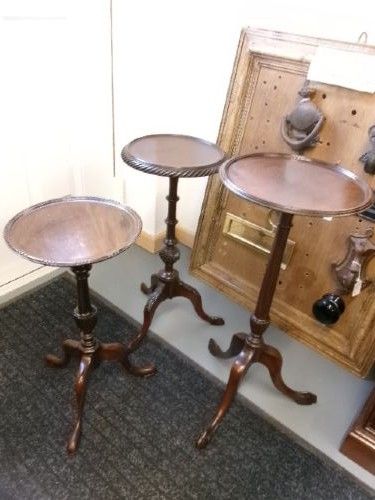
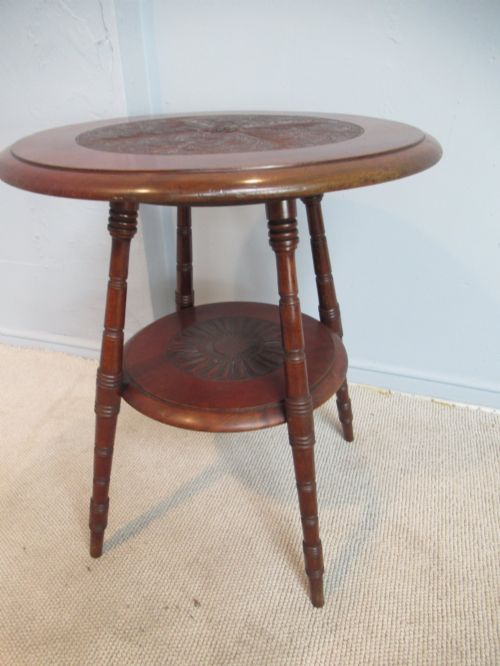
A circular tiered stand encompasses items built with multiple round levels stacked vertically, appearing as dumbwaiters, occasional tables, plant stands, and whatnots. These forms surface across Georgian, Victorian, Edwardian, and 1930s periods.
Mahogany remains the dominant wood across these multi-level pieces, alongside rosewood, walnut, oak, and cast iron. Makers utilise tripod pedestals, revolving tiers, and folding mechanisms to create practical multi-level furniture.
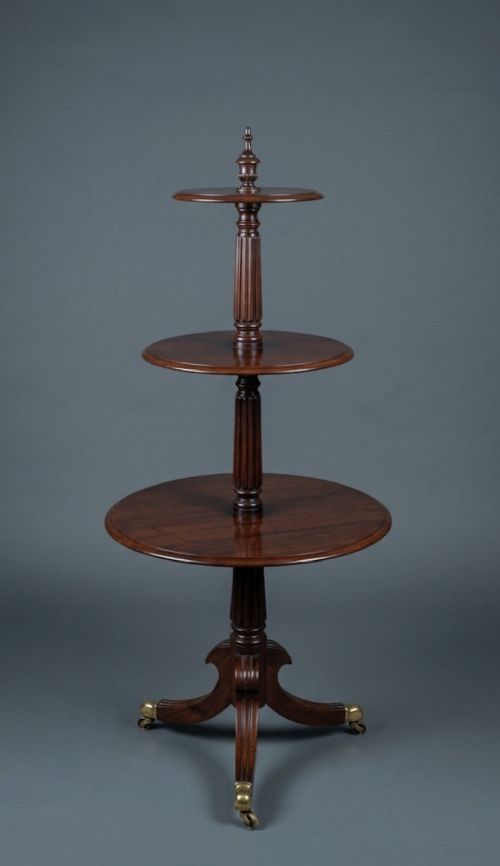
The version most commonly encountered on this page is the mahogany dumbwaiter or side table featuring graduated circular tiers supported by a central pillar. These configurations span from late eighteenth-century George III examples through to twentieth-century interpretations.
Materials and construction methods
Makers construct these multi-level pieces primarily in solid timbers and veneers such as mahogany, rosewood, and walnut, frequently incorporating brass fittings, satinwood inlay, or hand-painted decoration.
The structural integrity relies upon central columns or tripod pedestals supporting the stacked round platforms, sometimes incorporating revolving mechanisms, drop-leaf folding sections, or marble tops.
One piece folds down its circular tiers like an obedient umbrella, ready to vanish into the corner.
Distinctions in quality
Quality rests upon the selection of timber figures, the precision of the turning on the central pillar, and the stability of the tiered platform joints. Superior examples display refined proportions and smooth operation in revolving or folding mechanisms.
Fine craftsmanship shows in the subtlety of edge mouldings, the crispness of brass inlays, and the integration of the tripod base, separating standard utility items from more ambitious cabinet work.
Michel Dufet
The Circular Tiered Stand Glossary
- Dumbwaiter
- A multi-tiered serving stand designed to hold dishes or bottles without the need for servants. These pieces typically feature stacked circular shelves on a central pillar.
- Etagere
- A piece of furniture consisting of a set of open shelves for displaying small objects or ornaments. These stands often use multiple tiers arranged vertically.
- Tripod pedestal
- A central support column anchored by three spreading feet. This base design provides stability for stacked circular tables.
- Whatnot
- An open set of shelves used for displaying ornaments or books. These multi-tiered items appear in various woods across the nineteenth century.
- Gueridon
- A small French table supported by one or more columns. These occasional stands often feature circular tops.
Circular Tiered Stand: Frequently Asked Questions
What is a circular tiered stand used for?
These pieces function as serving stands, lamp tables, plant holders, and display units. The multiple levels maximise surface area while maintaining a small footprint.
Historically, dining room versions held food and drink during meals, while later iterations served as occasional tables or stands for decorative objects.
How do I identify a Georgian dumbwaiter?
Georgian examples often feature graduated mahogany circular tiers supported by a robust tripod base. Many incorporate revolving platforms or drop-leaf folding sections.
Construction details from the eighteenth and early nineteenth centuries include solid timber turned columns and pegged joints rather than modern fasteners.
What materials appear in these tiered stands?
Mahogany is the most frequent wood, accompanied by rosewood, walnut, oak, and satinwood inlay. Some variations include brass mounts, marble tops, cast iron, and hand-painted decoration.
Surfaces range from dark stained timber and polished wood grains to painted finishes found on specific Art Deco and gypsy table styles.
Are all tiered stands revolving?
Not all tiers rotate, though revolving mechanisms frequently appear on Georgian and Victorian dumbwaiters and bookcases. Fixed platforms also occur across plant stands, etageres, and occasional tables.
Inspection of the central column reveals whether the circular trays are fixed in place or mounted on a rotating pivot.