
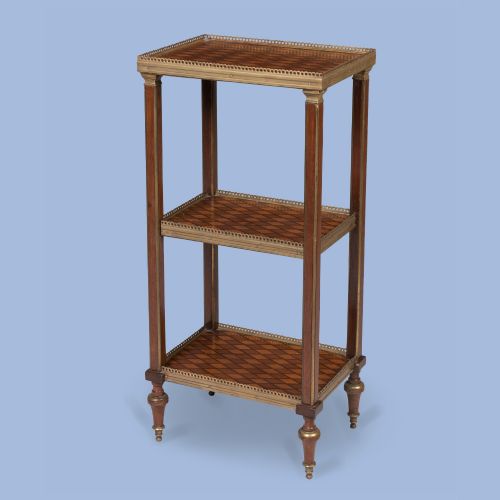


Three Tier Marquetry Table
A three tier marquetry table brings tiered display and intricate inlaid surfaces into a room, offering both decorative presence and practical tiered staging.
Three Tier Marquetry Table
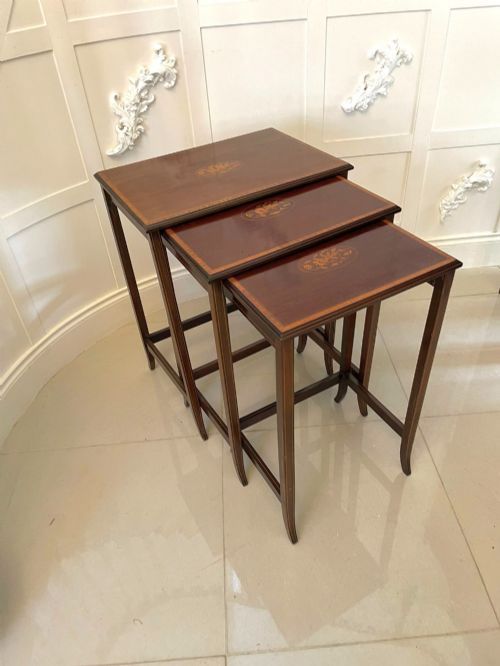
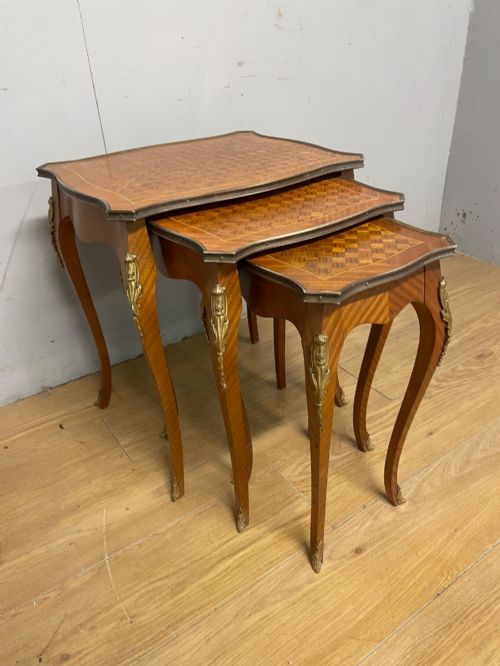
When searching for a three tier marquetry table, a buyer encounters pieces primarily from the nineteenth century, including Victorian, Edwardian, and eighteenth-century examples. French revivals, such as Louis XV and Napoleon III styles, appear frequently alongside British forms.
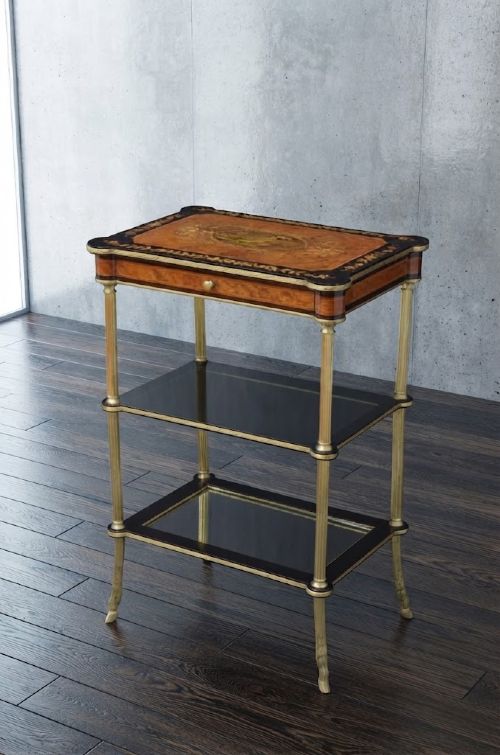
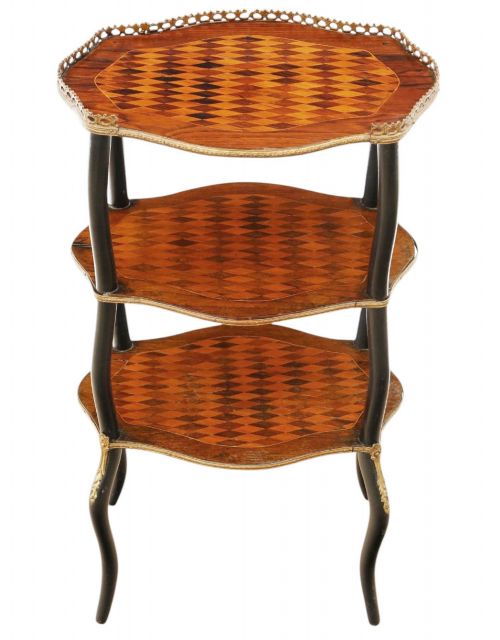
The common configurations include étagères, whatnots, side tables, and dumbwaiters with multiple shelves supported by slender uprights or columns. These tiered tables function as display stands for ornaments or as occasional tables in sitting rooms.
Most examples rely on walnut, burr walnut, ebonised wood, or mahogany as a carcase, enriched with marquetry veneer and parquetry inlay. Brass mounts, ormolu, and gilt metal frequently accent the corners and edges.
How they were made
Cabinetmakers constructed these tables using solid carcases of walnut, mahogany, or fruitwood, applying delicate veneers across the tiered surfaces. Marquetry inlay employed contrasting woods to form floral or geometric patterns embedded directly into the top layers.
Metal mounts in brass, ormolu, or gilt metal were cast and chased then fitted to protect edges and accentuate the upright supports. Ebonised finishes involved staining and polishing timber to imitate expensive ebony, providing a dark contrast to the inlaid details.
Several tables include mirrored tiers, designed to reflect light upward and trick the eye into making small ornaments float.
What varies in quality
The precision of the marquetry cutting and the choice of timbers define the upper tier of pieces. Burr walnut and finely figured veneers with crisp, tight floral patterns indicate superior workshop output compared to simpler geometric parquetry.
The integration of cast ormolu or brass mounts also separates standard production from finer examples. Heavy, finely chased metalwork fitted flush to the wood demonstrates greater cabinetmaking skill than stamped or poorly secured mounts.
The Three Tier Marquetry Table Glossary
- Étagère
- A piece of furniture consisting of a set of open shelves for displaying small objects or ornaments. These tiered stands emerged in France and became popular across nineteenth-century drawing rooms.
- Marquetry
- The art and craft of applying pieces of veneer to a structure to form decorative designs. Cabinetmakers used various tinted woods and fruitwood veneer to create pictorial scenes.
- Ormolu
- Gilded bronze applications used as decorative mounts on fine furniture. This technique added metallic lustre to French revival styles.
- Parquetry
- A geometric mosaic of wood pieces used for decorative floors and furniture surfaces. This technique creates repeating patterns like cubes or chequers.
- Dumbwaiter
- A tiered freestanding piece of furniture used for serving food or holding dishes. Eighteenth-century British versions typically feature graduating circular trays on a central column.
Three Tier Marquetry Table: Frequently Asked Questions
What is a three tier marquetry table used for?
These tiered tables served various decorative and practical functions in historic interiors, often acting as display stands for porcelain, clocks, and ornaments. In modern spaces, they work well as occasional tables beside seating or in corners where vertical display is preferred.
The multiple tiers provide generous surface area without taking up substantial floor space. This makes them adaptable for holding lamps, books, or collections in a drawing room.
How do I identify French styles on these tables?
French influence appears through curved cabriole supports, elaborate ormolu mounts, and floral marquetry reminiscent of Louis XV and Napoleon III revivals. Ebonised finishes and gilt accents also point toward nineteenth-century French cabinetmaking tastes.
British versions tend to follow simpler architectural lines, such as the mahogany dumbwaiter form with turned columns. Comparing the wood choice and mount style helps distinguish between continental and domestic production.
Are these tables sturdy enough for daily use?
Tiered tables were originally built to hold lightweight decorative items rather than heavy loads. While the joints and upright supports are generally stable, care should be taken with placement and weight distribution.
Placing them out of heavy traffic areas helps protect the delicate veneer edges and protruding brass mounts from accidental knocks.
How should I care for marquetry surfaces?
Marquetry veneer requires protection from direct sunlight and extreme humidity fluctuations to prevent the fine wooden inlays from lifting or drying out. Gentle dusting with a soft, dry cloth is sufficient for routine maintenance.
Avoid using silicone-based polishes or harsh chemical cleaners, as these can damage the historic polish and loosen the delicate wood veneers over time.