


Marquetry Open Shelf Stand
These marquetry open shelf stand pieces bring tiered display and tailored storage into a room with rich inlaid timber surfaces.
Marquetry Open Shelf Stand
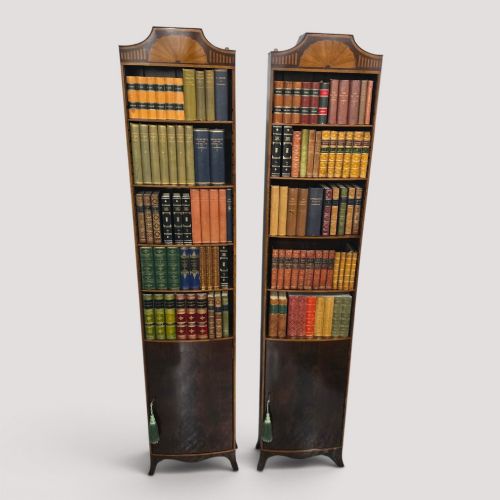
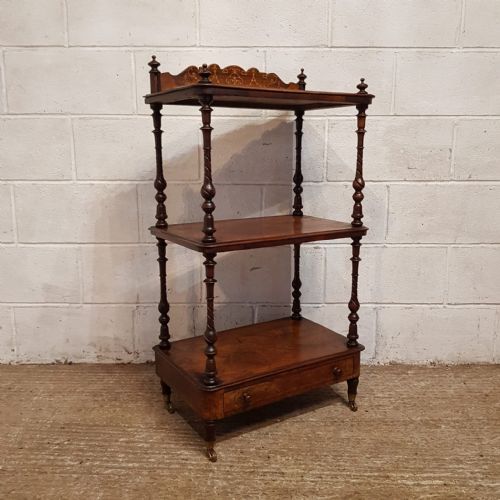
A marquetry open shelf stand provides tiered shelving for books and decorative objects, using open forms rather than enclosed cupboards. The pieces gathered under this phrase most commonly span the Victorian and Edwardian eras, taking the form of etageres, whatnots, corner stands, and open bookcases.
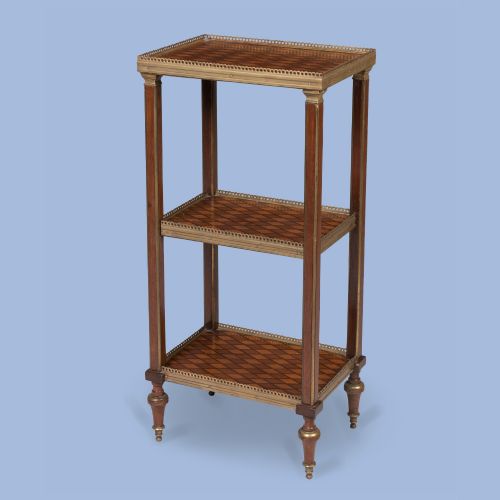
Makers often drew upon historical design idioms, resulting in pieces executed in the Sheraton Revival, Louis XVI, and French Rococo Revival manners. Buyers encounter freestanding four-tier structures as well as slim adjustable bookcases and corner stands designed to utilise difficult spaces.
How they were made
Constructed primarily from timber carcases in walnut, burr walnut, mahogany, and rosewood, these pieces utilise fine wood veneers to create patterned surfaces. Workshops applied contrasting satinwood inlay and complex marquetry veneers to tabletops, friezes, and shelf borders.
Mounts in brass provide structural accents and edge protection, particularly on pieces produced in the French manner. Cabinetmakers combined traditional joinery with decorative banding and ebonised detailing to achieve the finished display surfaces.
Design influences span the Victorian and Edwardian periods, including French Rococo Revival, Louis XVI, and Arts and Crafts styles.
What varies in quality
The refinement of the timber selection and the precision of the veneer work dictate the standing of an individual piece. Superior examples display carefully matched burr walnut or meticulously cut marquetry panels that integrate harmoniously with the primary wood.
Structural integrity in the upright supports and tier joints separates standard production from finer workshop output. The complexity of the design, such as multi-tiered corner configurations or brass-mounted etagere framing, also influences the character of the piece.
Shapland & Petter
The Marquetry Open Shelf Stand Glossary
- Marquetry veneer
- Thin sheets of wood applied to a furniture carcase in decorative patterns or pictorial designs. This technique allows cabinetmakers to combine contrasting timbers across flat display surfaces.
- Etagere
- A piece of furniture consisting of a set of open shelves for displaying small objects or ornaments. These tiered stands developed in France and became popular in various revival styles.
- Whatnot
- A freestanding piece of furniture with multiple open shelves supported by slender columns or pillars. Victorian examples frequently utilise walnut or mahogany and serve to hold books and decorative items.
- Satinwood
- A durable, yellowish timber prized for its lustrous sheen and used extensively for contrasting inlay work. Cabinetmakers employed it to create crisp geometric borders and floral motifs.
Marquetry Open Shelf Stand: Frequently Asked Questions
What is a marquetry open shelf stand used for?
These pieces provide accessible tiered storage and display space for books, ceramics, and decorative objects in principal rooms.
Their open architecture allows items to be viewed from multiple angles while occupying minimal floor space.
How do I identify a Victorian whatnot?
Victorian examples typically feature three or four open tiers supported by turned or fluted columns, frequently constructed from walnut or mahogany.
Many incorporate inlaid marquetry or brass mounts following French revival or Sheraton Revival design principles.
Where should I place a corner whatnot?
Corner whatnot stands are designed to fit snugly into room angles, making use of unused vertical space without blocking pathways.
They work effectively in sitting rooms and studies to display small collections or volumes.
What is the difference between an etagere and a bookcase?
An etagere is primarily designed for the decorative display of ornaments on open tiers, often featuring French-influenced brass mounts and delicate supports.
A bookcase focuses on shelving volumes, ranging from slim adjustable uprights to multi-tiered standing structures.