



French Etagere Stand
A french etagere stand brings open tiers of display into a room, offering a slender stage for small objects and plants.
French Etagere Stand
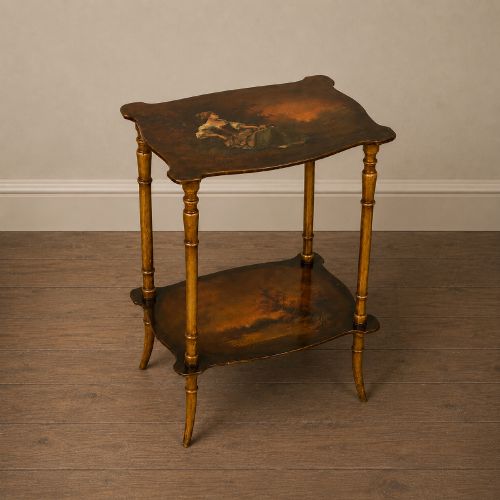
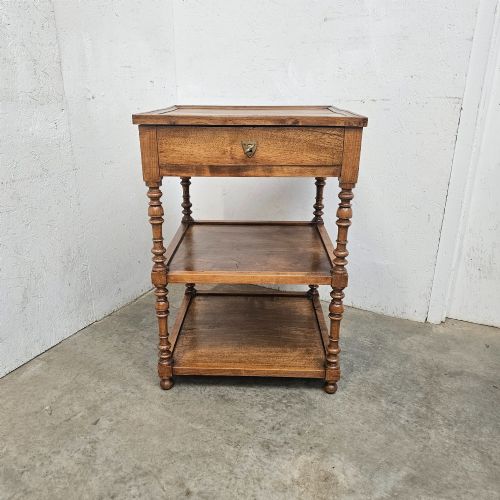
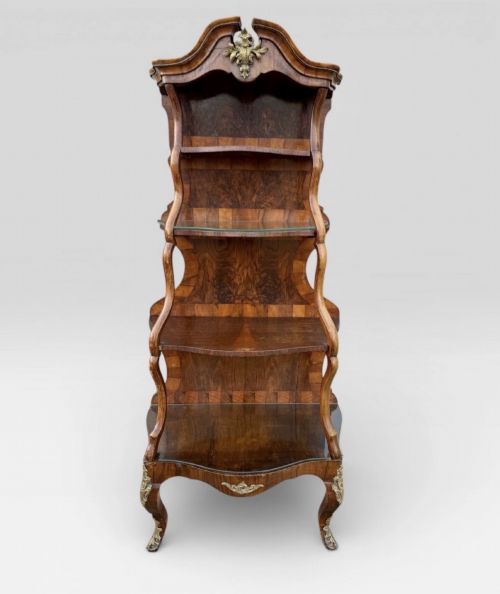
When you search for a french etagere stand, you are looking at tiered display furniture designed to hold ornaments, books, or plants across multiple open levels. The pieces available range from compact two-tier occasional tables to taller freestanding shelving units and plant stands.
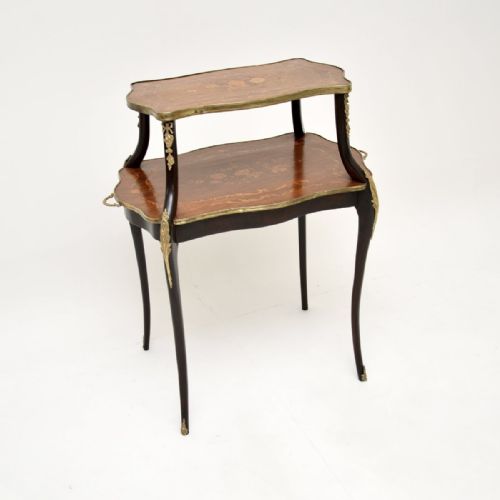
You will most frequently meet examples from the nineteenth century, including pieces finished in walnut, mahogany, and ebonised wood. Many incorporate distinct regional variants such as Louis XV style curves or Napoleon III ormolu mounts.
The form functions equally well as a side table or a dedicated display shelf. Makers adapted the multi-tiered concept into music cabinets, tea tables, and jewelled jewellery cabinets while keeping the defining open profile.
How they were made
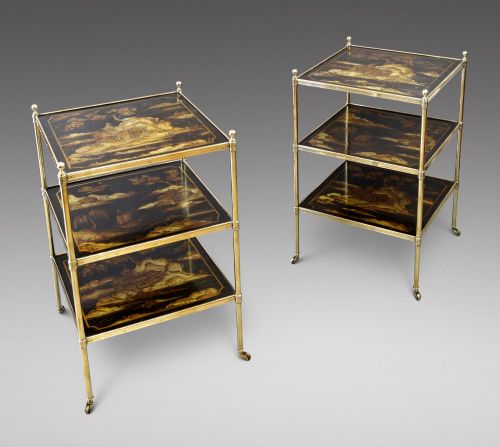
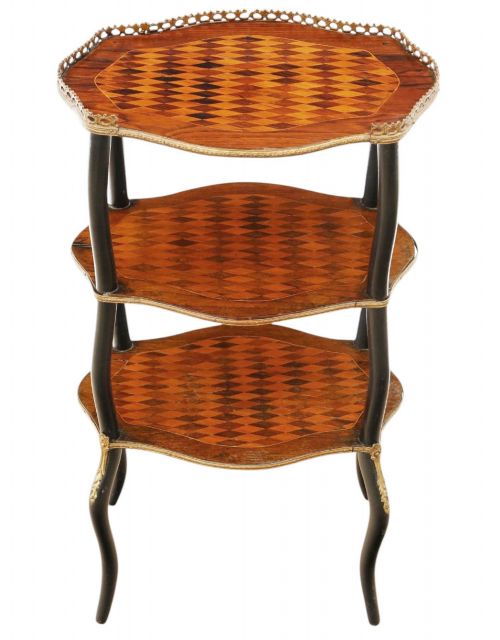
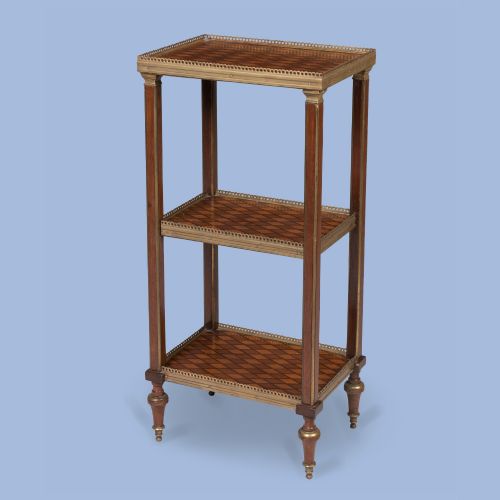
The construction relies heavily on cabinet timbers like walnut, mahogany, and rosewood, frequently enhanced by intricate marquetry and parquetry inlays. Craftsmen integrated brass galleries, gilt metal, and bronze ormolu mounts to edge the tiers and accent the upright supports.
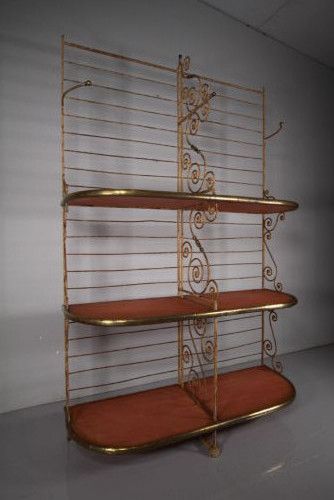
Metal and wirework versions appear alongside timber examples, utilising wrought iron and brass for tiered planters and pot stands. Surface finishes vary from clear polish on exotic woods to ebonisation, paint, and parcel gilding.
Inlaid marquetry and parquetry appear across multiple nineteenth-century tier designs.
What varies in quality
The distinction between standard production and the finest workshop pieces rests on the precision of the marquetry and the weight of the metal mounts. Superior examples use substantial cast bronze ormolu rather than lighter pressed brass.
Structural harmony also defines the better tier stands, where turned legs, delicate brass galleries, and matched wood veneers display deliberate proportion. Simpler utility racks and wirework stands rely on utilitarian metalwork rather than decorative cabinetmaking.
Gabriel Viardot·Edwards & Roberts·Donald Ross·Druce and Co
The French Etagere Stand Glossary
- Etagere
- A piece of furniture consisting of a set of open shelves for displaying small objects. The design allows items to be viewed from multiple angles.
- Ormolu
- Gilt bronze mounts applied to furniture for decoration. High quality mounts feature crisp chasing and heavy metal casting.
- Marquetry
- Decorative woodwork where pieces of veneer are fitted into a ground to form floral or geometric patterns. It requires precise cutting and careful wood selection.
- Whatnot
- A nineteenth century term for an open set of shelves used for storage and display. The pieces typically feature three or four tiers supported by slender columns.
- Parquetry
- Geometric wood inlay forming mosaic patterns across a tabletop or shelf surface. The technique creates structured visual depth using contrasting timber tones.
French Etagere Stand: Frequently Asked Questions
What is a french etagere stand used for?
These tiered stands serve primarily as display furniture for decorative objects, porcelain, and small potted plants. The open shelving design makes them suitable for placing beside seating or against empty walls.
Historically, they also functioned as tea tables, music cabinets, and bedside nightstands. Their lightweight multi-tier construction allowed owners to move them easily around principal rooms.
How do I identify the period of an etagere?
Nineteenth-century examples often display characteristic period traits such as elaborate marquetry, ebonised finishes, and classical revival styling. Pieces from the later Victorian and Edwardian eras tend to lean towards lighter woods and refined brass galleries.
Earlier nineteenth-century pieces frequently feature heavier walnut or mahogany construction with hand-cut veneers. Looking closely at the assembly methods and wood ageing helps clarify the decade of production.
Are all etageres made of wood?
While timber remains the most common material, many examples incorporate metal frameworks. Wrought iron and brass appear frequently in plant stands, pot holders, and utilitarian storage racks.
Combination pieces also exist, pairing wooden shelving with marble tops, ceramic inserts, and cane work panels. Metal mounts and brass wirework further diversify the material palette.
How do I style an etagere in a modern room?
The open tiers provide an ideal opportunity to arrange collections of ceramics, glassware, and small books without cluttering floor space. Varying the height and texture of objects on each shelf maintains visual balance.
Because the sides remain open, these stands work well against dark feature walls or in corners that require vertical interest. They fit comfortably into both traditional and contemporary interiors due to their slender proportions.