
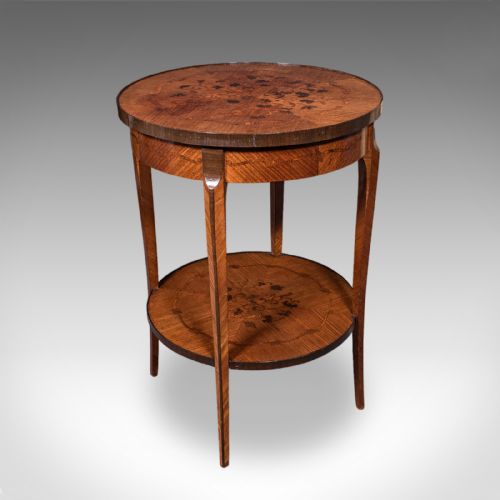
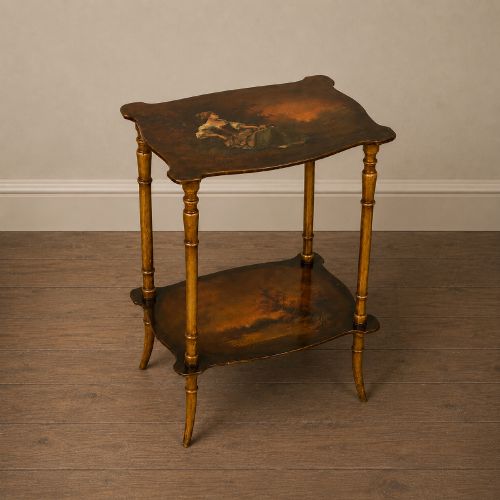
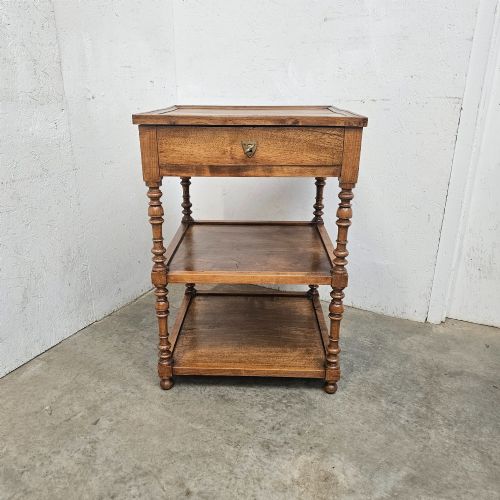
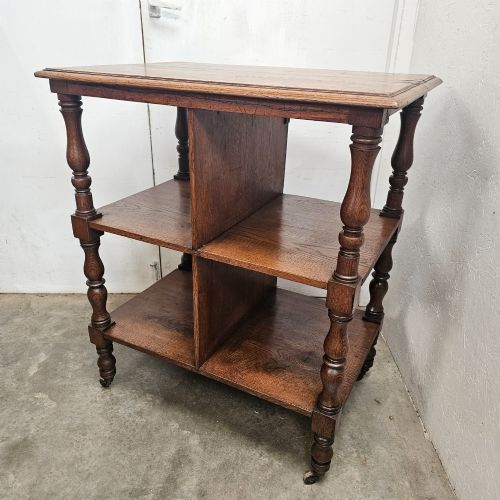
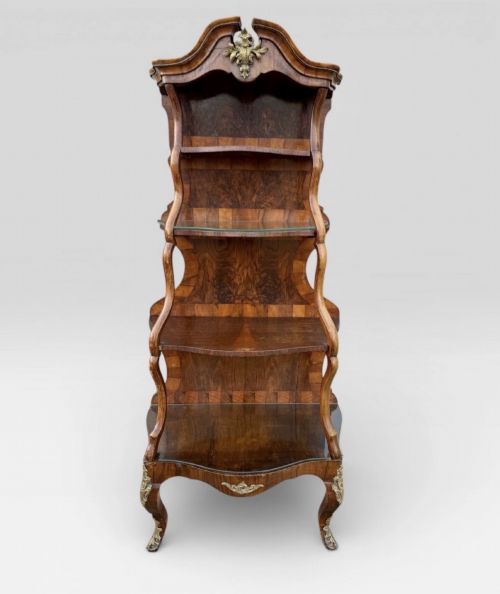


Antique French Tier Stand
An antique french tier stand brings layered display space and Continental elegance to a room, offering multiple surfaces for plants, lamps or precious objects.
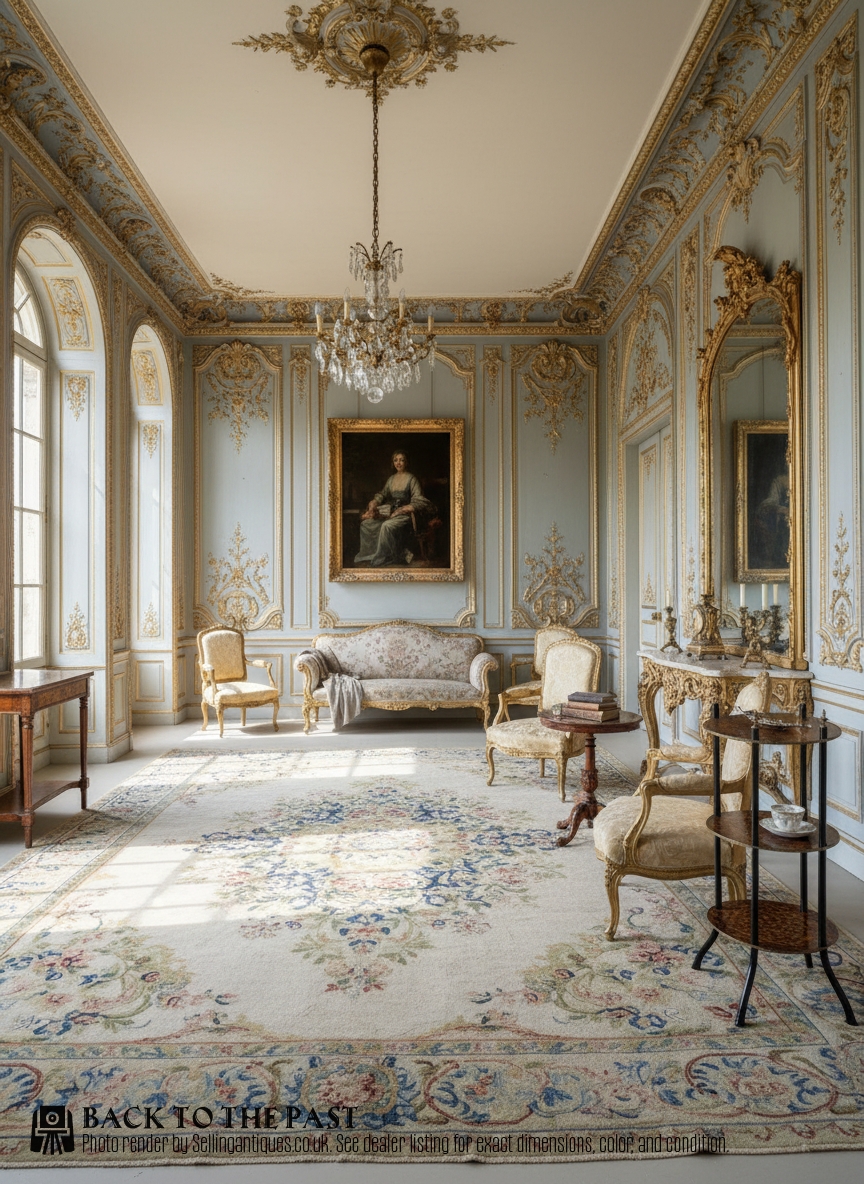
Antique French Tier Stand
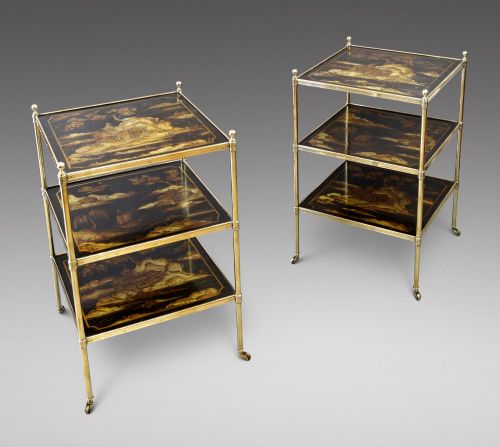
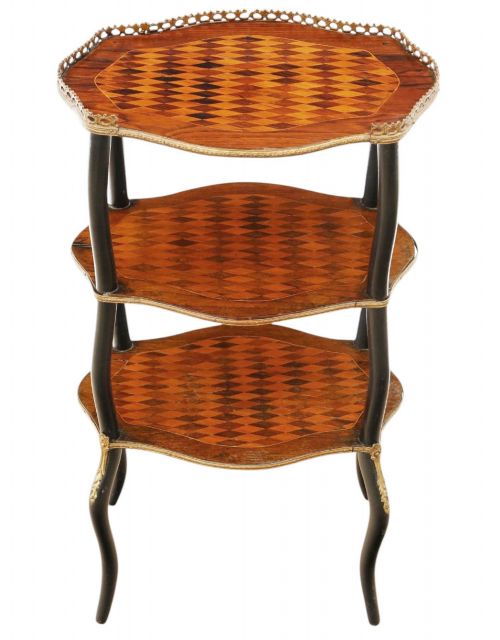
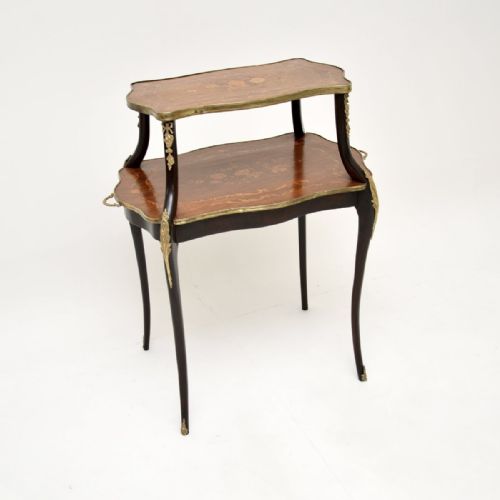
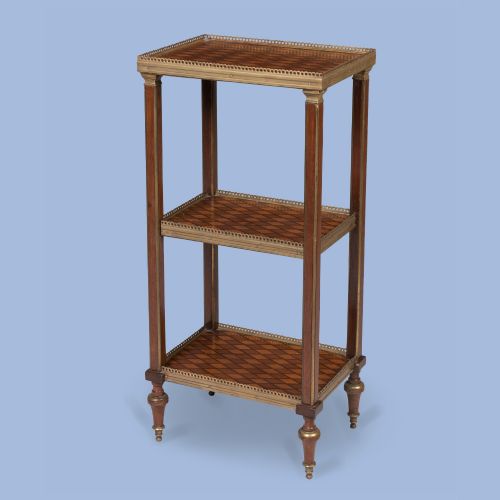
An antique french tier stand groups items across multiple horizontal surfaces, appearing in forms such as etageres, whatnot display shelves, plant stands and occasional tables. These tiered pieces serve to display decorative objects, books or botanical specimens while occupying a compact footprint in a room.
The pieces seen on this page span the nineteenth century into the early twentieth century, incorporating periods like the Victorian era, the Edwardian period, and specific decades up to nineteen thirty. Designs draw upon French Empire, Louis XV and Louis XVI styles, French Provincial, and Napoleon III aesthetics.
Most examples found here function as side tables, occasional tables, or specialised stands with two or more distinct tiers linked by upright supports or columns. Materials range from warm hardwoods and exotic veneers to polished metals, marble, and painted finishes.
How they were made
Cabinetmakers constructed these stands using timber skeletons of walnut, mahogany, rosewood, kingwood, amboyna, and oak, often applying intricate marquetry and parquetry inlay patterns across the surfaces. Ebonised wood and painted finishes also appear, providing contrasting dark or decorated backgrounds.
Metal mounts in bronze ormolu and solid brass frame edges, feet, and column supports, adding structural definition and ornamental detail. Marble inserts provide durable tops for plant stands and jardiniere tables, while elements of wirework, canework, and wrought iron appear in specialised stands and planters.
A sturdy eight-tier saucepan rack with hooks stands ready among the delicate parlor tables, proving that French and Victorian tiers were not just for show.
What varies in quality
The quality of an antique french tier stand rests upon the precision of its marquetry work, the crispness of its bronze ormolu mounts, and the selection of cabinet timbers such as figured walnut and amboyna. Finer pieces demonstrate careful hand-turned supports, tight joinery, and harmonious proportions between the tiers.
Simpler versions rely on plain mahogany, oak, or painted softwood with minimal turning and fewer decorative mounts. The presence of integrated marble tops, fine brass gallery rails, or elaborate parquetry distinguishes the workshop production from more utilitarian examples.
Edwards and Roberts·Gabriel Viardot
The Antique French Tier Stand Glossary
- Étagère
- A piece of furniture consisting of a set of open shelves for displaying small objects. The term derives from the French word for a shelf.
- Whatnot
- A Victorian term for an open tiered piece of furniture with three or more shelves used for ornaments and books. It functions similarly to an etagere.
- Ormolu
- Gilded bronze mounts applied to furniture edges and legs. This technique was widely used in French cabinetmaking during the eighteenth and nineteenth centuries.
- Marquetry
- Decorative patterns formed by the insertion of pieces of wood, shell, or ivory into a wood veneer base. It creates pictorial or geometric surface designs.
- Jardiniere
- An ornamental pot or stand designed to hold plants or flowers. In tiered stands, it often forms the central focus of the upper or lower surface.
Antique French Tier Stand: Frequently Asked Questions
What is an etagere?
An etagere is an open tiered stand designed specifically for displaying small ornaments, porcelain, or books across multiple levels. It provides vertical storage and display without darkening a room.
These pieces typically feature two, three, or more shelves supported by slender columns or turned legs, making them versatile additions to drawing rooms and reception spaces.
How do I use a tier stand?
A tier stand can function as an occasional side table, a lamp table, or a dedicated display surface for plants and decorative items. The multiple levels allow you to group collections together in a structured arrangement.
In living areas, they hold reading material and lighting, while plant stands accommodate trailing foliage on protected marble or wood surfaces.
What is a whatnot?
A whatnot is a nineteenth-century English and French term for an open set of shelves used to hold whatever objects were currently fashionable. They range from diminutive corner models to larger freestanding display units.
These pieces share the tiered format of etageres and frequently incorporate drawers, mirrors, or marquetry panels into their design.