


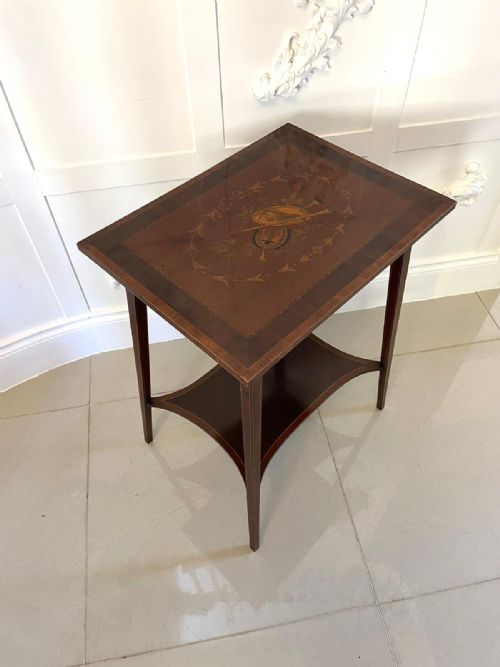
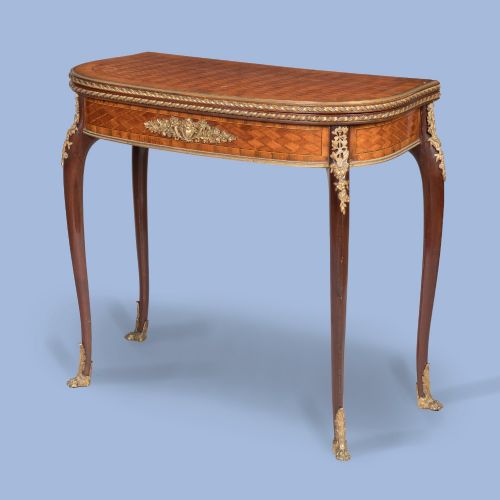
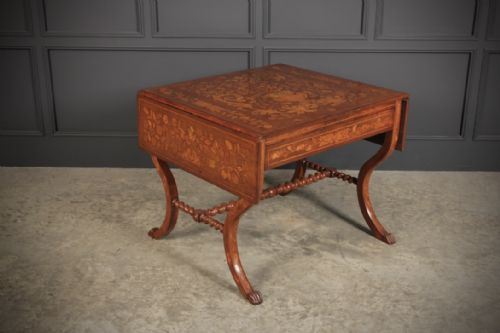


Carved Marquetry Accent Table
When you search for a carved marquetry accent table, you find pieces combining timber work and decorative surface patterns.
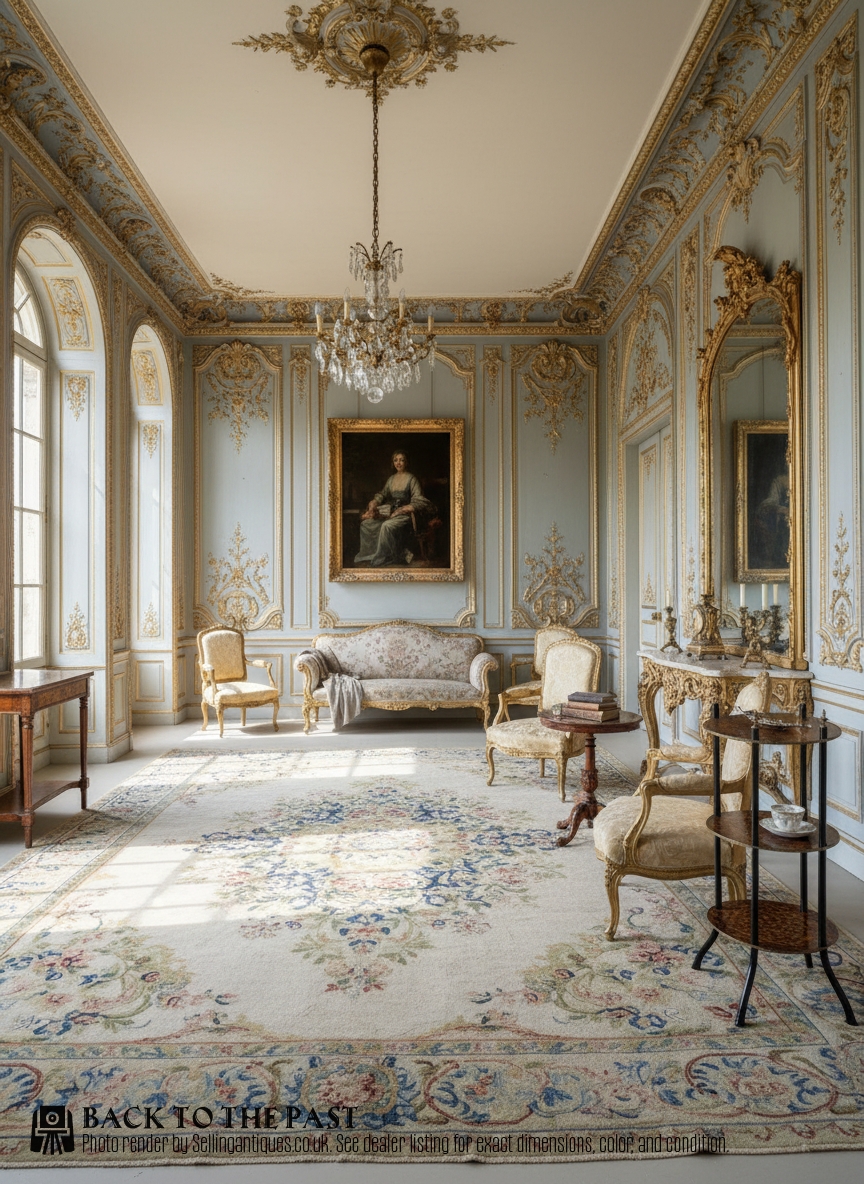
Carved Marquetry Accent Table
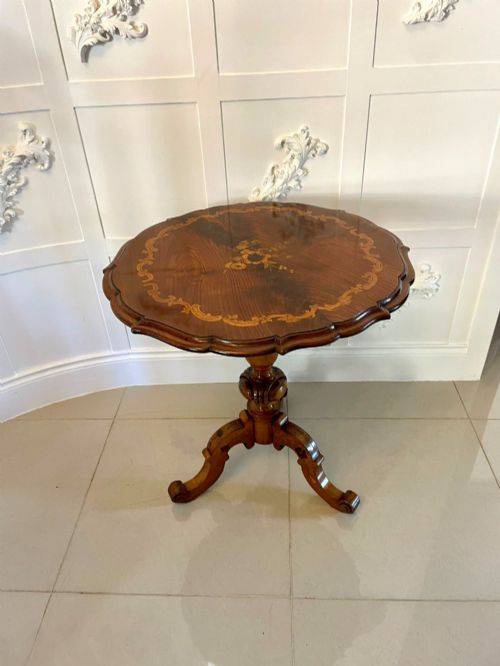
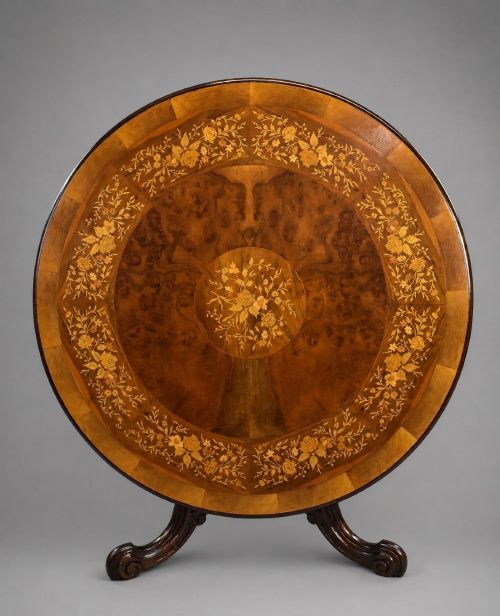
A carved marquetry accent table brings patterned wood surfaces and carved details into a room through forms such as occasional tables, lamp tables, and centre tables. You encounter Victorian burr walnut examples frequently, often built with oval, circular, or octagonal tops.
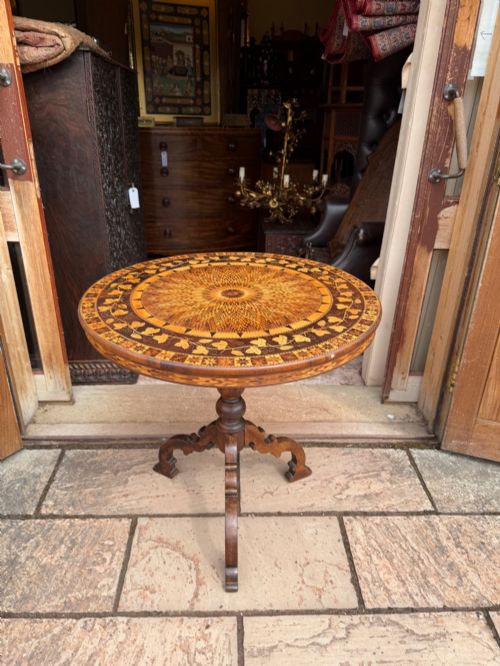
The selection extends to diverse regional and revival styles, including Italian Sorrento, Anglo-Indian, Moorish Revival, and Sheraton Revival designs. Makers utilised forms ranging from fold-over card tables and sofa tables to small wine tables and tripod tables.
Materials and construction
Cabinet makers used walnut, burr walnut, mahogany, oak, rosewood, and satinwood as primary timbers, applying veneers to create stable foundational surfaces. They incorporated contrasting woods, boxwood, brass, mother-of-pearl, and various exotic specimen woods to build intricate geometric and floral pictorial designs.
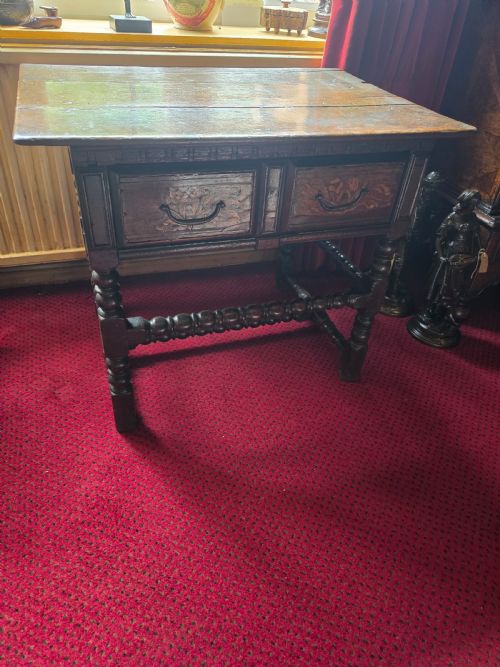
Surfaces received careful hand-finishing, sometimes incorporating ormolu mounts, turned pedestals, carved borders, and structural stretchers. Joinery techniques varied from traditional mortise and tenon joints to stable veneered table tops set on tripod or pedestal bases.
Some tables double as sewing boxes or flip-top surfaces, proving that Victorians loved hiding their sewing gear inside fancy furniture.
Markers of quality
Quality rests in the precision of the wood inlay and the depth of the carving on the structural frame. Finer examples show tight, seamless joins in the marquetry work without gaps between the contrasting veneers.
The choice of timber significantly affects the standard of the piece, with richly figured burr walnut and dense exotic specimen woods indicating higher grade production. The stability of the pedestal base and the crispness of the carved details distinguish better workshops from standard commercial output.
François Linke·Liberty & Co.·Anton Seuffer
The Carved Marquetry Accent Table Glossary
- Marquetry
- Decorative veneer work cut and fitted into a background to form intricate pictures or geometric patterns. This technique defines the primary visual appeal of these accent tables.
- Burr walnut
- Highly figured wood harvested from the growths of walnut trees, prized for its swirling grain patterns. Cabinet makers selected burr veneers for prominent table tops.
- Ormolu
- Gilded bronze mounts applied as decorative accents to furniture edges and legs. French and revival pieces frequently incorporate this material.
- Specimen wood
- Small sections of various native and exotic timbers assembled to showcase contrasting natural colours and grain structures. Tables utilising these woods often feature geometric or multi-toned checkerboard surfaces.
- Tripod table
- A small freestanding table supported by a central pillar above three spreading legs. This form appears frequently among nineteenth-century occasional tables.
Carved Marquetry Accent Table: Frequently Asked Questions
What rooms suit a carved marquetry accent table?
These tables fit easily beside seating in a drawing room or study, functioning as lamp tables or occasional surfaces for drinks and books.
Their decorative tops also allow them to stand alone as display pieces in hallways or reception spaces.
How do I care for a veneered table top?
Keep the wood away from direct sunlight and strong heat sources to prevent the veneer from drying or lifting over time.
Dust the surface regularly with a soft, dry cloth and avoid harsh chemical polishes.
What is the difference between marquetry and parquetry?
Marquetry involves cutting and assembling wood veneers to form pictorial scenes, floral motifs, or complex scrolls. Parquetry arranges geometric shapes like cubes or triangles to create repeating patterns.
Both techniques appear across the recorded tables.
How can I tell a Victorian table from later revivals?
Victorian examples often feature solid timber carcases with dense burr walnut veneers and heavy pedestal or tripod bases. Construction methods, timber oxidation, and hand-cut joinery help separate nineteenth-century pieces from later copies.