
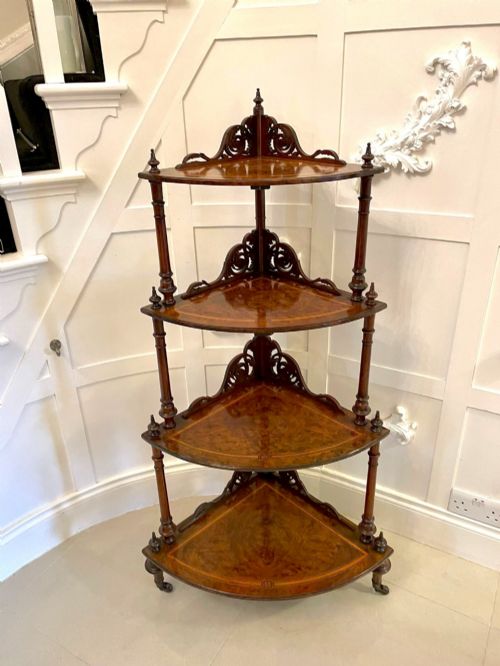
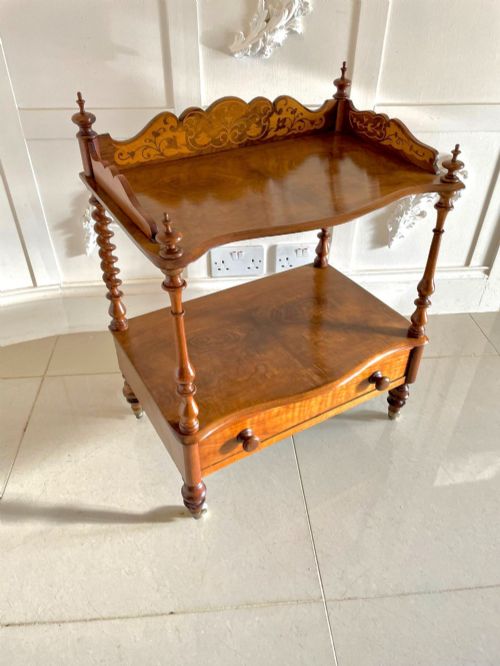
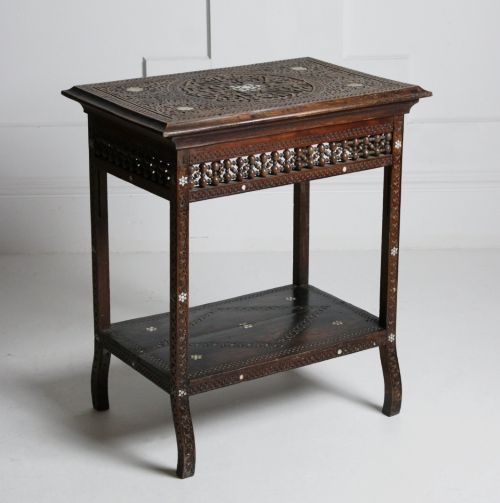


Inlaid Walnut Tier Stand
These inlaid walnut tier stand pieces are multi-tiered display tables built with patterned wood surfaces, offering practical height and decorative utility for period interiors.
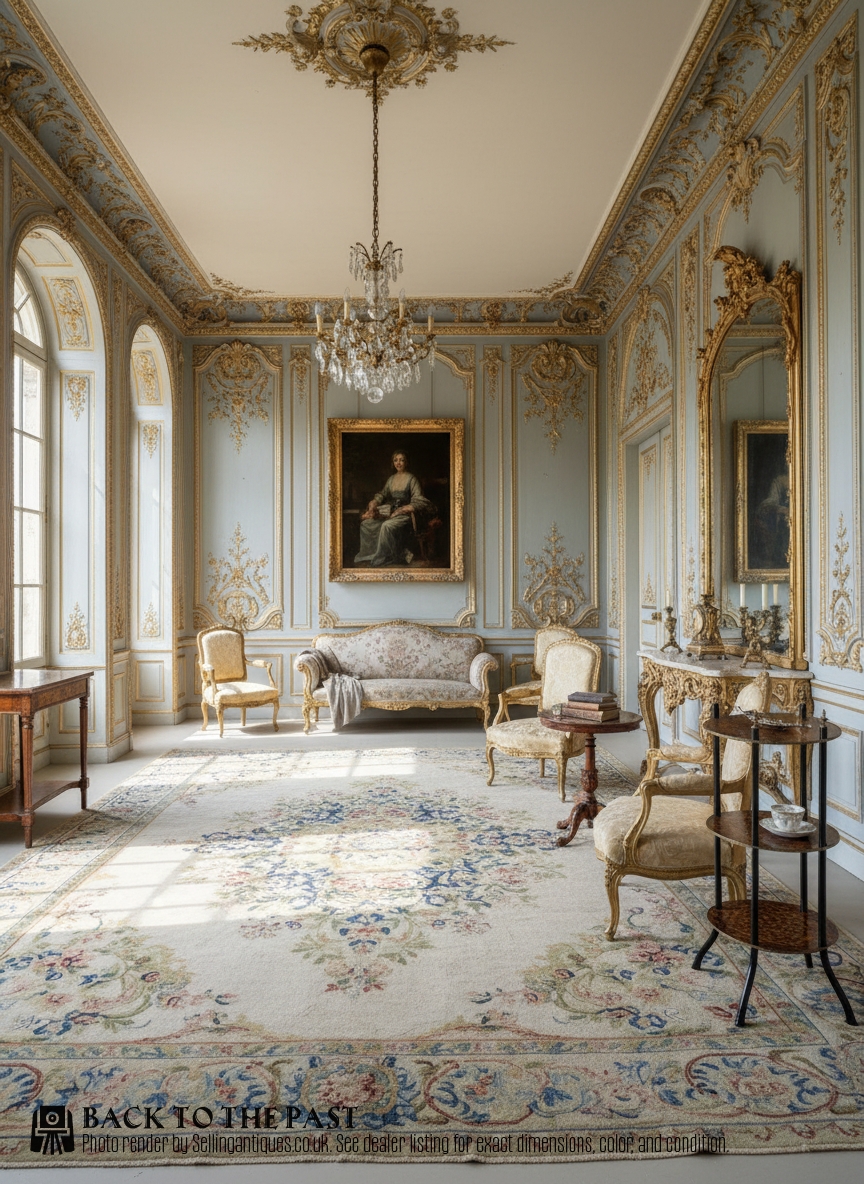
Inlaid Walnut Tier Stand
When you search for an inlaid walnut tier stand, you encounter multi-shelf furniture designed for display and small objects, spanning forms such as etageres, whatnots, side tables, and corner stands.
The pieces appearing on this page originate predominantly from the Victorian and Edwardian periods, alongside nineteenth-century examples and twentieth-century interpretations.
You meet various configurations, from two-tier occasional tables and lamp tables to substantial four-tier standing corner whatnots and multi-height etageres fitted with marquetry surfaces.
Materials and construction
These items utilise walnut and burr walnut timbers, frequently enhanced by decorative marquetry and floral inlay work executed in contrasting woods.
Many examples incorporate brass mounts, ormolu, gilt metal elements, or ebonised wood details to articulate the tiers and edges.
Makers constructed the multi-level frameworks using vertical supports or turned columns to space the shelves securely across two, three, or four heights.
Listings feature walnut, burr walnut, and marquetry inlay across Victorian, Edwardian, and nineteenth-century forms including etageres, whatnots, and corner stands.
Quality variations in the work
The refinement of the marquetry inlay and the complexity of the wood grain selection across the walnut tiers distinguish standard production from superior examples.
The integration of mounts, such as brass galleries, ormolu, or gilt metal framing, dictates the decorative ambition and overall finish of the tier stand.
Structural crispness in the turning of upright supports and the neatness of the joinery where shelves meet uprights indicate the maker's original standard of execution.
The Inlaid Walnut Tier Stand Glossary
- Etagere
- A piece of furniture consisting of a set of open shelves for displaying small objects or ornaments. These tiers are often supported by slender columns.
- Whatnot
- An open set of multi-level shelves used for books or ornaments, frequently appearing in corner configurations or fitted with small drawers and lower cabinets.
- Marquetry
- Decorative veneer work arranged in intricate patterns or pictorial designs using various coloured woods. This technique frequently covers the top surfaces of these stands.
- Burr walnut
- Timber taken from a walnut tree growth, yielding complex, swirling grain patterns highly prized for decorative furniture panels.
- Ormolu
- Gilt bronze ornamentation applied to furniture mounts and details. It adds metallic contrast to the walnut timber surfaces.
Inlaid Walnut Tier Stand: Frequently Asked Questions
What is an inlaid walnut tier stand used for?
These pieces function primarily as display furniture for holding small decorative objects, lamps, or books across multiple open shelves.
They serve in living spaces or corners where vertical display capacity is required without occupying excessive floor area.
How do I distinguish a whatnot from an etagere?
While both terms describe multi-tiered shelving units, whatnot generally refers to English multi-shelf stands, including corner variants.
Etagere more commonly denotes pieces influenced by French design styles, frequently featuring ornate marquetry, ormolu mounts, and galleried edges.
Which periods do these stands come from?
The examples on this page date largely from the nineteenth century, encompassing Victorian and Edwardian periods.
Some pieces reflect earlier eighteenth-century influences or later revival styles spanning into the early twentieth century.
How should I care for inlaid walnut furniture?
Protect the walnut timber and marquetry surfaces by keeping them away from direct sunlight and fluctuating heat sources.
Dust regularly with a dry cloth and avoid harsh chemical polishes that can damage the polish and veneer.