


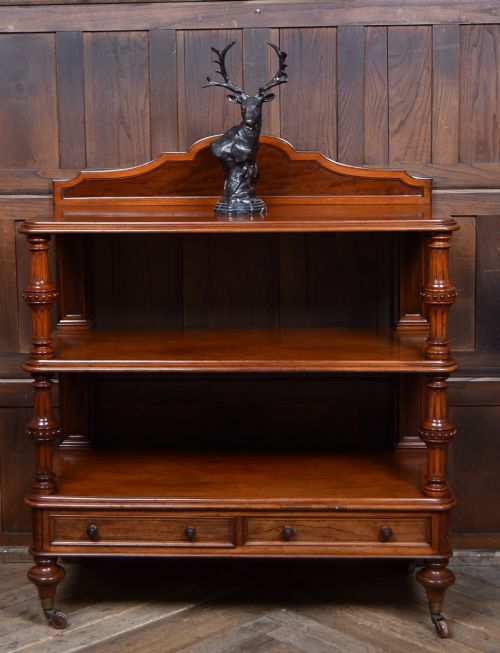
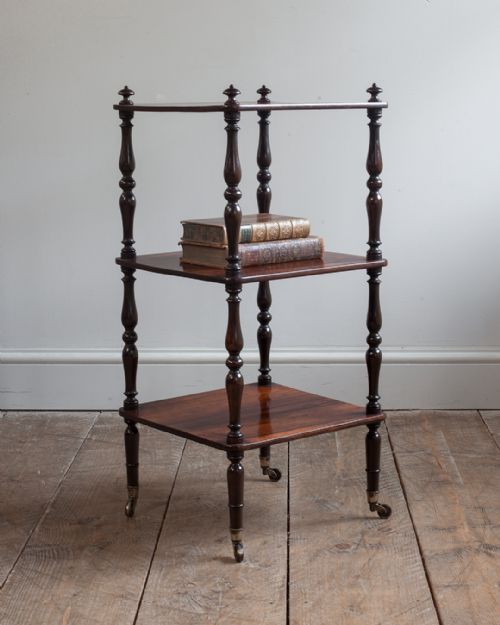
Victorian Tier Whatnot
A victorian tier whatnot offers open tiered shelving designed to display ornaments and books with characteristic nineteenth-century elegance.
Victorian Tier Whatnot
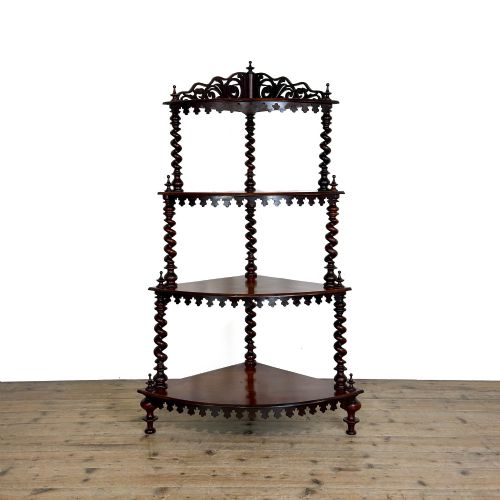
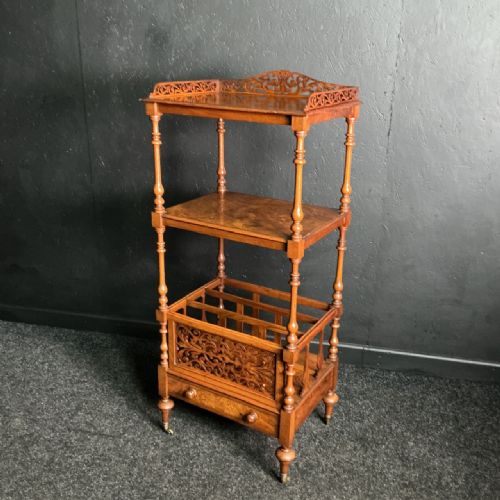
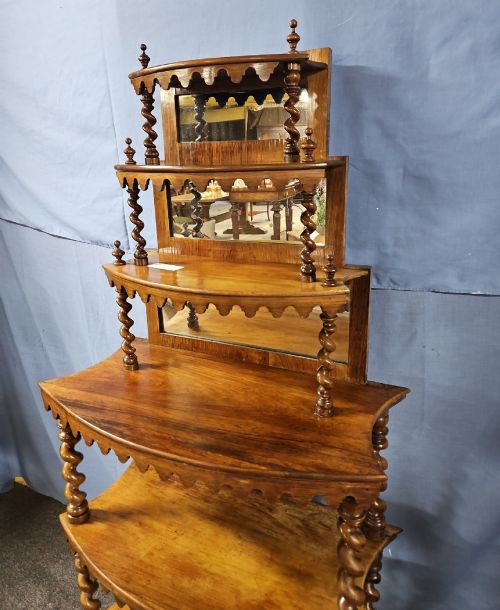
A victorian tier whatnot is a multi-level open shelving unit developed to hold ornaments, books and collections in nineteenth-century interiors. These pieces appear frequently as freestanding rectangular frames or dedicated corner units designed to fit compactly into rooms.
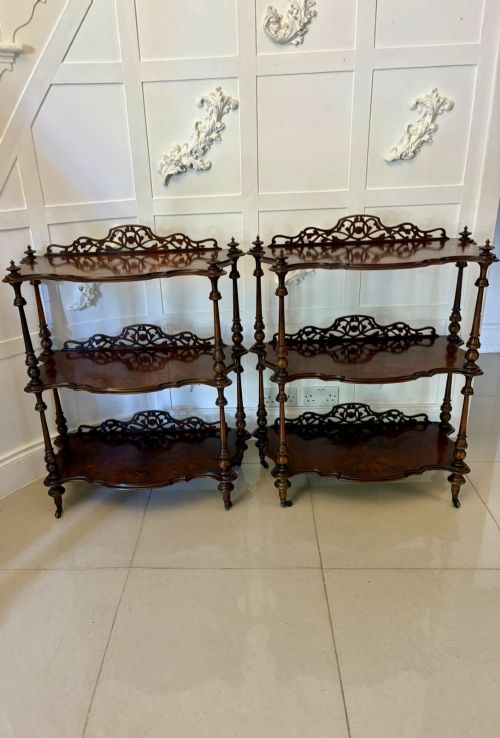
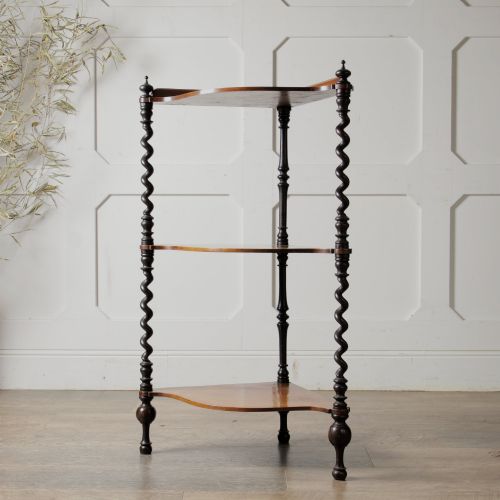
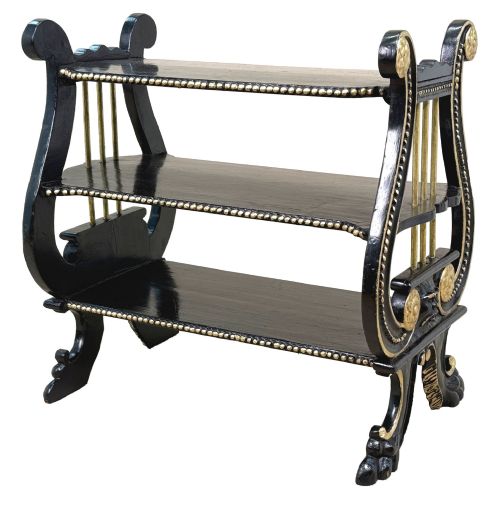
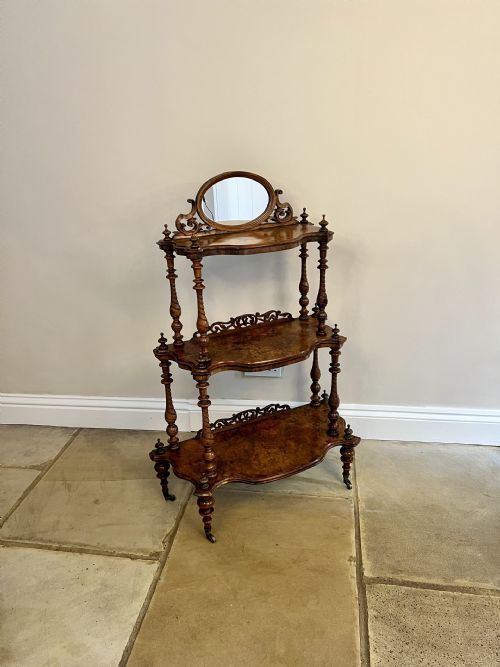
The form developed across several decades, resulting in pieces with three or four tiers supported by turned columns, barley twist supports or upright posts. Buyers frequently encounter mahogany and burr walnut examples alongside rosewood and ebonised variants.
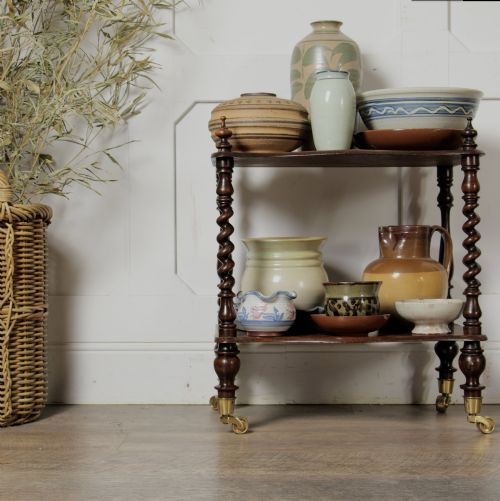
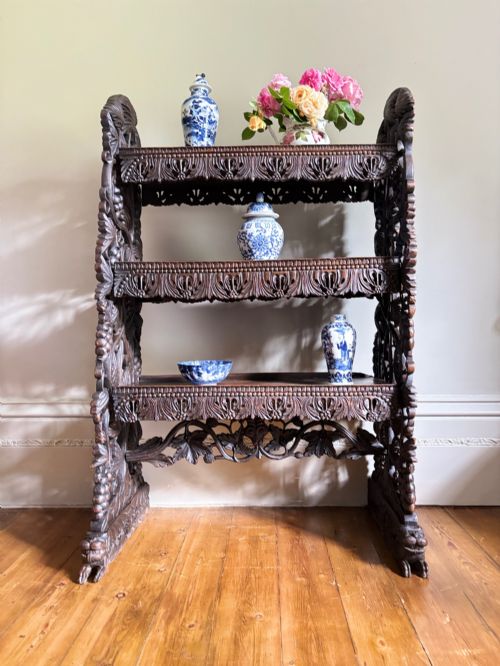
Makers produced these stands for parlours and drawing rooms where display space was at a premium. The open shelves allowed owners to exhibit ceramics, small sculptures and bound volumes.
How They Were Made
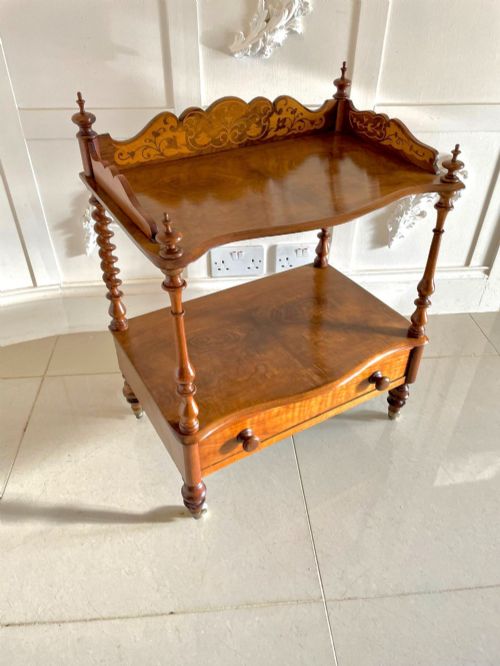
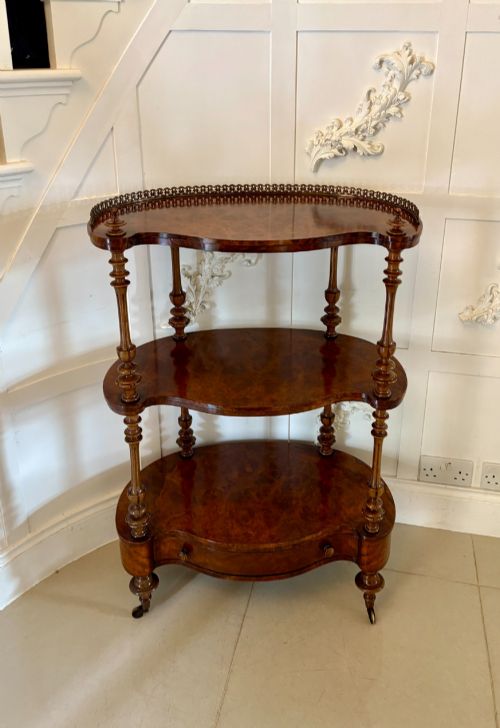
Cabinetmakers utilised dense timbers including mahogany, rosewood and burr walnut, often selecting figured veneers to create striking grain patterns on the shelf surfaces. Workshops frequently incorporated marquetry inlay, brass mounts and parcel-gilded details to enrich the primary wood.
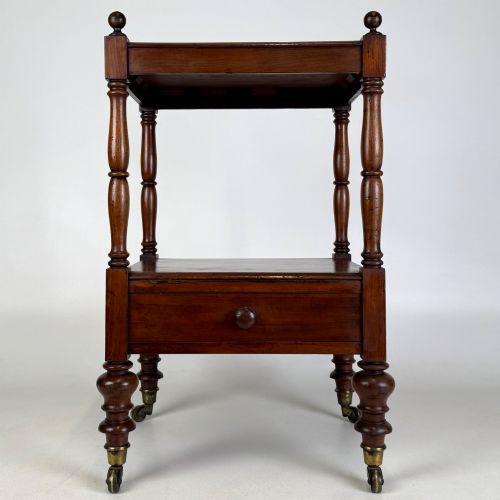
Structural support relied on turned uprights, such as barley twist columns or corner posts, joined securely to each horizontal tier. More elaborate iterations integrated lower drawers, glazed cabinets or compartments for newspapers and music.
The archive records pieces spanning the nineteenth century alongside later twentieth-century stands.
What Varies in Quality
Quality rests upon the choice of timber and the complexity of the cabinetwork. Fine examples display carefully matched burr walnut veneers or rich rosewood grains across every tier.
Construction details distinguish standard production from exceptional pieces. The finest items feature finely turned barley twist columns, intricate marquetry inlay, serpentine shelf fronts and integrated drawers with dovetailed joints.
Samson And Son London
The Victorian Tier Whatnot Glossary
- Whatnot
- An open shelved piece of furniture designed for displaying ornaments or holding books. The form became particularly popular during the nineteenth century.
- Étagère
- A French term for a piece of furniture consisting of a set of open shelves for displaying small objects. These often share characteristics with British tier whatnots.
- Barley Twist
- A type of turning shaped like a spiral rope, frequently used for the vertical supports connecting the shelves. This decorative technique appears across various nineteenth-century stands.
- Burr Walnut
- Timber taken from a tree growth featuring intricate, swirling grain patterns. Cabinetmakers prized this material for veneering prominent surfaces on tables and shelves.
- Canterbury
- A low stand featuring slatted partitions, originally used for holding sheet music or newspapers. Some nineteenth-century examples combine this function with upper whatnot shelves.
Victorian Tier Whatnot: Frequently Asked Questions
Where were whatnots placed in a room?
These units found homes primarily in Victorian drawing rooms and parlours where space permitted open display. Corner variations were particularly useful for utilising empty wall angles efficiently.
Larger freestanding rectangular versions stood against walls or between windows. They served as decorative focal points for exhibiting prized ceramics and bound volumes.
How many tiers do these stands have?
Most examples feature either three or four horizontal shelves supported by vertical posts. Four-tier models provide generous vertical display capacity without occupying substantial floor space.
Lower numbers of tiers often appear on pieces that incorporate cabinets, drawers or Canterbury sections beneath the open shelves.
Can these units support heavy books?
The open shelves were originally constructed to hold decorative ornaments, small collections and light volumes. While sturdy, the slender turned supports are not intended for dense libraries.
Placing excessively heavy items on the upper tiers can compromise the balance of the freestanding frame.
How do walnut and mahogany pieces differ?
Walnut variants frequently utilise burr veneers to create rich, patterned surfaces that reflect Victorian tastes for decorative grain. Mahogany versions tend to present deeper reddish-brown tones with straight or figured grain patterns.
Both timbers received careful polishing by nineteenth-century cabinetmakers to highlight their natural characteristics.