

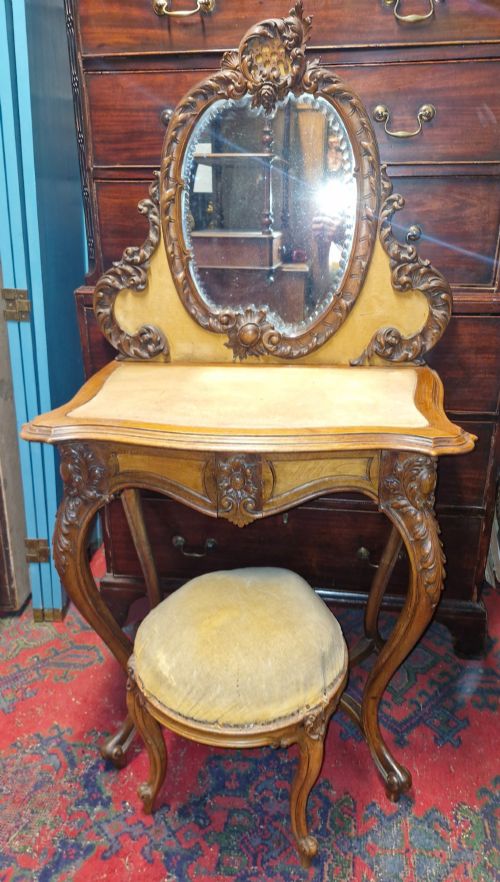
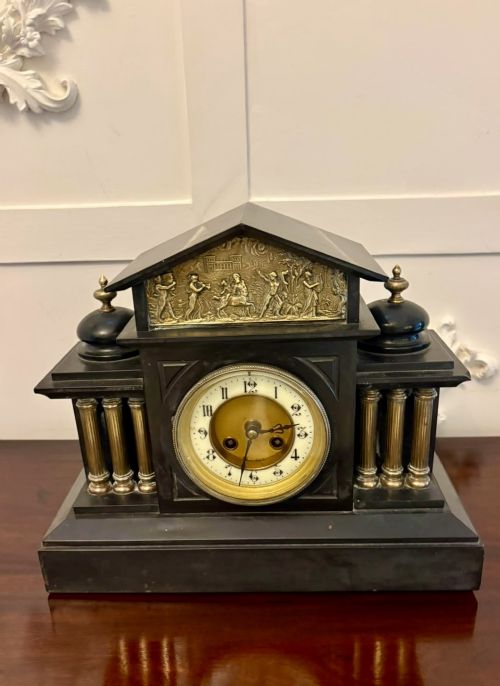
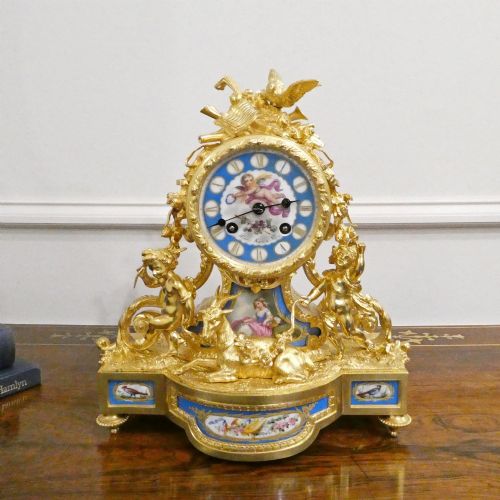
Victorian French Style Table
These ornate pieces bring a continental flourish to British rooms, uniting Victorian craftsmanship with continental rococo and neoclassical lines.
Victorian French Style Table
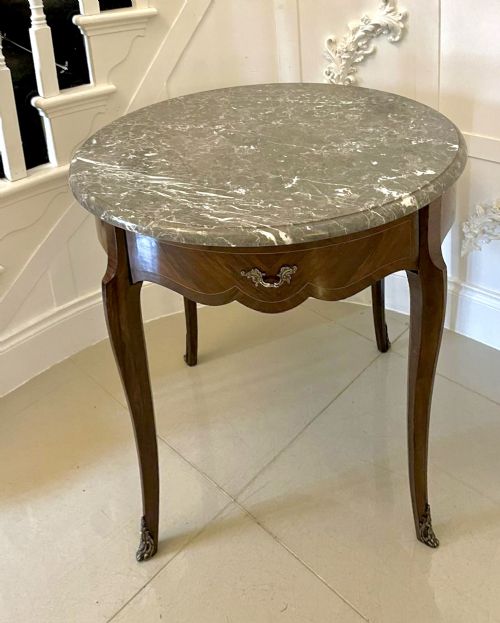
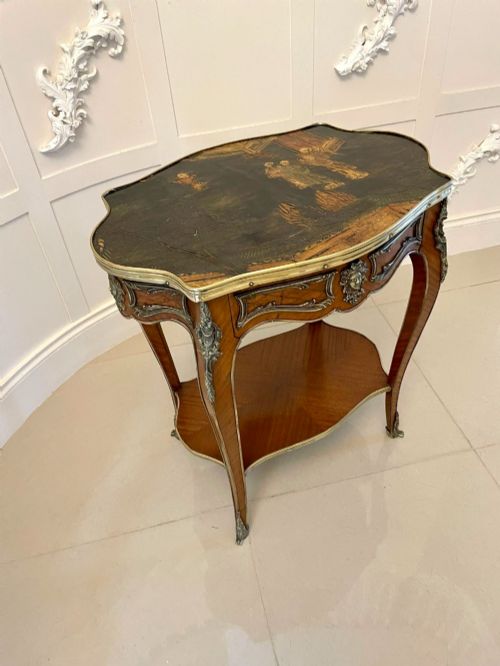
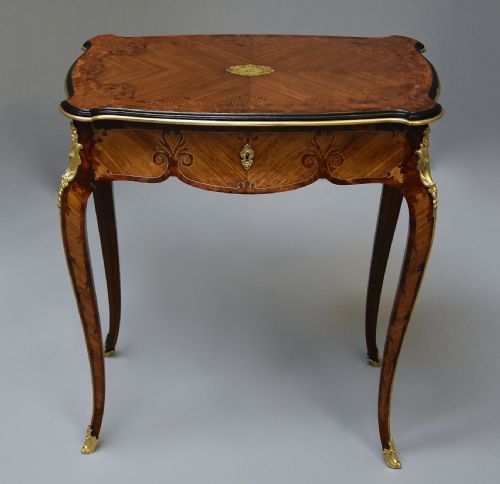
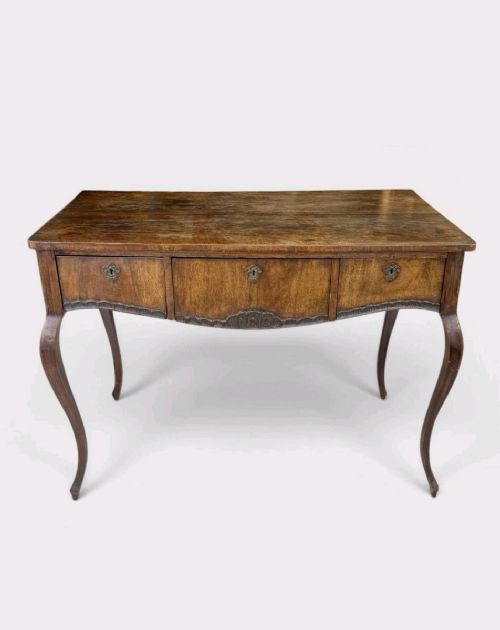
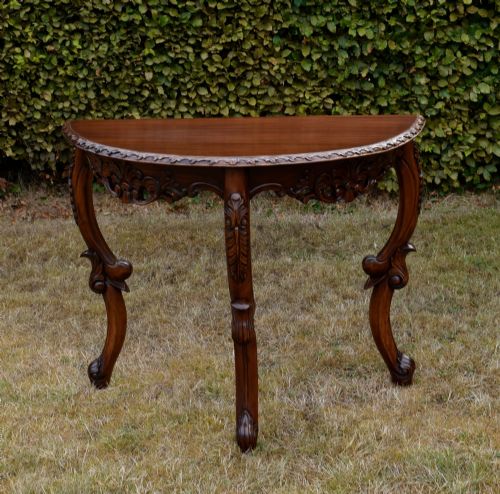
When you search for a victorian french style table, you encounter a refined group of occasional furniture spanning centre tables, writing desks, and lamp tables. These objects combine British domestic utility with continental decoration, referencing Louis XV and Louis XVI designs through serpentine forms and decorative mounts.
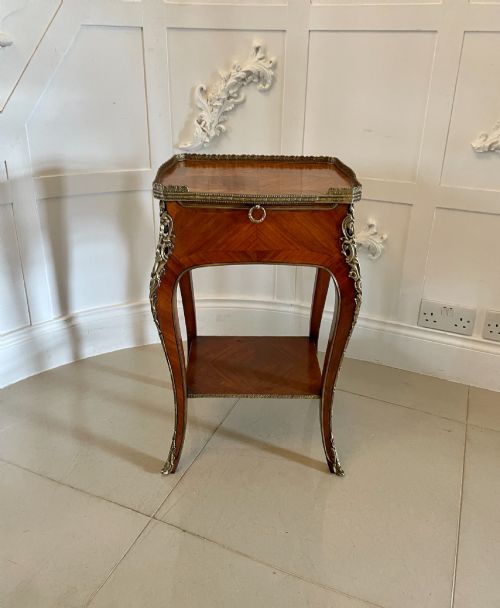
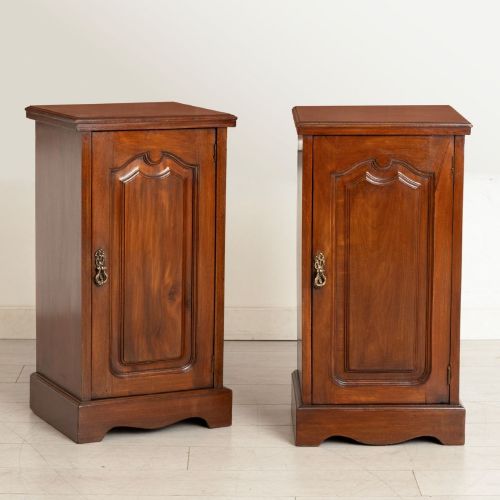
The pieces appearing on this page date predominantly from the nineteenth century, running from the eighteen-sixties through to eighteen-ninety. They take the form of freestanding tables intended for the middle of a room, alongside smaller card tables, bedside tables, and compact writing desks.
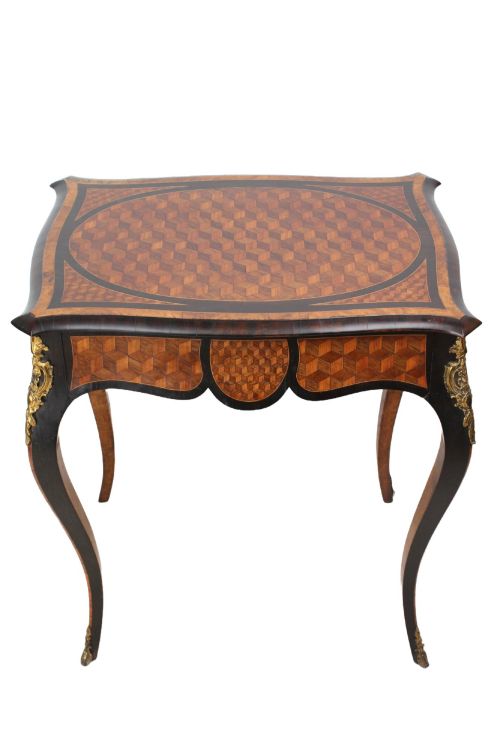
Makers working within this idiom adopted diverse timbers and decorative schemes, resulting in examples finished with parquetry, hand-painted porcelain panels, or contrasting veneers. Their shared vocabulary lies in curved supports, shaped tops, and ornamental metal fittings that evoke French salons within Victorian households.
Materials and construction methods
Cabinet makers utilised dense exotic timbers such as kingwood, satinwood, and walnut as foundations for veneering and marquetry patterns. These woods provided stable surfaces that accepted intricate geometric inlays and shaped cutting.
Metalwork played a defining structural and decorative role, with ormolu and gilt bronze cast into mounts, floral motifs, and sabots. Craftsmen secured these bronze and brass elements around table edges and legs to highlight the curved contours characteristic of the style.
Victorian French Style Table Retail Price Guide 2026
Typical asking prices for victorian french style table among the pieces listed under this phrase on Sellingantiques today, from the lower quarter to the upper quarter. They describe what is for sale here now, not the wider market.
Listings feature nineteen-century periods including eighteen-eighty, eighteen-sixty, and eighteen-ninety alongside materials like kingwood, ormolu, and porcelain.
Evaluating craftsmanship and execution
The distinction between standard production and superior execution rests on the precision of the timber work and the crispness of the cast metal mounts. Finer examples display hand-chased ormolu with sharp definition, whereas simpler pieces rely on unrefined brass castings.
Structural integrity reveals itself in the treatment of secondary woods and the alignment of moving parts, such as desk drawers or folding card table tops. Tables featuring sophisticated internal mechanisms or meticulous parquetry demand a higher standard of joinery to maintain stability over decades of use.
JAS Shoolbred·Henry Marc·Durand
The Victorian French Style Table Glossary
- Ormolu
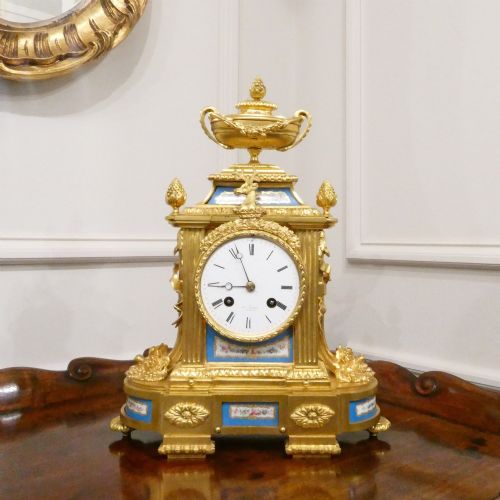
- Gilded bronze applied as a decorative mount on furniture and clock cases. The technique involves coating metal with a gold amalgam and heating it to leave a rich finish.
- Kingwood
- A dense, richly figured Brazilian timber utilised for decorative veneers during the eighteenth and nineteenth centuries. Its dark brown grain displays contrasting golden streaks.
- Marquetry
- The art of applying pieces of veneer to a structure to form decorative patterns and pictures. Craftsmen cut various woods together to create complex floral or geometric designs.
- Bureau plat
- A type of freestanding writing desk featuring a rectangular top inset with leather or fabric, usually supported on cabriole legs. These desks finished in polished veneer often incorporate multiple drawers.
- Cabriole leg
- A furniture leg that curves outward at the knee and tapers inward toward the foot, mimicking animal limbs. This form frequently terminates in scroll or pad feet.
Victorian French Style Table: Frequently Asked Questions
Where should a centre table go?
These tables are designed to be viewed from all sides, making them suited for placement in the middle of a drawing room or grand hallway. They serve as focal points for lamps, clocks, or decorative objects rather than sitting against a wall.
Ensure there is sufficient walking space around the perimeter to appreciate the detailed veneers and ormolu mounts without obstructing household traffic.
How do I care for kingwood veneers?
Keep these sensitive surfaces away from direct sunlight and strong heat sources to prevent the wood from fading and the veneer from lifting. Dust regularly with a dry cloth and apply occasional specialist wax polish sparingly.
Avoid using modern liquid sprays or silicones, which can penetrate porous historical finishes and damage the underlying timber over time.
What is the difference between a writing table and a bureau plat?
A standard writing table often incorporates drawers beneath the surface and may follow domestic Victorian proportions. A bureau plat is specifically a freestanding partner's or writing desk styled after French cabinetmaking traditions.
Both types typically feature leather or fabric writing surfaces inset into the wood, bordered by decorative crossbanding or metal mounts.
How can I date a nineteenth-century table?
Examine the secondary woods used for drawer linings and interior framing, as pine and oak usage shifted across the Victorian decades. The style of the cast bronze mounts and the complexity of the veneer patterns also offer chronological clues.
Documentation or maker stamps found on the locks or underside provide the most reliable indication of the exact decade of manufacture.