
French Kingwood Furniture
French kingwood furniture brings rich mahogany-toned veneers and elaborate ormolu mounts into domestic interiors, offering practical surfaces packaged in historic revival aesthetics.
French Kingwood Furniture
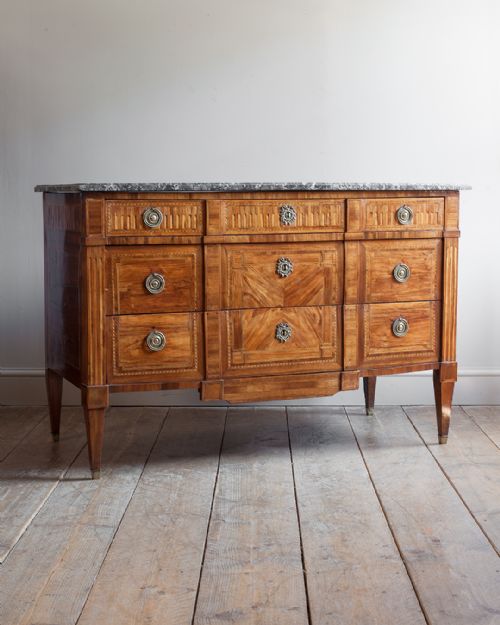
When buyers search for french kingwood furniture, they encounter a range of functional wooden items spanning the nineteenth century through to the early twentieth century. The selection leans heavily towards revival aesthetics, particularly Louis XV and Louis XVI styles, alongside French chateau and rococo expressions.
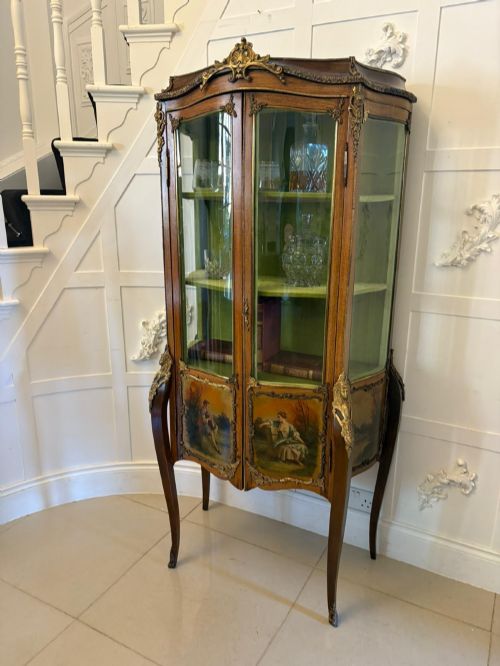
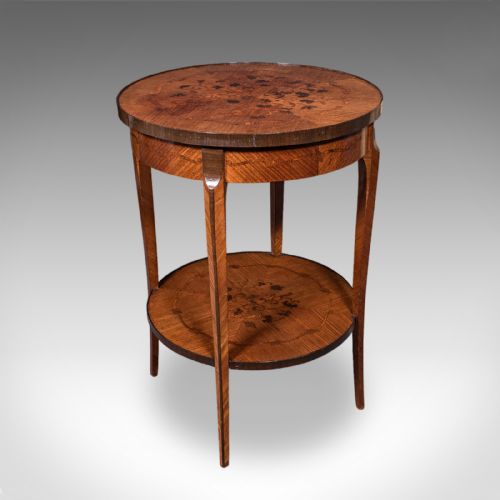
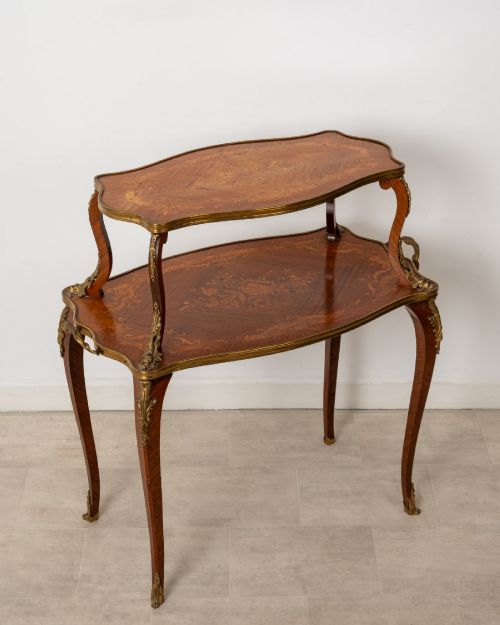
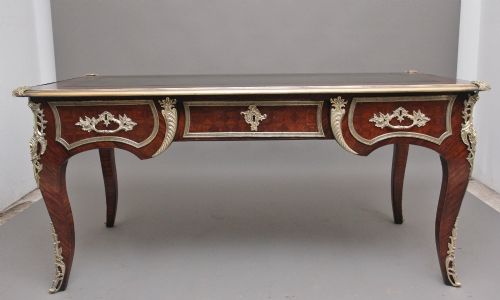
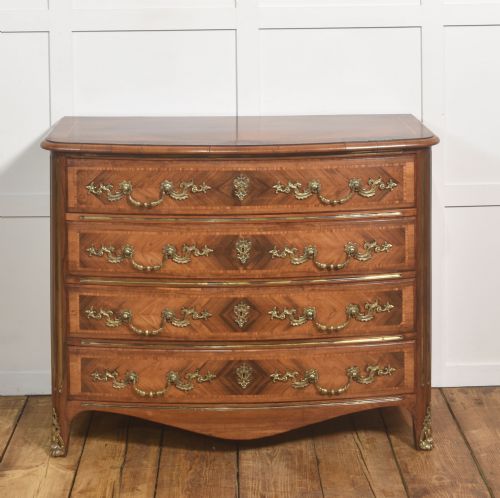
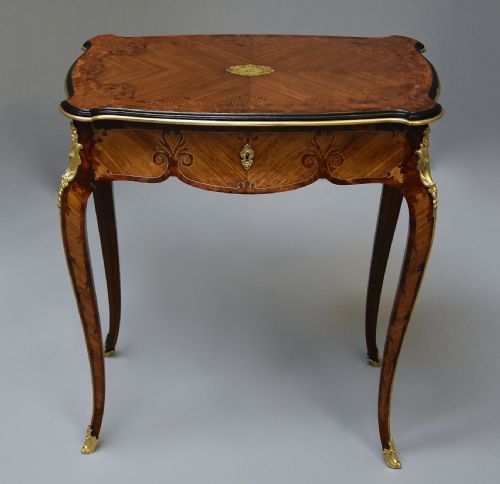
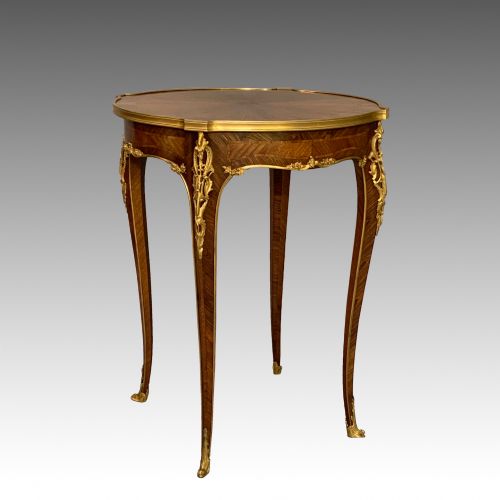
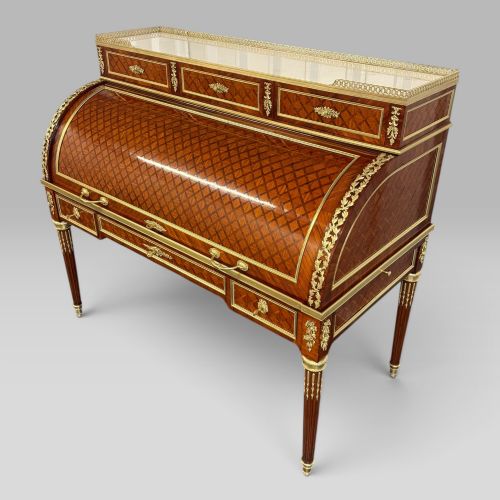
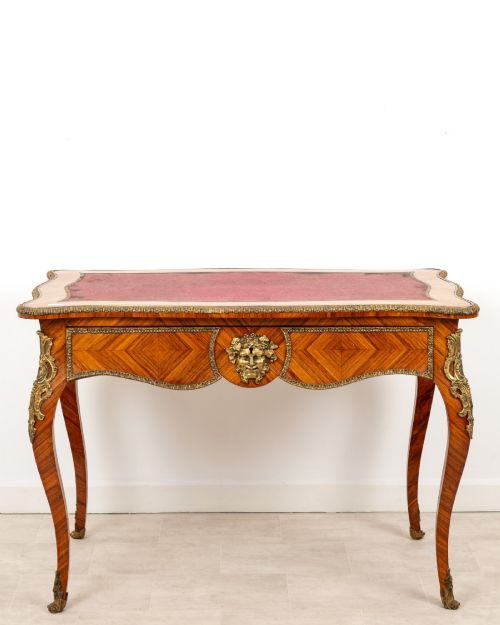
The objects available vary widely in scale and purpose, covering large display cabinets and commodes down to compact bedside tables and occasional lamp tables. Many pieces integrate specialised forms like bureau plat writing desks, vitrines, étagères and cylinder desks designed for formal reception rooms or private chambers.
Originating largely from French workshops and makers influenced by Parisian traditions, these items utilise rich timber veneers combined with decorative metalwork. Buyers find both freestanding centre tables and fitted cabinetry intended to anchor period room schemes with traditional continental elegance.
How they were made
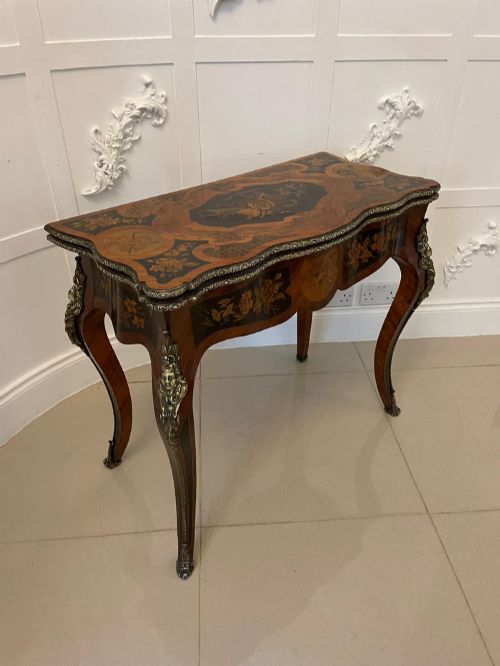
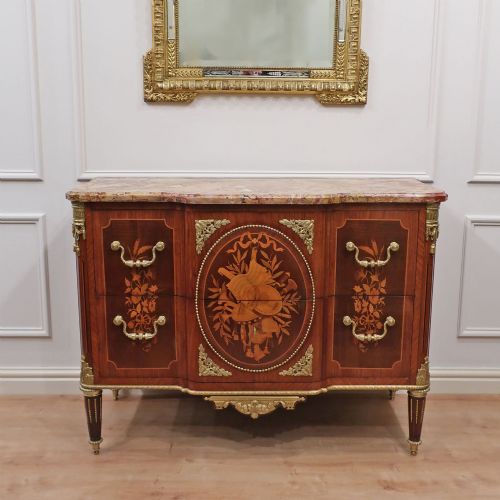
The primary structural surface relies upon kingwood veneers, frequently arranged in intricate marquetry or geometric parquetry patterns across table tops, commode drawer fronts and cabinet doors. This dense, figured timber provides a naturally warm, contrasting grain that catches the light differently depending on the viewing angle.
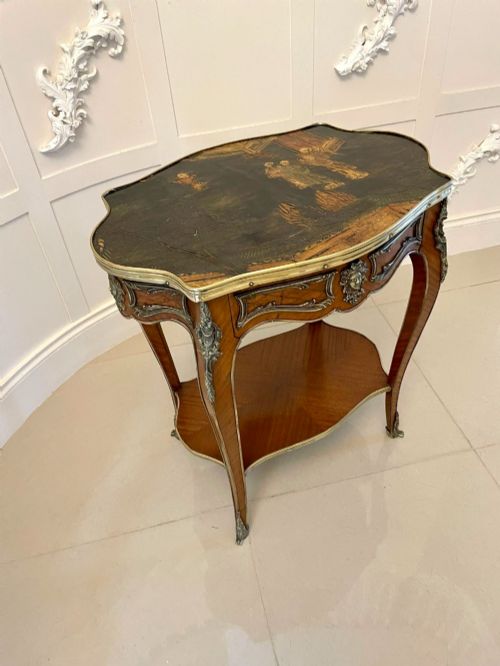
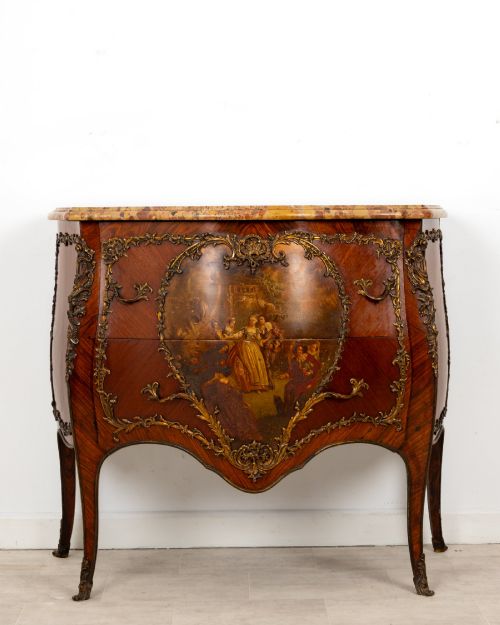
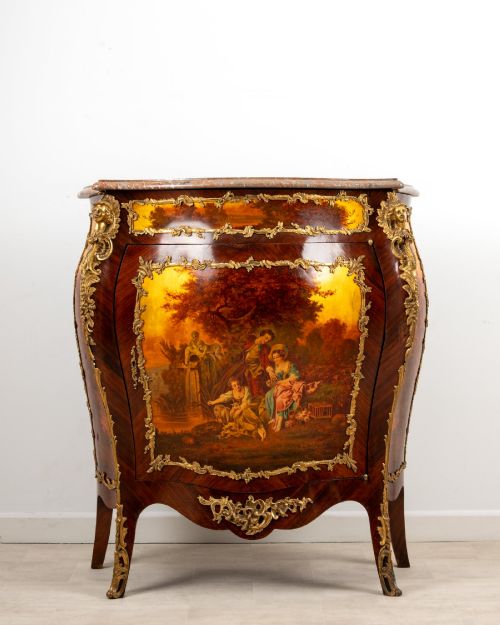
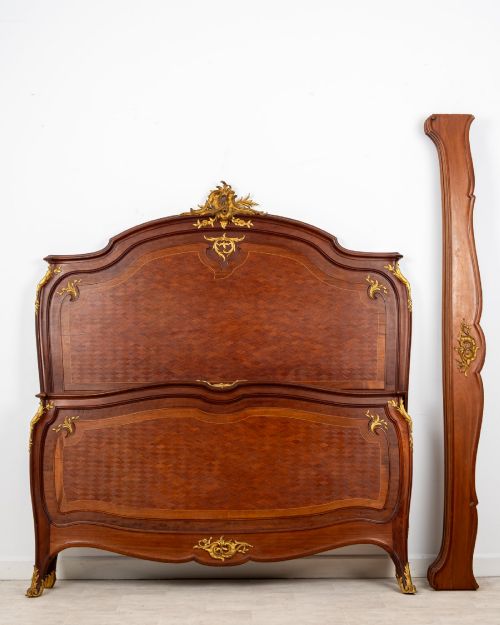
Craftsmen enriched the wooden carcasses with cast ormolu, gilt-bronze and brass mounts, securing elaborate scrollwork, caryatids and hardware along corners, feet and aprons. Marble tops feature heavily on commodes, cabinets and side tables, offering a cool, solid counterpoint to the polished wood and metallic embellishments.
Secondary materials such as glass panels, leather writing inserts and porcelain plaques appear alongside specialist painted panels in the Vernis Martin tradition. Mechanisms for drop-front desks, extending card tables and tiered étagères demonstrate advanced joinery and hardware integration for the period.
Some occasional tables conceal sophisticated nineteenth-century mechanisms, proving that historical desks and lamp stands loved a secret trick as much as any modern gadget.
What varies in quality
The refinement of the ormolu and gilt-bronze mounts dictates much of the visual hierarchy, separating standard factory output from pieces finished with finely chased, deeply articulated metalwork. Heavily detailed mounts that fit seamlessly against the wooden contours reflect superior workshop standards.
Marquetry execution creates another distinct tier, where tightly fitted geometric parquetry or pictorial floral inlay requires exceptional timber selection and precision cutting. Pieces bearing signatures or attributions to recognised makers command greater attention due to documented workshop provenance.
The sophistication of integrated mechanics and the presence of genuine marble slabs or painted Vernis Martin panels elevate certain items above simpler utility furniture. Overall structural harmony between the carcass proportions and the applied decorative hardware determines the enduring appeal of each piece.
Joseph-Emmanuel Zwiener·E. Kahn·Blake·G T Morant·Sormani·Millet·François Linke
The French Kingwood Furniture Glossary
- Kingwood
- A dense, heavily figured South American timber valued for its deep brown tones and dark striping, widely used in French cabinetmaking veneers. It polishes to a high lustre and takes complex geometric inlay exceptionally well.
- Ormolu
- Gilt bronze applied as decorative mounts, feet and handles on furniture frames. The technique involves gilding a cast bronze base with gold amalgam to create a bright metallic finish.
- Marquetry
- The art of applying thin slices of wood veneer to a structural carcass to form decorative patterns or pictures. Craftsmen cut contrasting timbers together to ensure tight, seamless joints.
- Commode
- A low French chest of drawers or cabinet designed for formal rooms, typically featuring a marble top and substantial ormolu mounts. They often display serpentine or bombé silhouettes.
- Vitrine
- A glass-fronted display cabinet intended to showcase porcelain, glassware or curiosities. These pieces incorporate glazed doors and sides to maximise light reflection across the interior.
French Kingwood Furniture: Frequently Asked Questions
What is french kingwood furniture?
French kingwood furniture comprises decorative wooden cabinets, tables and desks produced mainly during the nineteenth and early twentieth centuries. These items utilise dense kingwood veneers paired with cast ormolu mounts and marble tops.
They draw heavily on historical Louis XV and Louis XVI design vocabulary, reflecting Parisian cabinetmaking traditions and revival aesthetics.
How do I identify Louis styles?
Louis XV style pieces are characterised by flowing asymmetrical curves, serpentine lines, cabriole legs and organic rococo ormolu mounts. Louis XVI style shifts towards neoclassical symmetry, featuring straight fluted legs, geometric parquetry and rectilinear profiles.
Studying the leg shape and the geometry of the veneer work provides the quickest visual separation between the two periods.
Where were these pieces used?
In historic interiors, these items populated formal reception rooms, salons, boudoirs and libraries. Commodes and vitrines served as statement pieces in public spaces, while smaller étagères and lamp tables functioned in intimate sitting areas.
Writing desks like the bureau plat or bonheur du jour were dedicated to correspondence and administrative tasks in private studies.
How do I care for kingwood?
Kingwood surfaces benefit from stable indoor environments away from direct sunlight and extreme temperature fluctuations. Regular dusting with a soft, dry cloth preserves the polished veneer without stripping the finish.
Avoid placing damp items directly onto the wood or marble surfaces, and treat ormolu mounts gently to prevent abrasion of the gilt finish.