


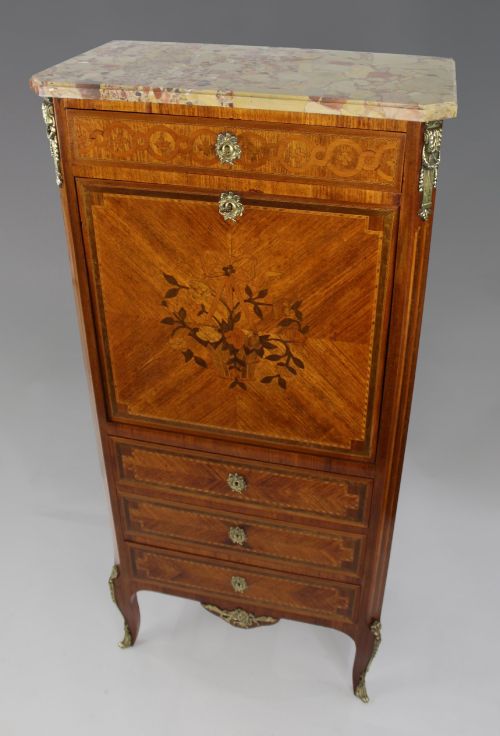
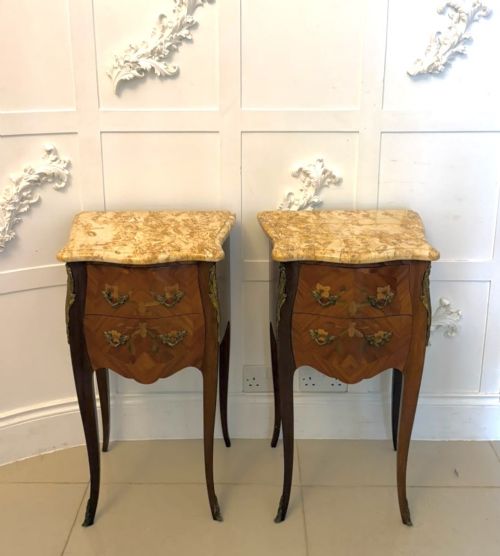

Marquetry Marble Top Cabinet
A marquetry marble top cabinet unites precision wood veneers with heavy stone slabs, offering both a functional surface and ornate storage across French and continental styles.
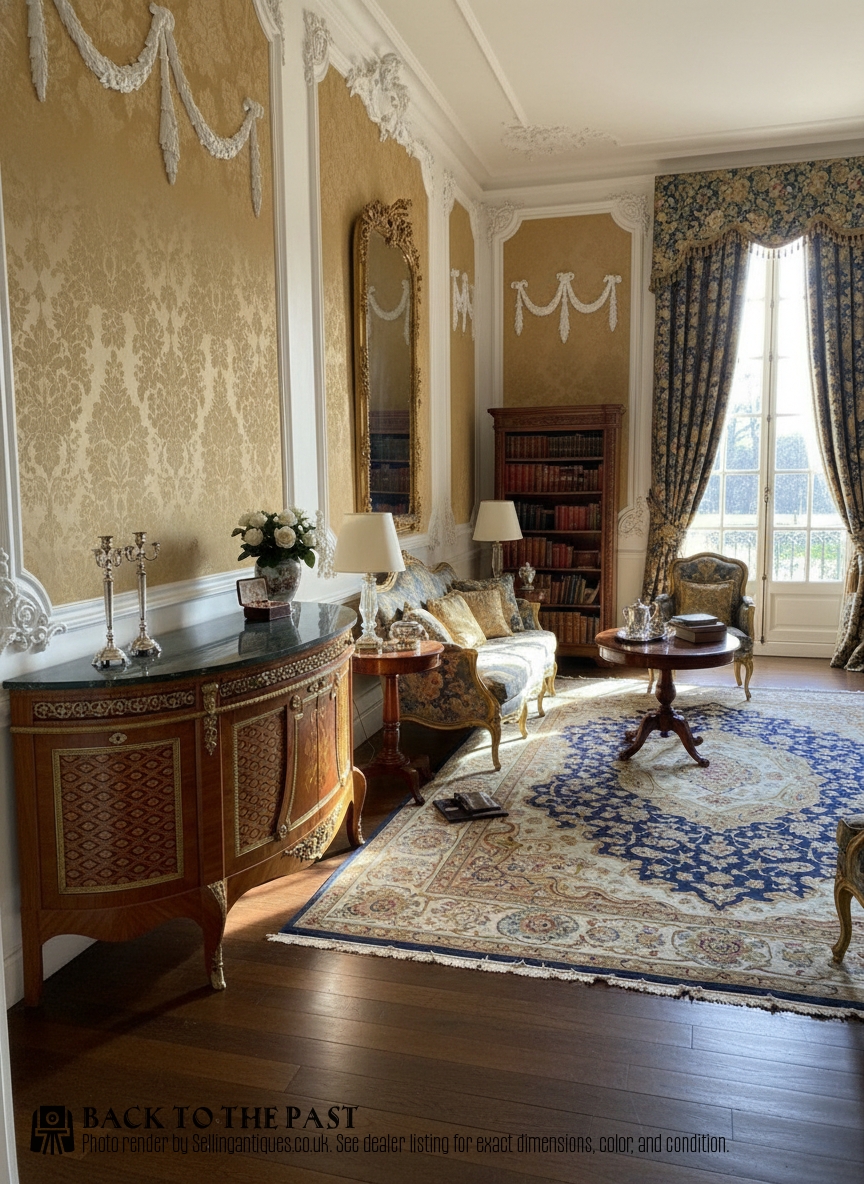
Marquetry Marble Top Cabinet
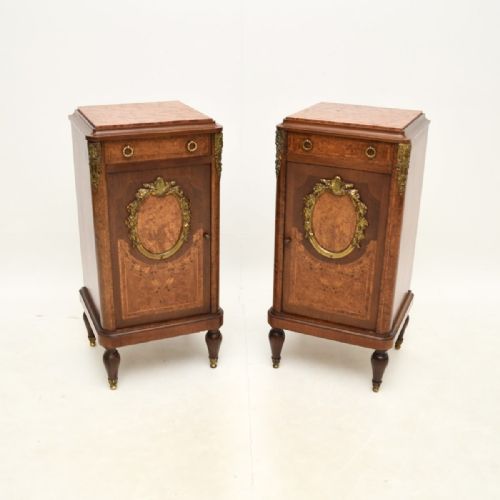
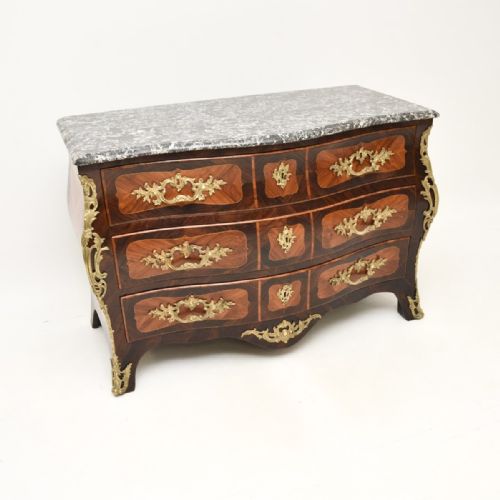
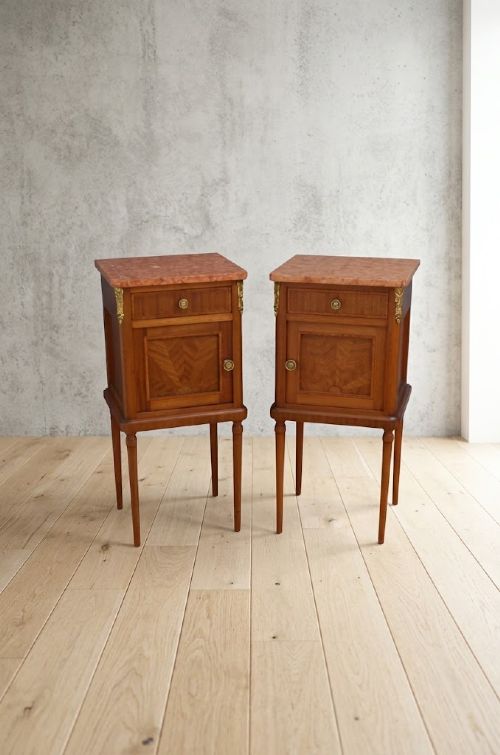
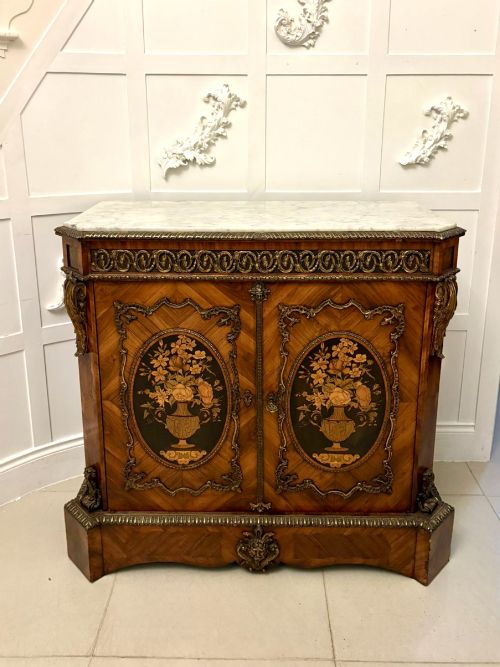
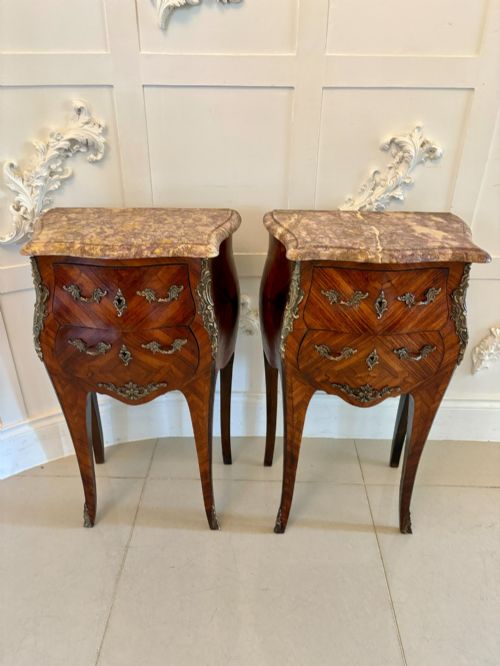
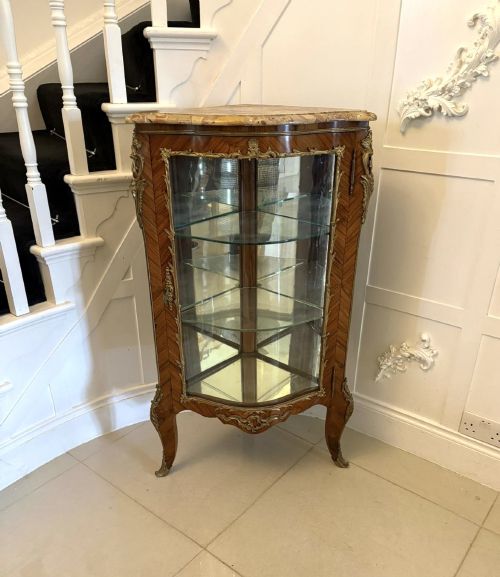
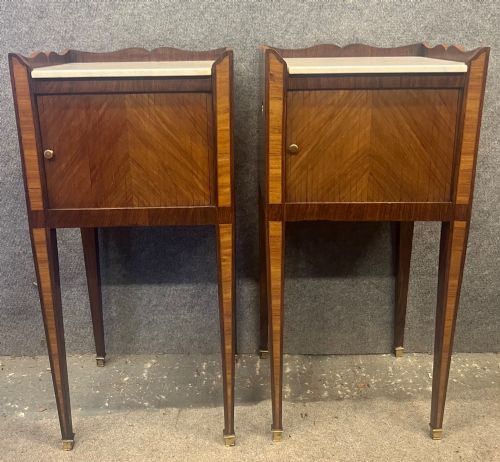
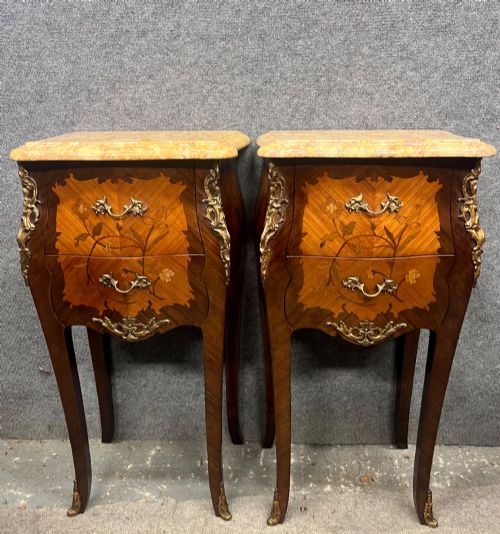
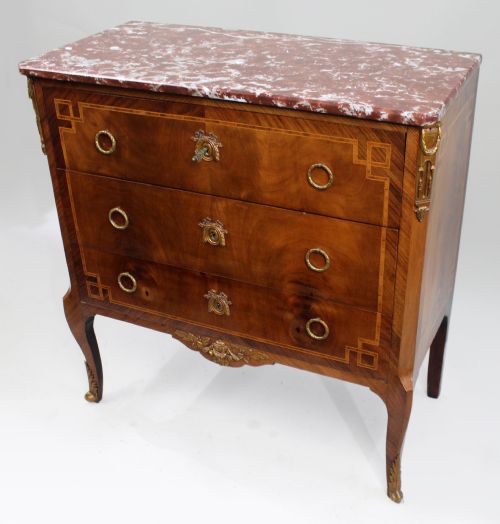
A marquetry marble top cabinet combines fitted stone tops with decorative wood veneer patterns, taking forms such as bedside tables, commodes, sideboards, and display cabinets.
The pieces appearing on this page span the nineteenth century through the early twentieth century, drawing heavily on Louis XV and Louis XVI revival aesthetics.
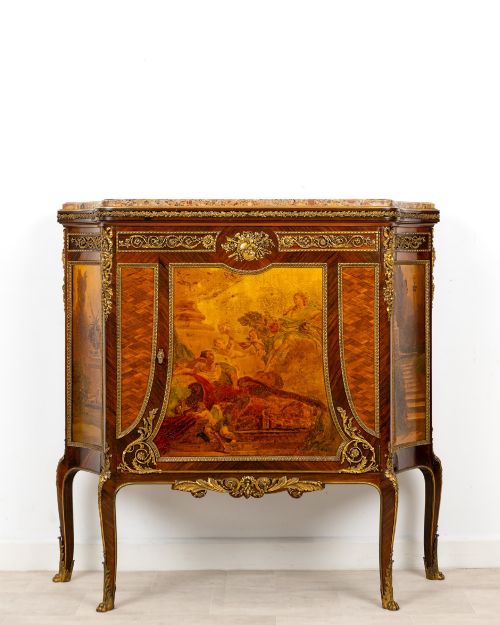
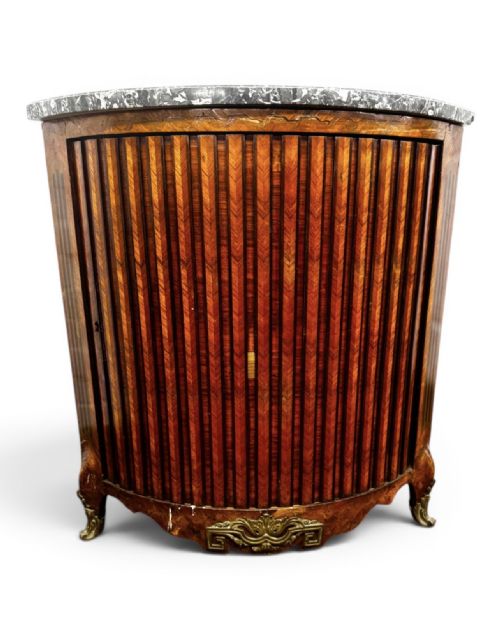
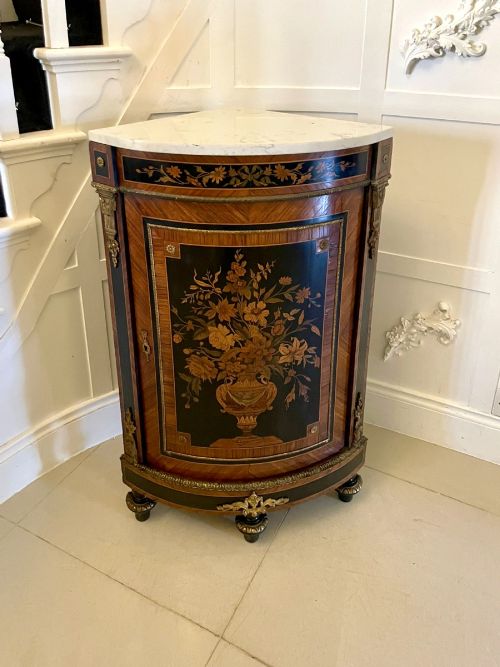
Continental workshops, particularly French makers, produced the majority of these items, utilising serpentine fronts, demi-lune shapes, and corner configurations.
How They Were Made
Craftsmen built carcases from timbers like walnut, mahogany, and kingwood, laying down intricate floral or geometric veneers across the exterior surfaces.
Heavy marble slabs, sometimes featuring rouge or other coloured varieties, were shaped to fit precisely over the timber frame of each commode or bedside chest.
Gilt bronze and ormolu mounts were cast and chased to edge the cabinetry, protecting corners and accentuating the structural lines of the revival styles.
Marquetry Marble Top Cabinet Retail Price Guide 2026
Typical asking prices for marquetry marble top cabinet among the pieces listed under this phrase on Sellingantiques today, from the lower quarter to the upper quarter. They describe what is for sale here now, not the wider market.
Listings feature items from the eighteenth, nineteenth, and twentieth centuries, incorporating kingwood, walnut, rosewood, and ormolu mounts.
What Varies in Quality
The precision and complexity of the wood inlay set apart standard furniture from exhibition pieces, where varied timbers create detailed pictorial or floral motifs.
The weight, thickness, and figure of the marble top indicate the grade of the piece, alongside the crispness and finish of the cast ormolu mounts.
Structural integrity, including the smooth operation of drawers and the original fit of doors on sideboards and vitrines, marks the distinction in tier.
Jacques Bircklé·François Linke·Edward Holmes Baldock
The Marquetry Marble Top Cabinet Glossary
- Marquetry
- The art of applying decorative pieces of veneer to a structural structure to form mosaic designs. It differs from parquetry through its pictorial or floral patterns rather than geometric tiles.
- Ormolu
- Gilt bronze mounts applied to furniture edges and feet for ornamentation and protection. This technique involves coating cast bronze with a gold amalgam.
- Demi-lune
- A half-moon shape characteristic of commodes and side cabinets designed to sit flush against a wall. This curved form requires specialised veneer shaping.
- Commodes
- Low chests of drawers standing on legs, popular in French revival furniture. They typically carry the heavy marble slabs found on these cabinets.
- Vernis Martin
- A simulated Japanese lacquer technique used on eighteenth-century and revival furniture panels. It provides a glossy, translucent finish over decorated grounds.
Marquetry Marble Top Cabinet: Frequently Asked Questions
How do I clean the marble top?
Wipe the stone surface using a soft cloth dampened with warm water and mild soap, avoiding acidic cleaners that etch the polish.
Dry the marble thoroughly afterwards to prevent water spots and maintain the natural finish of the stone.
What rooms suit these cabinets?
Bedside tables and small chests fit comfortably into bedrooms as lamp tables, while larger commodes and vitrines serve as focal points in living spaces.
The combination of wood veneer and stone allows them to function alongside both antique and modern interior schemes.
How are Louis XV and Louis XVI styles told apart?
Louis XV pieces lean towards asymmetrical curves, cabriole legs, and elaborate rococo ormolu mounts that soften the overall rectangular silhouette.
Louis XVI furniture introduces neoclassical straight lines, fluted columns, and symmetrical geometric marquetry patterns reflecting architectural restraint.
Are the marble tops fixed in place?
Most marble slabs rest directly upon the wooden carcase under their own weight, allowing them to be lifted off for safer transport and relocation.
Heavier sideboards and commodes may secure the stone more firmly, but gravity remains the primary method of retention.