

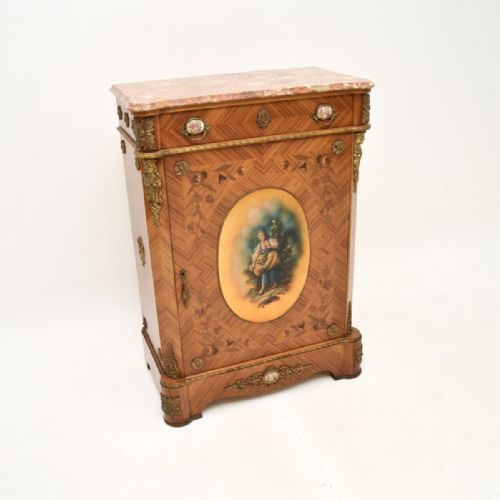
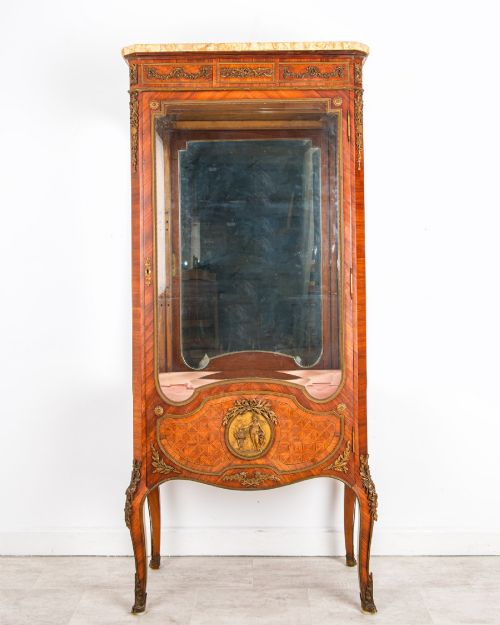
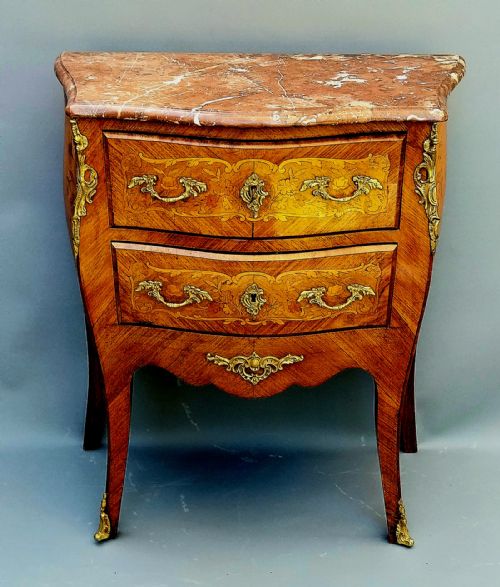
Kingwood Marble Top Cabinet
A kingwood marble top cabinet brings together figured wood, cast bronze mounts and heavy stone to anchor a traditional room.
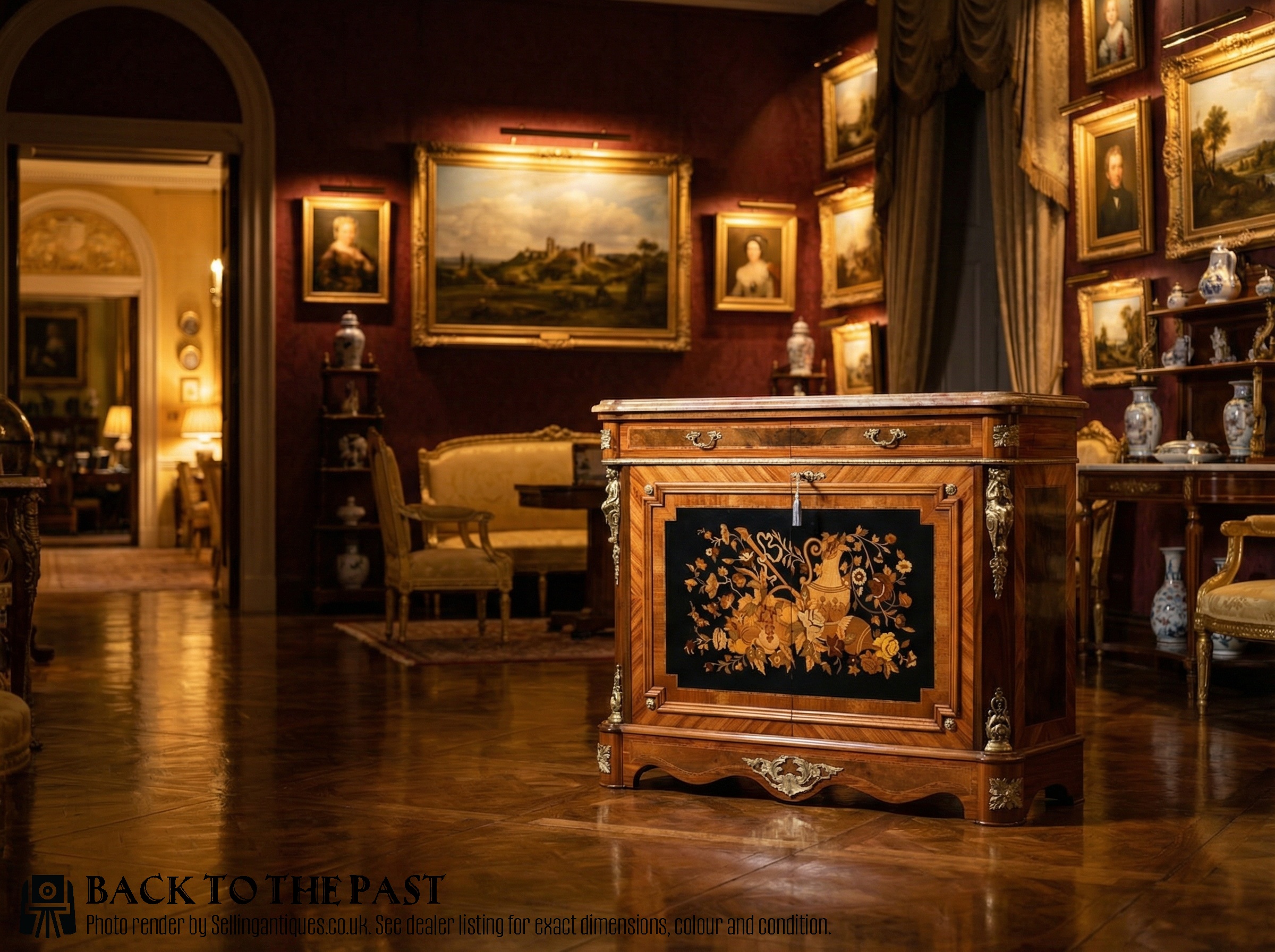
Kingwood Marble Top Cabinet
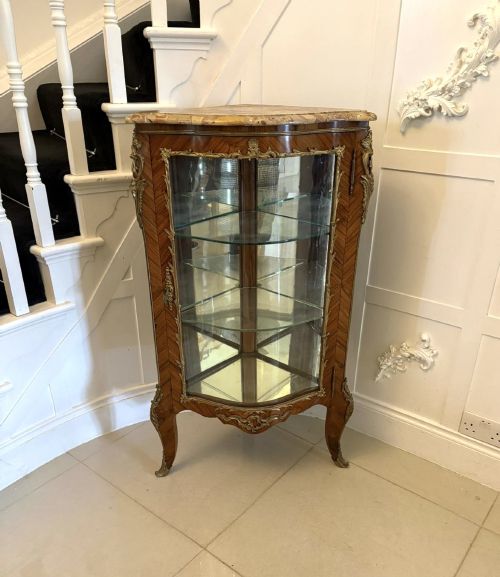
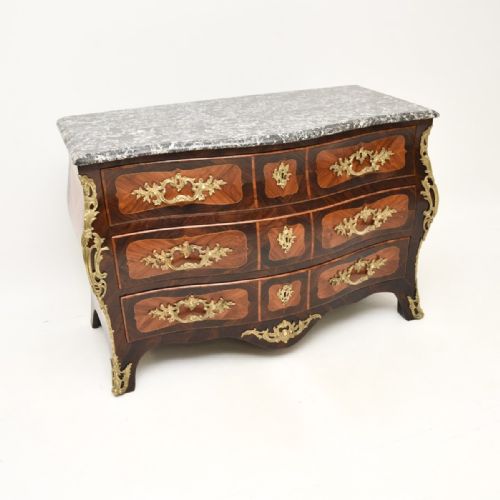
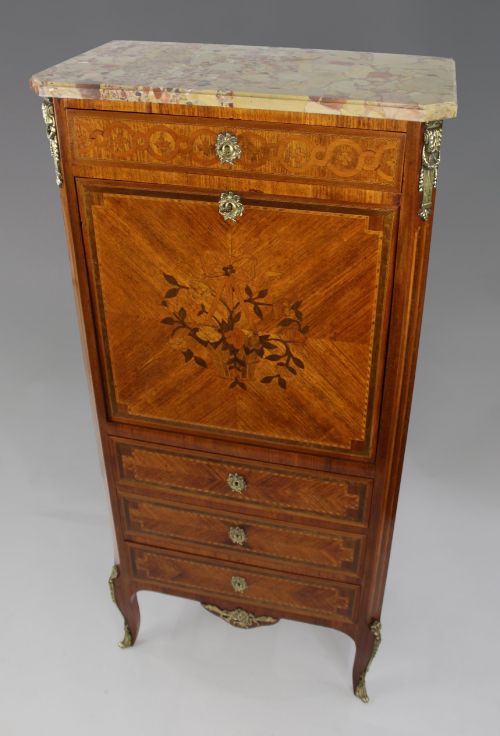
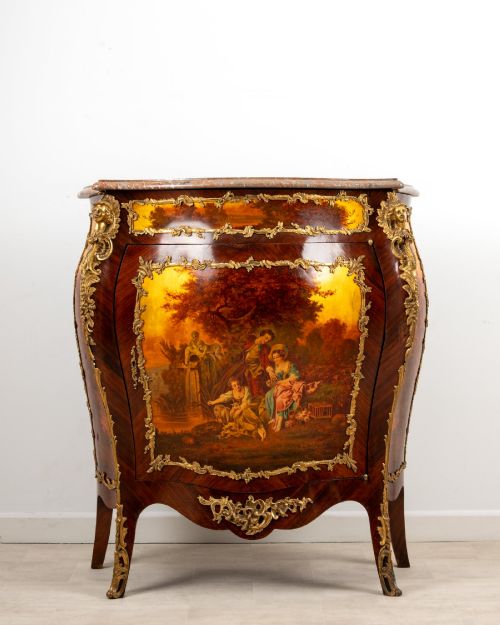
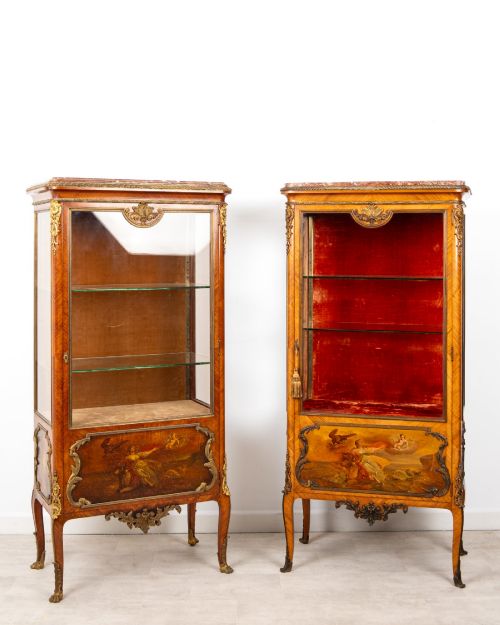
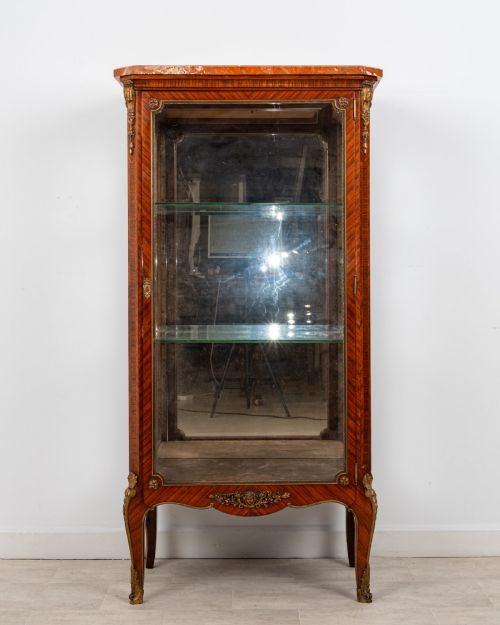
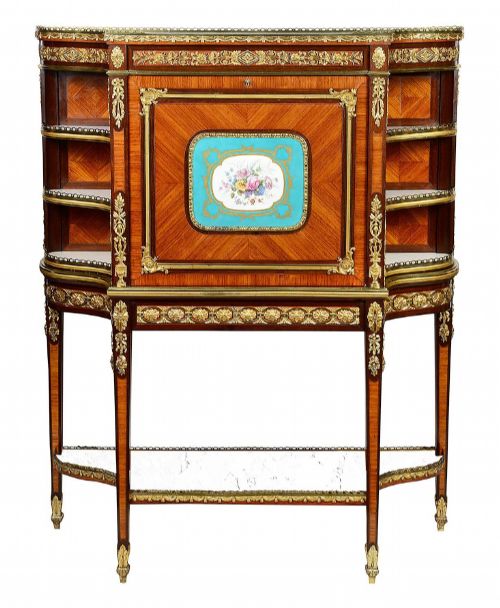
When you examine a kingwood marble top cabinet, you look at a piece of furniture built to display wealth through imported timber and polished stone. These forms span bedside tables, commodes, vitrines and larger side cabinets designed for nineteenth-century reception rooms.
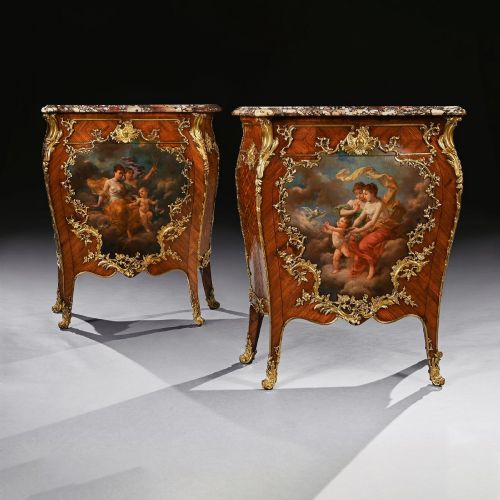
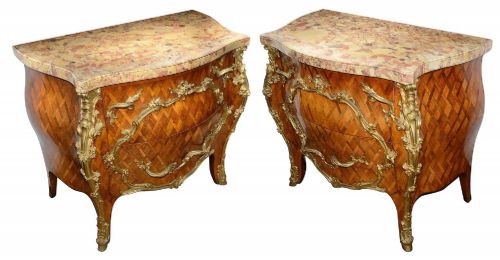
The nineteenth-century revival periods dominate this selection, particularly pieces drawing on Louis XV and Louis XVI designs. Makers utilised curved serpentine fronts, bombé shapes and marquetry patterns to echo earlier royal French workshops.
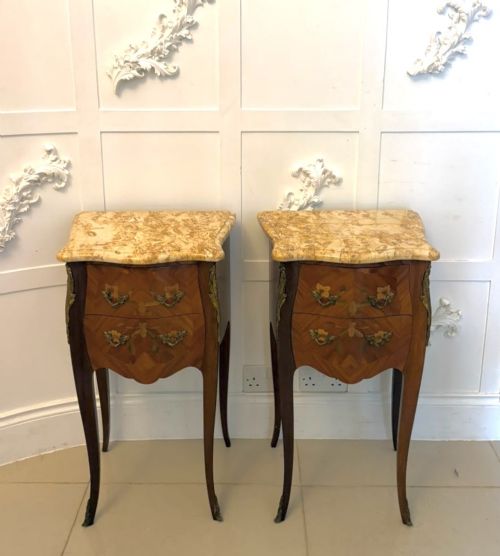
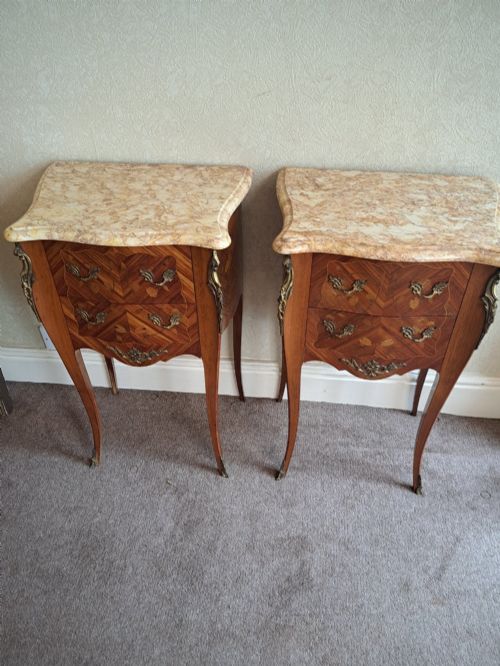
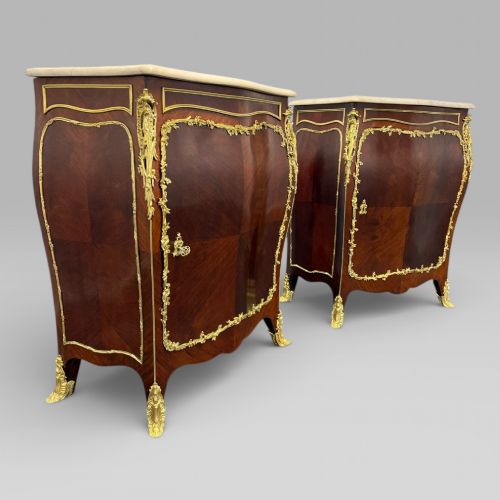
On this page, compact bedside cabinets and bedside tables appear frequently alongside tall display cabinets and side cupboards. Each object pairs the distinct violet-brown grain of kingwood with a fitted slab of marble.
Construction and Materials
Cabinetmakers constructed these frames using native carcases overlaid with sliced veneers of kingwood, arranged to display symmetrical grain patterns. Marquetry panels incorporate floral motifs or geometric parquetry using contrasting woods.
Heavy marble slabs, shaped to follow the serpentine or bow contours of the carcase, sit unattached or bedded onto the timber top. Cast ormolu and gilt bronze mounts, secured with brass screws, edge the corners, aprons and key escutcheons.
Many bedside cabinets arrived in matching pairs, though centuries of redecorating frequently separated them across different rooms.
Markers of Quality
The distinction between standard production and top-tier workshop output lies in the crispness of the gilt bronze chasing and the complexity of the wood marquetry. Master makers employed heavier mounts with deeper relief and selected veneers with intense, variegated grain.
Interior execution separates fine examples from ordinary ones, revealing itself in dove-tailed drawer linings, finished carcase backs and closely fitted doors. The thickness and geological variation of the marble top also indicate the original investment in the piece.
Jacques Bircklé·E. Kahn·François Linke·Blake London·G. Durand·Maison Millet Paris·Paul Sormani·Victor Raulin
The Kingwood Marble Top Cabinet Glossary
- Kingwood
- A dense Brazilian timber featuring dark violet-brown tones with lighter golden streaks. It was sliced into thin veneers for decorative furniture panels.
- Ormolu
- Gilt bronze mounts cast and chased by hand to ornament furniture corners and frames. This technique provides metallic contrast against dark timber.
- Vernis Martin
- A European imitation of East Asian lacquer work using layered varnish. It appears on painted panels depicting pastoral or floral scenes.
- Bombe
- A swollen, convex furniture shape curving outward on the front and sides. This form requires skilled veneer bending and joinery.
- Marquetry
- Inlaid wood veneers assembled to create pictorial or geometric designs. Craftsmen fit contrasting timbers together within the surface.
Kingwood Marble Top Cabinet: Frequently Asked Questions
How were these cabinets used originally?
These cabinets served functional storage roles in grand reception rooms, bedrooms and boudoirs. Commodes and side cabinets held linens or papers, while vitrines displayed porcelain and small objects.
Bedside versions provided enclosed storage for night lamps and personal items beneath protective stone surfaces. The marble top offered a practical, water-resistant station for washing sets or drinks.
How do I identify Louis XV revival styles?
Louis XV revival pieces rely on asymmetric curves, cabriole legs and naturalistic floral marquetry. The lines avoid straight edges in favour of sweeping serpentine fronts and bombé sides.
Ormolu mounts on these pieces typically feature acanthus leaves and C-scrolls. The overall aesthetic mimics eighteenth-century Rococo extravagance produced during nineteenth-century revivals.
Are the marble tops original?
Original marble tops match the exact serpentine, bow or rectangular profile of the wooden carcase beneath. They often show weight-bearing thickness and edge profiles appropriate to the manufacturing period.
Replacements usually present cleaner edges or stone variations inconsistent with nineteenth-century French quarry output. Look for matching wear patterns between the stone underside and the wood frame.
How do I care for kingwood furniture?
Protect kingwood surfaces from direct sunlight and extreme humidity fluctuations to prevent veneer lifting. Dust regularly with a soft, dry cloth without applying modern silicone sprays.
Clean the marble top using a damp cloth and neutral soap, avoiding acidic cleaners that etch the stone. Wax the timber sparingly to maintain the polish of the grain.