

French Louis XV Cabinet
A french louis xv cabinet brings fluid curves, rich marquetry, and classical gilt mounts into a room.
French Louis XV Cabinet
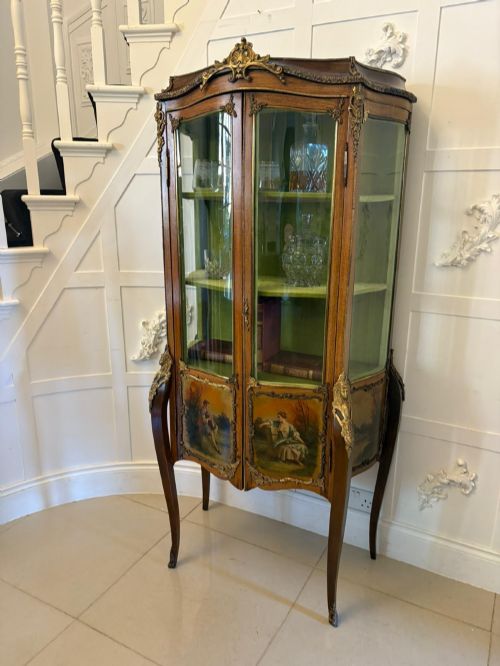
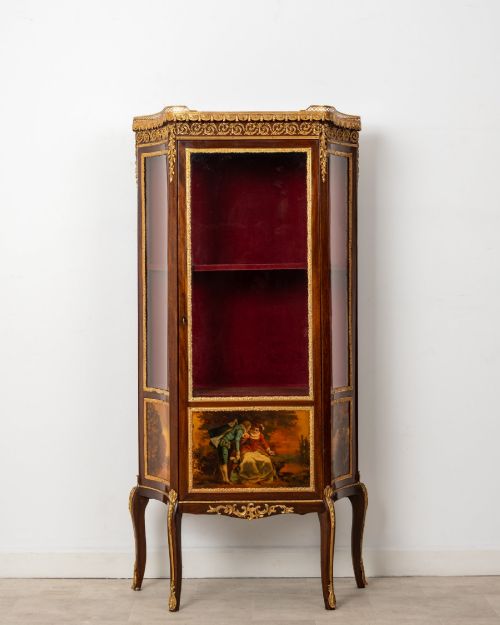
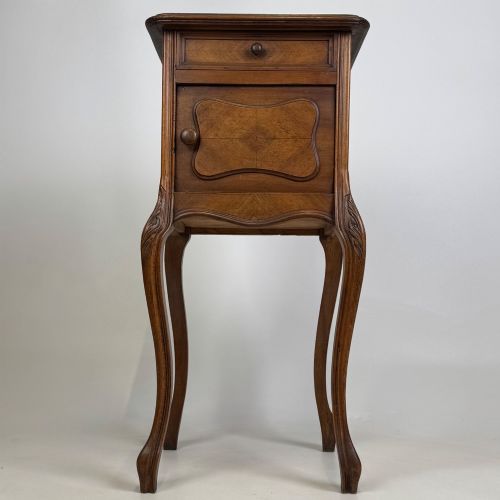
A french louis xv cabinet encompasses a broad variety of forms designed for storage and display, originating from mid-eighteenth-century models as well as later revivals. Buyers searching this phrase most frequently encounter nineteenth-century and early twentieth-century interpretations, including vitrines, commodes, and bedside cabinets.
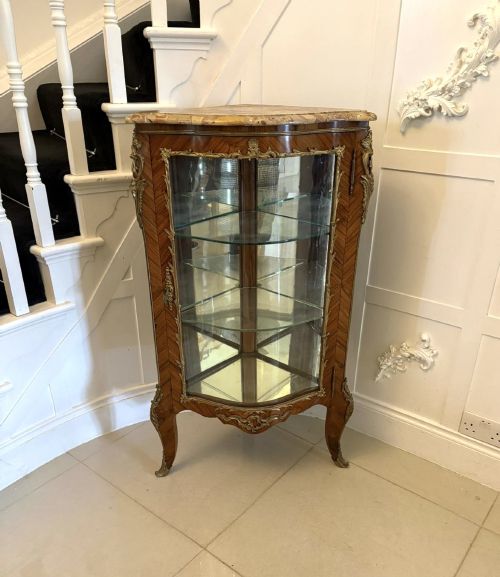
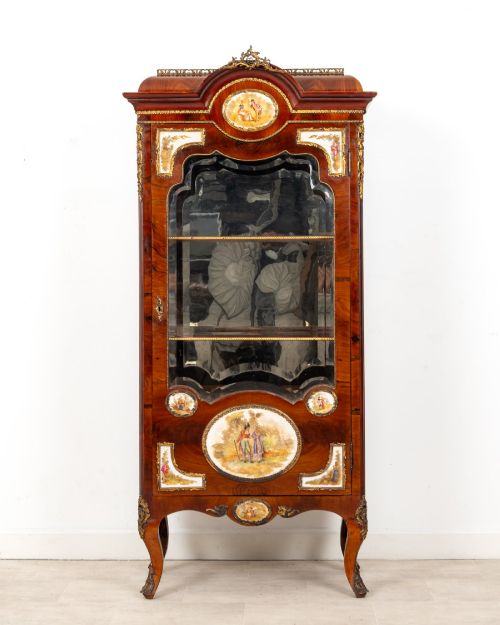
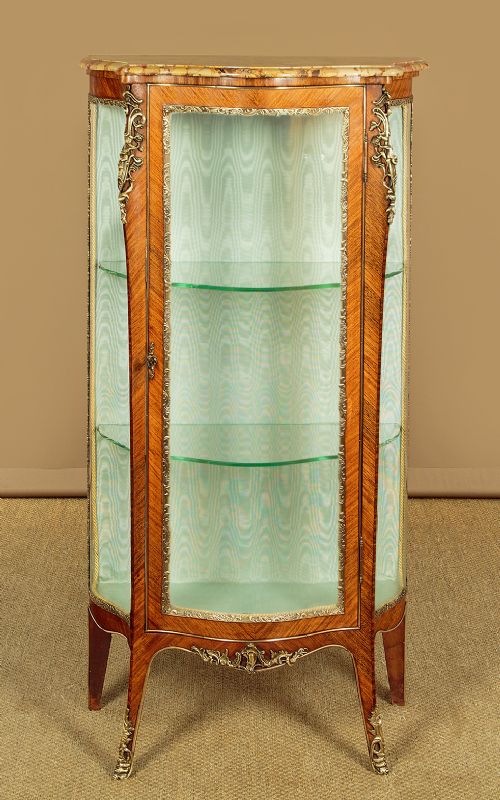
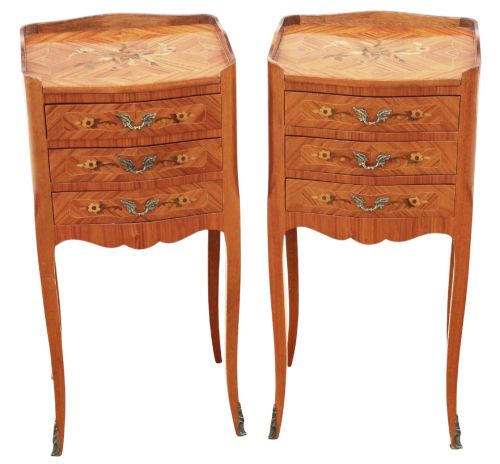
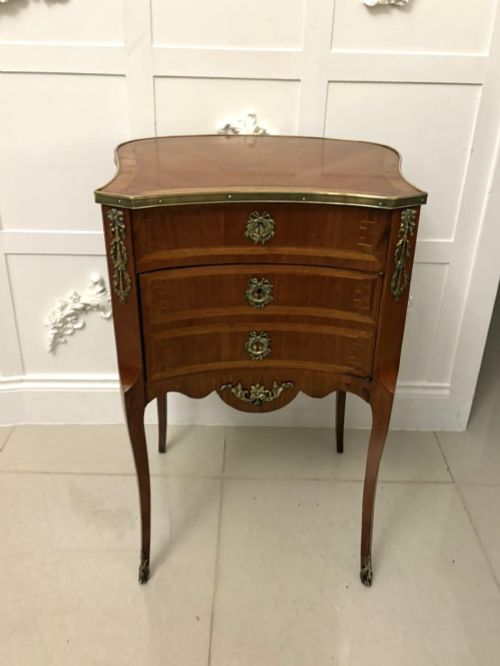
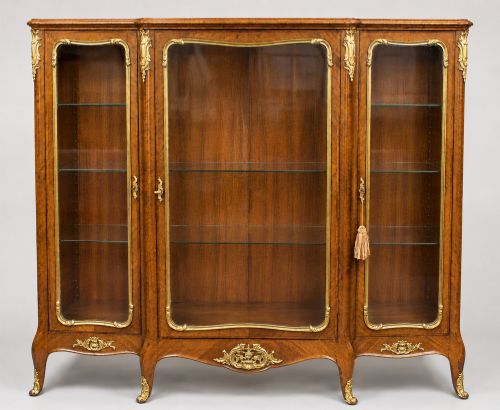
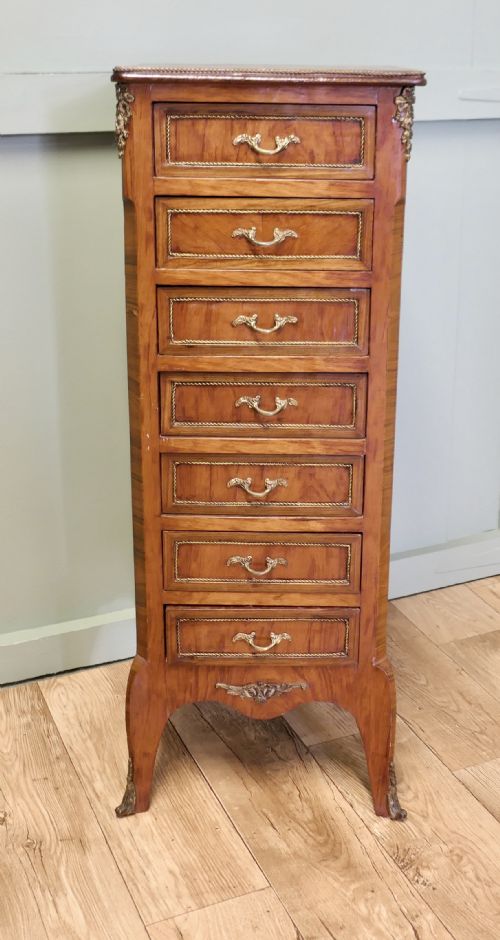
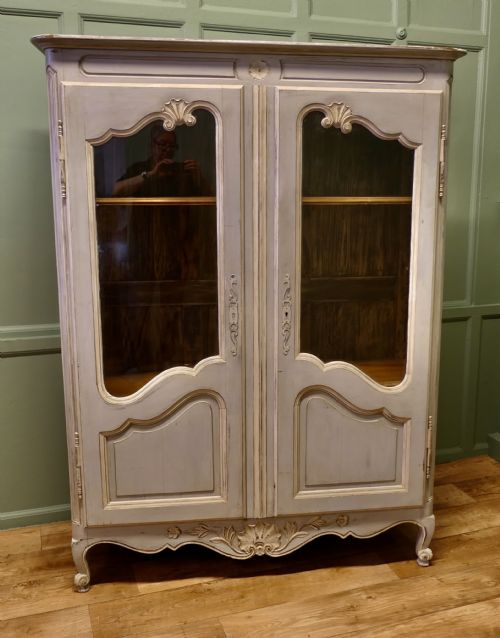
The selection ranges from tall display pieces with glass panels to compact bedside tables and serpentine chests of drawers. Common timber frameworks include kingwood, walnut, and mahogany, often enhanced by decorative surface techniques.
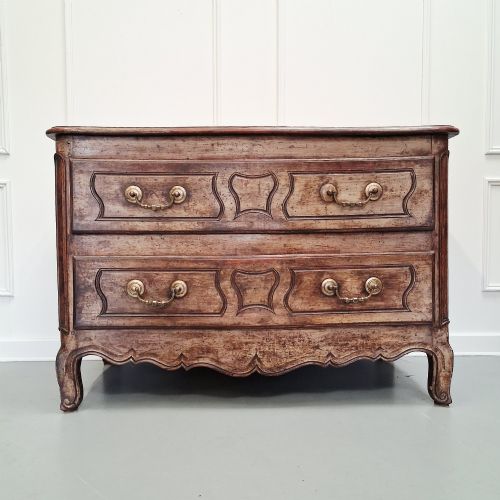
Many examples adhere closely to the rococo aesthetic characterised by asymmetrical lines and organic motifs. Others adopt provincial expressions using simpler oak or walnut construction without elaborate metal ornamentation.
What varies in quality
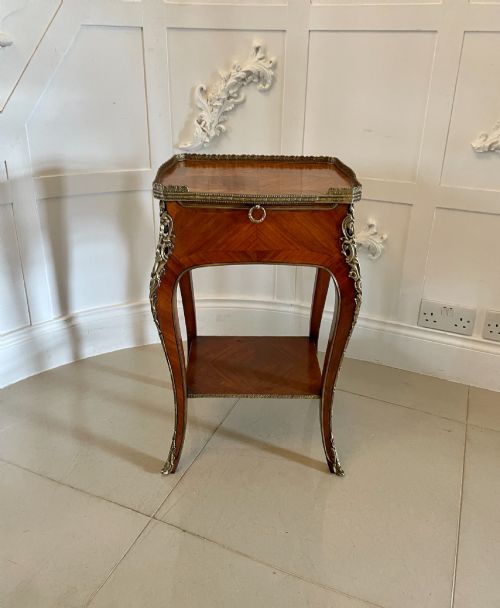
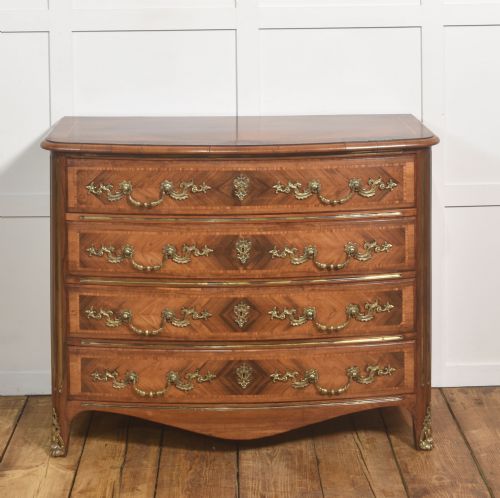
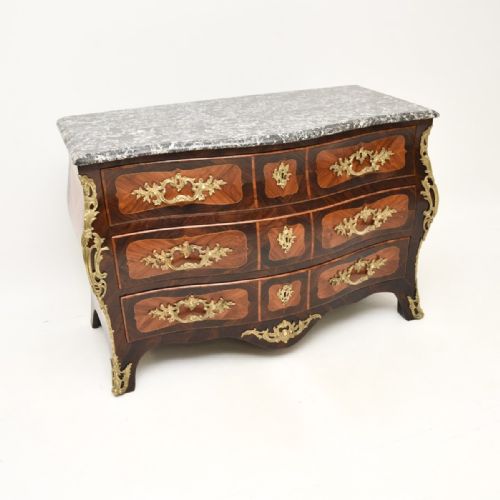
The refinement of the cast bronze or ormolu mounts distinguishes finer examples, where crisp chasing reveals sharp botanical or scroll details rather than soft, blurred casting. The precision of the marquetry inlay, using tightly fitted timber grains without visible filler, indicates the maker's skill.
Structural integrity depends on the seasoning of the primary and secondary woods, preventing warping across large expanses like commode sides or tall vitrine doors. Original marble tops shaped specifically to the carcase edge hold greater architectural harmony than later replacements.
Some diminutive bedside cabinets measure barely knee-high, offering miniature rococo grandeur for modest spaces.
Jacques Bircklé
The French Louis XV Cabinet Glossary
- Ormolu
- Gilded bronze used for decorative mounts and sabots on fine furniture. It was cast and then hand-chased to create sharp decorative details.
- Marquetry
- The art of applying small pieces of veneer to a structure to form decorative patterns. Cabinetmakers used various coloured woods to depict floral scenes and geometric designs.
- Vitrine
- A glass-panelled display cabinet intended for porcelain and precious objects. These pieces often feature glazed sides and doors alongside mirrored interiors.
- Serpentine
- A curved line that is convex in the middle and concave at the sides, creating a flowing movement across the front of a chest or commode.
- Vernis Martin
- A type of simulated Japanese lacquer developed in France during the eighteenth century. It employs multiple layers of translucent varnish to achieve a glossy finish over painted pastoral scenes.
French Louis XV Cabinet: Frequently Asked Questions
What is a french louis xv cabinet?
A french louis xv cabinet is a decorative storage or display piece defined by curved lines, asymmetrical rococo styling, and rich wood veneers. These items range from large glazed vitrines to small bedside commodes.
Originating from mid-eighteenth-century design principles, most surviving examples date from the nineteenth and early twentieth centuries when revival styles flourished across Europe.
How do I tell original eighteenth-century pieces from later revivals?
Distinguishing period pieces relies on examining construction methods, timber shrinkage, and the wear patterns on internal secondary woods. Eighteenth-century items show hand-cut joinery and aged patination unique to early workshops.
Most options encountered on the market belong to nineteenth-century and early twentieth-century revival periods, which reproduced the classic forms with high technical proficiency.
Where were these cabinets used in a home?
Bedside cabinets and small chests served private chambers, providing enclosed space for night-time essentials beneath marble surfaces. Larger vitrines and side cabinets stood in salons or dining rooms to display porcelain and silver.
Desks and escritoires offered dedicated writing surfaces fitted with small drawers and compartments for correspondence.
How should I care for marble and veneer?
Marble tops require simple cleaning with a damp cloth, avoiding acidic substances that can etch polished stone surfaces. Timber veneers and ormolu mounts benefit from gentle dusting and occasional application of appropriate furniture wax.
Keeping wooden cabinets away from direct heat sources and dramatic humidity shifts prevents timber movement and veneer lifting.