
Louis XV Marble Chest
These pieces combine figured marble tops with timber commodes and bedside cabinets, originating in 18th-century France and later revivals.
Louis XV Marble Chest
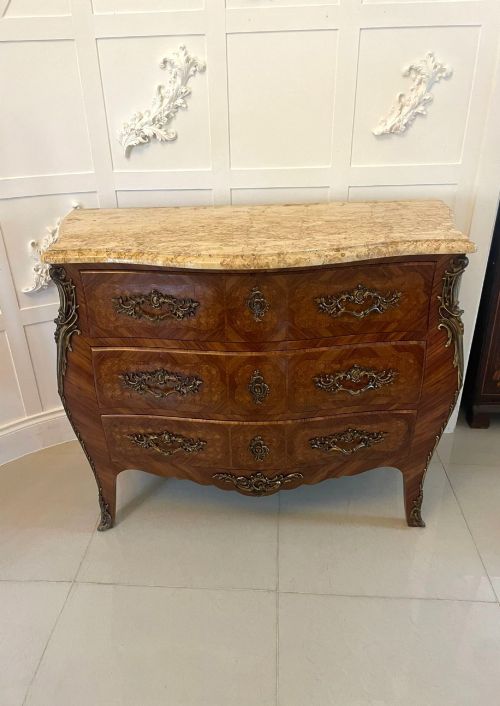
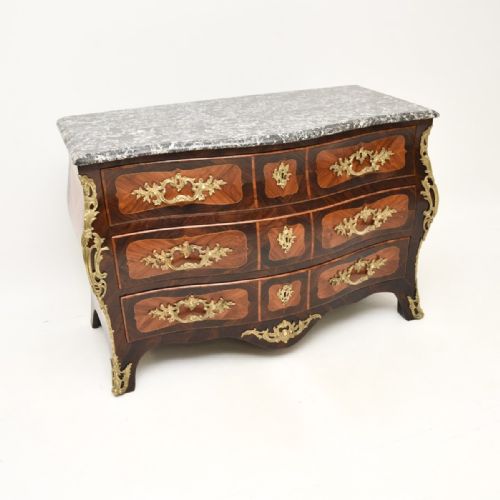
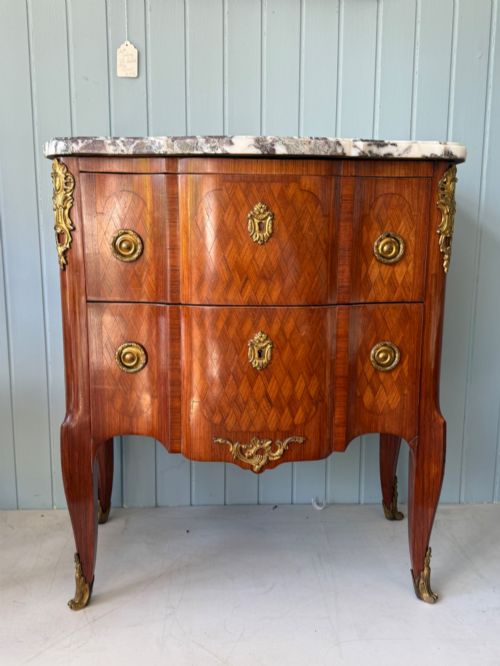
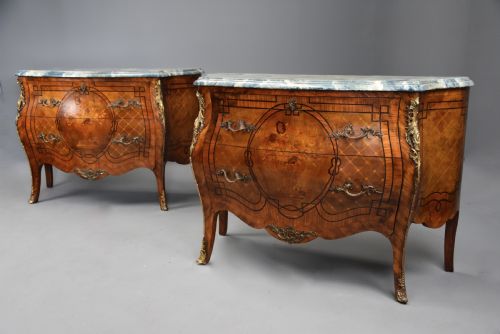
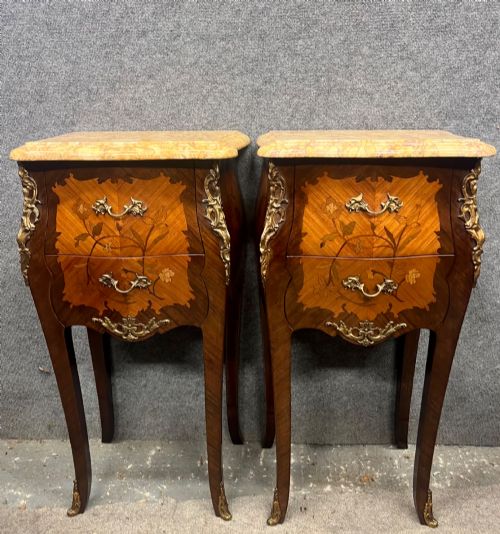
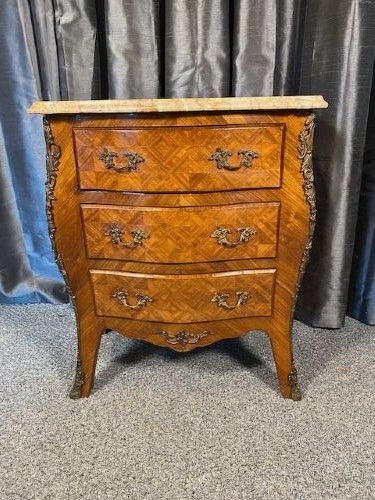
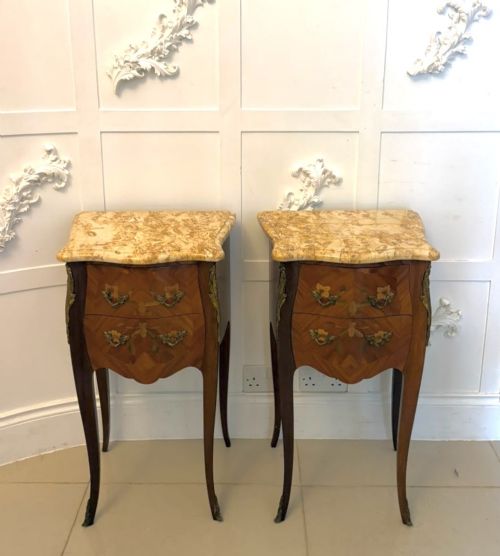
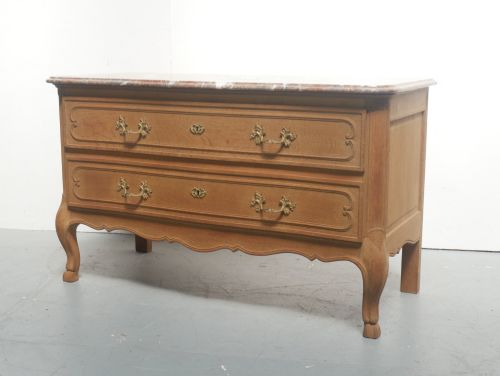
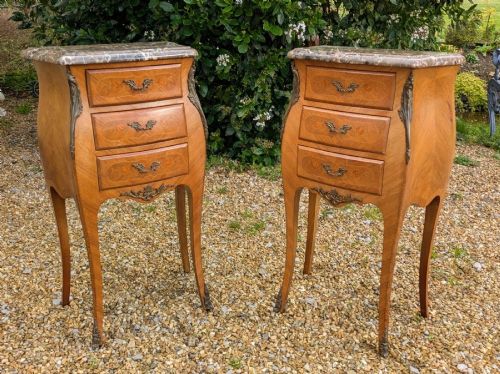
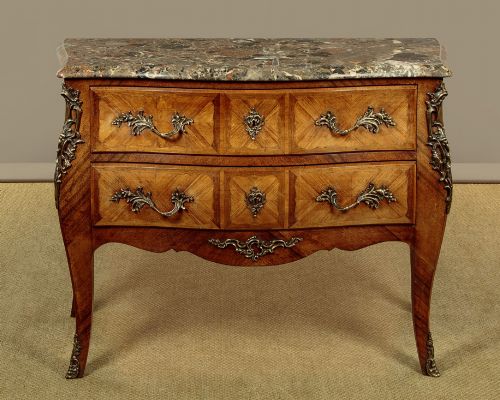
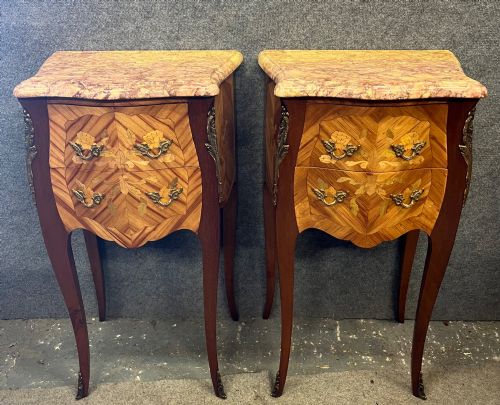
A louis xv marble chest primarily takes the form of a commode, bedside cabinet, or occasional chest of drawers. The listings span the 18th century through to the 1930s, encompassing authentic period pieces and subsequent Louis XV revival interpretations.
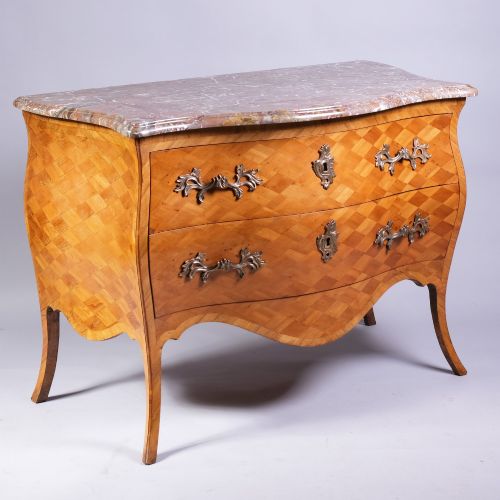
The characteristic serpentine and bombé silhouettes define the category, alongside smaller bedside tables and washstands. Cabinets frequently feature marquetry, parquetry, or lacquered surfaces supporting shaped stone tops.
Materials and construction
Cabinetmakers constructed carcases from oak or walnut, applying veneers of kingwood, rosewood, and mahogany in intricate marquetry and parquetry patterns. Tops consist of heavy slabs of shaped marble, frequently matching the serpentine curves of the wooden frame below.
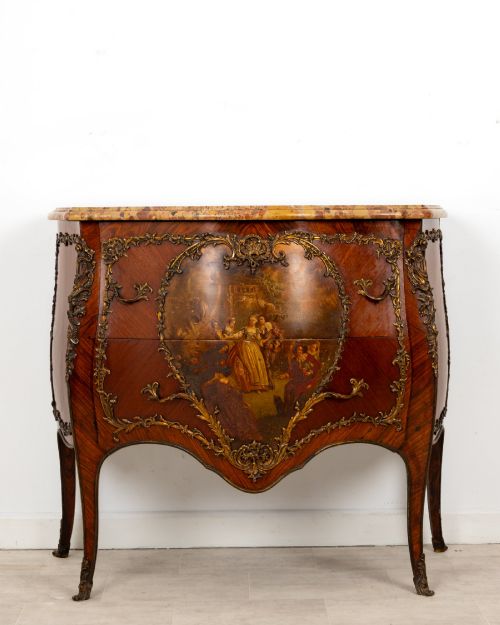
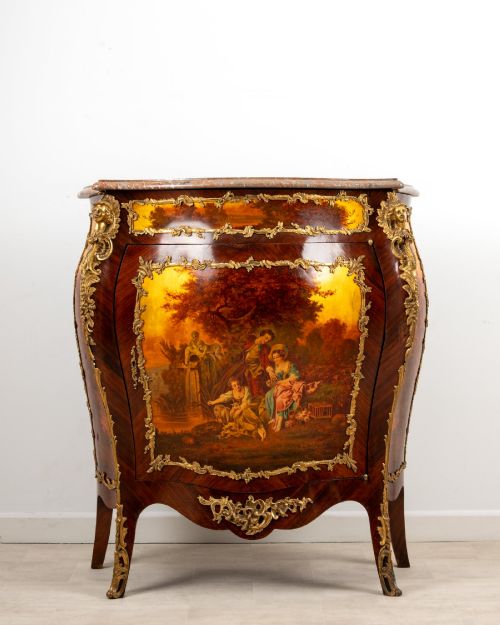
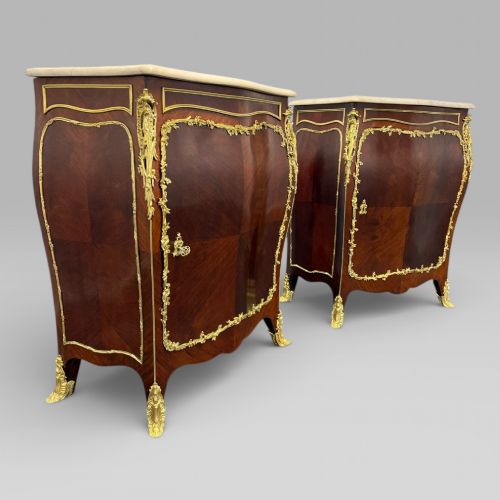
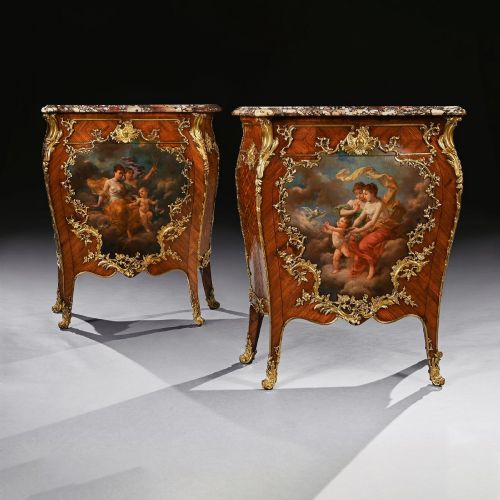
Mounts in ormolu, gilt-bronze, and brass accent the corners, handles, and apron, cast and chased to complement the organic lines of the woodwork. Vernis Martin finishes and hand-painted Chinoiserie lacquer appear on selected revival and turn-of-the-century examples.
Several chests hide their drawers behind sweeping lacquer panels, pretending to be solid cabinets until someone pulls.
Assessing craftsmanship
The distinction between tiers rests upon the precision of the veneer work and the crispness of the bronze or ormolu mounts. Finer pieces demonstrate seamless alignment between the stone top and the timber carcase, with hand-chiseled mounts secured firmly to the structure.
Earlier 18th-century originals display hand-cut dovetailing and integrated structural wear, whereas 19th-century revival pieces rely on heavy, machine-milled timber frames matched with deeply figured exotic veneers.
Jacques Bircklé·E. Kahn
The Louis XV Marble Chest Glossary
- Commode
- A low chest of drawers, typically featuring multiple tiers and prominent decorative mounts. This term forms the principal descriptor for French case furniture of this scale.
- Bombé
- A swelling, outward-curving contour in the sides and front of a chest. This undulating form requires advanced veneer shaping techniques.
- Marquetry
- Decorative patterns formed by inserting thin pieces of wood, shell, or ivory into a veneered surface. Craftsmen arrange contrasting timbers to create floral or geometric compositions.
- Ormolu
- Gilt bronze ornamentation applied to the mounts and feet of furniture. The technique involves fusing gold to a copper and zinc alloy.
- Parquetry
- Geometric wood inlay arranged in repetitive patterns such as cubes or chequers. This technique contrasts with pictorial marquetry by focusing on strict symmetrical lines.
Louis XV Marble Chest: Frequently Asked Questions
How do I spot a reproduction?
Examine the interior drawer construction and the backboards for tool marks and timber ageing consistent with the stated era. Revival pieces from the 19th and 20th centuries often use standardised machine-cut joints rather than hand-cut dovetails.
Check the marble top for thickness, edge profiling, and natural veining that matches historical quarry sources rather than modern composite stone.
Can these fit in modern rooms?
The compact footprint of bedside cabinets and smaller commodes makes them adaptable as lamp tables or bedside storage. Their marble surfaces provide a durable resting place for everyday objects.
Ensure you measure the depth of bombé shapes, as the curving sides extend further than the flat top dimensions indicate.
How do I care for marble?
Clean the stone surface using a damp cloth and mild, pH-neutral soap, avoiding acidic solutions like vinegar or lemon juice that etch polished calcium carbonate. Use coasters under drinks to prevent liquid rings from soaking into older, unsealed marble.
Treat the surrounding wood veneers with traditional paste wax rather than silicone sprays to maintain the natural sheen of the timber.
Are the marble tops original?
Original marble tops generally fit the exact serpentine or contour profile of the wooden carcase without overhang gaps. Look for uniform ageing, minor surface scratches, and edge wear that matches the age of the base cabinet.
Replacement tops often display slightly different thickness measurements or stone types compared to standard regional practices of the period.