
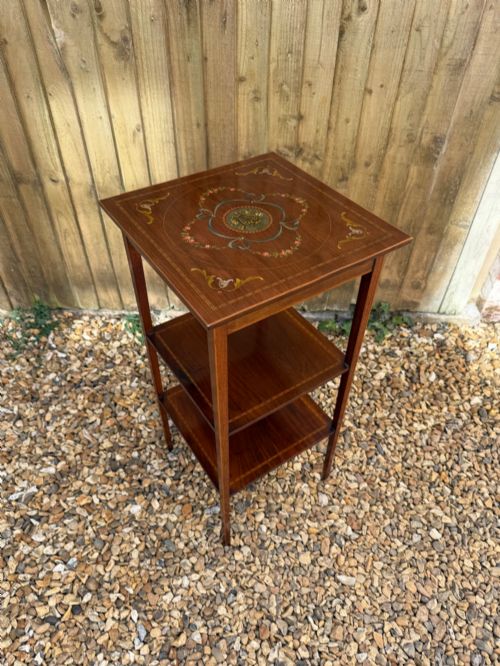
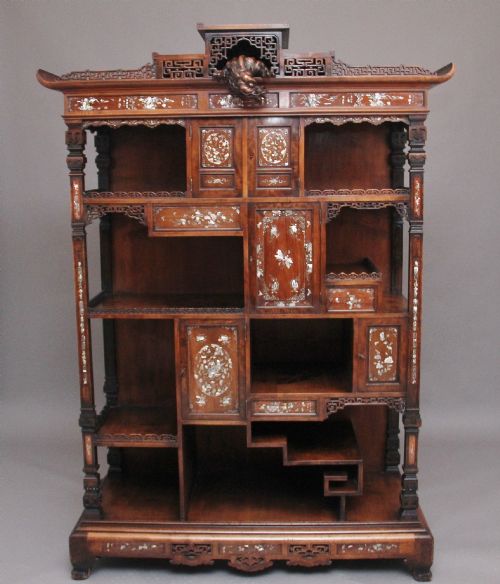
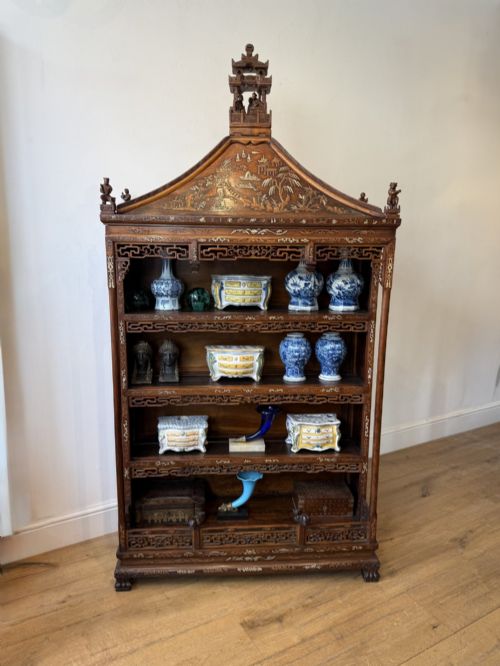
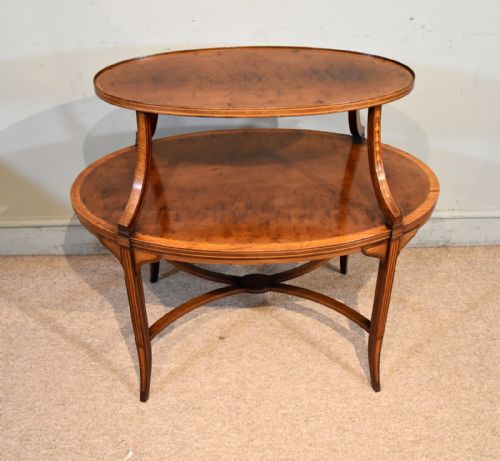


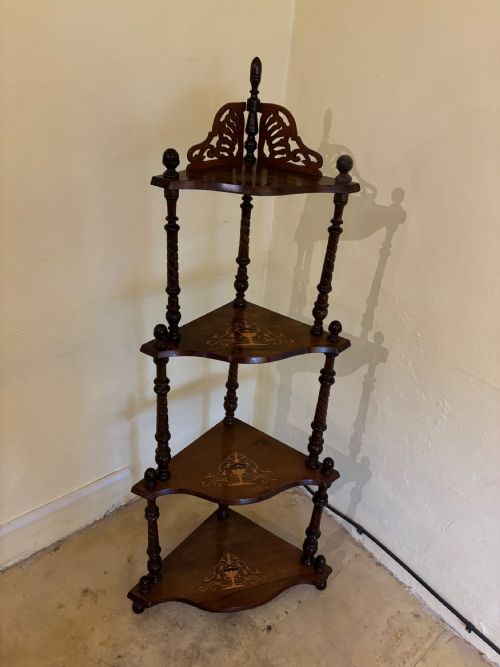

Inlaid Wood Etagere
An inlaid wood etagere is a multi-tiered display piece that brings patterned surfaces and elevated display space to a room.
Inlaid Wood Etagere
An inlaid wood etagere provides open tiers for displaying small objects, books, or decorative items within domestic spaces. These pieces appear across Victorian and Edwardian periods, taking the form of freestanding multi-tier tables, corner stands, and wall-hung shelves.
The most common examples encountered on this page date from the nineteenth century to the early twentieth century. They utilise woods such as mahogany, walnut, rosewood, and satinwood, often enhanced with marquetry or contrasting timber bands.
How They Were Made
Cabinetmakers constructed these frames using dense hardwoods like mahogany and walnut as a stable carcass. Surfaces received decorative veneers of satinwood or rosewood, cut and fitted into intricate marquetry patterns across shelves and tabletops.
Many examples incorporate cast brass galleries, ormolu mounts, or gilt metal details to edge the tiers and secure displayed items. Joinery relied on traditional mortise and tenon methods to support multiple open levels without rigidity loss.
Makers occasionally built these multi-tier stands with removable tray tops so tea could travel straight from the kitchen to the parlour.
What Varies in Quality
The distinction between standard production and top-tier workshop output lies in the precision of the marquetry inlay and the choice of cabinet timbers. Superior examples deploy finely figured burr walnut, vibrant satinwood, and detailed floral or geometric pictorial marquetry.
Construction details also separate workshop grades, particularly the weight of the brass mounts, the crispness of turned supports, and the structural integrity of multi-tiered corner units.
Gabriel-Frederic Viardot·Edwards & Roberts
The Inlaid Wood Etagere Glossary
- Etagere
- A piece of furniture consisting of a set of open shelves for displaying small ornaments. The form gained popularity in France before spreading to British cabinetmaking.
- Marquetry
- The art of applying pieces of veneer to a structure to form decorative designs and pictures. Craftsmen cut contrasting woods together to ensure tight joints.
- Satinwood
- A durable, lustrous timber with a golden-yellow sheen used extensively for fine veneer and inlay work. It contrasts sharply with darker woods like mahogany and rosewood.
- Whatnot
- A nineteenth-century term for an open multi-tiered piece of furniture designed for storage and display. The names etagere and whatnot often overlap in period descriptions.
Inlaid Wood Etagere: Frequently Asked Questions
How were etageres used historically?
These pieces served in nineteenth-century drawing rooms and parlours for displaying porcelain, silver, and small decorative curiosities. The multiple tiers allowed owners to exhibit collections without cluttering primary table surfaces.
Over time, specific variants emerged for corners, walls, or centre-room placement, matching the formal entertaining habits of Victorian and Edwardian households.
How do I distinguish Victorian from Edwardian pieces?
Victorian examples generally feature darker timbers such as walnut, rosewood, and heavier proportions with turnings or brass mounts. They often include corner whatnot stands with four or more graduated tiers.
Edwardian pieces tend to utilise lighter satinwood or mahogany with delicate Sheraton Revival inlay, presenting an airier profile suited to brighter reception rooms.
What is the difference between an etagere and a whatnot?
The terms largely describe the same form of multi-tiered open shelving, though 'etagere' carries a French stylistic association. British makers often used 'whatnot' for utilitarian corner stands and multi-shelf display units.
Both descriptions appear interchangeably across nineteenth-century trade records and current antique listings.
Where should I place an etagere in a modern room?
Freestanding two-tier tables and tray tables function well beside seating as occasional surfaces for lamps or drinks. Corner variants utilise dead space efficiently while drawing the eye upward through their stacked shelves.
Wall-hung versions provide display space above sideboards or desks without occupying floor area.