



Brass Gallery Tier Table
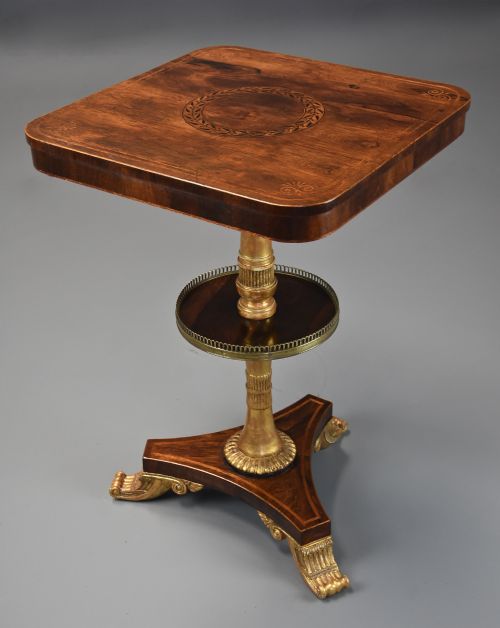
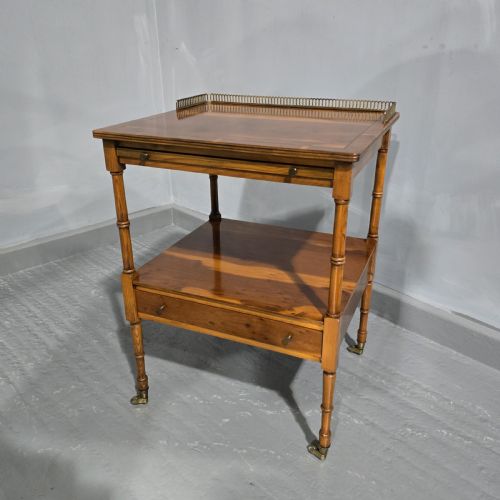
A brass gallery tier table brings multi-level display and refined metalwork into a room, joining useful tiers with decorative surrounds.
Brass Gallery Tier Table
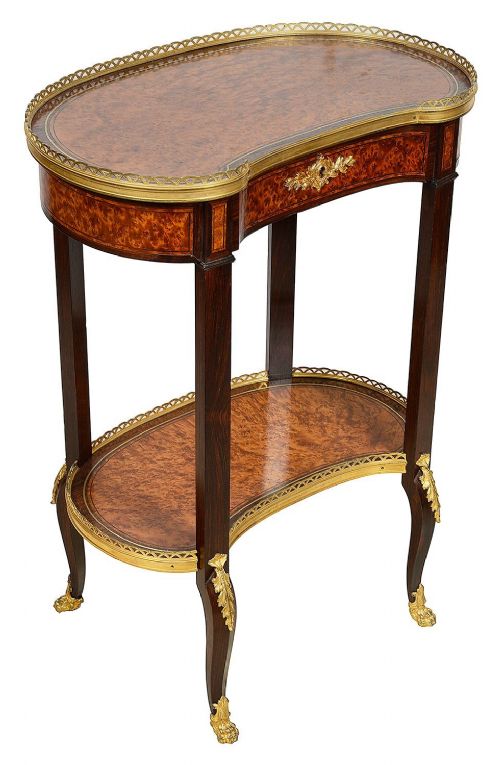
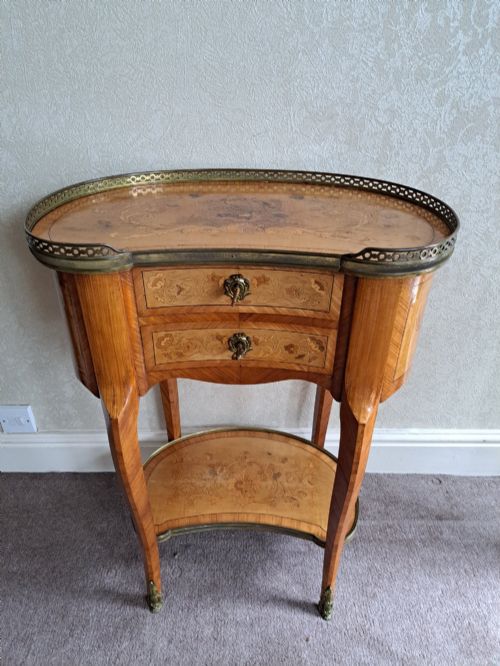
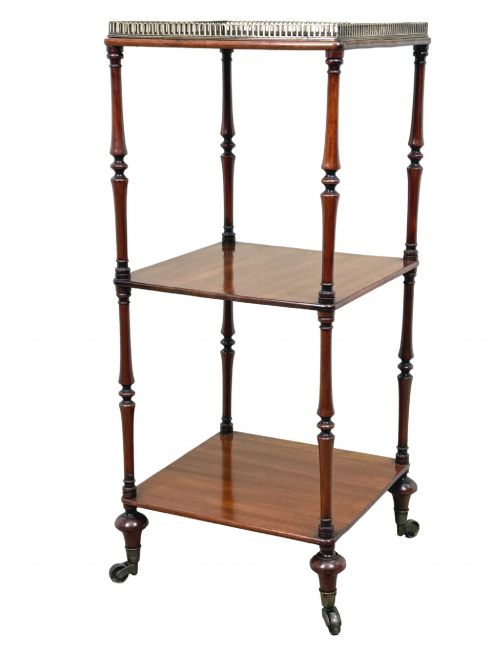
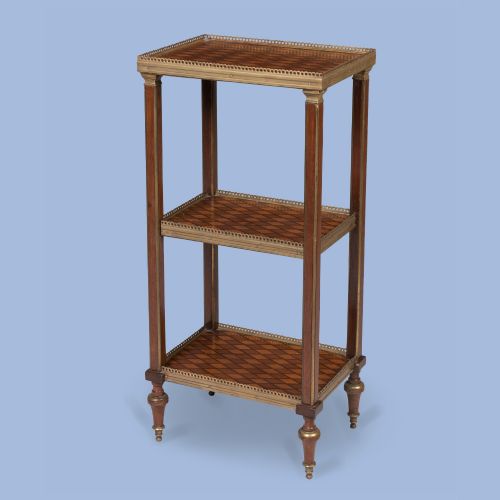
A brass gallery tier table serves as a multi-level surface for lamps, books, or decorative objects, utilising raised metal borders to keep items secure. These items appear across the nineteenth century and into the early twentieth century, taking forms such as etageres, occasional tables, side tables, and display stands.
The most common examples on this page are French and English pieces from the nineteenth century, often reflecting Regency, Victorian, or Louis-style influences. They combine stacked timber tiers with fine brass galleries, creating open display furniture suited to sitting rooms and libraries.
How they were made
Cabinet makers constructed these tables from dense timbers like mahogany, rosewood, walnut, satinwood, and kingwood, frequently incorporating marquetry, parquetry, or brass mountings. Marble tops also appear, providing a cool, solid surface inset within wooden or ormolu frames.
The characteristic brass gallery is secured around the edge of the upper and lower tiers, cast or pierced to form a protective rim. Ebonised wood, gilt brass, and ormolu details complete the construction, linking French and English workshop traditions of the period.
Listings feature woods including mahogany, rosewood, walnut, satinwood, amboyna, and kingwood alongside marble and ormolu.
What varies in quality
Quality rests in the crispness of the brass casting and the precision of the timber work, separating standard production from finer workshop output. Marquetry inlays, choice veneers, and substantial marble inserts show the level of care invested by the maker.
Proportion and the integration of metal mounts to wood structure define the better examples. A balanced frame with cleanly fitted galleries and well-figured grain indicates superior construction.
Tehan·George Bullock·Haentgos Freres Paris·Donald Ross
The Brass Gallery Tier Table Glossary
- Brass gallery
- A low pierced or cast metal railing fitted around the edge of a table tier to prevent items from sliding off. It defines the character of many multi-level occasional tables.
- Etagere
- A set of open shelves or stacked tiers designed for displaying ornaments or small objects. These pieces often feature multiple levels supported by slender columns.
- Ormolu
- Gilt bronze mounted on furniture or decorative objects, popular in French nineteenth-century design. It provides bright golden highlights against dark woods or marble.
- Marquetry
- Decorative veneer patterns formed by fitting together small pieces of coloured wood or other materials. It covers table tops and tiers with geometric or floral designs.
- Dumb waiter
- A tiered stand traditionally used for serving food or holding dishes without servants present. In later periods, it functions as a multi-tier occasional table.
Brass Gallery Tier Table: Frequently Asked Questions
What is a brass gallery tier table used for?
These tables provide multiple surfaces for lamps, plants, and decorative objects in a living space.
The raised brass gallery ensures that items placed on the tiers stay securely in place during everyday use.
How do I date a nineteenth-century etagere?
Dating relies on timber choices, construction methods, and stylistic references such as Regency or Louis XVI revival.
Examining the underside, joinery, and the method of securing the brass gallery offers further clues to the decade of manufacture.
Are marble top tier tables heavy?
The inclusion of a marble insert adds significant weight to the upper or lower tier of the table.
This weight helps anchor the piece firmly to the floor, making them stable despite their slender proportions.
How do I clean a brass gallery?
Dusting with a soft cloth keeps the pierced metalwork clear without harming the surrounding timber or veneer.
Avoid harsh liquid polishes that might seep into the wood joints or damage antique patination.