
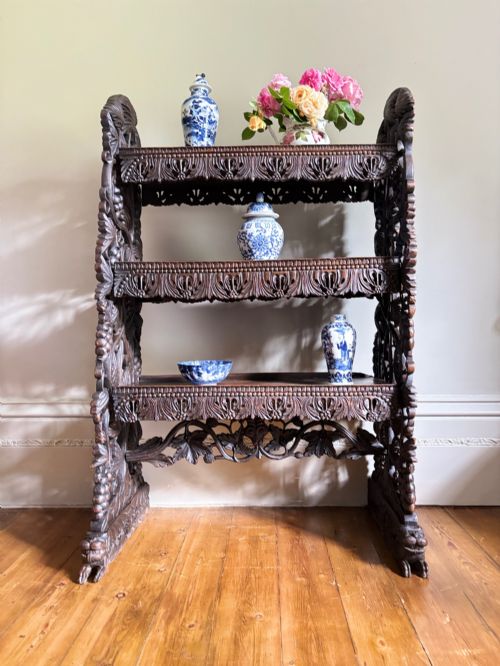

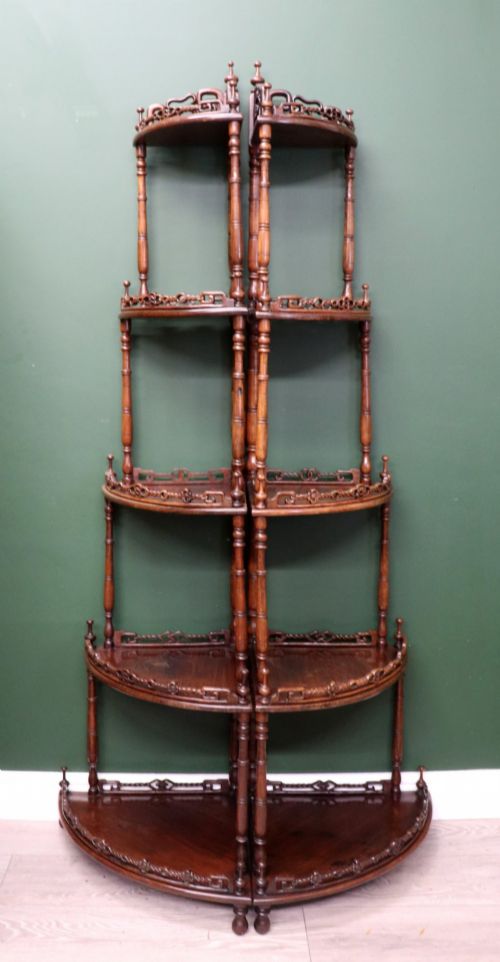
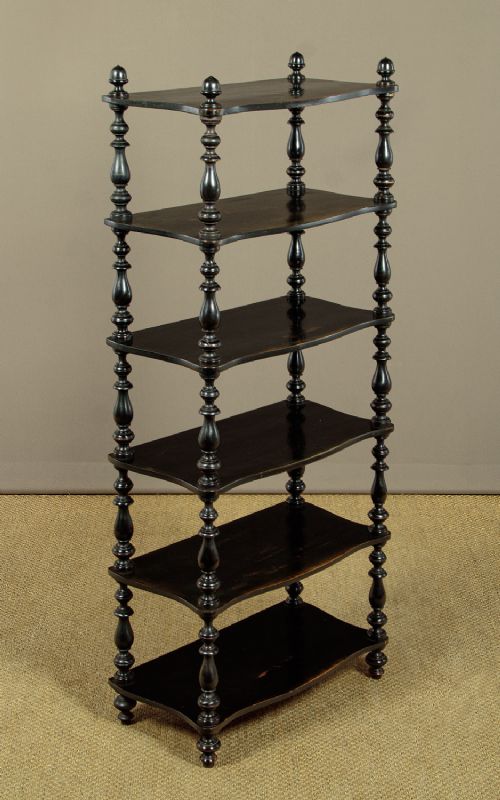


Mid 19th Century Etagere
A mid 19th century etagere offers tiered display space for small treasures, bringing elegance and vertical interest to any room.
Mid 19th Century Etagere
When you search for a mid 19th century etagere, you are looking at multi-tiered display stands and whatnots designed to hold ornaments and books. The pieces on this page span the Victorian era, including specific dates such as eighteen fifty and eighteen sixty.
You will encounter various forms ranging from small corner whatnots and central standing buffet shelves to towering six tier dumb waiters and side cabinets with doors and drawers. These items function as practical display surfaces whilst adding architectural shape to interiors.
Origins and stylistic influences vary across the selection, featuring English mahogany models alongside French revival brass-mounted pieces and Anglo-Indian padauk furniture. Each variation reflects the diverse tastes of nineteenth-century cabinet makers.
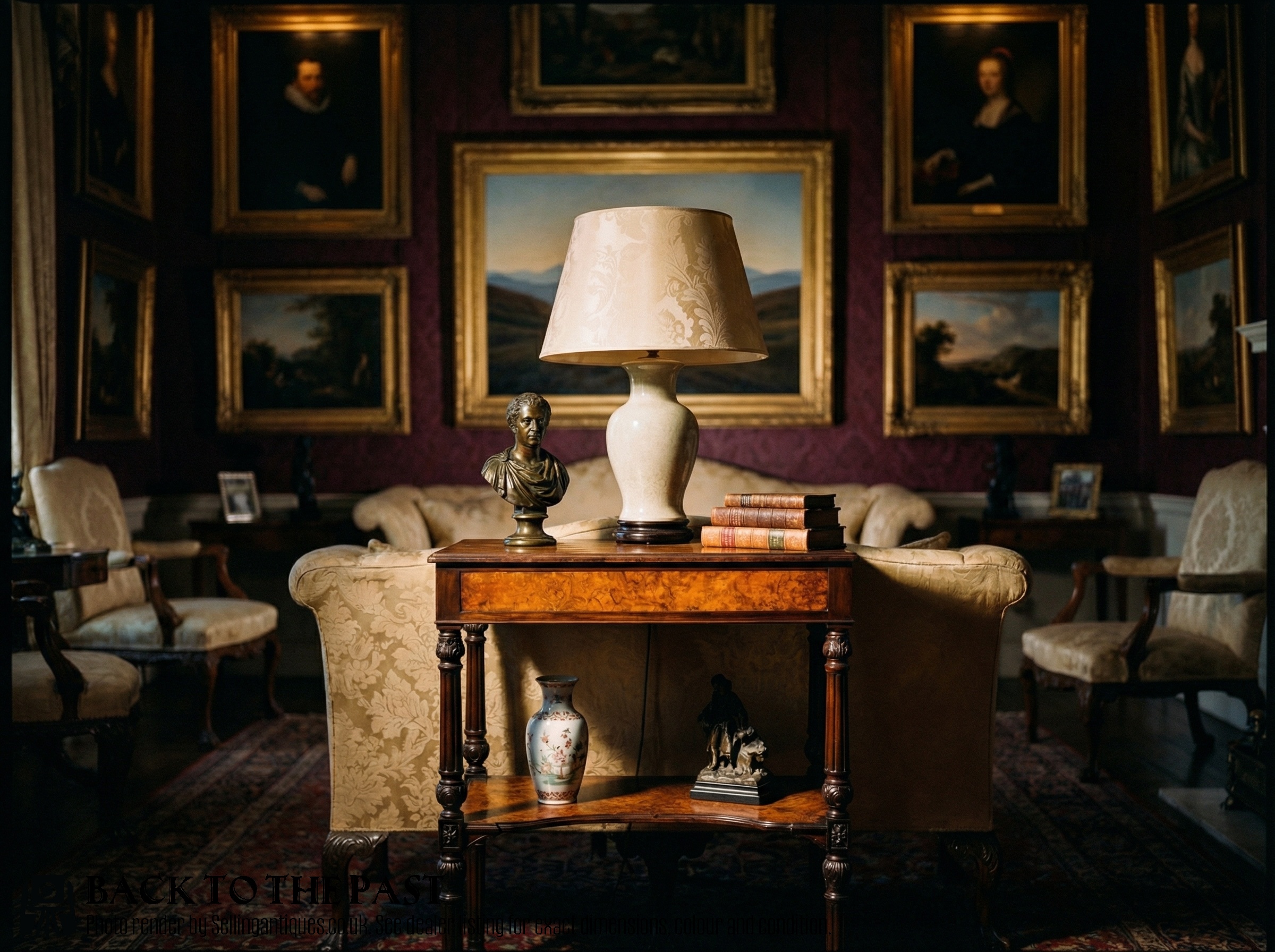
Materials and construction
Cabinet makers utilised a rich palette of timbers including mahogany, rosewood, walnut, padauk, and ebonised wood to build these tiered structures. Marquetry veneer and brass mounts were frequently applied to enhance the visual appeal of French manner and Victorian designs.
Construction methods focused on supporting multiple shelves securely, whether through turned uprights, corner brackets, or enclosed lower cupboards with single or double doors. The integration of drawers and brass mounts required precise joinery to ensure stability across three, four, or six tiers.
Mid 19th Century Etagere Retail Price Guide 2026
Typical asking prices for mid 19th century etagere among the pieces listed under this phrase on Sellingantiques today, from the lower quarter to the upper quarter. They describe what is for sale here now, not the wider market.
Victorian households needed somewhere to place everything, hence naming tall tiered display shelves the whatnot.
Judging quality
The distinction between standard examples and superior pieces rests on the choice of timber and the fineness of the cabinet work. Richly figured rosewood, padauk, or intricate marquetry veneer indicate a higher grade of manufacture than plain utility timbers.
Proportion and decorative detailing also set exceptional items apart, such as finely cast brass mounts in the French manner or grand proportions seen in maker-attributed furniture. The structural integrity of multiple tiers and the crispness of turned supports demonstrate the maker's skill.
Holland & Sons
The Mid 19th Century Etagere Glossary
- Etagere
- A piece of furniture consisting of a set of open shelves for displaying small objects or ornaments. It originates from France and became popular during the nineteenth century.
- Whatnot
- A tiered stand or shelving unit designed for storing or displaying miscellaneous items. English cabinet makers produced these in mahogany, rosewood, and walnut throughout the Victorian period.
- Dumb waiter
- A multi-tiered shelving unit used originally for serving food or holding tableware. Nineteenth-century examples often feature numerous graduated tiers supported on a central column or uprights.
- Marquetry veneer
- Thin slices of decorative wood arranged in patterns and glued onto the primary carcass of a furniture piece. It adds ornamental complexity to surfaces on cabinets and display stands.
- Padauk
- A dense tropical hardwood prized for its deep reddish colour and durability. Anglo-Indian craftsmen utilised this material for intricately carved nineteenth-century furniture.
Mid 19th Century Etagere: Frequently Asked Questions
What is a mid 19th century etagere used for?
These tiered shelving units were originally designed to display ornaments, porcelain, and small decorative objects in Victorian reception rooms. They maximise vertical space while keeping prized possessions visible from multiple angles.
Today, collectors use them in living rooms and hallways for the same purpose, placing books, plants, and ceramics across the various tiers to add character to an interior.
How do I identify a French manner etagere?
Pieces described in the French manner often incorporate decorative brass mounts, curved lines influenced by Rococo revival styles, and delicate marquetry veneers. These decorative elements distinguish them from stricter English mahogany furniture.
Makers of these pieces drew inspiration from continental designs, resulting in lighter visual silhouettes and ornate metalwork attached to rosewood or ebonised wood bodies.
What is the difference between an etagere and a whatnot?
In nineteenth-century terminology, both terms describe multi-tiered shelving furniture, though etagere often implies a more decorative French-influenced display stand. Whatnot is a traditional English term frequently applied to corner units and multi-shelf stands.
Both forms served similar display functions in Victorian homes, and makers often used the terms interchangeably in period records and contemporary descriptions.
Are these pieces made of solid wood?
Construction varies between solid timbers like mahogany, padauk, and walnut, and framed pieces that incorporate decorative veneers over secondary woods. Marquetry veneer was commonly applied to tabletops and cabinet doors to showcase elaborate grain patterns.
The use of dense hardwoods ensured that multi-tiered structures remained stable enough to support heavy ornaments and books without warping.
How do I care for a rosewood or mahogany etagere?
Maintain nineteenth-century polished wood surfaces by keeping them away from direct sunlight and sudden temperature changes, which can cause timber to split or veneer to lift. Dust gently with a dry cloth and avoid silicone-based polishes.
Applying a traditional beeswax occasionally helps nourish the wood and preserves the depth of the grain on rosewood, walnut, and mahogany surfaces.