


Marquetry Tier Stand
A marquetry tier stand brings layered display surfaces and intricate wood-inlaid patterns into a room, offering both practical utility and decorative elegance.
Marquetry Tier Stand
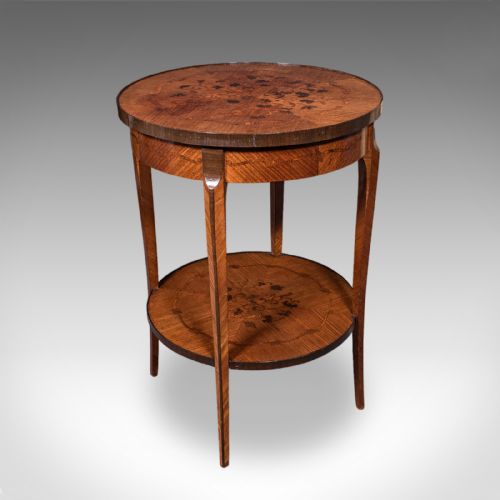
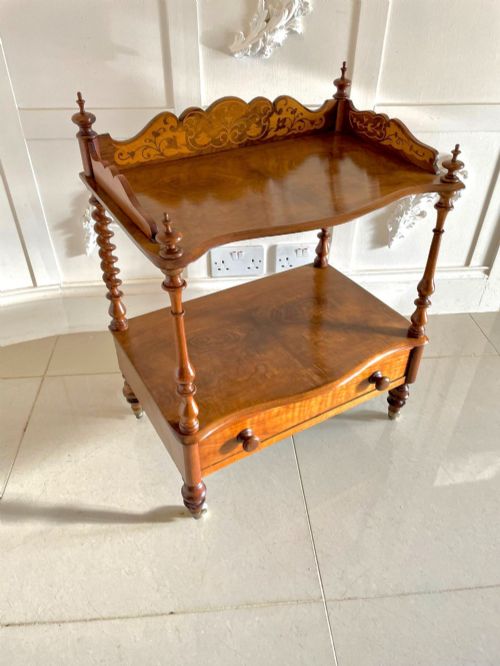
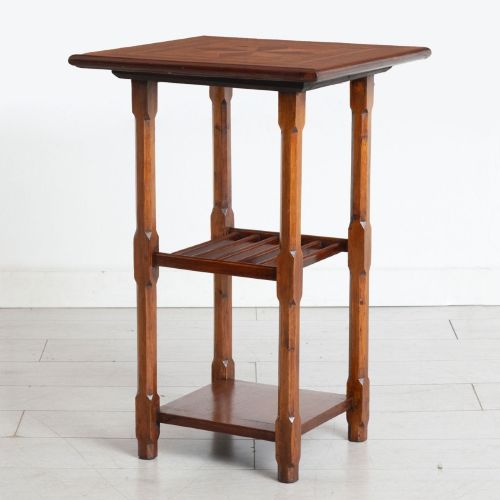
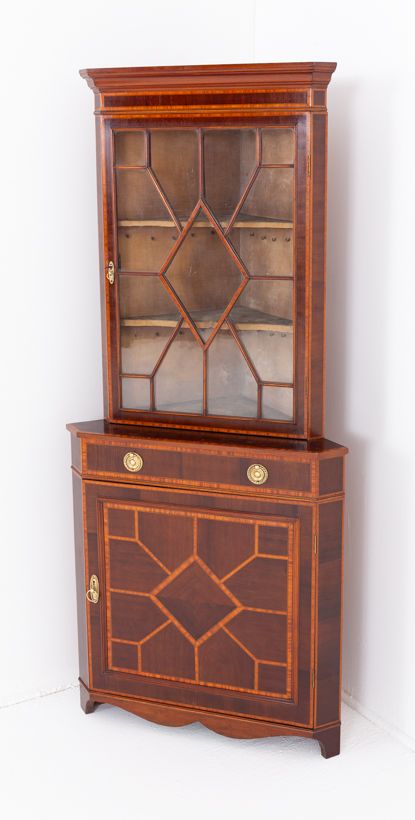
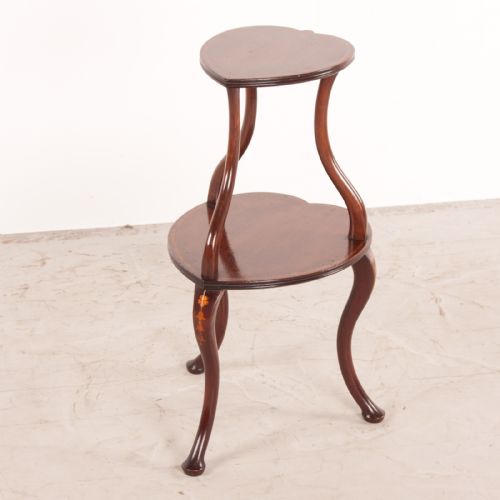
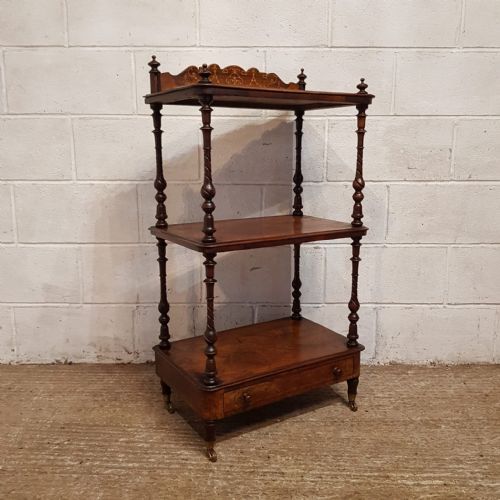
A marquetry tier stand is primarily encountered as an etagere, occasional table, or multi-level display piece dating from the Victorian and Edwardian eras through to the early twentieth century. These multi-level pieces provide stacked platforms supported by upright columns or legs, designed to hold decorative objects, books, or plants.
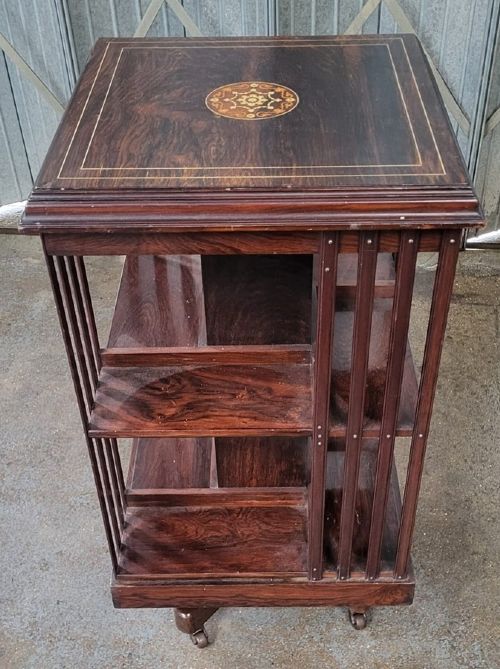
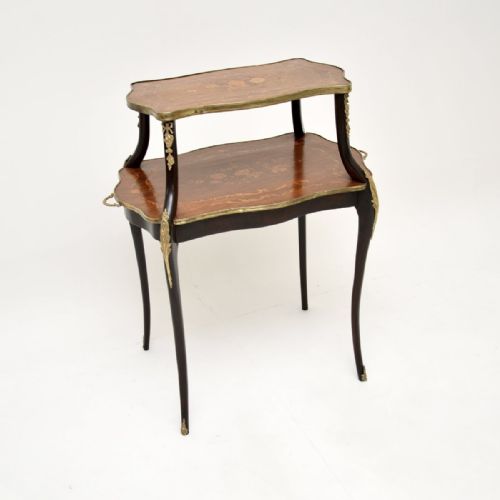
The materials and styles span British classical revivals like Sheraton Revival alongside continental French influences including Louis XV style, Louis XVI manner, and Napoleon III designs. walnut, mahogany, rosewood, and burr walnut form the structural basis of these tiers, often enriched with detailed parquetry and marquetry work.
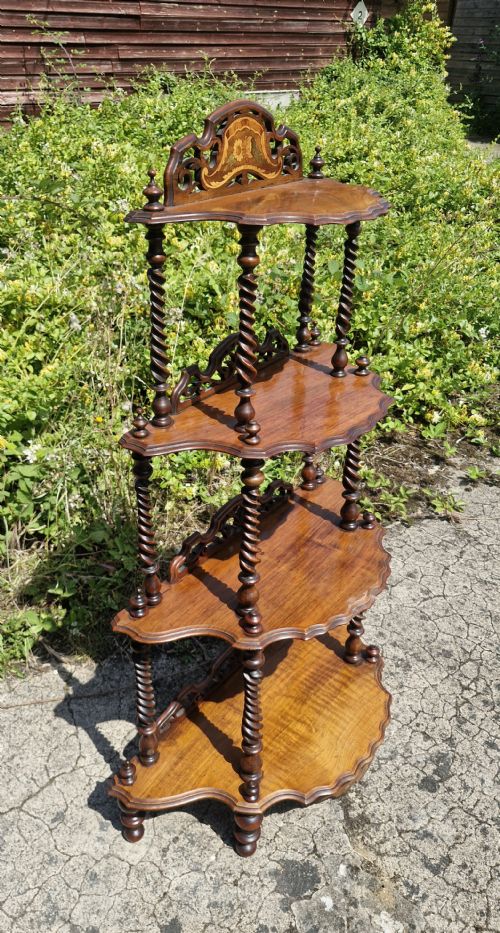
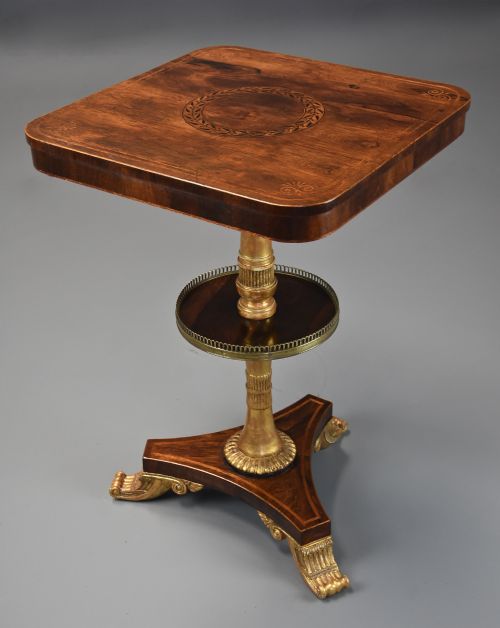
Pieces take various forms ranging from corner stands and plant stands to revolving bookcases and galleried side tables. The overarching function remains the display of prized ornaments across distinct horizontal levels.
Materials and Construction
Cabinet makers utilised dense hardwoods such as mahogany, walnut, and rosewood for the primary frames, tabletops, and tier supports. These woods provided the necessary stability and weight for multi-level freestanding furniture.
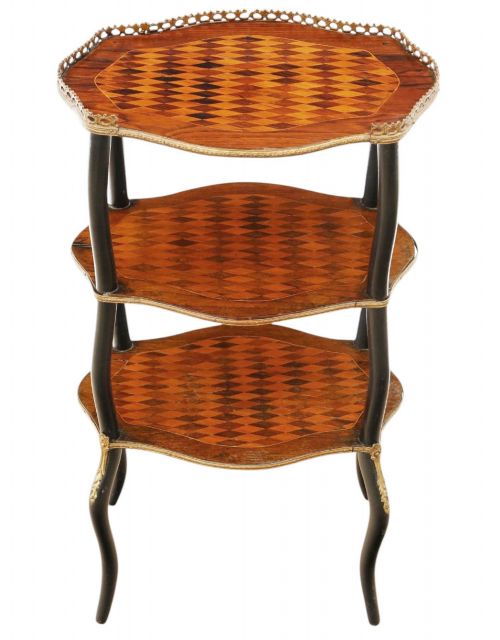
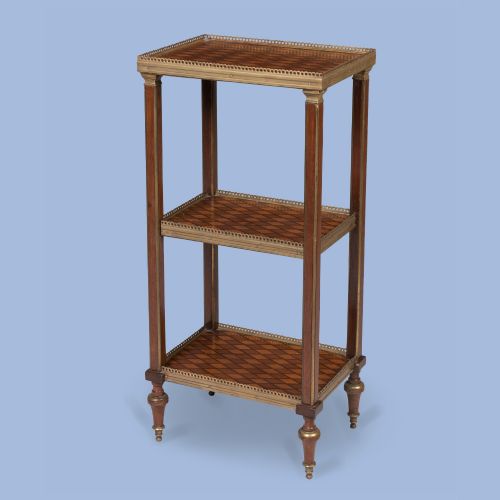
Decorative surfaces display intricate marquetry and parquetry using contrasting timbers like satinwood and kingwood, creating pictorial or geometric wood-inlaid motifs. Brass galleries and ormolu mounts frequently edge the tiers and accent the legs, adding metallic contrast to the timber.
Listings span multiple decades from the Victorian and Edwardian periods through to the 1930s, featuring walnut, mahogany, brass, and ormolu.
Assessing Quality and Craftsmanship
Quality rests in the precision and complexity of the wood inlay, where tighter joints and varied timber tones distinguish superior marquetry work from simpler geometric parquetry. The crispness of cast ormolu mounts and the rigidity of brass galleries also signal higher grade execution.
Structural integrity through well-fitted tier joints and sturdy upright supports separates standard utility pieces from finer salon furniture. The choice of underlying timber, such as heavily figured burr walnut or rich rosewood, elevates the visual presence of the tier stand.
Edwards & Roberts
The Marquetry Tier Stand Glossary
- Marquetry
- Decorative veneer work forming pictorial patterns by fitting together small pieces of various woods. It transforms flat tier surfaces into detailed visual displays.
- Etagere
- A piece of furniture consisting of a set of open shelves for displaying small objects. This form constitutes many of the multi-tiered pieces found here.
- Ormolu
- Gilded bronze or brass mounts applied to furniture edges and legs. This technique adds ornamental highlights popular in French-influenced designs.
- Parquetry
- Geometric mosaic woodwork used for floors and tabletops. It differs from marquetry by relying on repeating angular shapes rather than pictorial scenes.
- Galleried
- Having a raised decorative rail or pierced border around the edge of a shelf. This feature prevents items from sliding off upper tiers.
Marquetry Tier Stand: Frequently Asked Questions
What is a marquetry tier stand used for?
These tiered stands served as display surfaces for porcelain, small clocks, and decorative ornaments within Victorian and Edwardian reception rooms.
Today, they function effectively as side tables, lamp stands, or corner display units in contemporary interiors.
How do I identify a French style etagere?
French style pieces typically incorporate ormolu mounts, serpentine curves, and elaborate floral marquetry reflecting Louis XV or Napoleon III tastes.
British equivalents often follow Sheraton Revival or classical Georgian lines with more restrained mahogany or satinwood inlays.
Are these stands sturdy enough for daily use?
Most tier stands are built with multiple upright supports connecting the shelves, providing adequate stability for lamps, books, and decorative objects.
Heavier items belong on the bottom tier, while delicate porcelain or glassware sits securely on the upper surfaces.
What is the difference between an etagere and a whatnot?
Both terms describe multi-tiered shelving furniture, though nineteenth-century British makers frequently used whatnot for general shelved stands.
Etagere often denotes pieces with a distinct continental French influence and decorative ormolu or marquetry details.