

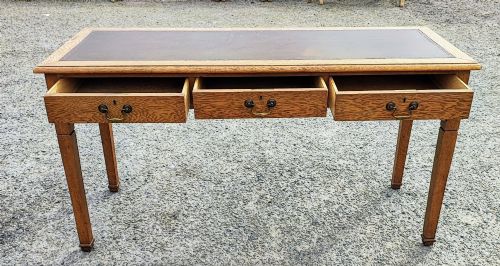
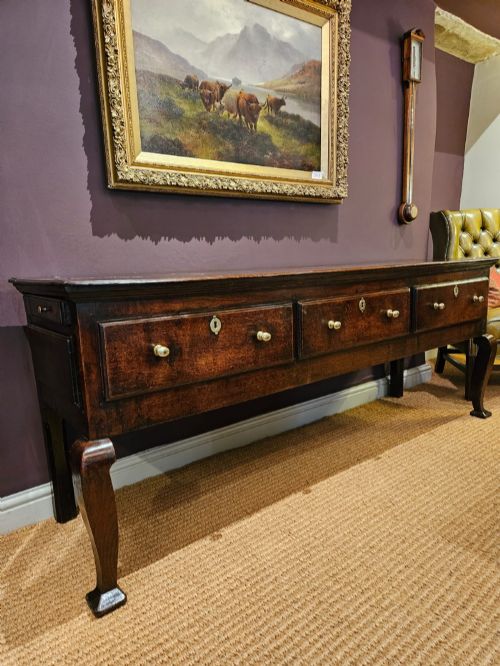
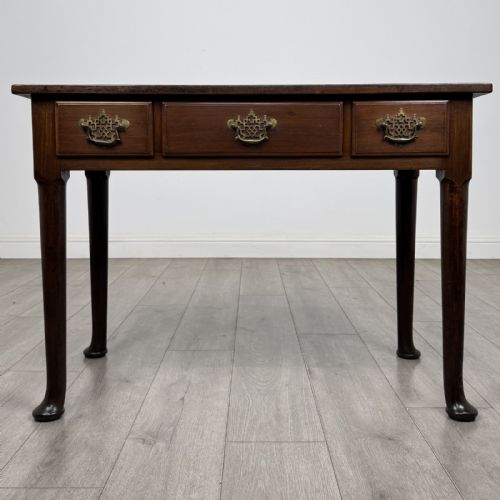
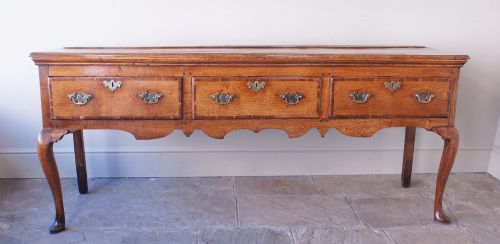
Three Leg Oak Table
A three leg oak table offers a sturdy tripod stance and honest vernacular charm, making it a versatile surface for country houses and modern interiors alike.
Three Leg Oak Table
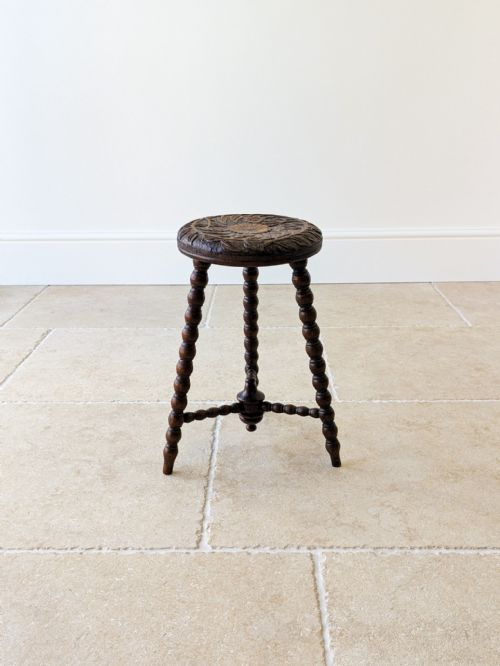
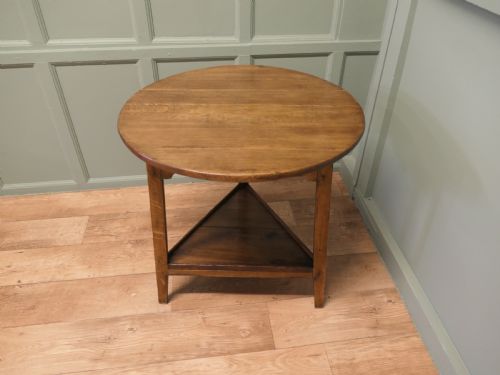
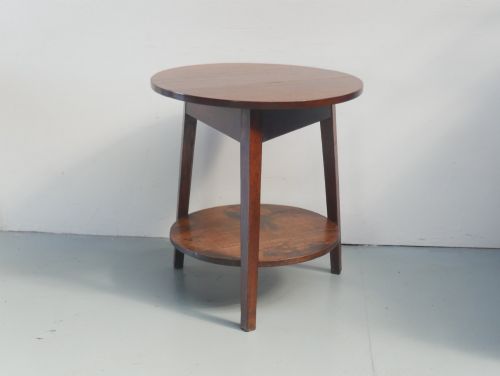
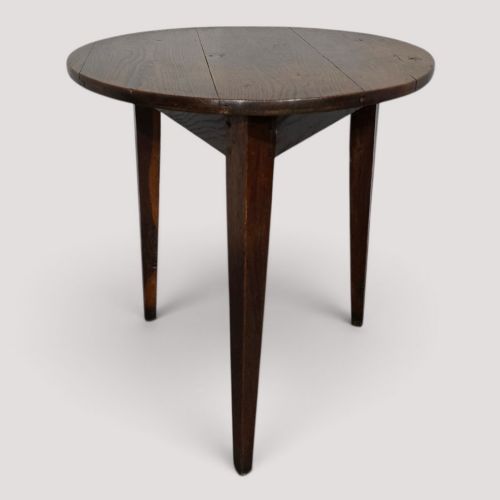
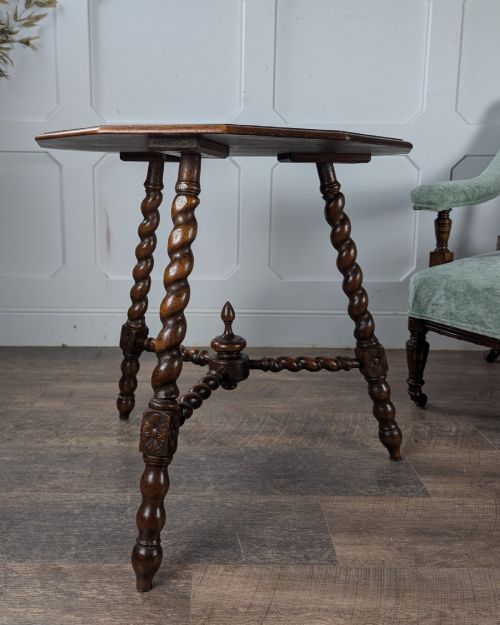
A three leg oak table is most commonly represented on this page by the traditional cricket table, featuring a round top supported by three legs that provide stability on uneven flagstone floors. These pieces emerge from periods spanning the eighteenth century through the Edwardian era, reflecting both utilitarian country use and later revival interest.
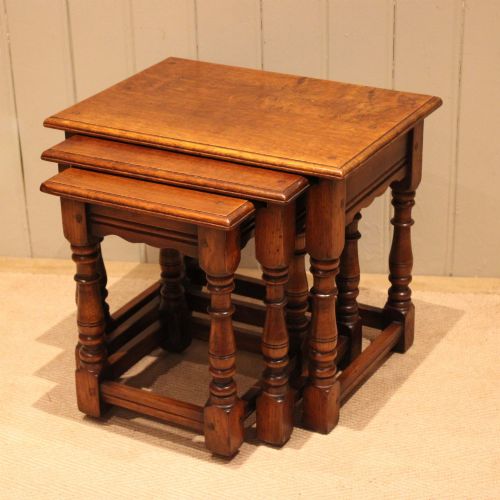
The selection includes lowboys, occasional tables, and tripod lamp or wine tables alongside standard cricket forms. While the majority are fashioned from solid oak, variations appear with elm or pine elements, and occasional examples display specialised construction like trefoil tops or two-tier formats.
Geographical and stylistic markers link these pieces to English country vernacular and Georgian traditions. Buyers encounter everything from rustic eighteenth-century originals to later Arts and Crafts interpretations and Jacobean revival pieces.
Materials and construction methods
Makers relied primarily on solid oak timber, frequently paired with secondary woods such as pine for bases or elm for top panels in vernacular pieces. Construction often involved pegged tenons and sturdy tripod configurations designed to remain level on irregular domestic surfaces without rocking.
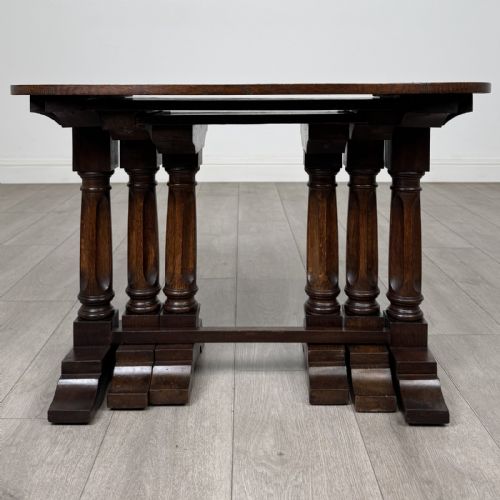
Surface treatments vary from plain waxed timber showing natural grain to carved decoration, geometric moulding, and occasional painted finishes. Detail work ranges from simple plank tops to elaborate trefoil designs and bobbin-turned or barley twist supports.
Three Leg Oak Table Retail Price Guide 2026
Typical asking prices for three leg oak table among the pieces listed under this phrase on Sellingantiques today, from the lower quarter to the upper quarter. They describe what is for sale here now, not the wider market.
Some historical cricket tables owe their name and uneven stance to sports pavilions, though most simply refused to wobble on lumpy cottage floors.
Separating ordinary examples from the finest
Quality in a three leg oak table rests upon the integrity of the timber and the tightness of the joinery where the legs meet the underside of the top. Pieces retaining their original surface patination and uncompromised structural connections command greater appreciation than those with heavily replaced components or modern hardware.
Subtleties in turning, edge moulding, and proportions distinguish utilitarian workshop items from more considered examples produced in established regional traditions. The harmony between the thickness of the top plank and the slender grace of the three supporting legs determines the visual balance of the piece.
The Three Leg Oak Table Glossary
- Cricket table
- A small vernacular wooden table featuring three splayed legs and a round top, traditionally designed for stability on uneven floors. These pieces often date from the eighteenth century and display straightforward pegged construction.
- Tripod table
- Any small table supported by three legs branching from a single central pillar or attached directly to the underside of the top. They frequently served as wine tables, lamp stands, or occasional tea surfaces.
- Lowboy
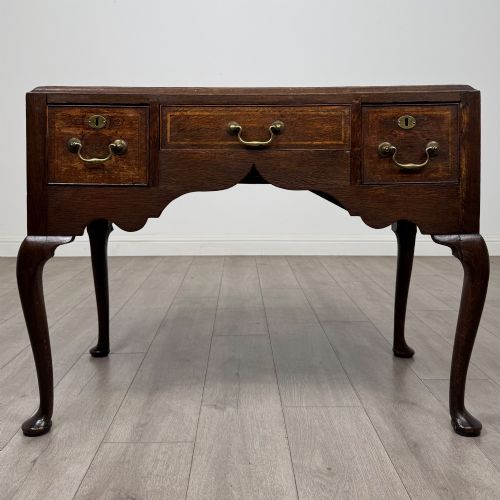
- A small side table or writing desk with one or more tiers of drawers, typically raised on four legs but occasionally grouped alongside vernacular tripod forms. They originate largely from the Georgian period.
- Trefoil top
- A tabletop shaped with three lobes resembling a clover leaf, appearing on specific vernacular and Gothic revival occasional tables. This unusual geometry adds distinct decorative character to a standard three-legged format.
- Dresser base
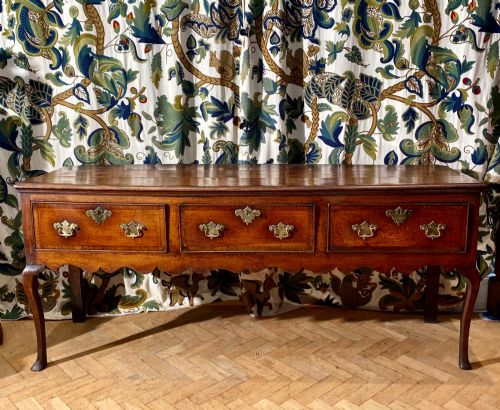
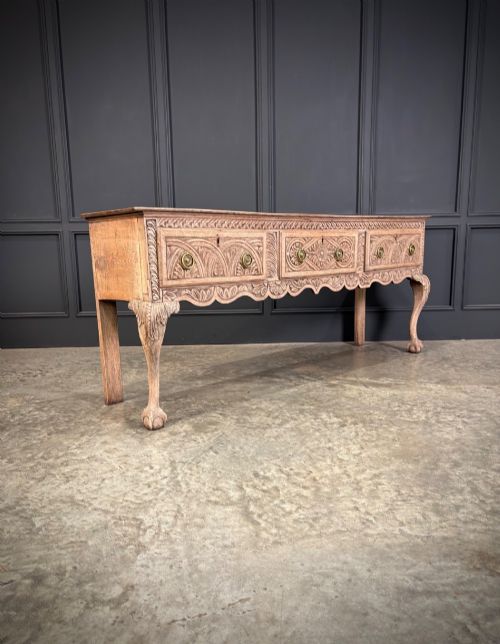
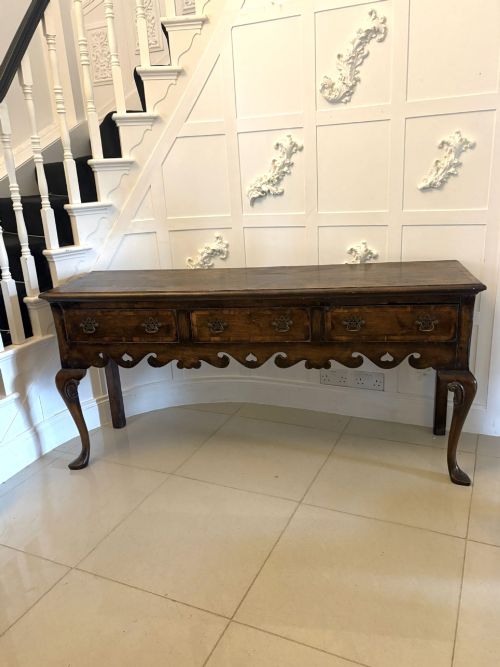
- A long low sideboard featuring drawers and sometimes an open pot board shelf below, representing a heavier form of vernacular oak furniture found alongside smaller tables.
Three Leg Oak Table: Frequently Asked Questions
What is a cricket table used for?
These tables served multiple domestic purposes in traditional English homes, functioning as surfaces for dining, reading, or holding candles near hearths. Their three-legged design kept them steady on uneven stone floors.
Today, they find places beside armchairs as lamp tables or act as compact display surfaces in smaller reception rooms.
How do I date an old oak table?
Dating relies on observing construction marks, timber shrinkage, tool traces, and the style of turning on the legs. Eighteenth-century examples generally display hand-cut pegs, pegged joints, and natural patination built up through generations of waxing.
Later Victorian and Edwardian revivals often utilise machine-sawn timber, crisper mechanical turning, and standardised fixings that differ from earlier vernacular methods.
Are three legged tables stable?
Three legs naturally rest firmly on any flat or uneven surface without wobbling, unlike four-legged furniture that requires a level floor. This practical geometric advantage explains their historical popularity in rustic cottages.
Properly maintained joints ensure the splayed legs distribute weight evenly beneath the centre of the tabletop.
What wood are these tables made from?
The primary material is solid oak, though makers frequently incorporated regional timbers such as elm, ash, and pine for secondary components like bases or drawer linings. Some variations feature pollard oak tops with distinctive knot patterns.
Surface finishes range from untreated scrubbed timber to deep brown wax polishes developed over centuries.
How do I care for antique oak furniture?
Maintain the wood by applying natural beeswax sparingly and buffing with a soft cloth to preserve the breathable protective layer. Avoid placing oak pieces near direct heat sources or in fluctuating humidity to prevent timber splitting.
Keep surfaces free of excessive moisture by using coasters under glasses and wiping spills promptly.