


Thoroughbred Horse Portrait
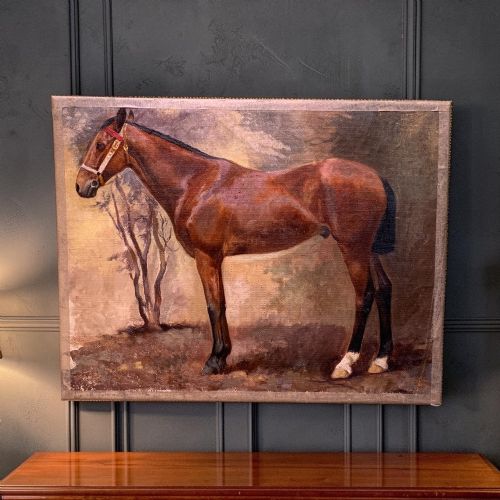
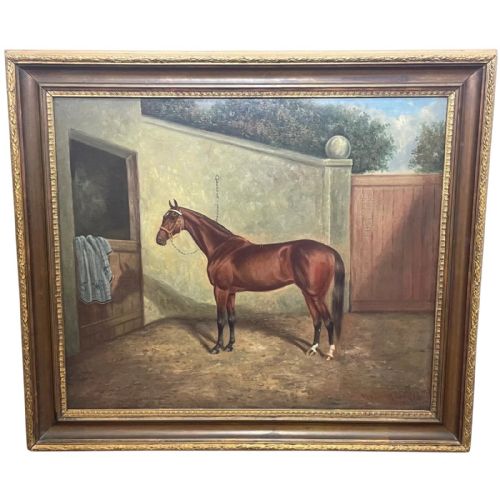
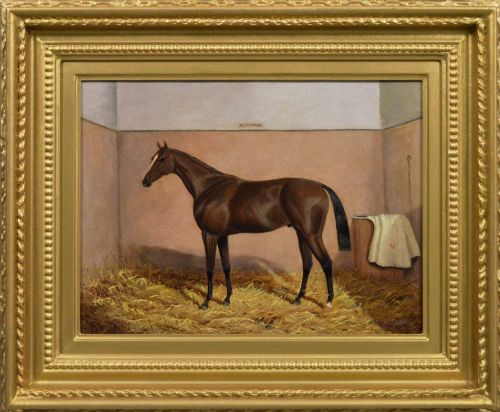
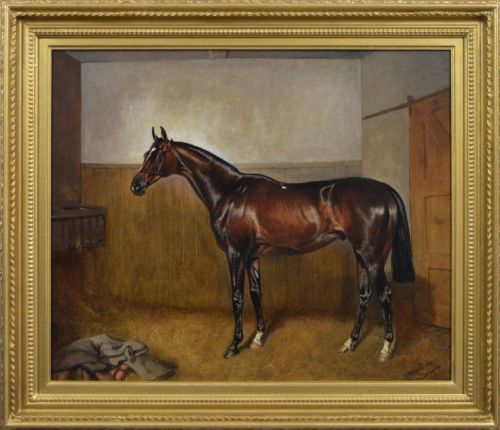
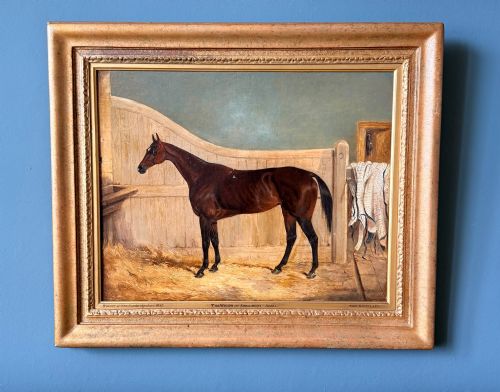
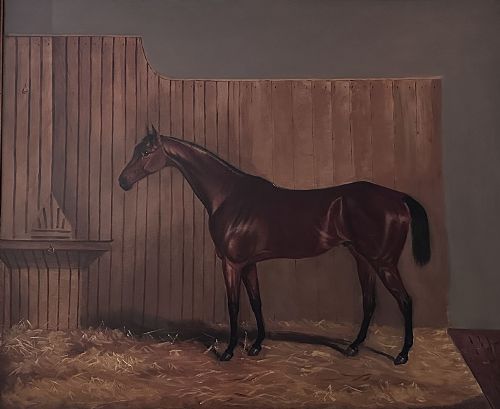
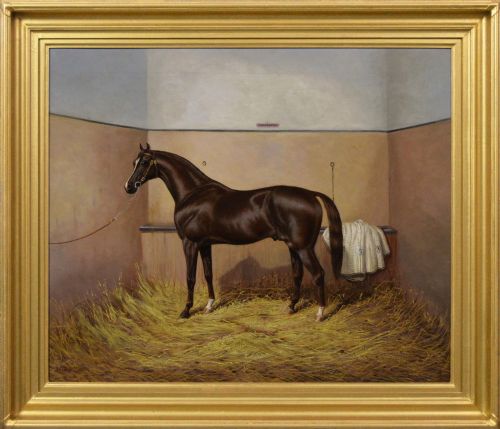
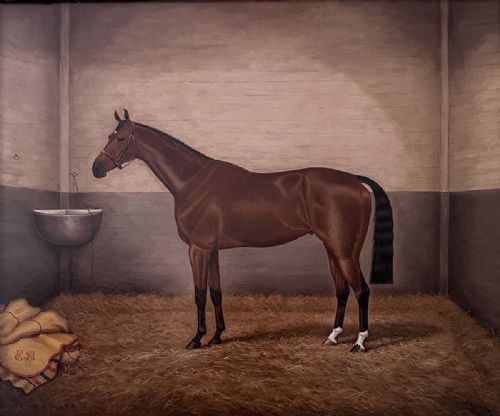
A thoroughbred horse portrait captures the distinct build and famous lineage of an equine champion in oil paint on canvas.
Thoroughbred Horse Portrait
A thoroughbred horse portrait depicts named racehorses, stable winners, and celebrated champions across the nineteenth and early twentieth centuries. Buyers encounter framed canvas works originating from Victorian sporting art traditions and Edwardian equine painting schools.
Many compositions feature the animal alone in a stable or landscape, while others record specific turf victories with jockeys up in racing silks. The most frequently met examples date from the Victorian era up to the nineteen-thirties.
Objects range from individual oil paintings on wood or canvas to framed sets of photographic prints of famous racehorses. Each piece documents a significant animal from racing history, often inscribed with the horse name and winning year.
Materials and techniques
Artists created these works primarily using oil paint on stretched canvas or wood panels, applying pigments to build up the depth of the horse coat and muscle structure. Many surviving pieces retain their original giltwood and gold leaf frames.
The technique relies on realism to render the specific conformation of the animal, often combining detailed equine anatomy with a landscape or stable interior background. Later twentieth-century entries include framed photographic prints alongside traditional painted mediums.
Several horses immortalised in these oils famously carried colourful jockey names like Spion Kop, General Peace, and Master Walter.
Assessing quality and execution
Quality rests in the anatomical precision of the horse, the handling of light across the musculature, and the fidelity of the equine portraiture. Superior examples capture the distinct individual character and conformation of the specific animal rather than a generic template.
The skill with which the artist renders the landscape, stable setting, or jockey in the colours distinguishes accomplished works from simpler production. Original framing in period giltwood enhances the integrity of the piece.
Frederick Albert Clark·John Alfred Wheeler·Thomas Walker Bretland·Edward Lloyd of Ellesmere·Samuel Spode·Alfred Wheeler·Walter Herbert Wheeler·Frank Giggs
The Thoroughbred Horse Portrait Glossary
- Sporting art
- A genre of painting focused on equestrian subjects, racing, hunting, and rural sports. It gained immense popularity in Britain throughout the nineteenth century.
- Giltwood
- Wood carved and coated with gold leaf or gold paint. It forms the traditional frame material for nineteenth-century oil paintings.
- Conformation
- The physical build and bodily structure of a horse. Accurate depiction of this is a hallmark of skilled equine artists.
- Jockey up
- A term used in racing titles indicating the rider is mounted on the horse. These works often name the jockey alongside the winning horse.
- Oil paint
- A slow-drying medium consisting of pigments suspended in a drying oil. It allows for subtle blending and rich tonal depth in animal portraits.
Thoroughbred Horse Portrait: Frequently Asked Questions
How do I date a thoroughbred horse portrait?
Dating relies on stylistic markers within the painting, the clothing and cap of the jockey, and framing materials. Inscriptions on the canvas often record the specific race year or the lifespan of the winning horse.
Additional clues appear in the artist signature and records of nineteenth and early twentieth-century sporting painters. Comparing the visual style to known dated works helps narrow the period.
Were these painted from life?
Many celebrated racehorses sat for their portraits after major victories, while others were painted from life by specialised equine artists visiting stables. Commissioned works by known painters accurately recorded the famous animals of the turf.
Some later pieces draw upon earlier sketches or photographs to commemorate historical race winners. The inclusion of named jockeys and specific owners points to direct commission work.
How should I hang and light an oil painting?
Oil paintings on canvas require stable indoor humidity levels and protection from direct sunlight to prevent the paint and canvas from degrading. Hang them securely using appropriate hardware suited to the weight of the heavy wooden frame.
Positioning the work away from direct heat sources preserves the wood panel or canvas stretcher. Gentle, indirect lighting highlights the details of the brushwork without causing fading.
What subjects besides racehorses appear in these works?
While the focus remains on thoroughbred racehorses and named winners, compositions often include stable hands, trainers, and jockeys in racing silks. Landscapes and stable interiors provide the background context for the animal portraits.
Some pieces record historic events such as the Epsom Derby or specific cup races. Photographic print sets also capture groups of famous racehorses from the nineteen-thirties.