
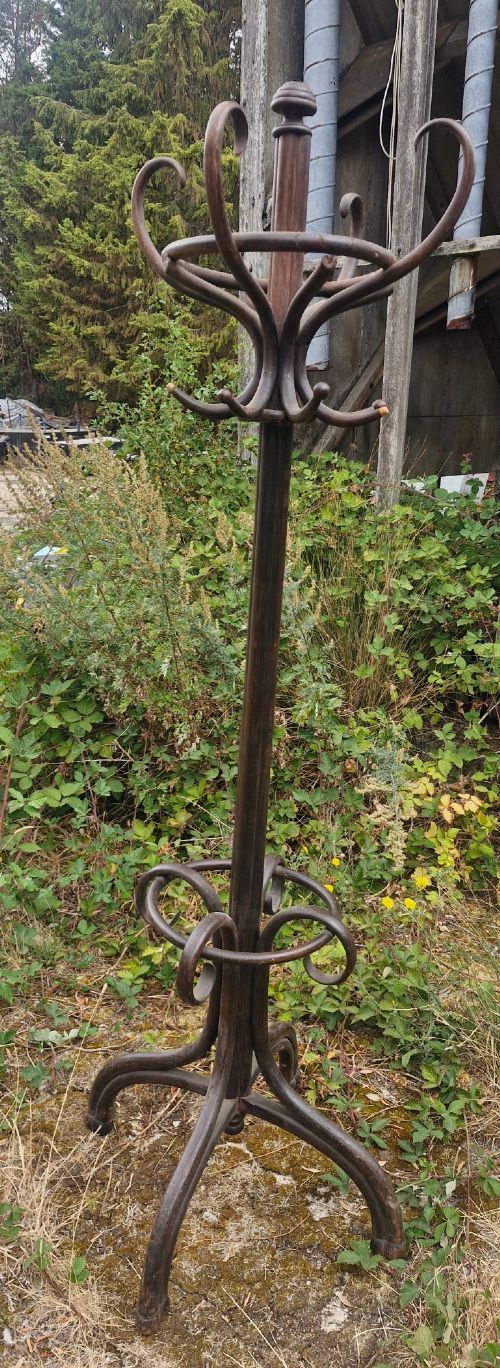
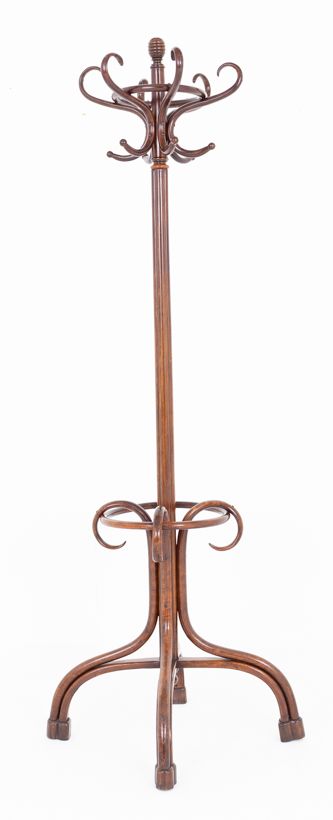
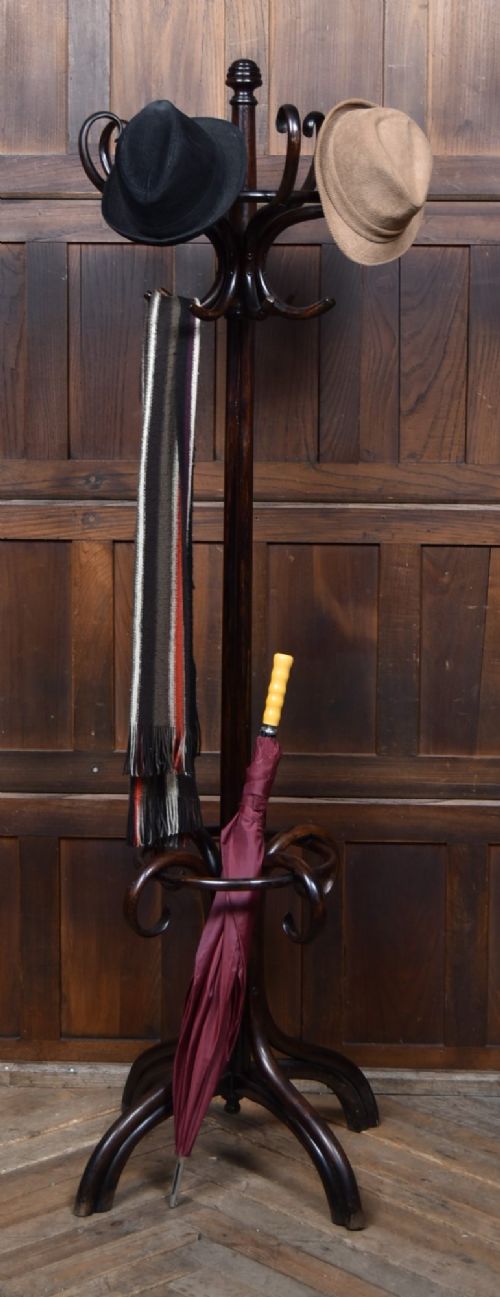
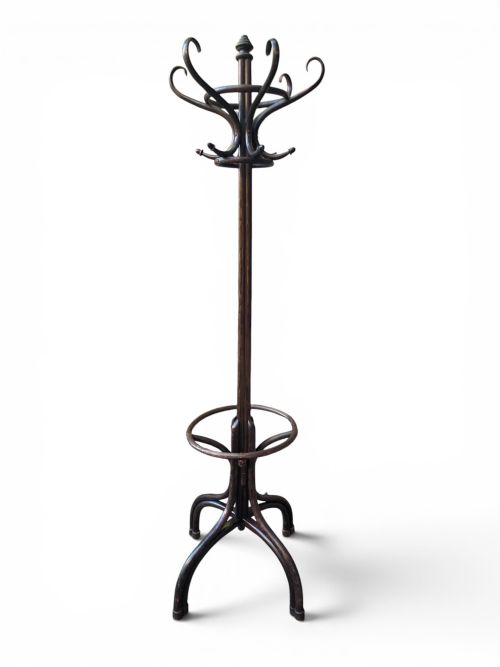
Thonet Style Hall Stand
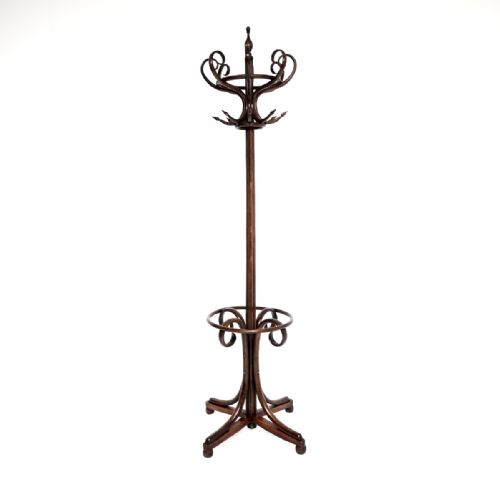
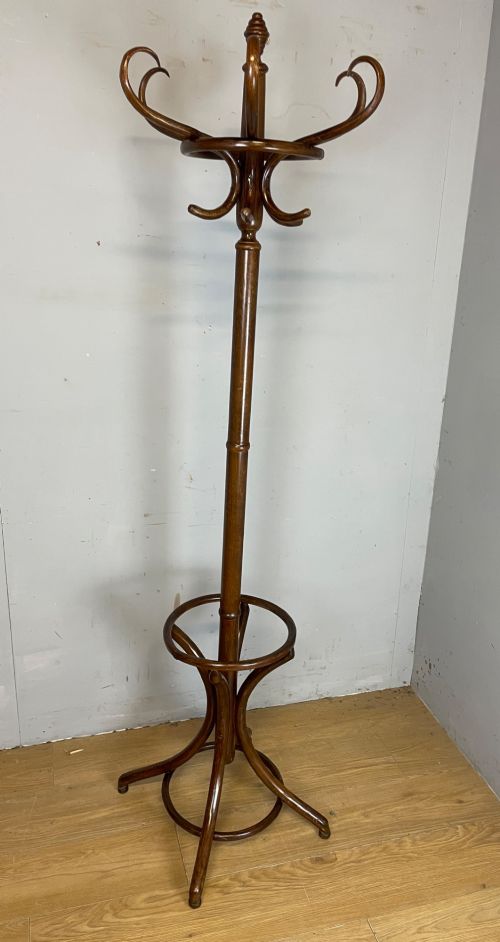
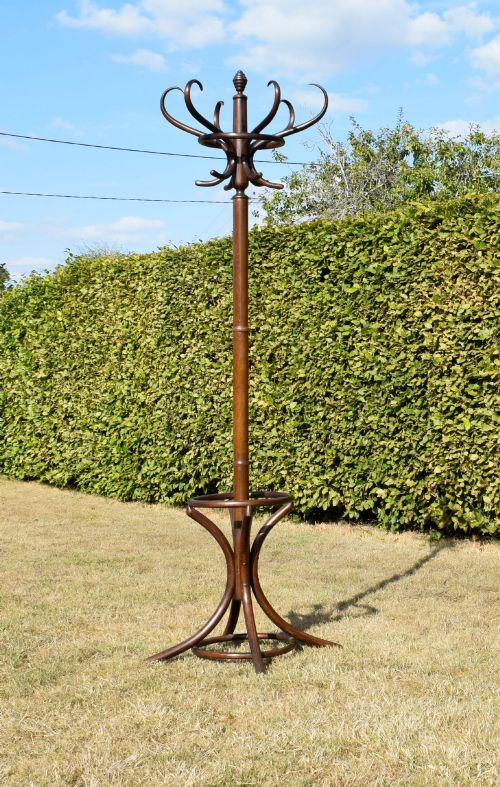
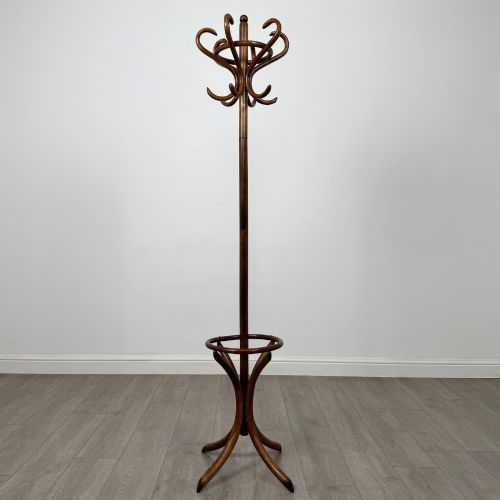
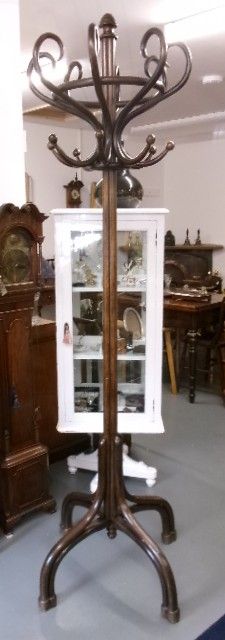
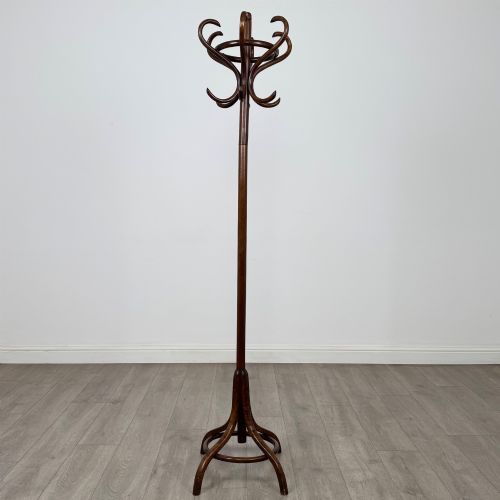
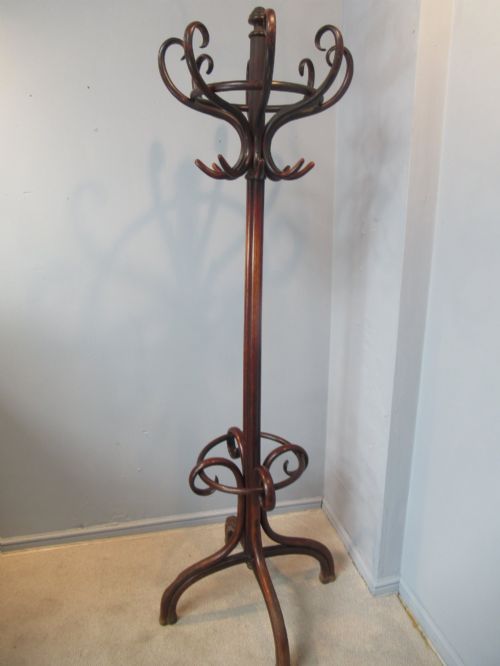
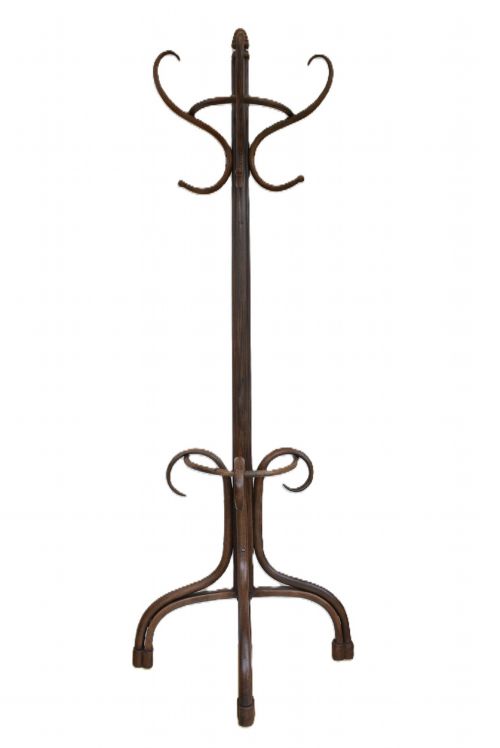
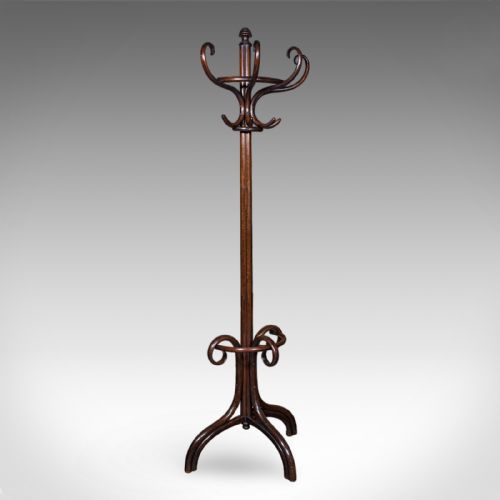
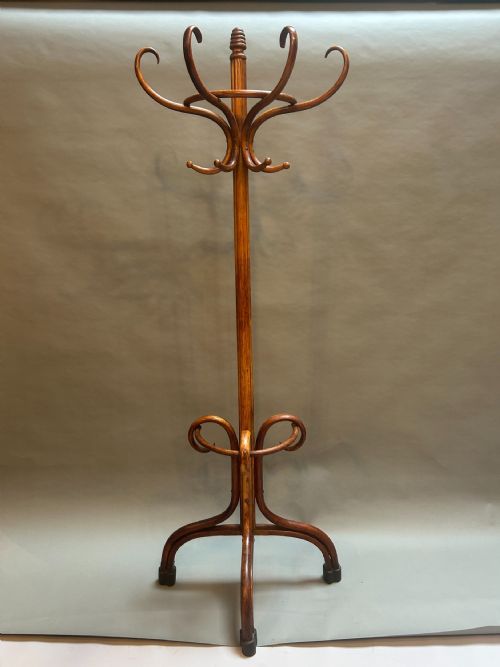
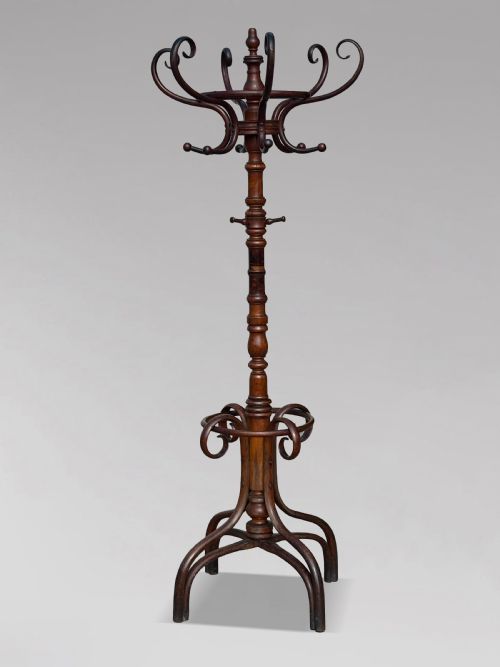
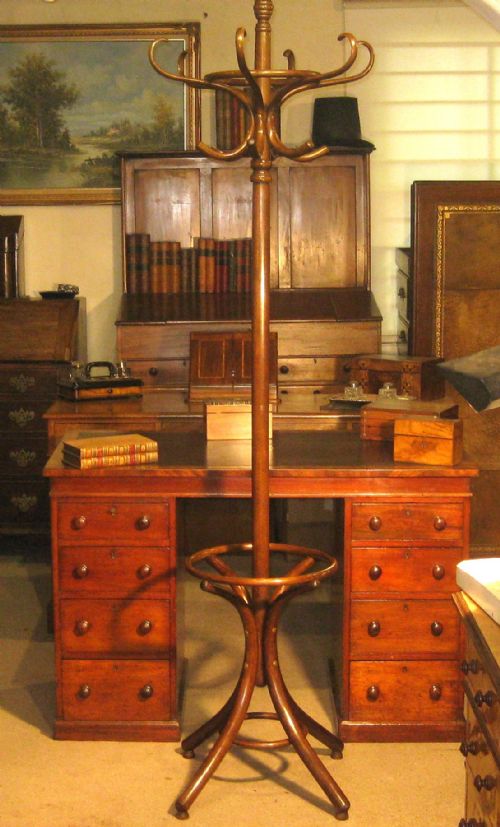
A thonet style hall stand brings linear grace and clever steam-bent timber to the hallway.
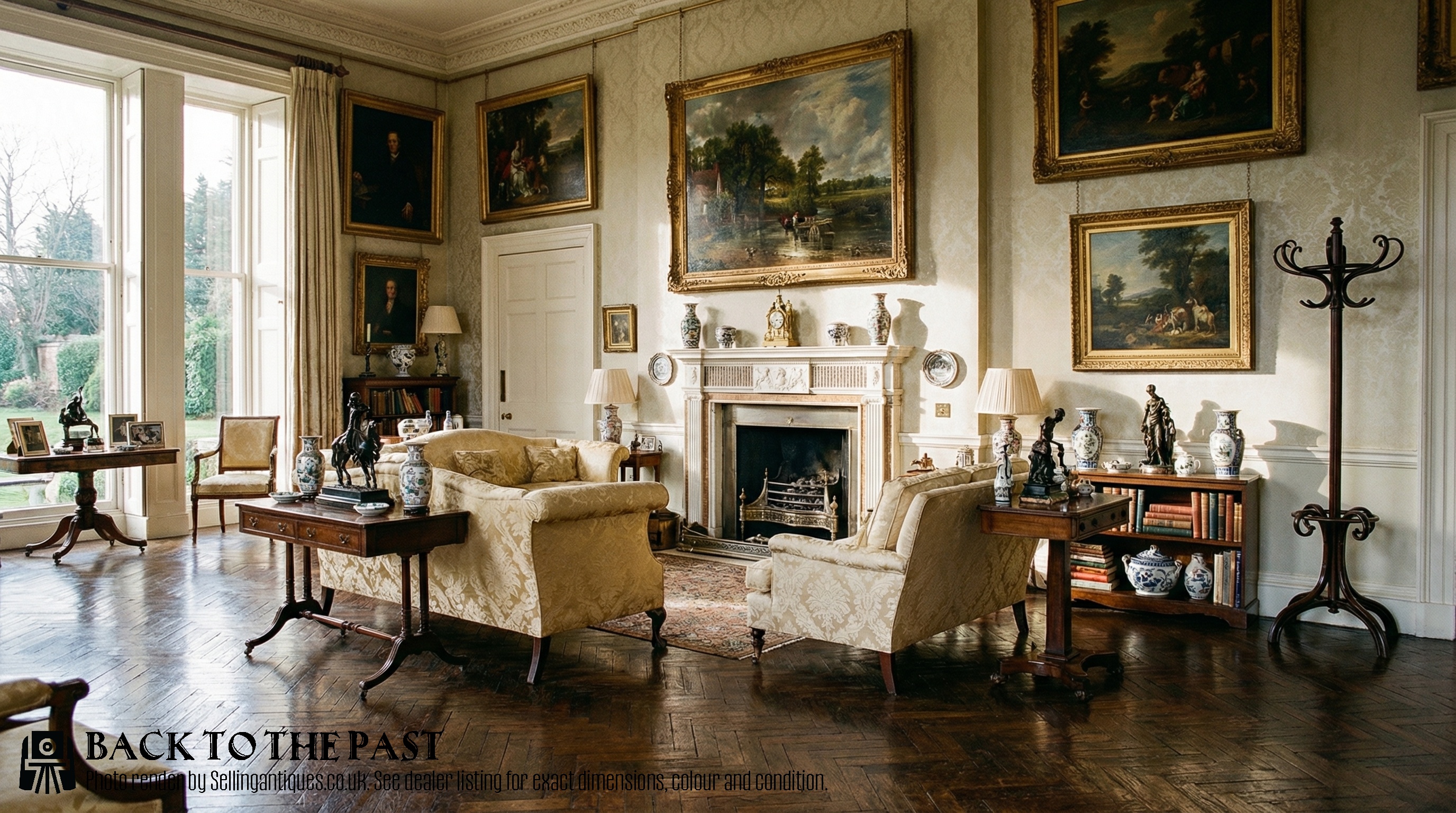
Thonet Style Hall Stand
A thonet style hall stand is typically a vertical coat, hat and stick stand constructed from curved timber. These pieces span from the late nineteenth century through the Edwardian era and into the nineteen thirties.
You will encounter tall upright coat trees, half-round or demi-lune designs intended to sit flush against a wall, and revolving configurations. The form relies on slender profiles that organise outerwear without crowding a narrow entranceway.
Originating in Austrian and continental European workshops, these designs gained widespread popularity across British homes. The pieces listed here frequently combine beech or steamed beechwood with practical umbrella rings and multi-tiered coat hooks.
What varies in quality
The distinction between standard examples and finer pieces lies in the complexity of the bending and the weight of the timber. Heavier sections of beechwood and sophisticated multi-tiered top sections indicate superior craftsmanship.
Structural integrity depends on the rigidity of the central column and the original tightness of the threaded joints. Examples bearing workshop labels or exhibiting double-tier formations sit securely at the upper end of the scale.
Thonet Style Hall Stand Retail Price Guide 2026
Typical asking prices for thonet style hall stand among the pieces listed under this phrase on Sellingantiques today, from the lower quarter to the upper quarter. They describe what is for sale here now, not the wider market.
Some tall stands include revolving top sections, letting you spin your hat collection around like a silent, wooden butler.
Fischel
The Thonet Style Hall Stand Glossary
- Bentwood
- Wood that has been rendered pliable via steam or boiling and then shaped into curves using metal forms. This technique creates lightweight yet robust frames without traditional joinery.
- Demi-lune
- A half-moon or semi-circular shape designed to stand flat against a wall. This profile saves floor space in narrow hallways.
- Hall tree
- An alternative term for a freestanding hall stand that incorporates hooks for coats and hats alongside umbrella storage. These items served as central entranceway furniture in period homes.
- Steamed beechwood
- Beech timber subjected to steam treatment to soften the lignin. It forms the primary material for bentwood furniture due to its predictable flexibility.
- Revolving
- A mechanism allowing the upper tier of coat and hat hooks to turn independently. This design facilitated easy access to garments stored on multi-sided stands.
Thonet Style Hall Stand: Frequently Asked Questions
What is a thonet style hall stand?
A thonet style hall stand is a vertical piece of furniture designed for entranceways to hold coats, hats and walking sticks. These items utilise curved wooden elements developed through steam-bending techniques.
Most examples date from the late Victorian period, the Edwardian era, and the early twentieth century. They provide practical storage while maintaining a visually light profile.
How do I date a bentwood hall stand?
Dating relies on stylistic clues, construction methods, and occasionally paper labels affixed by the manufacturer. Earlier pieces from the late nineteenth century often feature heavier timbers and more intricate decorative turnings.
Edwardian and later iterations tend toward standardised components and revolving top sections. Comparing the complexity of the scrollwork and the style of the base helps narrow down the production period.
Where should I place a half round stand?
Half round or demi-lune hall stands are specifically engineered to sit flat against a hallway wall. Their shallow depth makes them suitable for narrow corridors and tight entrance spaces.
They offer the hanging capacity of a full-size coat tree without protruding excessively into walking routes.
Are these stands sturdy enough for daily use?
These pieces were built to support heavy winter garments, hats and umbrellas in busy Victorian and Edwardian households. The inherent elasticity of bent beechwood provides considerable resilience under normal loads.
Ensuring the central connecting bolts remain properly tightened preserves the stability of the entire frame during everyday use.