
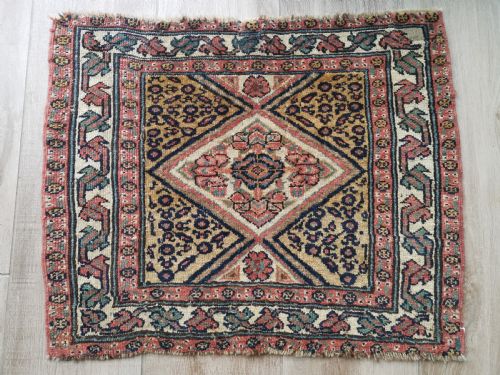


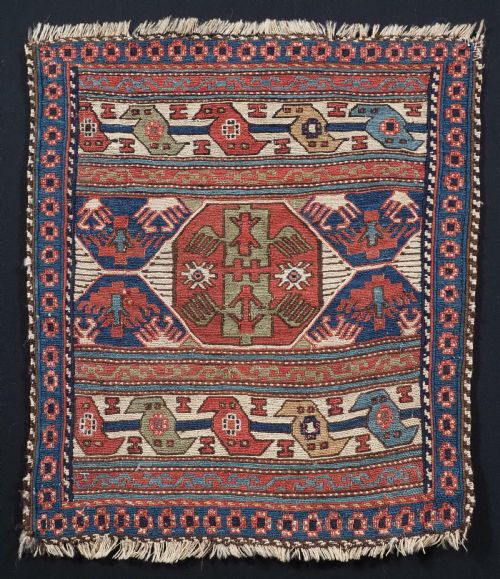

Terracotta Wool Khorjin
These terracotta wool khorjin are genuine tribal saddle bags and bag faces woven by nomadic groups in Persia and the Caucasus during the nineteenth and early twentieth centuries.
Terracotta Wool Khorjin
When you search for terracotta wool khorjin, you are looking at utilitarian textile art created by nomadic and tribal weavers across Persia and neighbouring regions. These pieces include complete double saddle bags with their original backs, individual bag faces, and storage bags utilised in daily nomadic life.
You are most likely to encounter nineteenth-century examples on this page, particularly bag faces and saddle bags originating from groups such as the Shahsavan, Qashqai, Kurdish, Khamseh, and Baluch. These textiles served practical functions for transport and storage before being repurposed or preserved as decorative items.
Factors of Quality
The refinement of the weave and the complexity of the tribal motifs dictate the upper tier of these textiles. Pieces featuring intricate pictorial elements like birds and dragons alongside crisp geometric medallions demonstrate superior craftsmanship.
Preservation of the original structure, including the back panels and complete saddle bag construction, elevates an example. The depth and clarity of the natural dyes used in the hand-spun wool further distinguish finer weaving.
Listings feature nineteenth and early twentieth-century pieces spanning 1870 to 1930, utilising hand-spun wool and natural dyes.
The Terracotta Wool Khorjin Glossary
- Khorjin
- A traditional Persian double saddle bag utilised by nomadic tribes for transport and storage. These pieces were draped over animals and featured two compartments.
- Soumak
- A flatweave technique involving wrapping weft threads over the warp to create a textured, durable surface. This method allows for precise geometric patterning without a cut pile.
- Bag Face
- The decorative front panel of a storage or saddle bag that remains visible when packed. Many surviving examples are separated bag faces rather than complete bags.
- Hand-spun wool
- Wool yarn spun by hand rather than by industrial machinery, resulting in variable thickness and a rich absorption of natural dyes. This material forms the primary pile of these tribal pieces.
Terracotta Wool Khorjin: Frequently Asked Questions
What is a khorjin?
A khorjin is a traditional double saddle bag made by nomadic weavers for carrying possessions during seasonal migrations. These functional objects were constructed to withstand the rigours of daily tribal life.
Today, collectors appreciate them for their intricate tribal patterns and the quality of their hand-spun wool and natural dyes.
How were these bags used?
Tribal groups utilised these textiles as saddle bags draped over pack animals or as storage sacks inside tents. They held household goods, grain, and personal belongings.
Over time, many complete double bags were separated into individual bag faces for easier display or trade.
How do I date a tribal bag face?
Dating relies on examining the materials, dye types, and structural characteristics visible in the weave. Nineteenth-century examples typically feature hand-spun wool and a palette derived from natural sources.
Stylistic markers specific to groups like the Shahsavan or Qashqai also help place a piece within a particular period.
How should I display a textile?
These pieces can be mounted on a wall using a non-damaging display method or utilised as small accent rugs on flat surfaces. Keeping them away from direct sunlight preserves the natural dyes.
Gentle vacuuming without a rotating brush helps maintain the hand-knotted pile and flatweave structures.