


Handwoven Wool Bagface
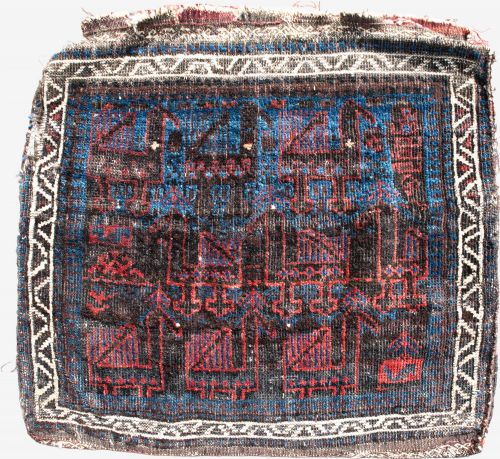
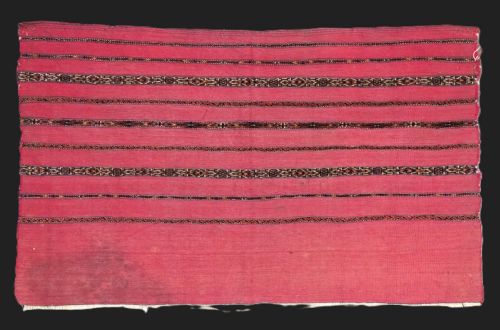
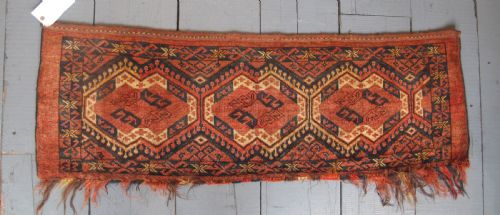
These handwoven wool bagface textiles are tribal panels salvaged from larger saddlebags and storage sacks, prized for their dense geometric patterns and rich natural dyes.
Handwoven Wool Bagface
A handwoven wool bagface represents the decorative front panel of a nomadic or tribal storage container, preserved long after the plain back and sides disintegrated. These panels were originally woven by Turkmen, Baluch, Qashqai, and other tribal groups for utilitarian purposes within tents and camps.
The pieces encountered on this page span from the mid-nineteenth century up to the early twentieth century. They manifest primarily as smaller torba or chuval faces, alongside occasional bird bag designs and cushion conversions.
Nomadic weavers utilised local materials to create durable household furnishings that doubled as dowry items. Each surviving fragment displays the distinct tribal iconography and knotting techniques of its maker.
Materials and construction
These textiles rely entirely on hand-spun wool for the pile and foundation yarns, often supplemented with goat hair for durable selvedges and structural perimeters. The reliance on natural dyes produces a shifting palette of madder reds, indigo blues, and earthy browns that mature gracefully over decades.
Weavers employed tight knotting techniques on vertical looms set up in camp environments. The resulting fabric is dense and resilient, designed to withstand the rigours of nomadic transport and daily domestic use.
Materials documented in these textiles include hand-spun wool, natural dyes, cotton foundations, and structural goat hair.
Judging quality and handle
Quality in a handwoven wool bagface rests upon the density of the knotting and the crispness of the drawing. Finer weaves allow for intricate geometric precision in motifs such as curled leaves and bird patterns.
The depth and saturation of the natural dyes dictate visual success. Superior examples exhibit subtle abrash where dye batches shift slightly across the wool, adding texture and movement to the surface.
The Handwoven Wool Bagface Glossary
- Bagface
- The decorative front panel of a nomadic storage bag or saddlebag. It is the portion preserved and framed as a textile.
- Chuval
- A large Turkmen storage bag used for bedding and household goods. The face of this sack is prized for its spacious main guls.
- Torba
- A smaller Turkmen storage bag traditionally hung against the tent wall. These display horizontal rows of primary guls.
- Abrash
- Variation in colour within a single field of wool caused by differences in dye batches or hand-spun yarn lots. It creates a striated, organic appearance.
- Gul
- A repeated octagonal or medallion-like motif used in tribal weaving. Each design often identifies a specific tribe or clan.
Handwoven Wool Bagface: Frequently Asked Questions
What is a bagface?
A bagface is the ornamented front panel of a utilitarian nomadic sack, cut away and preserved when the rest of the storage bag wore out.
These panels were made by tribal weavers across Central Asia and Persia to store household items inside tents.
How were they used?
Nomadic families used these woven sacks to transport and store bedding, clothing, and domestic provisions on camels and horses.
Over time, the decorative faces were separated from plain utility backs to be kept as portable wealth or dowry items.
How do I display one?
Many collectors mount these textile panels flat on linen backing or hang them directly on interior walls using conservation-safe clips.
They also function well as small floor mats in low-traffic areas or as cushion covers for furniture.
How do I date a piece?
Dating relies on assessing the wool quality, the chemical composition of the natural dyes, and the structural fineness of the weave.
Nineteenth-century examples typically show softer wool handles and complex tribal motifs distinct from later twentieth-century work.