

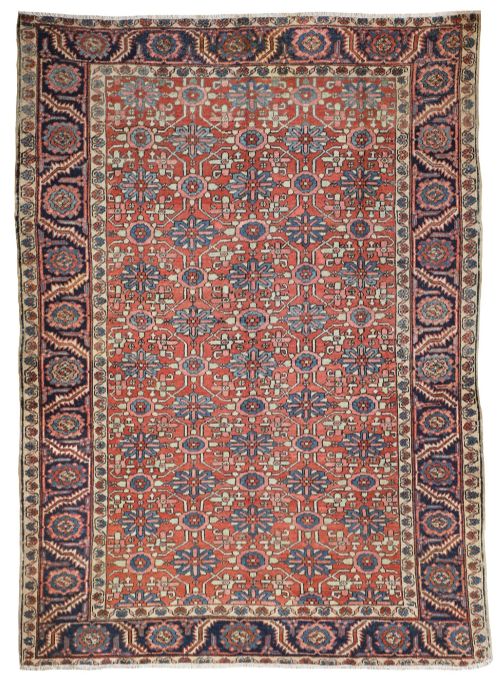

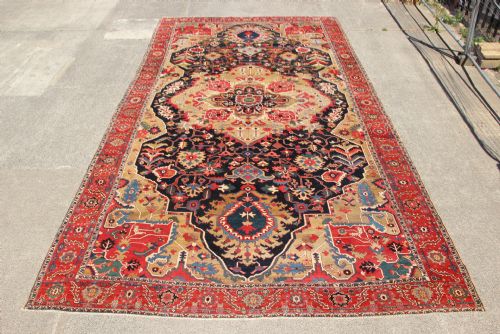


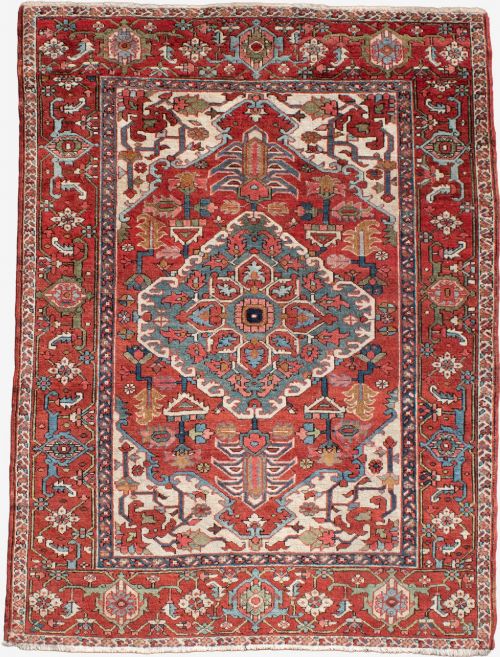


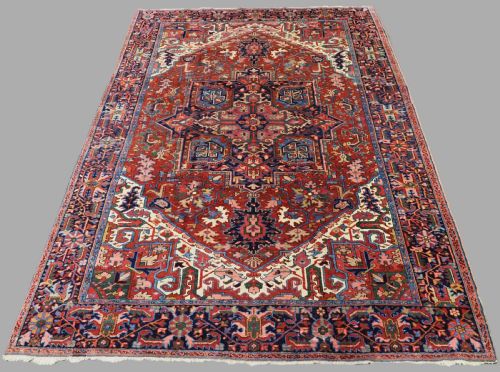


Terracotta Serapi Carpet
These terracotta serapi carpets are large woven floor coverings originating from North-West Persia, prized for bold geometric medallions and durable wool construction.
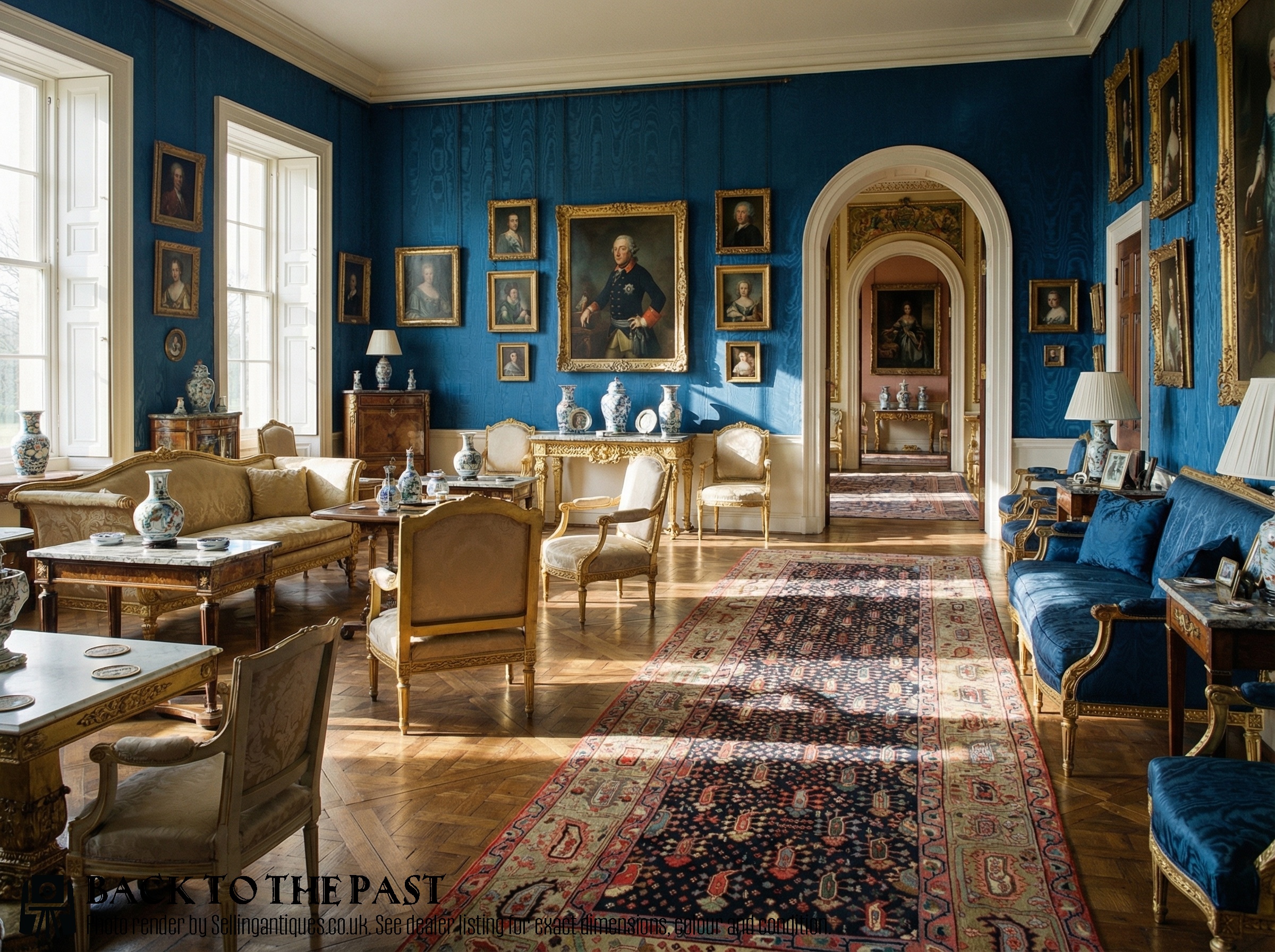
Terracotta Serapi Carpet
When you examine a terracotta serapi carpet, you look at room-sized floor coverings originating from the North-West Persia region during the nineteenth and early twentieth centuries. The pieces on this page span several decades from the eighteen-sixties through to the nineteen-thirties, though items bearing the Serapi designation typically cluster in the earlier Victorian decades.
The form is dominated by large formats, room-sized area carpets, and occasional long hallway runners. You will most frequently meet traditional Persian Heriz designs, which share a close workshop heritage with Serapi weaves and often present similar geometric medallion layouts.

Materials and construction
These carpets are constructed using durable wool pile hand-knotted onto sturdy cotton foundation warps and wefts. This combination provides the structural integrity needed for large floor-going textiles while maintaining a dense, resilient surface.
Weavers utilised traditional hand-knotting techniques characteristic of North-West Persia, building geometric patterns from memory or cartoons with local wool and natural dyestuffs.
Every large carpet carries the invisible rhythm of different hands knotting wool by village windows.
Judgements of quality
Quality in these carpets rests upon knot density, the crispness of the geometric drawing, and the handling of the terracotta ground colour. Finer examples display precise outlines within the central medallion and well-balanced secondary borders.
The condition of the wool pile and the integrity of the cotton foundation determine the durability of the piece. Even wear across a large surface indicates balanced usage, whilst surviving original selvedges and end finishes elevate the standing of the carpet.

The Terracotta Serapi Carpet Glossary
- Serapi
- A sub-category of Heriz carpets from North-West Persia, generally distinguished by bolder, more open geometric designs and earlier production dates.
- Heriz
- A town and carpet-weaving region in North-West Persia known for durable room-sized floor coverings with pronounced central medallions.
- Medallion
- The prominent central ornament set within the field of the carpet, typically geometric in these North-West Persian workshops.
- Warp
- The vertical cotton threads stretched tightly on the loom that form the foundational skeleton of the knotted carpet.
- Weft
- The horizontal cotton threads passed between rows of knots to bind the structure together across the width of the rug.
Terracotta Serapi Carpet: Frequently Asked Questions
What is a terracotta serapi carpet?
A terracotta serapi carpet is a large, hand-knotted floor textile originating from North-West Persia. These pieces date from the nineteenth and early twentieth centuries.
They are defined by a distinctive terracotta red ground colour and bold geometric medallion designs. The style sits closely alongside traditional Heriz carpet production.
How do I tell Serapi and Heriz apart?
Serapi carpets typically date from the nineteenth century and exhibit looser, more spacious geometric drawing with prominent large medallions. Heriz carpets often continue into the twentieth century with slightly finer, more detailed floral-geometric integration.
Both share the same North-West Persian origins and durable wool-on-cotton construction. The nomenclature often reflects dealer distinctions in age and design boldness rather than entirely separate weaving traditions.
How should I care for a large carpet?
Place a quality underlay beneath the carpet to prevent slipping and reduce friction between the wool pile and hard flooring. This cushions the cotton foundation during everyday foot traffic.
Vacuum gently using a suction-only attachment without a rotating beater brush. Rotate the carpet periodically to ensure even exposure to natural light and wear.
Where were these carpets made?
These carpets were produced in the Heriz region of North-West Persia, an area renowned for robust village and town weaving. Local sheep provided the sturdy wool used for the pile.
Weavers worked in households and local workshops, utilising cotton for the structural warps and wefts. The resulting textiles were traded regionally and exported internationally.