




Terracotta Portrait Bust
A terracotta portrait bust captures character and form through modelled earth, offering a timeless study in human expression.
Terracotta Portrait Bust
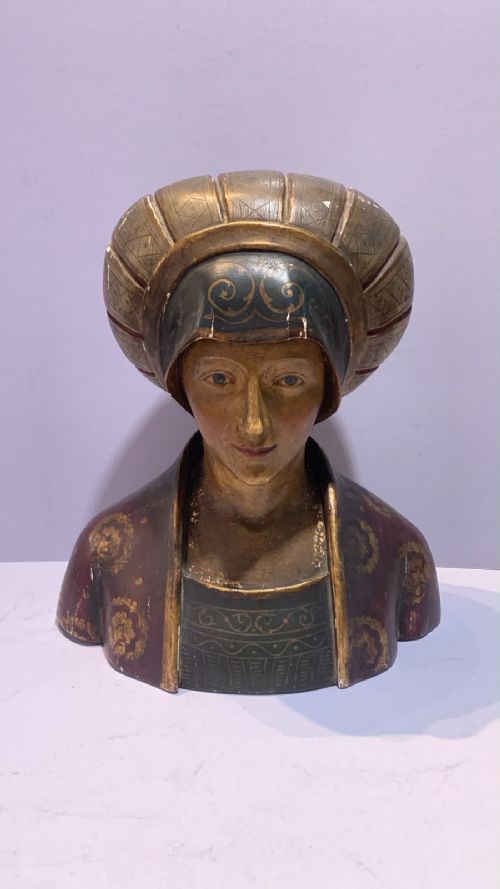
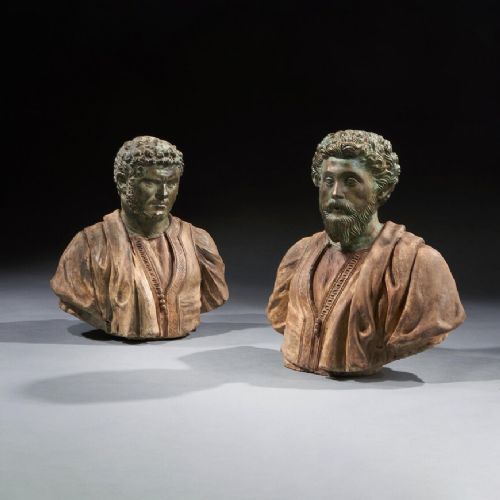
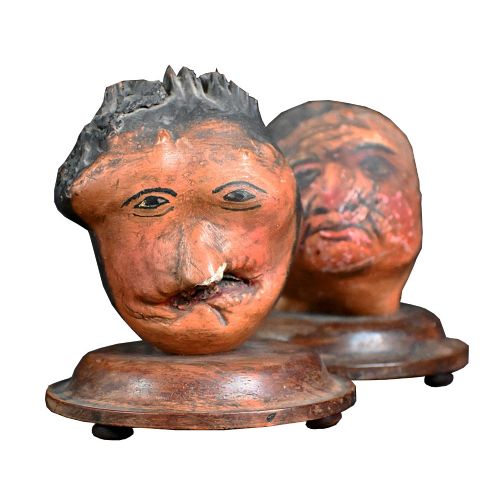
A terracotta portrait bust presents the head and shoulders of a subject, modelled in clay and fired to permanence. These works capture historical figures, mythological characters, and private sitters with striking immediacy.
The pieces appearing on this page span several centuries, with a strong representation of nineteenth-century Neoclassical and Art Nouveau interpretations. Makers often looked to classical antiquity, rendering Caesars, nobility, and classical women.
Forms range from intimate desk-sized studies to monumental gallery pieces, occasionally mounted on wood or integrated with gesso and gold leaf accents.
Materials and methods
Makers shaped moist clay by hand, often utilising moulds for secondary elements before firing the material in kilns to achieve a durable ceramic body. Plaster and glass paste also appear alongside clay within these sculptural groups.
Surfaces frequently receive applied paint, polychrome detailing, or bronzed finishes to imitate metalwork, enhancing the depth of hair, drapery, and flesh tones.
Terracotta Portrait Bust Retail Price Guide 2026
Typical asking prices for terracotta portrait bust among the pieces listed under this phrase on Sellingantiques today, from the lower quarter to the upper quarter. They describe what is for sale here now, not the wider market.
Listings feature periods ranging from the eighteenth century through the 1940s, utilising terracotta, plaster, paint, and gold leaf.
Judging quality
The sophistication of the surface finish also determines excellence, where applied polychrome, paint, or bronzing supports rather than obscures the underlying form.
Ernst Whaliss·Georges Morin·Bohumil Rezl·Reps and Trinte·A Gory·Goldscheider
The Terracotta Portrait Bust Glossary
- Terracotta
- Fired unglazed clay of a brownish-red colour. It serves as a primary medium for sculptural portraits due to its responsiveness to the modeller's hand.
- Polychrome
- Decoration in multiple colours applied to the surface of sculpture. This technique enhances realism in portraiture.
- Neoclassical
- A style inspired by the art of classical antiquity, prevalent in nineteenth-century sculpture. It emphasises dignified restraint and classical subject matter.
- Gesso
- A plaster-like mixture applied to surfaces as a base for painting or gilding. It provides a smooth ground for refined surface decoration.
Terracotta Portrait Bust: Frequently Asked Questions
How should I clean a terracotta portrait bust?
Dust the surface gently with a soft, dry brush to remove settled particles without disturbing the porous clay or applied paint.
Avoid using water or chemical cleaners, as moisture can damage unglazed ceramic and historic surface finishes.
Where were these portrait busts displayed?
Owners traditionally placed them on mantelpieces, libraries, and pedestals within nineteenth-century drawing rooms and studies.
They served both as academic tributes to antiquity and as fashionable interior ornaments for affluent homes.
How do I distinguish terracotta from plaster?
Terracotta is a fired ceramic material that feels heavier, denser, and warm in tone, while plaster is a gypsum-based compound that feels lighter and chalkier.
Examining the underside or any unpainted areas usually reveals the reddish-brown clay body characteristic of terracotta.
What periods do these sculptures represent?
The pieces span from eighteenth-century works through nineteenth-century revivals and into early twentieth-century Art Nouveau and Art Deco designs.
Many nineteenth-century examples draw direct inspiration from earlier Renaissance and classical Roman precedents.