



Terracotta Persian Bag Face
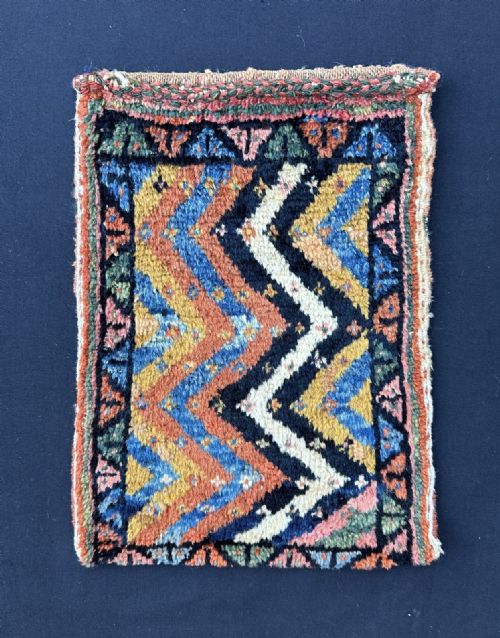
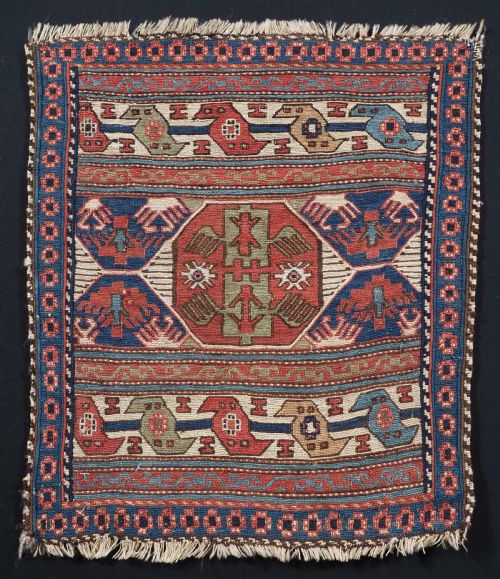
These terracotta persian bag face textiles are woven tribal saddle-bag fronts and fragments collected for their rich natural dyes and bold nomadic patterns.
Terracotta Persian Bag Face
When you search for terracotta persian bag face, you are looking at the front panels of nomadic storage sacks and saddle bags made across the nineteenth and early twentieth centuries. These fragments originate from tribal groups including the Shahsavan, Qashqai, Kurdish, Baluch, and Khamseh.
The most common form on this page is the square or rectangular bag face, often preserved when the original rear panel wore away from daily use. Makers wove these items for practical transport, utilising durable materials designed to withstand harsh nomadic conditions.
Many examples arrive converted into small cushions or retained as flat textile art, showing geometric medallions, animal motifs, and banded designs. The palette leans heavily on terracotta and earthy red tones achieved through traditional dyeing methods.
How they were made
The foundation and pile rely entirely on hand-spun wool and cotton, providing a sturdy structure for intricate weaving techniques. Artisans employed hand-knotted pile alongside flatweave soumak construction to create varied surface textures.
Natural dyes impart the distinctive terracotta colourways and secondary hues seen across these tribal textiles. The combination of local wool and botanical or mineral colourants gives each piece its characteristic depth.
Terracotta Persian Bag Face Retail Price Guide 2026
Typical asking prices for terracotta persian bag face among the pieces listed under this phrase on Sellingantiques today, from the lower quarter to the upper quarter. They describe what is for sale here now, not the wider market.
Nomadic weavers occasionally included stray camel hairs and small tufts of unspun fleece straight into the foundation wool.
What varies in quality
The fineness of the knotting and the tightness of the weave separate standard utilitarian sacks from exceptionally precise workshop or tribal work. Tighter execution allows complex geometric figures and animal motifs to remain sharp and clear.
The integrity of the natural dyes and the preservation of the original wool pile determine the visual impact of the surface. Pieces retaining their full colour range and complete borders command greater attention from collectors.
The Terracotta Persian Bag Face Glossary
- Bag face
- The decorative front panel of a nomadic saddle bag or storage sack, usually preserved after the plain back has perished. It displays the primary tribal design and weaving skill.
- Khorjin
- The traditional Persian term for a double saddle bag used by nomads for transport and storage. Complete sets feature two pouches joined by a central web.
- Soumak
- A flatweave technique involving wrapping weft threads over warp threads in a herringbone pattern. This method creates a sturdy textured surface without a cut pile.
- Pushti
- A small mat or rug used for sitting on the floor or ground within a tent. These pieces share design motifs with bag faces.
- Chanteh
- A small woven bag or pouch used by nomadic people for carrying personal items. They often mirror the patterns of larger saddle bags.
Terracotta Persian Bag Face: Frequently Asked Questions
What is a terracotta persian bag face?
A terracotta persian bag face is the surviving front section of a nomadic storage bag or saddle bag woven by tribal groups in Persia.
These fragments display traditional geometric designs and are prized for their warm terracotta and natural dye colour palettes.
How were these bags originally used?
Nomadic tribes utilised these double-sided bags draped over pack animals for transporting household goods, grain, and personal belongings.
Over decades of use, the plain backs wore out while the decorative front panels survived and entered collections as textiles.
How do I live with a bag face?
Bag faces adapt well to modern interiors as small wall hangings, framed textile art, or converted decorative cushions.
Their sturdy wool construction handles gentle placement in low-traffic areas away from direct sunlight to protect the natural dyes.
How can I tell different tribal groups apart?
Tribal origin is identified through specific combinations of knotting techniques, structural materials, and characteristic motifs like medallions or animal figures.
Groups such as the Shahsavan, Qashqai, and Baluch each maintained distinct colour preferences and structural conventions.