




Mounted Textile Art
Mounted textile art brings historical fabrics into modern interiors, offering fragments of tapestries, embroideries, and tribal weaving ready for the wall.
Mounted Textile Art
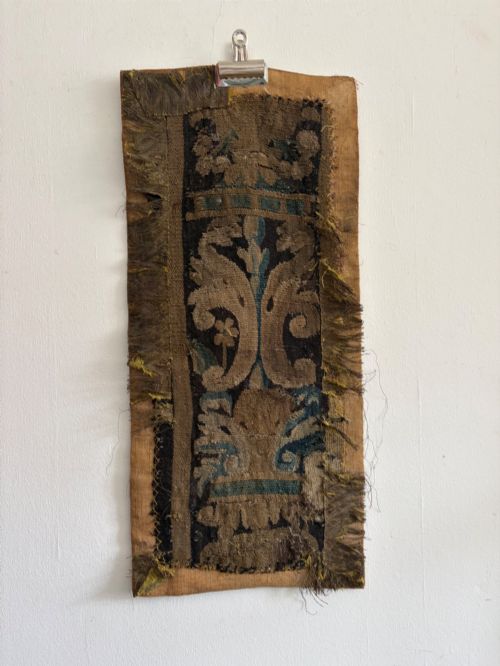
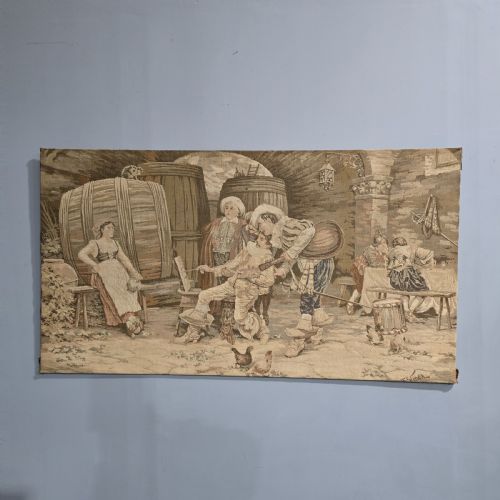
Mounted textile art encompasses historic fragments, borders, and complete panels that have been prepared for wall display. When searching for mounted textile art, collectors encounter everything from seventeenth-century verdure tapestry fragments and Flemish game park scenes to nineteenth-century silk jajim panels and Central Asian tribal bag faces.
The pieces on this page span several centuries, reaching back to the seventeen-hundreds and earlier with works like Stuart beadwork and seventeenth-century Flemish tapestries. Alongside these European examples appear pieces from diverse origins, including Persian tribal weaves, Indian silk spinning wheel displays, and Nurata suzani embroideries.
Most entries take the form of framed wall art, textile art panels, or board-mounted fragments secured to linen or backing materials for structural support. These formats preserve fragile fibres while allowing historic needlework and tapestry to be hung safely in domestic spaces.
Materials and construction
The physical substance of these works relies on natural textiles such as silk, linen, wool, and cotton, often worked with hand-spun threads and needlework. Artisans stitched intricate embroidery, beadwork, or lace using these organic fibres, frequently mounting the finished cloth onto linen, board, or wooden supports to keep the fabric flat.
Frames and enclosures incorporate wood, teak, and gilt wood, sometimes protected behind glass to shield delicate organic surfaces from dust and handling. Supporting structures utilise traditional framing techniques that secure fragile textile borders and fragments without puncturing or damaging the historic weave.
Listings feature textiles from the seventeenth, eighteenth, and nineteenth centuries, including silk, wool, linen, and cotton works mounted on wood and gilt frames.
Assessing quality and preservation
Quality in these works depends heavily on the survival of the original textile fibres, the clarity of the design, and the stability of the mounting. Pieces retaining vibrant natural dyes, tight needlework, and intact borders sit higher in the range than heavily degraded fragments.
The skill of the mounting process itself plays a significant part in the overall standard of the piece. Clean attachment to supportive linen or board, appropriate framing materials like teak or gilt wood, and careful preservation behind glass distinguish professional presentation from makeshift mounting.
The Mounted Textile Art Glossary
- Verdure tapestry
- A wall hanging or fragment depicting a landscape, foliage, trees, and plants, typically dominated by green and natural tones. These scenes often formed the background or borders of larger narrative tapestries in seventeenth and eighteenth-century interiors.
- Suzani
- A type of embroidered and decorative tribal textile made in Tajikistan, Uzbekistan, and other Central Asian countries. They are usually worked in silk thread on a cotton or linen foundation in large, bold floral patterns.
- Jajim
- A tightly woven flatweave textile produced in strips and stitched together, often featuring colourful striped geometric patterns. Originating from nomadic and village traditions, these textiles served various utilitarian purposes before being adapted for display.
- Mafrash
- A Turkmen storage bag face or panel woven by tribal groups using traditional techniques. These fragments display distinct geometric motifs and pile or flatweave structures characteristic of specific regional weaving traditions.
- Flemish tapestries
- Large-scale pictorial woven hangings produced in the Flanders region during the medieval and early modern periods. Known for intricate detail and narrative depth, surviving portions are frequently mounted as independent wall art.
Mounted Textile Art: Frequently Asked Questions
How are historic textiles mounted safely?
Historic fragments are typically secured to a neutral backing fabric like linen or mounted onto rigid boards using conservation-grade stitching. This distributes the tension evenly across the fragile weave without the use of damaging glues.
Once stabilised on a backing, the textile is often placed within a wooden frame, sometimes behind glass, to protect the delicate silk, wool, or cotton threads from atmospheric dust and physical contact.
Where should I hang textile art?
Textile art looks best on interior walls away from direct sunlight, which can fade historic natural dyes in silk and wool over time. Placing pieces in rooms with stable humidity levels helps preserve organic fibres.
Because these works vary from small embroidered panels to large framed tapestries, they suit spaces above mantelpieces, along stairwells, or as focal points in studies and living areas.
How can I tell the age of a textile fragment?
Dating relies on identifying the materials, dyes, and stylistic motifs characteristic of specific periods, such as seventeenth-century verdure designs or nineteenth-century needlework patterns. The construction techniques and preparation methods also offer clues to the era of production.
Examining the type of thread, the weave structure, and the nature of any accompanying framing provides further context for placing the piece within a century.
What is the difference between a tapestry and a suzani?
A tapestry is a pictorial textile created by weaving coloured weft threads through a warp on a loom to form an image, such as a landscape or game park scene. A suzani is an embroidered textile where needle and thread are applied to an existing woven foundation cloth.
While both result in decorative wall hangings, their underlying creation methods differ fundamentally between interlaced loom weaving and surface needlework.