




Handwoven Tribal Rug Fragment
These handwoven tribal rug fragment pieces bring nomadic textile art into a room with rich patterns and honest historic textiles.
Handwoven Tribal Rug Fragment
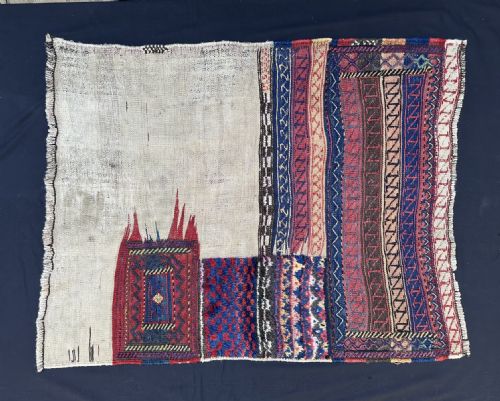
A handwoven tribal rug fragment typically originates as a portion of a larger nomadic item such as a torba face, chuval face, or saddlebag. These survivals come from Persian and Central Asian groups, including Lori-Bakhtiari, Afshar, Qashqa'i, and Turkmen tribes. You are most likely to meet nineteenth-century dowry pieces and utilitarian sacks reduced to manageable panel formats.
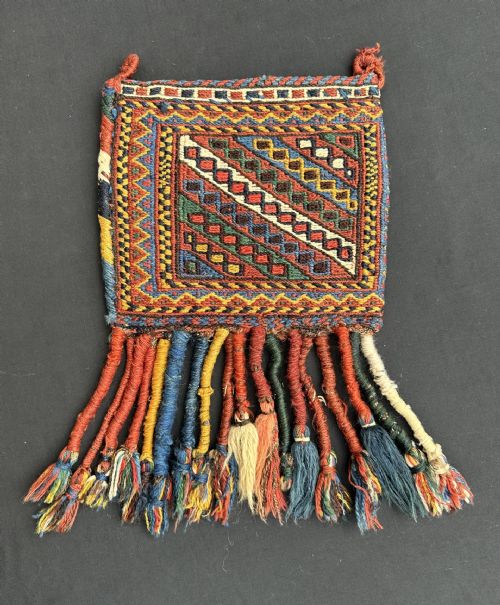
The functional origins of these fragments account for their varied shapes and dense structural weaves. Pieces range from small personal vanity bags and chantehs to larger tent bands and wheat-sacks. Each item preserves the distinct tribal motifs and regional weaving traditions of its nomadic maker.
Materials and construction
Weavers constructed these textiles using hand-spun wool foundations and piles, occasionally incorporating white cotton and crimson silk details. Natural dyes provide the enduring palette seen across the pieces, which date primarily from the late nineteenth century to the early twentieth century. Fine weaves demonstrate the high level of technical skill required for nomadic dowry and storage weaving.
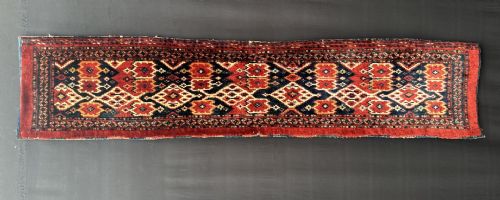
Nomadic workshops and tribal households produced these works on portable vertical or horizontal looms. The resulting structures range from standard piled surfaces to intricate tent bands known as tegerich, reflecting the demanding physical conditions of Central Asian and Persian tribal life.
Handwoven Tribal Rug Fragment Retail Price Guide 2026
Typical asking prices for handwoven tribal rug fragment among the pieces listed under this phrase on Sellingantiques today, from the lower quarter to the upper quarter. They describe what is for sale here now, not the wider market.
Nomads wove elaborate wedding camel trappings so the bride's beast would outshine the entire desert caravan.
Assessing quality
Quality rests in the tightness of the weave, the clarity of the tribal motifs, and the preservation of the natural dyes. Superior examples exhibit exceptional knot density and refined handling of traditional guls or field designs, such as Salor or Kedjebe patterns.
The integrity of the remaining wool pile and the survival of secondary materials like silk and cotton distinguish finer fragments. Greater visual impact comes from crisp geometric execution and balanced proportions within the surviving textile section.
The Handwoven Tribal Rug Fragment Glossary
- Torba
- A small storage bag produced by Turkmen tribes, often featuring multiple guls on the face panel. These pieces were used inside tents for storing household possessions.
- Gul
- A medallion motif repeated across Turkmen and Central Asian carpets and tribal fragments. Each distinct pattern often identifies the specific tribe that wove the textile.
- Chanteh
- A small personal bag or vanity pouch woven by Persian nomadic tribes such as the Afshar. They served practical carrying purposes for personal items.
- Chuval
- A large storage bag made by Turkmen weavers, generally featuring primary gul arrangements on the main field. Surviving faces preserve the intricate tribal iconography of the original sack.
- Tegerich
- A piled tent band produced by Kyrgyz weavers in Central Asia. These narrow bands served both structural and decorative functions within nomadic dwellings.
Handwoven Tribal Rug Fragment: Frequently Asked Questions
What is a tribal rug fragment?
A tribal rug fragment is a surviving portion of an older nomadic textile, such as a bag face, tent band, or storage pouch. These pieces preserve the traditional designs and weaving techniques of Persian and Central Asian tribes.
Collectors frame or display these panels to enjoy the historic wool work, natural dyes, and tribal motifs without housing a full-sized carpet.
How were these bags used?
Nomadic groups utilised these items for practical storage inside tents, holding grain, clothing, or personal belongings during migration. Pieces like torbas and chuvals formed essential parts of a bride's dowry.
Over time, wear separated the decorative faces from the utilitarian backs, leaving durable panels prized for their artistic tribal designs.
How do I identify different tribes?
Tribal attribution relies on specific design elements, such as the repeating guls on Turkmen torbas or the characteristic palette of Afshar and Qashqa'i bag faces. Regional structures and wool characteristics further distinguish Persian groups from Central Asian makers.
Examining the border patterns, colour combinations, and knotting styles reveals the specific nomadic heritage of each textile.
How do I care for a fragment?
Display these textiles away from direct sunlight to protect the natural dyes from fading over time. Gentle vacuuming with a low-suction attachment helps remove dust without damaging the historic wool pile.
Mounting the fragment properly distributes its weight and prevents stress on the old cotton or wool foundation fibres.