


Tekke Wool Weaving
Tekke wool weaving comprises tribal carpets, torbas and chuvals originating from Central Asia during the nineteenth and early twentieth centuries.
Tekke Wool Weaving
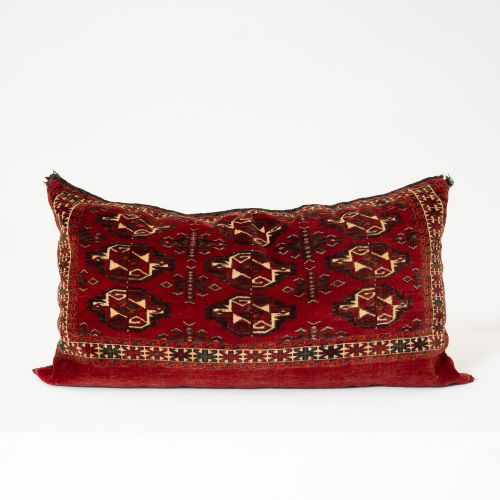
Tekke wool weaving encompasses traditional Turkmen tribal items such as tent bands, dowry rugs, engsi wall hangings and storage bags like chuvals and torbas. These pieces reflect nomadic Central Asian culture, created by weavers utilising wool, cotton, silk and linen.
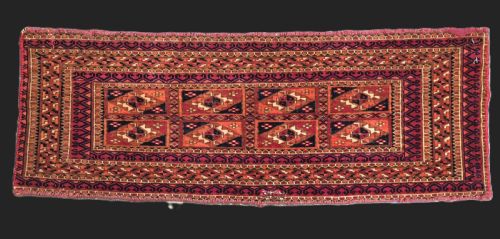
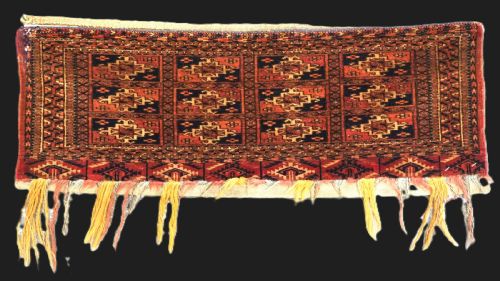
The items found here frequently date from the nineteenth century, including examples from eighteen-fifty, eighteen-seventy and eighteen-eighty, alongside early twentieth-century pieces up to nineteen-twenty. Chuval faces and torba fragments often display distinct tribal guls and geometric patterns.
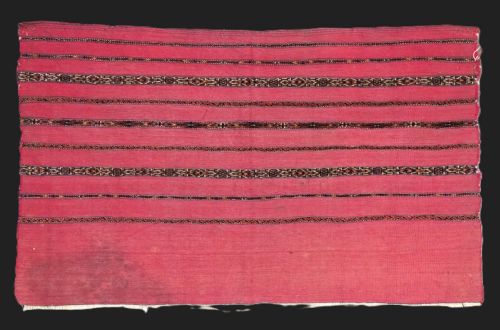
Buyers will most commonly encounter individual bag faces and complete storage sacks fitted with plain weave backs or hanging loops. Larger formats such as carpets and tent bands appear less frequently within the selection.
Materials and Construction
Makers constructed these textiles predominantly from wool foundations and piles, occasionally incorporating cotton and linen for structural strength or foundation warps. Natural dyes provided the palette for traditional designs.
Selected pieces feature silk highlights or structural elements that accentuate specific motifs like guls, curled leaf designs and tree patterns. Fine weaves require meticulous knotting techniques developed across generations of nomadic makers.
A remarkably resilient fifty-foot tent band preserves the scale of nomadic architecture.
Evaluating the Weaving
Quality rests upon the density of the weave and the precision of the drawing within motifs such as Salor guls or aina gul designs. Finer knotting allows intricate geometric patterns to appear sharp and well-defined.
The vibrancy and depth of natural dyes dictate visual success, alongside the survival of original plain weave backs and hanging loops. Intact structural completeness elevates individual dowry rugs and chuvals.
The Tekke Wool Weaving Glossary
- Chuval
- A large tent bag utilised by nomadic tribes for storage inside a yurt. These pieces often survive as decorative bag faces.
- Torba
- A smaller storage bag traditionally hung on the lattice walls of a Turkmen tent. They display characteristic tribal guls and borders.
- Gul
- A primary medallion or repeating motif used in Turkmen carpet design. Different tribal groups employ distinct variations.
- Engsi
- A rug specifically designed to hang over the doorway of a yurt. They feature specialised layouts divided into quarters.
- Mafrash
- A rectangular storage container or travel bag used in nomadic households. Faces and panels are frequently collected independently.
Tekke Wool Weaving: Frequently Asked Questions
What is a chuval used for?
Nomadic weavers utilised chuvals as large storage bags inside traditional tents to hold household goods and bedding. They functioned as both utilitarian containers and essential elements of dowry furnishings.
Over time, many chuvals have been separated into individual bag faces for display as wall textiles or decorative carpets.
How do I identify a torba?
A torba is a smaller storage bag than a chuval, distinguished by its horizontal rectangular proportions and tribal guls. They hung along the interior walls of Turkmen tents for smaller possessions.
Many examples survive today as single faces complete with geometric borders and characteristic central medallions.
What are natural dyes?
Natural dyes derive from plant, root and insect sources utilised by traditional weavers to colour wool yarns before knotting. These colourants produce rich tones that develop subtle patination over decades.
They form a defining characteristic of nineteenth-century Central Asian tribal textiles.
Where were these textiles made?
Nomadic and semi-nomadic Turkmen tribes produced these woven objects across Central Asia, including regions associated with the Tekke and Saryk groups. Weavers worked within tribal communities using locally sourced materials.
Their output reflects the artistic traditions of the nineteenth and early twentieth centuries.