
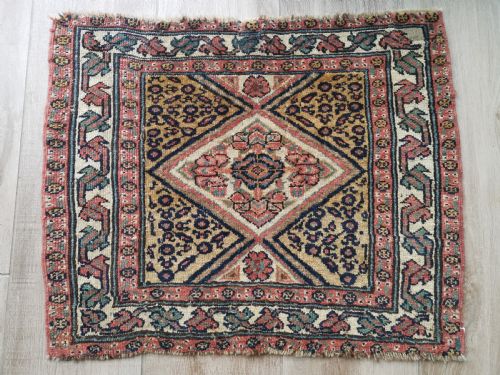


Small Oriental Hanging
A small oriental hanging brings texture and tribal geometry to a wall, offering portable woven art rooted in centuries of nomadic tradition.
Small Oriental Hanging
When you search for a small oriental hanging, you encounter portable textile fragments created by tribal and village weavers across Central Asia, Persia, the Caucasus, and Anatolia. These pieces typically originate as storage bags, saddlebag faces, torbas, mats, or small prayer rugs produced from the nineteenth century into the early twentieth century.
Because nomadic households moved frequently, format sizes remained compact and portable, making these textiles well suited for modern wall suspension. The survivals span from geometric tribal compositions to fine silk prayer formats and embroidered Suzani panels.
Materials and Technique
The construction relies heavily on hand-spun wool, cotton, and occasionally silk, dyed with natural colourants that yield rich crimson, madder, and indigo tones. Weavers utilised traditional pile-weaving techniques alongside flat-woven kilim structures and silk embroidery on cotton foundations.
Nomadic workshops depended on locally sourced materials, meaning wool quality often reflects the harsh climates in which the sheep grazed, producing dense, resilient piles. Structural details such as white cotton highlights, silk supplementary wefts, and intricate geometric gul motifs demonstrate disciplined hand-knotting traditions passed down through generations.
Some small hangings started life as camel luggage before finding a quiet retirement on a living room wall.
Design and Execution
Quality in these textiles rests upon knot density, precision of the geometric layout, and the brilliance of the natural dyes used. Finer examples display meticulous execution of complex tribal emblems, such as kepse or schemle guls, maintaining straight vertical lines and balanced proportions across a diminutive format.
Condition and completeness also dictate distinction, separating heavily used utility fragments from pristine dowry pieces that retain their original elem borders and selvedges. The depth of the colour palette and the crispness of the secondary motifs further distinguish standard village weaving from exceptional tribal artistry.
The Small Oriental Hanging Glossary
- Torba
- A small horizontal storage bag traditionally used in Turkmen tents for household items. These pieces were often woven as part of a bride's dowry.
- Chuval
- A large tent bag used for storage, frequently encountered today as a fragment or single face adapted for hanging. They typically display multiple guls.
- Gul
- A primary medallion or repeating octagonal motif used in Turkmen and Central Asian rug design. Each tribal group favoured distinct geometric configurations.
- Suzani
- An embroidered textile panel originating from Uzbekistan, executed with silk thread on a cotton or linen foundation. Designs often feature floral and vine patterns.
- Pushti
- A small mat or rug designed for individual seating or kneeling. They share dimensions common with modern wall displays.
Small Oriental Hanging: Frequently Asked Questions
How do I hang a textile safely?
Mounting a small textile requires distributing the weight evenly across the top edge using a non-damaging sleeve or specialised rug clips. Avoid piercing the fabric directly with nails or hooks, as this stresses the wool foundation over time.
Keep the hanging away from direct sunlight and damp walls to preserve the natural dyes and organic fibres. Periodic gentle brushing helps prevent dust accumulation within the pile.
What is a bag face?
A bag face is the decorative front panel of a utilitarian nomadic storage sack, separated from the plain back over decades of use. These panels preserved the finest weaving while the utilitarian backs deteriorated.
Because they were made for daily camp life, they capture authentic tribal expression in a compact, square or rectangular shape ideal for interior display.
How do I identify a Turkmen piece?
Turkmen weaving is recognised by its deep crimson colour palette, wool foundations, and repeating octagonal gul motifs arranged in strict geometric rows. Tribal subgroups like the Yomut, Saryk, and Tekke each utilised specific drawing styles and border arrangements.
Examining the structural details on the reverse helps reveal whether the piece originated as a torba, chuval, or tent hanging.
Are natural dyes easy to spot?
Natural dyes derived from plants, roots, and insects exhibit a subtle variation in tone known as abrash, where the colour shifts gently across the rows of knots. These dyes age gracefully, mellowing into harmonious secondary shades rather than fading harshly.
Synthetic aniline dyes, introduced in the late nineteenth century, tend to remain flat and can bleed when exposed to moisture.