



Tapestry Seat Footstool
These tapestry seat footstools bring tactile historical texture to a room, offering low seating or a rest for tired feet.
Tapestry Seat Footstool
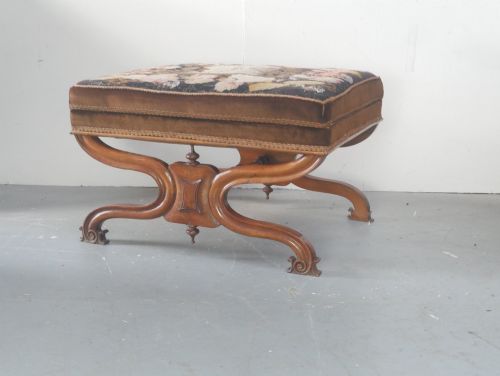
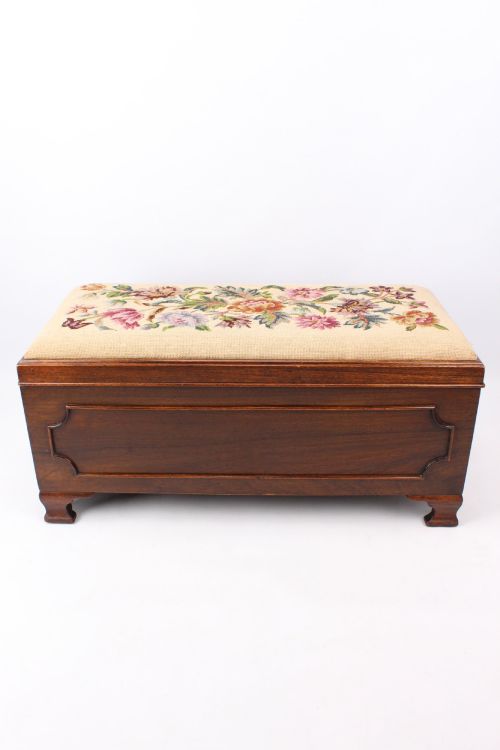
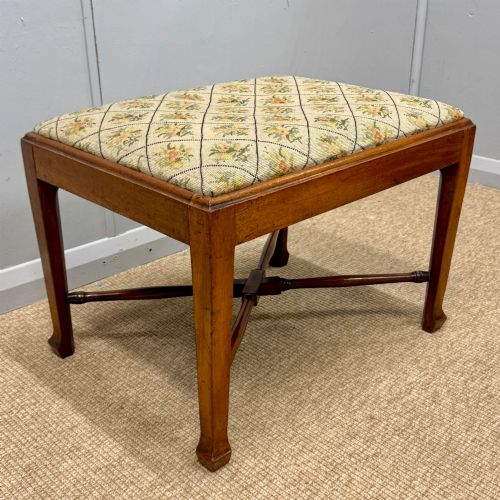
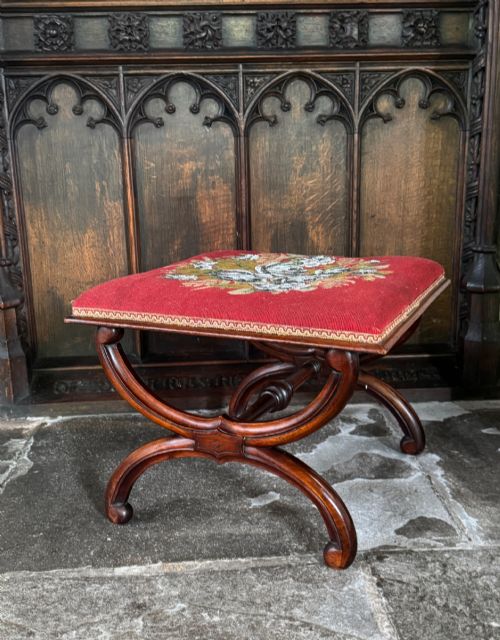
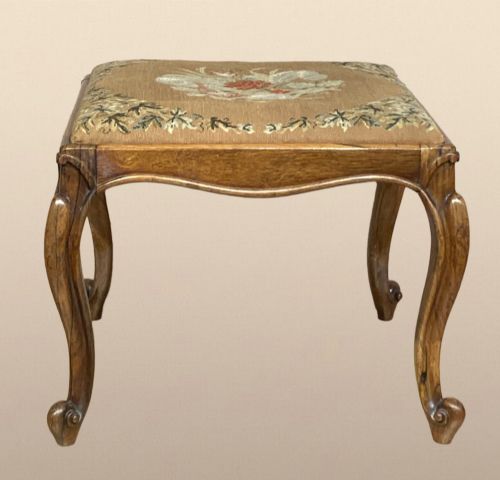
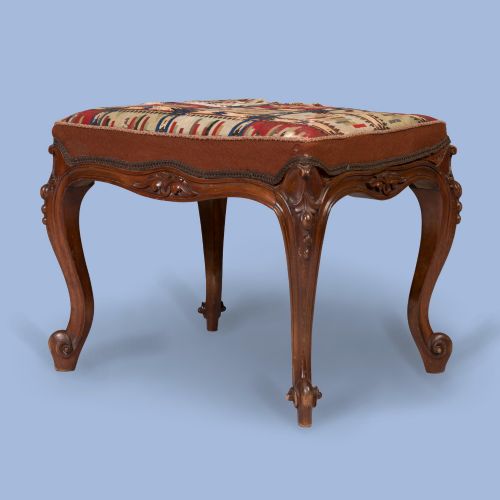
A tapestry seat footstool combines a sturdy wooden frame with a decorative textile top, serving as a low seat, ottoman, or dressing table companion. When you search for this phrase, you encounter diverse forms ranging from simple x-frame stools to elaborate window seats and piano stools.
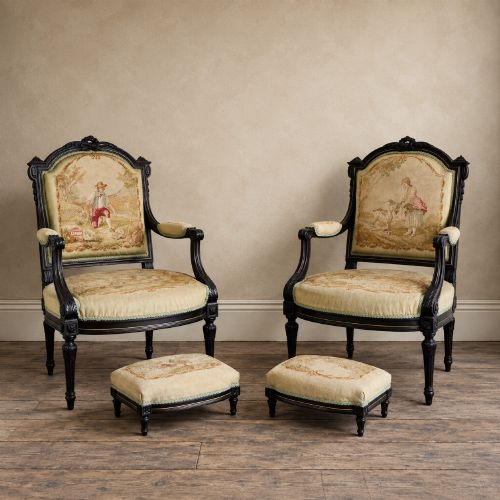
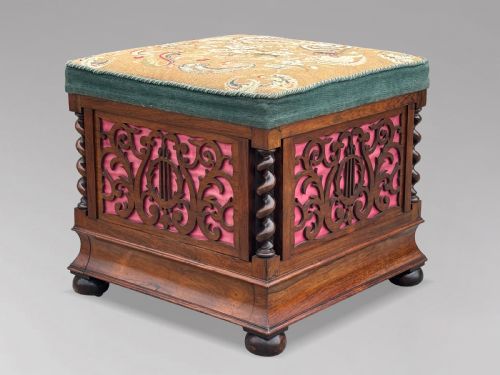
The pieces appearing on this page date predominantly from the nineteenth century, including Victorian walnut and mahogany examples alongside revival styles. You meet walnut dressing stools, rosewood piano seats, and larger ottomans designed for country houses.
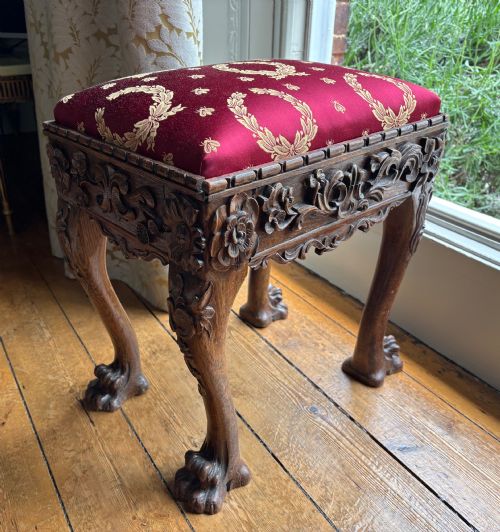
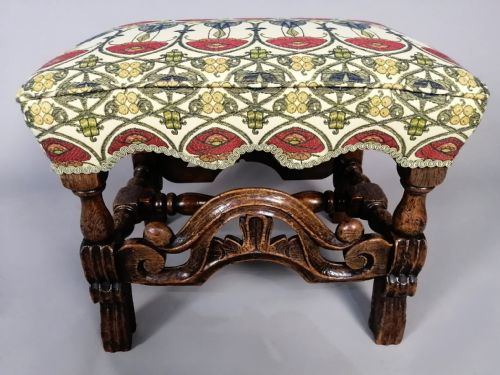
Makers produced these seats in various regional styles, such as Scottish Baronial or French revival, adapting historical aesthetics for domestic comfort. Queen Anne style influences appear frequently, often matched with cabriole legs and needlepoint upholstery.
Materials and Construction
Craftsmen built the frames using dense hardwoods like walnut, mahogany, and rosewood, sometimes employing oak, beech, or ebonised finishes. These timbers provided the structural integrity needed to support carved details like cabriole legs, cross stretchers, and x-frames.
The characteristic seats utilise hand-worked textiles, incorporating tapestry, needlepoint, needlework, beadwork, kilim, velvet, and wool fabric. Artisans stretched these durable woven surfaces over padded frames, securing them to support daily use.
Certain Victorian walnut window seats feature carved hunting dog heads peering out from the wooden frame.
Distinctions in Quality
Quality rests upon the crispness of the timber carving and the complexity of the frame architecture, such as a well-proportioned x-frame or solid mahogany chassis. Finer examples display deeply carved cabriole legs or detailed animal motifs rather than plain, utilitarian turnings.
The integrity and fineness of the textile top dictate much of the piece's standing, particularly when the needlepoint or tapestry work shows intricate pictorial detail and tight stitching. Original fabric seats that retain their historical character elevate the overall integrity of the piece.
Hallett & Sons·Jas Shoolbred
The Tapestry Seat Footstool Glossary
- Cabriole leg
- A furniture leg that curves out and then in, resembling an animal's leg. This shape appears frequently on Queen Anne style stools.
- X-frame
- A structural base formed by intersecting diagonal wooden members that create an X shape when viewed from the side. These frames provide robust support for dressing stools.
- Needlepoint
- A type of canvas work embroidery executed with wool yarn, creating the durable decorative top seen on many nineteenth-century footstools.
- Cross stretcher
- Horizontal wooden rods connecting the legs of a stool to provide stability. They often feature central bosses or turning details.
- Ottoman
- A low upholstered seat or footstool without a back or arms, sometimes incorporating internal storage space.
Tapestry Seat Footstool: Frequently Asked Questions
How do I date a footstool?
Dating relies on identifying the underlying timber, the construction techniques, and the stylistic revival period of the frame. Victorian and nineteenth-century examples often feature rosewood or walnut with specific turning and carving details.
Comparing the legs and stretcher arrangements to documented historical periods helps narrow down the decade of production. Original textile covers also provide clues, though many pieces were re-covered during their working lives.
Where were footstools used?
These stools found places in drawing rooms, bedrooms, and dressing rooms alongside armchairs, dressing tables, and pianos. Window seats served near bright living room apertures for reading or sewing.
Larger ottomans and box seat stools provided both a resting place and discreet storage in grand country houses. Smaller dressing stools sat neatly beneath vanity tables for daily grooming routines.
How do I live with a footstool?
Living with a antique footstool involves placing it as a low accent piece, a functional footrest, or an occasional seat beside larger armchairs. Their modest scale makes them versatile additions to both traditional and modern interiors.
Protecting the antique textile top from direct sunlight and heavy wear preserves the wool or tapestry work. Regular light dusting of the wooden frame keeps the walnut or mahogany finish in healthy condition.