

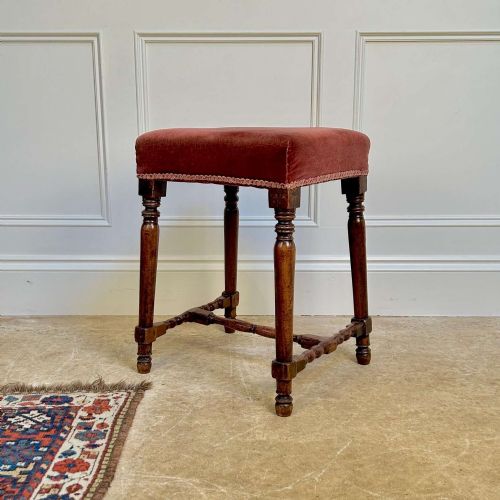


Mahogany Dressing Table Stool
A mahogany dressing table stool is a solid wood seat designed for the bedroom, offering period character and practical utility at the vanity.
Mahogany Dressing Table Stool
A mahogany dressing table stool serves as a functional seat for a bedroom vanity, appearing frequently across the Victorian and Edwardian periods in various Revival styles.
Buyers will encounter pieces spanning the nineteenth and early twentieth centuries, including Georgian and Regency examples alongside Arts and Crafts and Chippendale Revival designs.
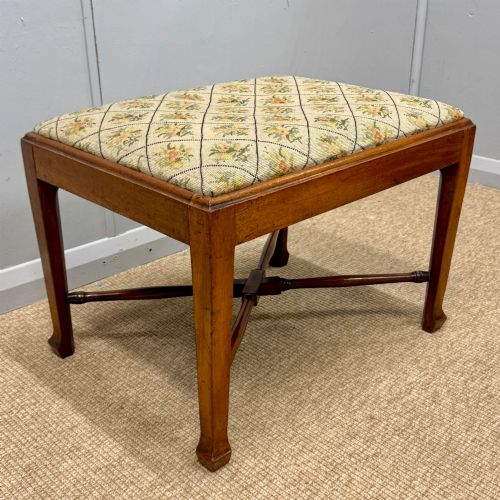
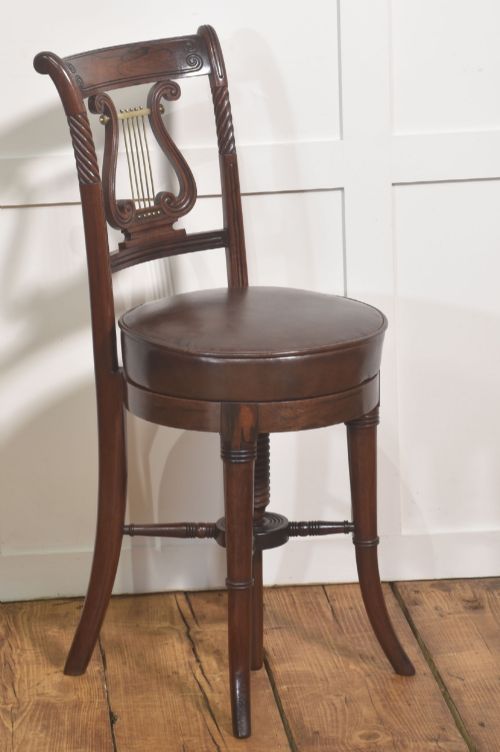
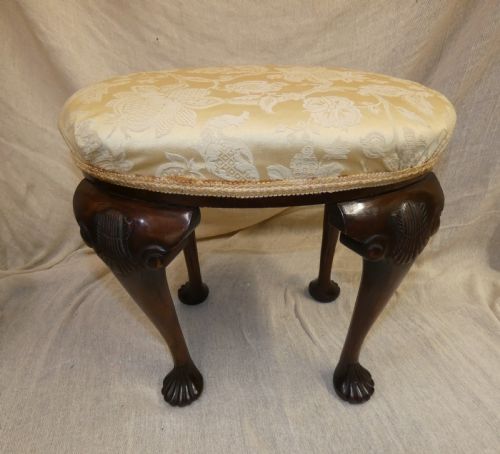
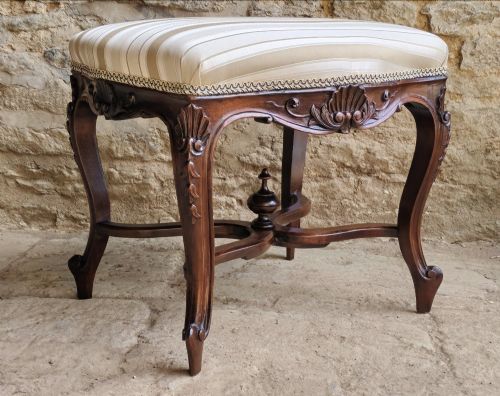
These seats take many forms, from simple square frames on cabriole legs to adjustable piano stools and pieces with cross stretchers or inlaid decoration.
What Varies in Quality
The degree of hand carving on the mahogany frame separates standard examples from finer pieces, particularly in revival styles where crisp detailing matters.
The choice and execution of upholstery materials, from simple woven fabric to needlepoint or buttoned leather, reflect the original tier of manufacture.
The archive records adjustable mechanisms on several nineteenth century piano and dressing stools.
Victorian Brooks
The Mahogany Dressing Table Stool Glossary
- Cabriole leg
- A furniture leg that curves outward at the knee and tapers inward to an ankle, common on Victorian and Queen Anne style pieces.
- Cross stretcher
- Intersecting wooden stretchers placed between the legs near the base to provide extra structural support and stability.
- Needlepoint
- Hand-stitched canvas work utilised for the decorative upholstery top of period stools.
- Damask
- A reversible figured fabric woven on a jacquard loom, frequently seen covering Victorian seats.
- X-frame
- A structural furniture base formed by intersecting curved or straight members shaped like the letter X.
Mahogany Dressing Table Stool: Frequently Asked Questions
How do I date a mahogany stool?
Dating relies on observing the timber grain, leg style, and construction methods used in the frame. Victorian pieces often feature cabriole legs or deep buttoning, while Edwardian examples commonly include inlaid wood details.
Reference points like Georgian Revival styles or Arts and Crafts influences also help narrow down the period of manufacture.
Were these stools used for pianos?
Many period stools served a dual purpose for both dressing tables and pianos or music cabinets. Adjustable mechanisms were frequently built into these seats to allow the player or user to alter the height.
Revolving tops and mechanical screw adjustments appear often in surviving nineteenth and early twentieth century examples.
How do I style a stool in a modern room?
A mahogany stool works well as a flexible accent piece in a bedroom, bathroom, or hallway. Its compact footprint allows it to slide under desks or sit quietly in a corner when not in use.
Pairing the antique wood with contemporary textiles or placing it near modern furniture creates a balanced interior mix.