




Rectangular Upholstered Stool
A rectangular upholstered stool provides a firm yet comfortable seat by the fireside or dressing table, offering both utility and period character.
Rectangular Upholstered Stool
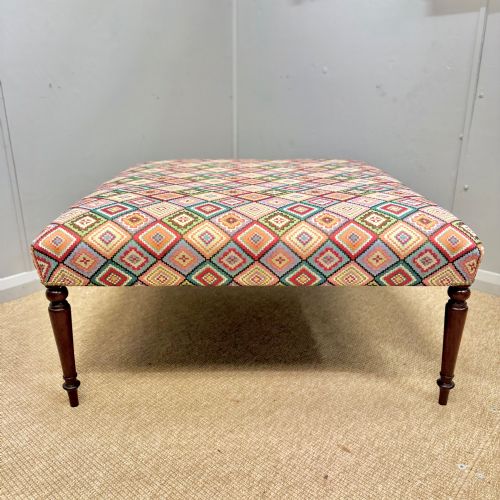
When you search for a rectangular upholstered stool, you encounter a diverse selection of low seating designed for specific domestic tasks. These pieces range from compact dressing table seats and piano stools to large ottomans and deep fireside footstools.
Victorian and nineteenth-century examples dominate the selection, often rendered in rosewood, walnut, or mahogany with carved details. You also find eighteenth-century and Edwardian pieces, alongside styles spanning George III designs to Art Deco walnut frames.
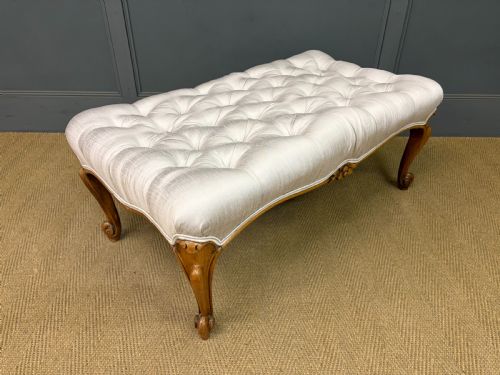
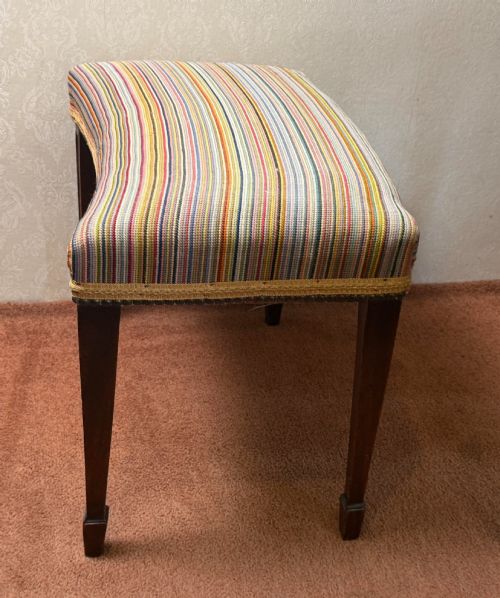
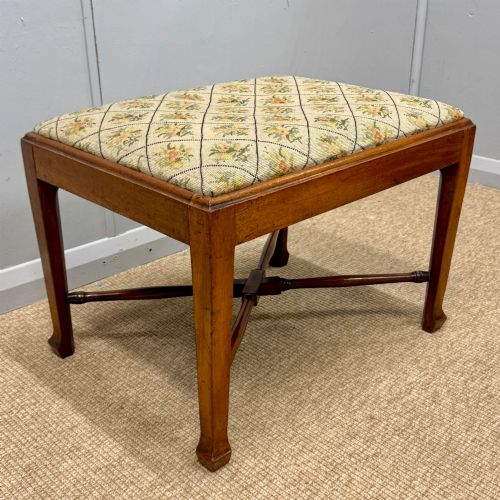
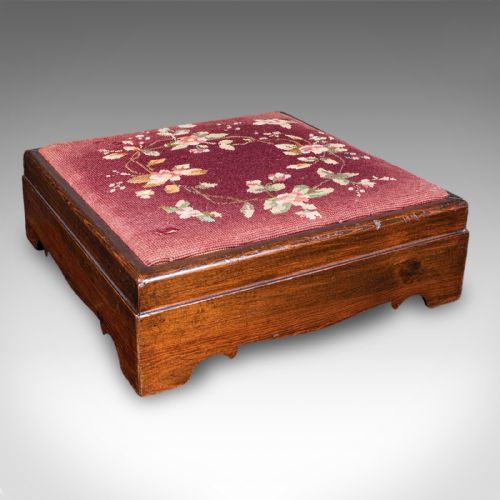
The forms function primarily as footstools, dressing stools, and centre stools, frequently featuring upholstered tops covered in fabric, leather, tapestry, or damask. Many rest on castors, cabriole legs, or square tapering supports suited to period interiors.
How they were made
Cabinetmakers constructed the supportive frames using hardwoods such as mahogany, rosewood, walnut, oak, and pitch pine. Joinery often incorporated cross stretchers for added stability, while carved ornamentation and giltwood finishes highlighted specific stylistic periods.
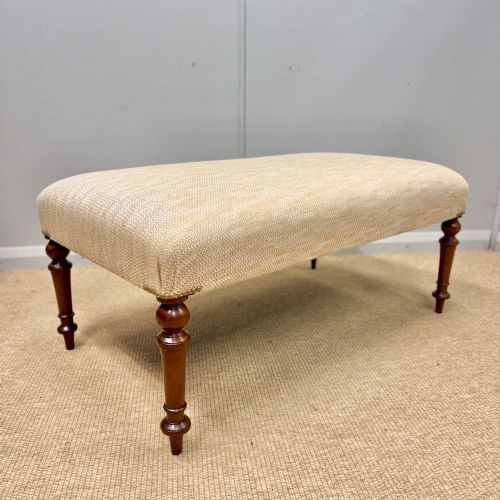
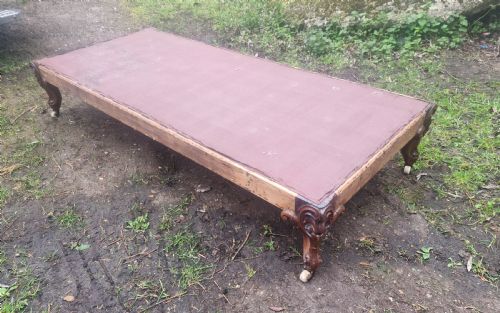
Upholstered surfaces utilised textiles including woven rattan, tapestry, damask, and leather, occasionally secured with brass studding. Many nineteenth-century examples incorporated brass castors on the feet to ease movement across heavy carpets.
What varies in quality
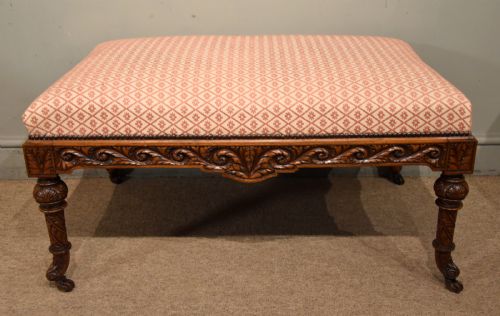
The standard of carving across the wooden frames distinguishes basic utility pieces from high-status furniture. Crisp, deep relief work on cabriole legs or friezes indicates skilled joinery, whereas softer mouldings point to simpler production.
The robustness of the internal frame construction and the integrity of the timber dictate longevity. Dense hardwoods like rosewood and well-figured mahogany provide a stable foundation that outlasts lighter, more utilitarian pine or secondary woods.
Howard and Sons
The Rectangular Upholstered Stool Glossary
- Cabriole leg
- A furniture leg that curves outward and then tapers inward, typically ending in a pad or claw foot. This form derives from traditional animal legs and appears frequently on eighteenth and nineteenth-century seating.
- Cross stretcher
- An intersecting wooden brace connecting the legs beneath a stool to provide structural rigidity. These supports often feature central turning or carving.
- Damask
- A reversible, figured fabric woven on a loom, commonly utilised for period upholstery. The pattern typically shows a glossy design against a matte ground.
- Giltwood
- Timber treated with a thin layer of gold leaf or powder applied over a prepared surface. This finish creates a bright decorative appearance on formal nineteenth-century frames.
- Fireside stool
- A low seat positioned near a hearth for resting feet or sitting close to the fire. These often feature deep upholstery and sturdy wooden frames.
Rectangular Upholstered Stool: Frequently Asked Questions
How were these stools used historically?
These low seats served multiple purposes in period homes, functioning primarily as footstools near firesides or as companion pieces for dressing tables and pianos. Larger versions often acted as centre stools or ottomans within grand reception rooms.
Their substantial construction allowed them to withstand daily domestic use while providing comfortable support for resting the feet or sitting during grooming.
How do I identify the period of a stool?
Dating relies on examining the timber species, leg profiles, and carving styles associated with specific eras. For instance, eighteenth-century examples frequently display square tapering legs or fine mahogany frames, whereas Victorian pieces often feature rosewood, buttoned leather, or brass castors.
Matching the design characteristics to known periods such as George III, Victorian, or Edwardian helps establish the age of the piece.
Can I reupholster a period stool?
Reupholstering is a common practice that breathes new life into antique seating, provided the underlying wooden frame remains sound. Many pieces survive ready for new fabric or retain older textiles that can be replaced to suit modern interiors.
Traditional materials and methods should be considered when updating the top to maintain sympathy with the original age and style of the woodwork.
What woods were used for the frames?
Cabinetmakers selected dense, durable hardwoods to ensure the frames could support weight and carving. Mahogany, rosewood, and walnut appear frequently in finer examples, offering rich grains and deep natural colour.
Sturdier utility pieces often utilised oak, pitch pine, or teak, particularly in ecclesiastical contexts or robust country house environments.