



Tapestry Low Stool
A tapestry low stool brings historic textile work and solid timber frames together into a compact, functional seat.
Tapestry Low Stool
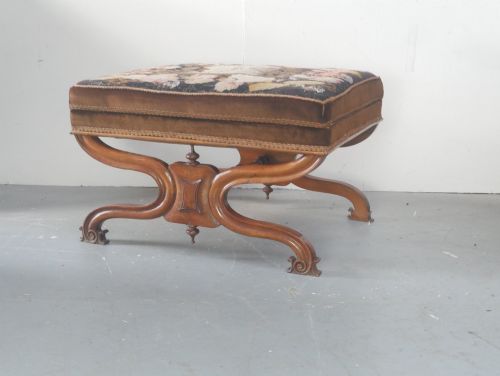
A tapestry low stool is a compact form designed to support the feet or provide low seating, appearing frequently in nineteenth-century and early twentieth-century variants. These pieces span Victorian, Georgian, and revival aesthetics, including Queen Anne and Chippendale styles executed in domestic settings.
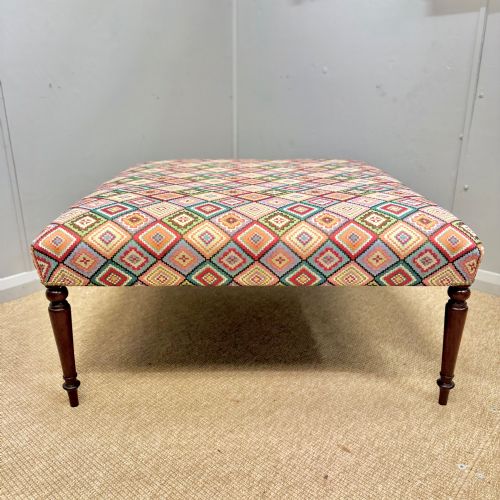
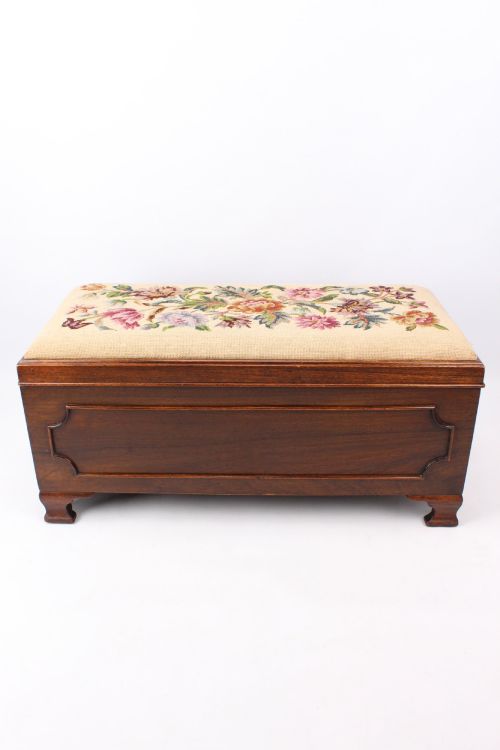
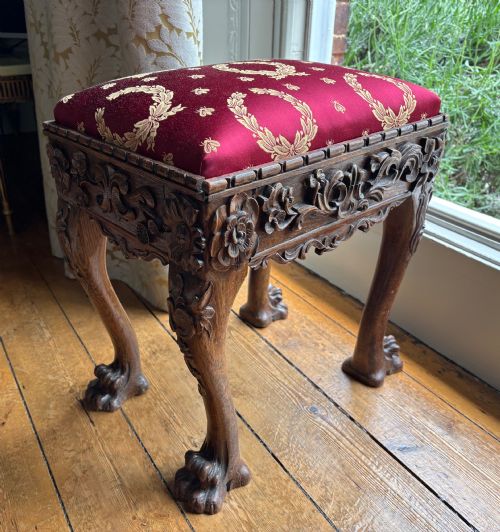
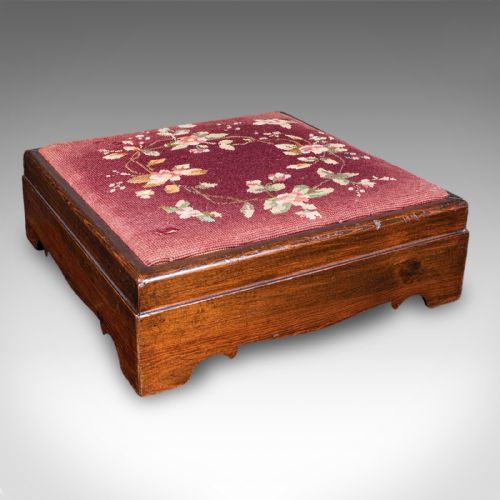
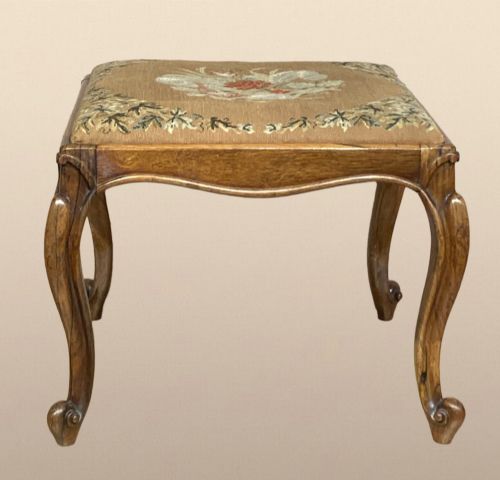
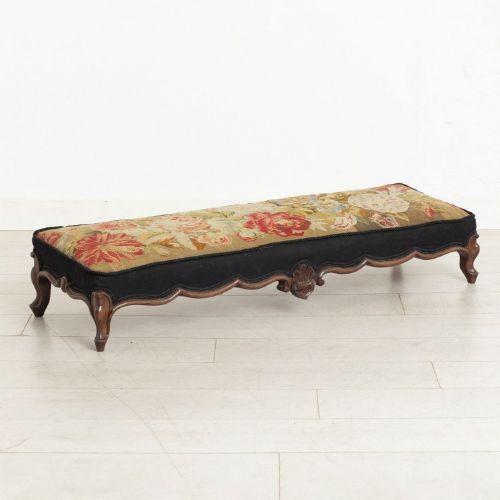
The primary forms include small footstools, dressing table stools, and larger ottomans, often framed by low wooden structures. Examples range from simple nineteenth-century wool-covered frames to elaborate walnut and rosewood constructions with detailed needlepoint seats.
Timber and textile
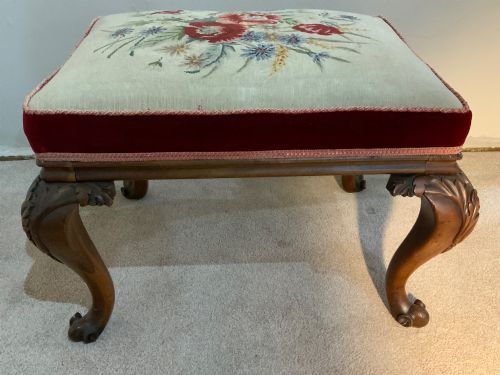
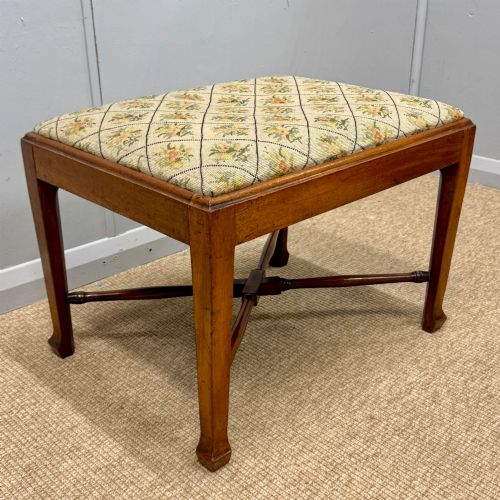
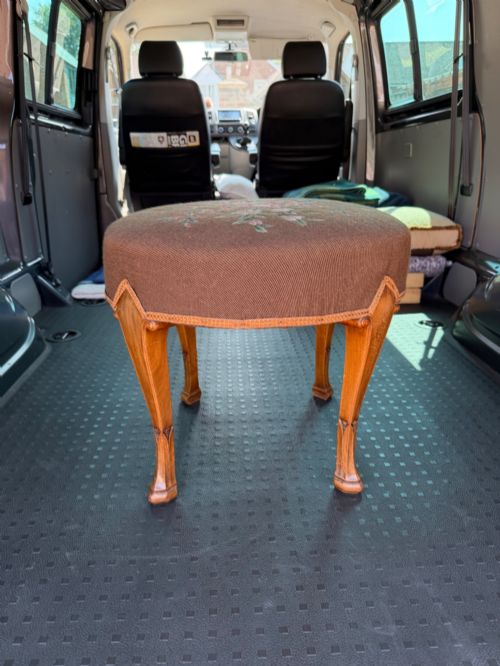
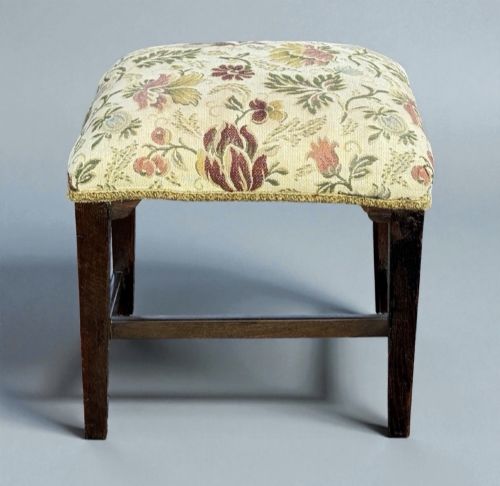
Frames are constructed from hardwoods such as mahogany, walnut, rosewood, and oak, shaped by turners and joiners to form cabriole legs, cross stretchers, or carved aprons. These timbers provide the structural rigidity required for low seating supports.
Seats feature hand-worked tapestry, needlepoint, and wool textiles stretched over upholstered pads. The covers employ geometric patterns, floral needlework, and kilim designs secured directly to the wooden rails.
A tiny geometric needlepoint stool managed to double as a footrest and a miniature gallery for Tunbridge wood mosaics.
Design and execution
Quality rests in the precision of the timber framing and the complexity of the carved details on the legs and aprons, distinguishing simple utility stools from elaborate revival pieces. Higher-grade examples utilise dense woods like rosewood and walnut paired with intricate needlepoint.
The integrity and survival of the original textile seat dictate much of the piece's character. Finer needlework displays tight stitches and deliberate colour patterns that match the era of the supporting frame.
The Tapestry Low Stool Glossary
- Cabriole leg
- A furniture leg that curves outward at the knee and tapers inward toward the foot, typical of eighteenth-century and Victorian revival seating.
- Needlepoint
- A type of counted thread embroidery stitched over a stiff canvas mesh, frequently used for historic footstool upholstery.
- Cross stretcher
- A structural wooden brace connecting the legs beneath a stool to provide stability and rigidity.
- Tunbridge ware
- Small-scale decorative woodwork characterised by mosaic patterns assembled from many tiny pieces of naturally coloured wood.
- Prie-Dieu chair
- A low devotional chair or stool designed for kneeling, often featuring upholstered needlework panels.
Tapestry Low Stool: Frequently Asked Questions
How do I date a low stool?
Dating relies on identifying the timber species, leg geometry, and upholstery techniques used in the construction. Styles like Victorian cabriole legs or Georgian revival frames offer clear chronological markers.
Changes in textile wear and the method of securing the tapestry to the wooden frame provide additional clues to the period of manufacture.
Were these stools used for feet?
Many low stools served primarily as footstools to keep feet elevated above cold draughty floors in nineteenth-century parlours. Others functioned as dressing table seats or small fireside benches.
Their compact dimensions allowed them to be moved easily around sitting rooms depending on immediate domestic requirements.
How do I clean antique tapestry?
Historic wool and needlepoint require gentle surface cleaning with a soft brush or low-suction vacuum attachment. Moisture and harsh cleaning agents damage fragile aged fibres.
Professional textile conservators should handle deep cleaning or structural repairs to the original needlework.
What woods were commonly used?
Mahogany, walnut, and rosewood dominate the better-quality frames, offering deep grain patterns and solid weight. Oak appears in earlier pieces, while pitch pine and painted surfaces occur in specific regional and Edwardian examples.
The choice of timber typically reflects the prevailing fashion and budget of the period when the stool was made.