
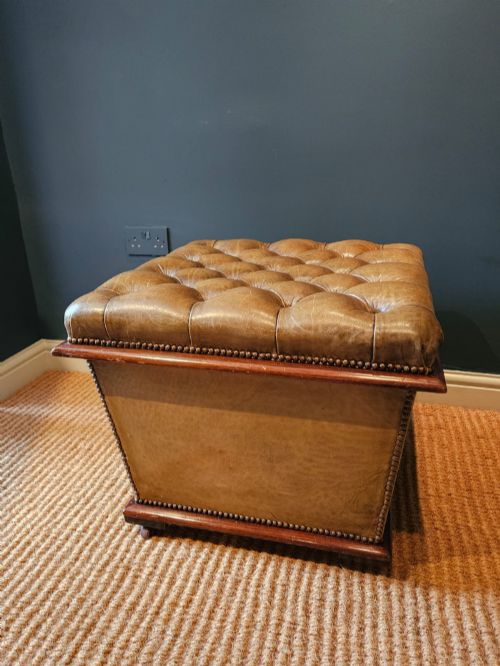


Brown Mahogany Ottoman
A brown mahogany ottoman brings solid timber warmth and practical seating or storage into a room.
Brown Mahogany Ottoman
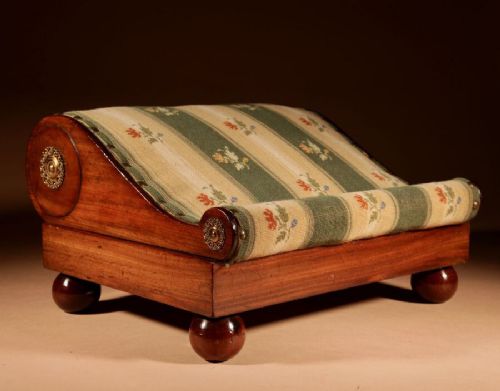
A brown mahogany ottoman sits firmly within the broader category of footstools and window seats found in nineteenth-century and early twentieth-century homes. The examples recorded here span periods from the Regency era through the Victorian years and into the Edwardian and later revival decades.
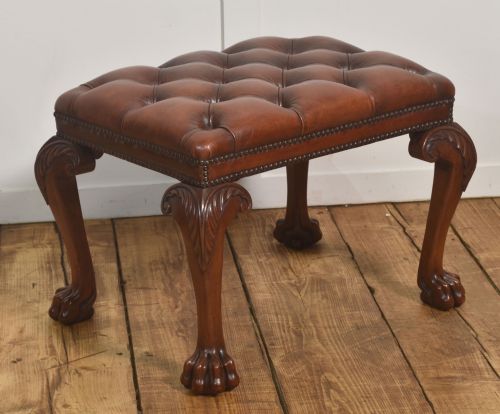
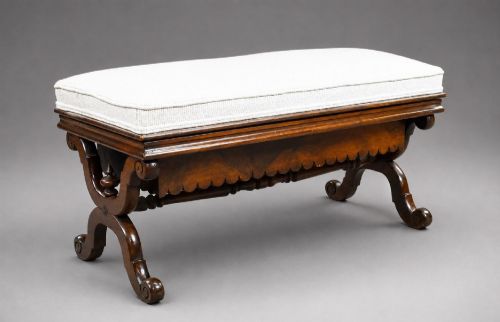
Buyers searching for a brown mahogany ottoman will encounter various forms, including square ottoman boxes with internal storage, long footstools, and framed window seats. The wood frameworks display styles ranging from plain nineteenth-century frames to elaborate Chippendale, Queen Anne, and William IV revivals.
Many of these pieces serve dual functions as low coffee tables, dressing stools, or piano seats alongside their traditional role as footstools. The timber is predominantly mahogany, frequently paired with leather, velvet, tapestry, or cane seating surfaces.
Materials and construction methods
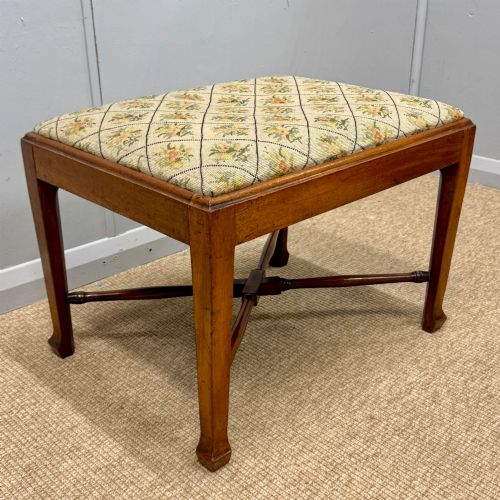
The structural framework relies on solid mahogany, shaped into cabriole legs, cross stretchers, or X-frames depending on the period. Joinery methods of the nineteenth and early twentieth centuries ensure sturdy weight distribution across these low furniture forms.
Upholstery materials include buttoned leather, woven cane, velvet, and tapestry textiles secured over internal padding. Brass details appear on castors or decorative hardware elements across Victorian and Regency pieces.
Object forms range from simple footstools and piano seats to large window seats and storage boxes with hinged lids.
Distinguishing quality in timber and upholstery
Quality reveals itself in the depth of the mahogany grain and the precision of the carved details, such as cabriole legs or stretcher joints. Finer pieces demonstrate heavier timber construction and more intricate period styling.
The standard of upholstery work, whether deep-buttoned leather or hand-woven cane, marks the distinction between standard utility seating and more ambitious workshop productions.
Morris & Co.·Whytock and Reid
The Brown Mahogany Ottoman Glossary
- Cabriole leg
- A furniture leg that curves out and then tapers inward, mimicking an animal's curving leg. This shape appears frequently on eighteenth-century and revival stools.
- Cross stretcher
- Wooden rails connecting the legs near the base to provide extra structural rigidity. They often feature central turnings or decorative intersections.
- X-framed
- A furniture base formed by two intersecting diagonal members shaped like the letter X. This geometric arrangement provides stable support for Regency and nineteenth-century stools.
- Ottoman box
- A low seat featuring a hinged lid that opens to reveal internal storage space. These pieces combine seating with concealed utility.
- Window seat
- An elongated upholstered stool designed to fit beneath a window recess. They frequently feature mahogany frames matching the surrounding interior joinery.
Brown Mahogany Ottoman: Frequently Asked Questions
How do I use an ottoman in a living room?
An ottoman functions effectively as a footrest before a sofa or as extra casual seating when guests arrive.
Box variants also provide a concealed compartment for storing blankets or books while maintaining a neat surface.
Are these pieces suitable for daily seating?
Most frames are built from solid mahogany and designed for regular weight bearing, whether used as dressing stools or piano seats.
Upholstered variants provide comfortable padding suited to prolonged sitting.
How do I distinguish Victorian from Regency styles?
Regency pieces often display classical influences with clean lines, X-frames, and restrained mahogany framing.
Victorian examples tend towards heavier proportions, buttoned leather upholstery, and elaborate revival styling like cabriole legs.
Can I use an ottoman as a coffee table?
Sturdy upholstered stools and square tables with flat surfaces accommodate trays, books, and decorative objects easily.
Leather and firm fabric tops withstand everyday placement of daily items without sustaining damage.