


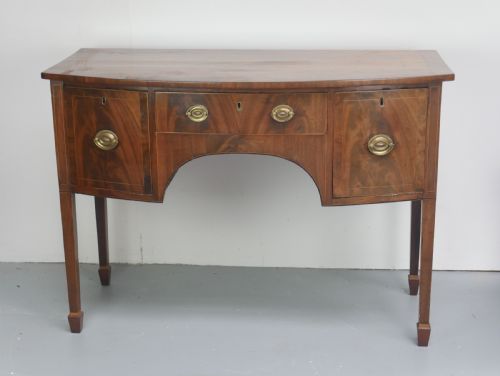

Tapered Leg Mahogany Sideboard
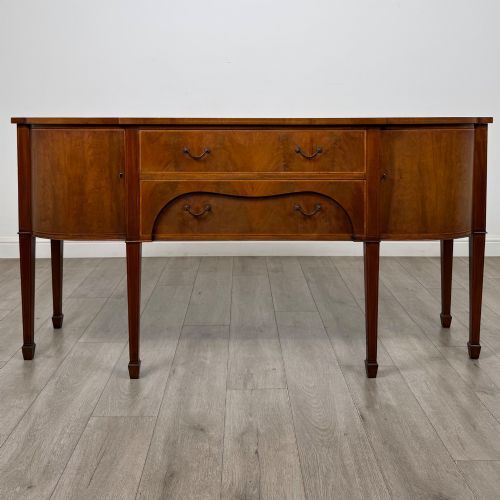
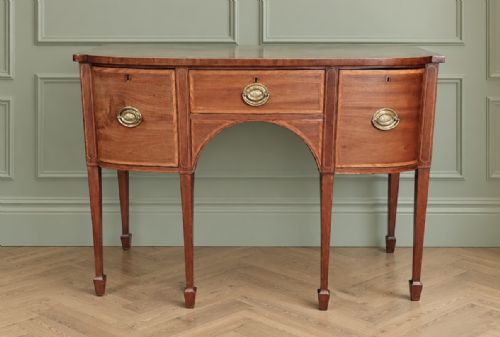
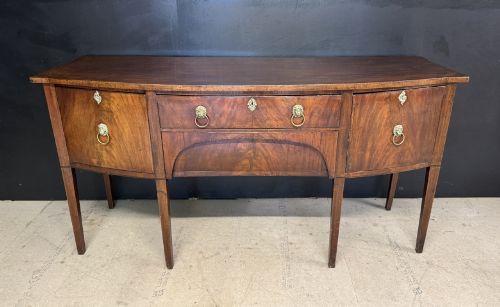
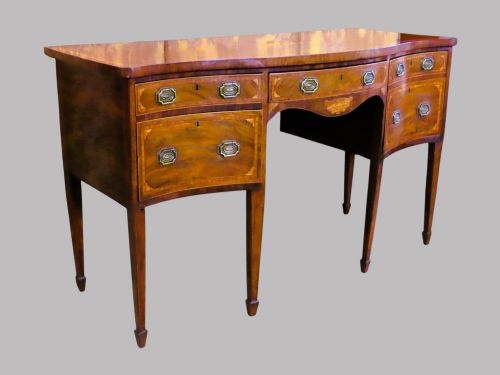
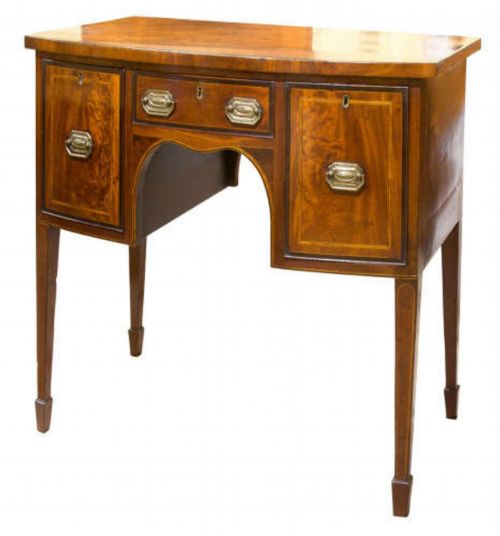
These tapered leg mahogany sideboard examples bring lasting warmth and proportion to a dining room, combining rich timber grain with slender supports.

What a tapered leg mahogany sideboard is
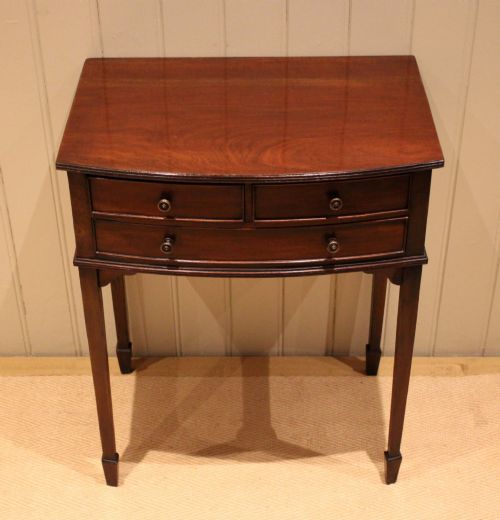
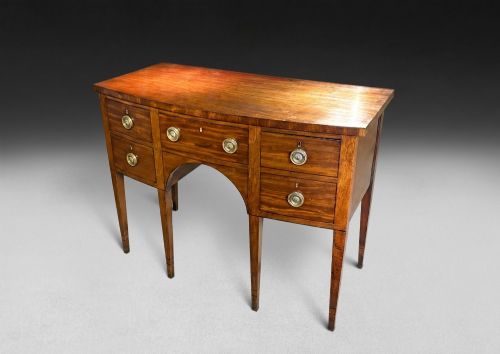
A tapered leg mahogany sideboard provides substantial storage and a commanding surface for display, constructed from richly grained timber. These pieces anchor a dining space with traditional presence while maintaining a lighter footprint than their heavier counterparts.
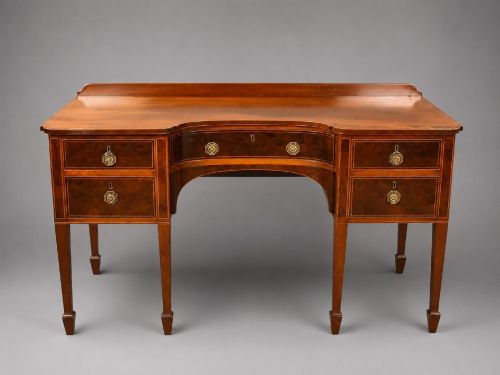
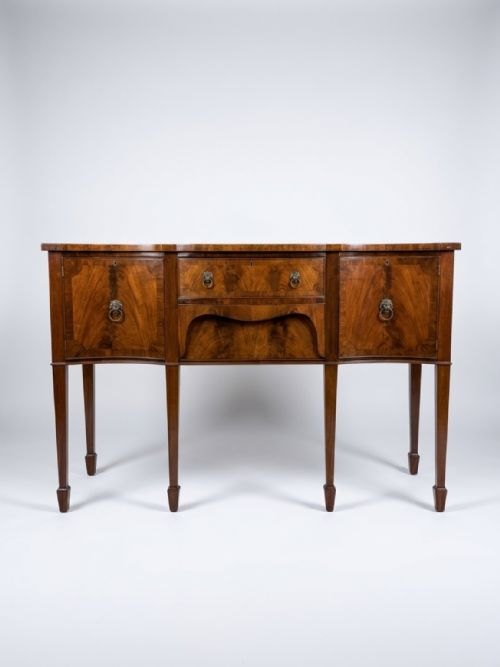
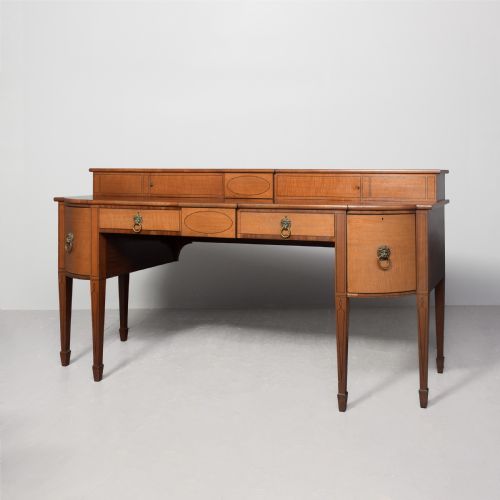
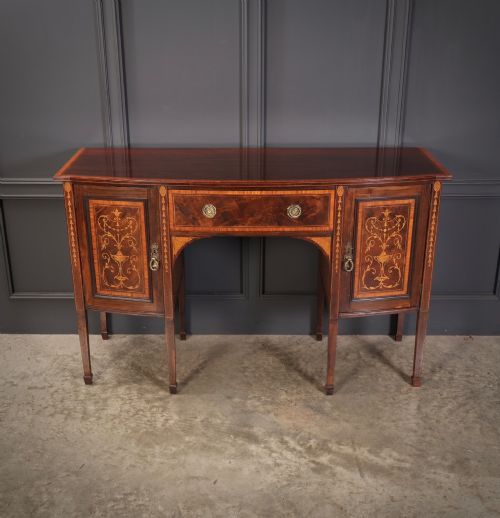
Most examples encountered here belong to the Georgian and Regency periods, alongside later Georgian Revival and Edwardian interpretations. The form ranges from straight-fronted proportions to bow front and serpentine profiles, often enhanced by stage-backs.
Makers designed these items to serve dining rooms efficiently, incorporating deep drawers and cupboards for silver and linen. The inclusion of square tapered legs distinguishes them from earlier bulbous or cabriole supports, offering a refined silhouette.
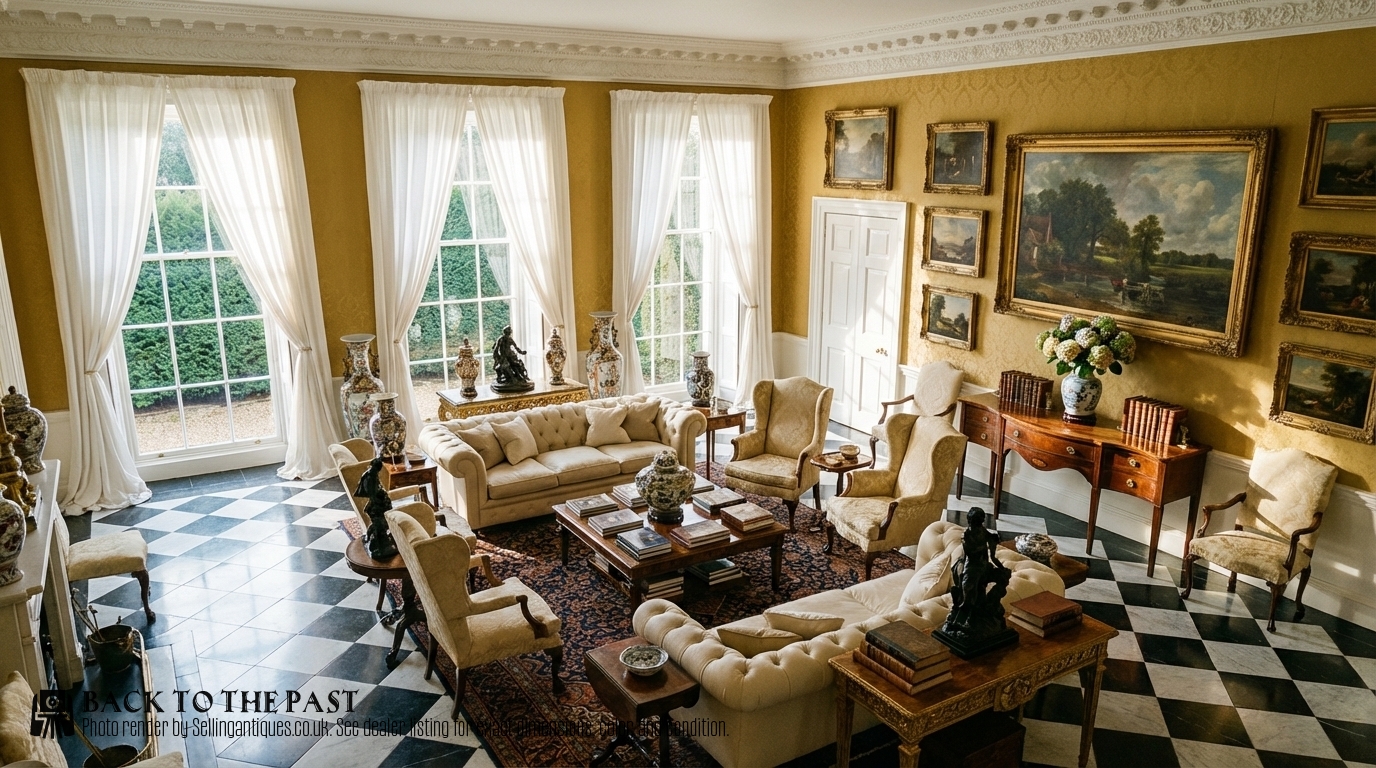
Materials and construction
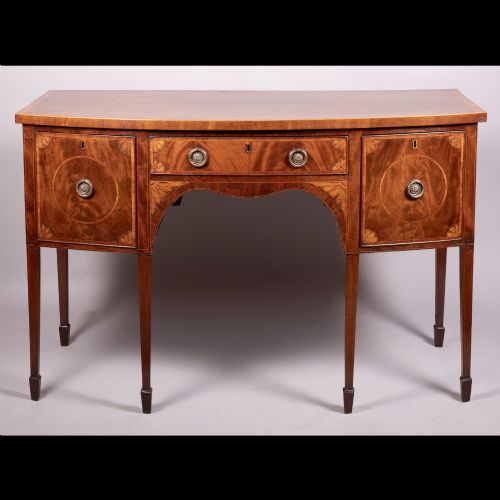
Cabinet makers selected dense mahogany for its strength and deep colour, frequently pairing the primary timber with contrasting boxwood and satinwood inlay. Craftspeople applied these veneers and stringing lines carefully across drawer fronts and borders to create delicate geometric patterns.
Constructors integrated brass hardware, including ring pulls and backplates, to complement the dark red-brown timber tones. Square tapered legs were shaped directly from solid wood or reinforced internally to support the substantial weight of the main body.
Retail Price Guide 2026
Typical UK retail prices for tapered leg mahogany sideboard, calculated from the Sellingantiques database of over a million retail prices indexed since 2003. This retail price guide relies exclusively on Sellingantiques data; no external sources or auction records are used, so the figures do not describe the wider market.
Spade feet rest quietly on the floor, giving slender tapered legs a surprisingly sturdy stance.
Judging quality in a sideboard
The sophistication of the timber figure and the precision of the satinwood inlay set superior examples apart from standard workshop production. Fine grain selection on the top surface and drawer faces creates a cohesive visual richness that lesser pieces lack.
Proportion and structural harmony dictate the standing of a sideboard within the range. Clean lines on the square tapered legs, balanced hardware placement, and crisp edge detailing indicate the care invested by the original maker.
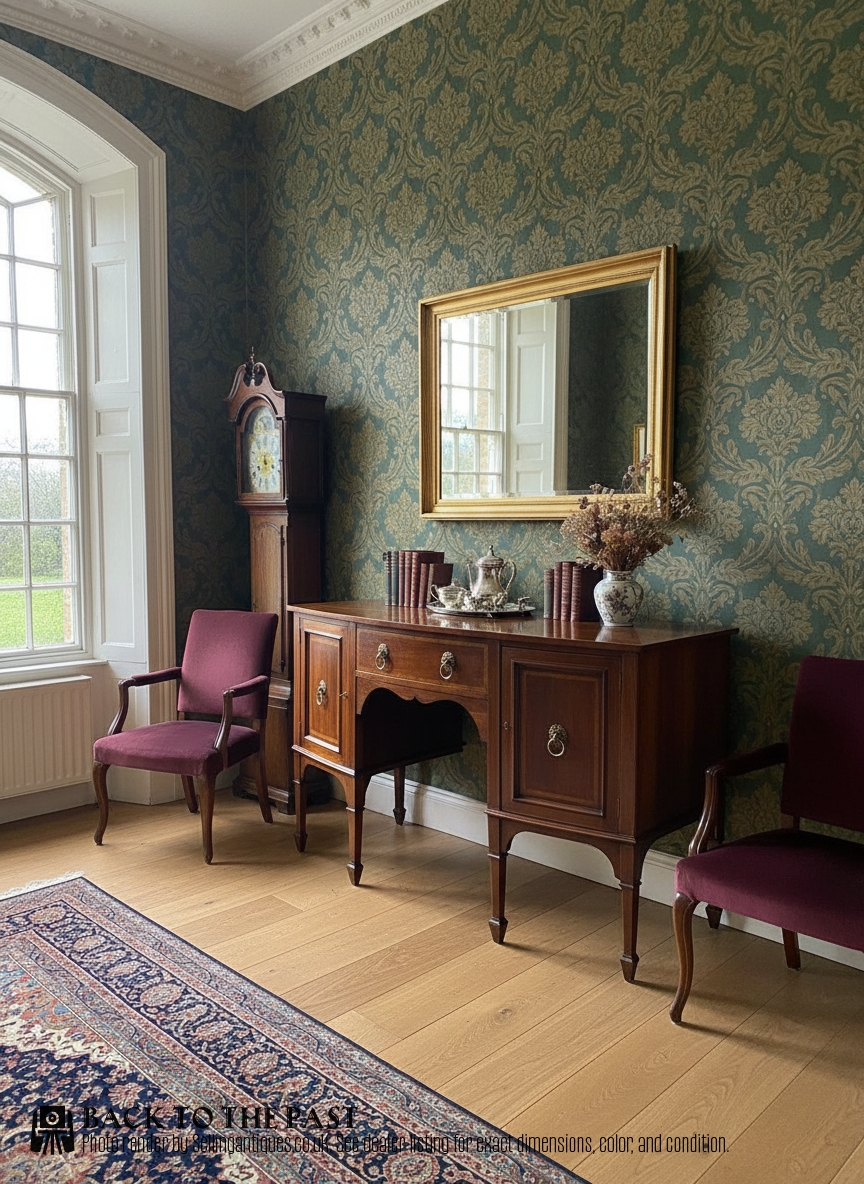
The Tapered Leg Mahogany Sideboard Glossary
- Bow front
- A convex curved cabinet front that projects outward in the centre. This shape softens the room and requires skilled woodworking to construct.
- Serpentine
- A front profile featuring a convex centre flanked by concave curves. It demands exceptional craftsmanship from the cabinet maker.
- Stringing
- Thin lines of contrasting wood inlay used to outline drawers and panels. This technique highlights the structural geometry of the timber.
- Stage-back
- An elevated tier at the rear surface of the sideboard used for displaying serving vessels. It adds height and architectural interest to the piece.
Frequently Asked Questions
How do I date a sideboard?
Examine the secondary woods inside the drawers, construction marks, and overall proportions. Georgian and Regency pieces show hand-cut dovetails and timber characteristics distinct from Edwardian revivals.
Hardware placement and inlay styles also provide clues to the era of manufacture. Comparing the leg taper and timber finish helps confirm the period.
Where should I place a sideboard?
Position the piece against a dining room wall where it can serve meals and display silver or ceramics. Ensure adequate clearance for drawer and cupboard access.
Keep the timber away from direct heat sources and strong sunlight to protect the polish and prevent wood splitting.
How do I clean mahogany?
Dust the surface regularly with a soft, dry lint-free cloth to remove particles. Avoid silicone sprays that build up residue over time.
Apply a traditional beeswax polish sparingly when the wood appears dry, buffing gently to maintain the natural lustre of the grain.
What is a bow front?
A bow front is a gently curved cabinet face that swells outward in the middle. This design maximises interior storage while offering a softer profile than flat-fronted furniture.
Cabinet makers used steam-bending and precise block construction to achieve this durable, rounded shape.