
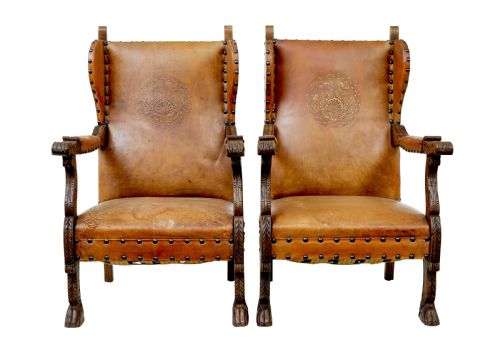
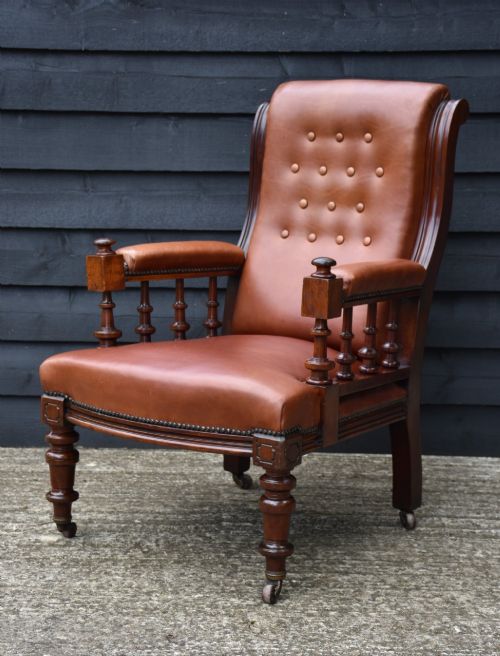
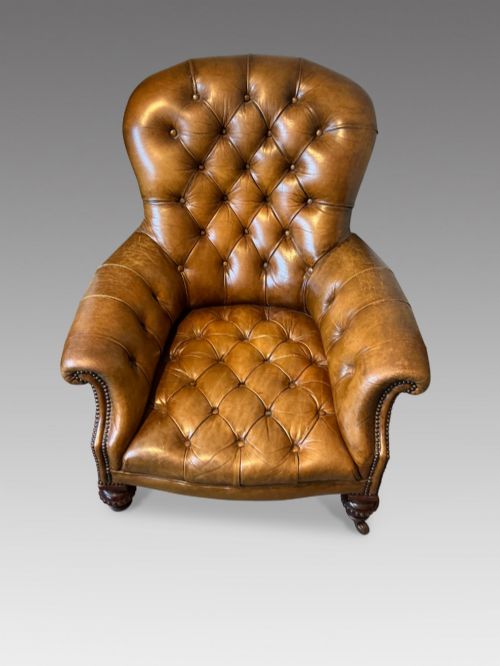
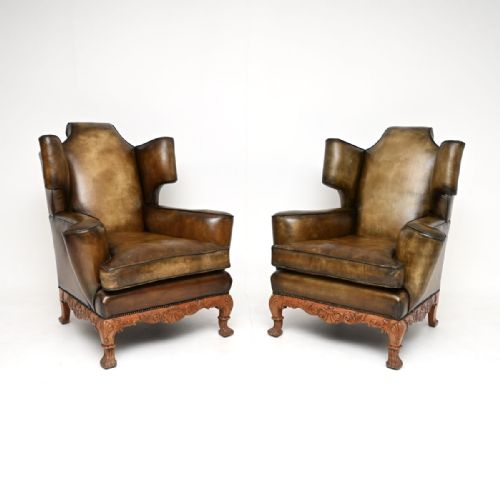
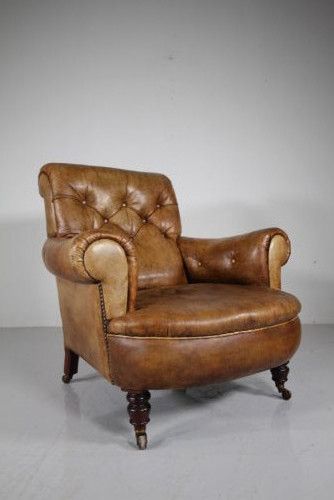
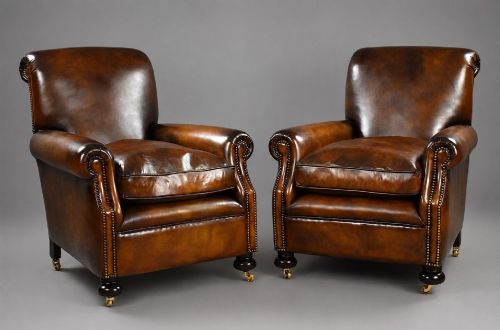
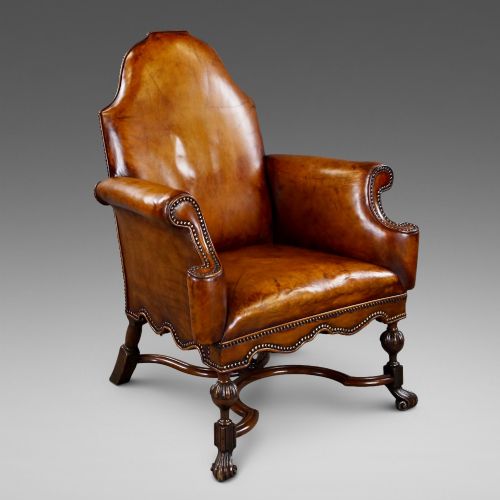
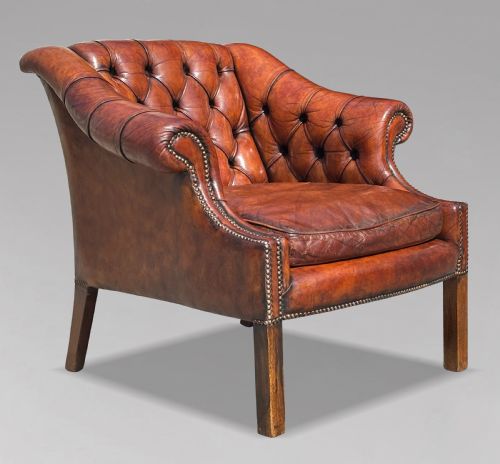
Tan Leather Library Chair
A tan leather library chair brings rich warmth and comfortable dignity to a study, built to endure daily reading and writing.
Tan Leather Library Chair
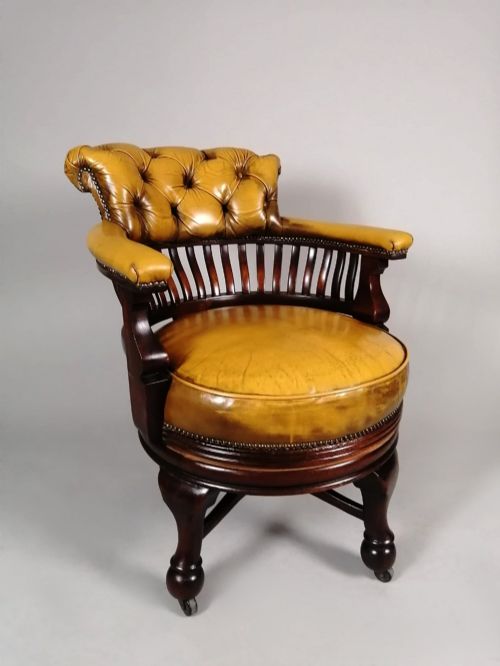
A tan leather library chair combines robust seating with the supple finish of aged hide, suited for long hours at a desk or by the hearth. These pieces span the nineteenth and early twentieth centuries, drawing on Victorian, Edwardian, and Regency periods.
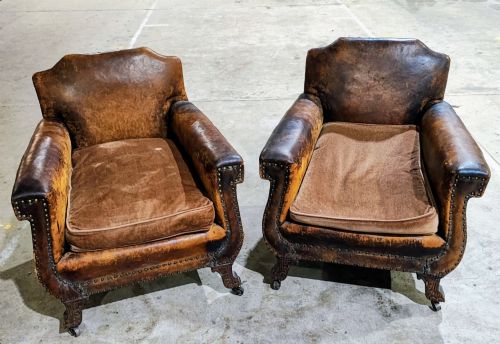
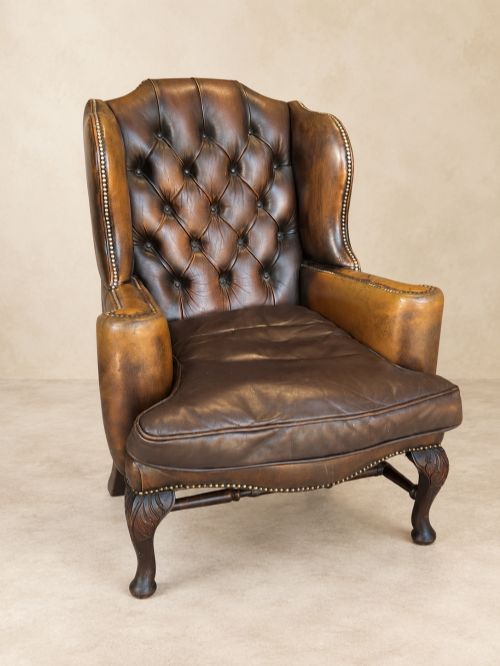
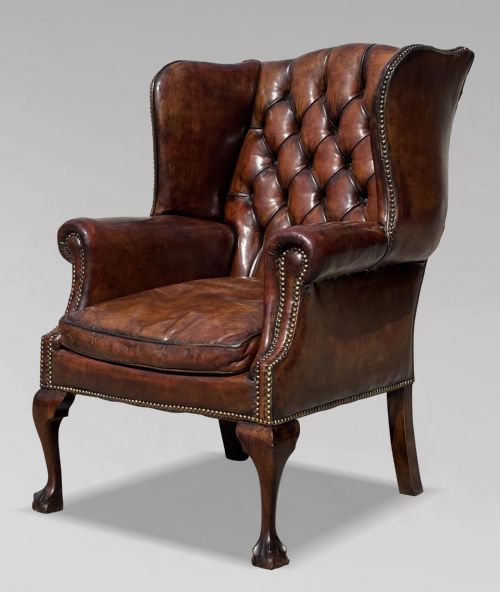
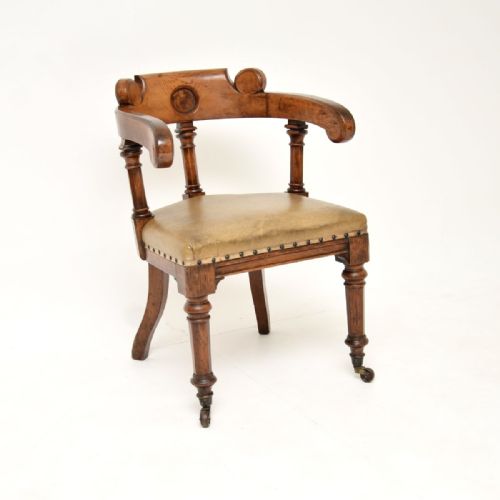
The form most frequently met is the desk chair or club armchair, often framed in sturdy mahogany, oak, or walnut. Makers of the period designed these seats for utility and comfort, resulting in deep proportions and supportive wingbacks or revolving bases.
Materials and construction
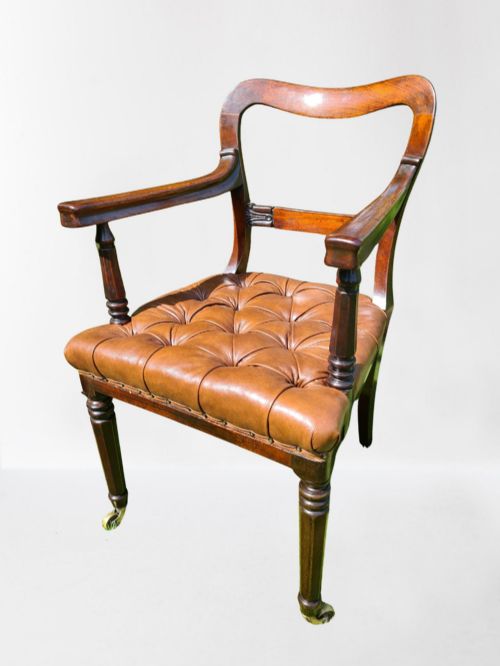
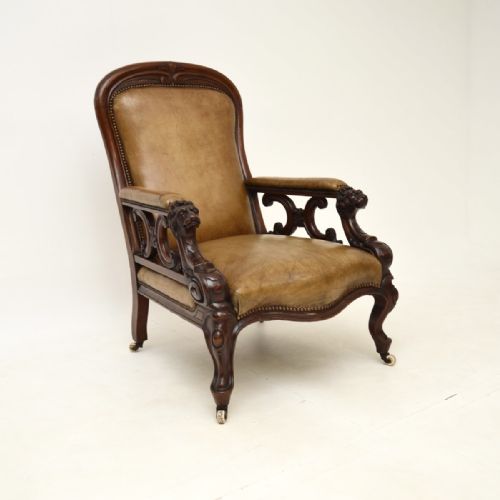
Cabinetmakers utilised dense timbers such as mahogany, oak, walnut, and rosewood for the structural frames, ensuring long-term stability under heavy use. Brass details, including castors and decorative nailheads, frequently secure the upholstery and accent the wood.
Upholstery relied on durable leather or hide stretched over supportive stuffing, sometimes finished with deep buttoning or embossed patterns. Frames incorporate hand-carved elements and sturdy joinery, reflecting the traditional carpentry methods of the nineteenth and early twentieth centuries.
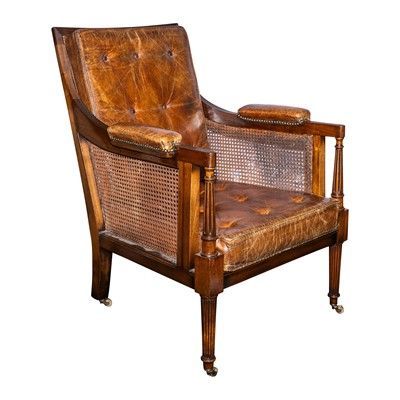
The listings show nineteenth-century and Edwardian pieces built from mahogany, oak, walnut, and cane, featuring both desk and club chair configurations.
Judging quality
The grade of the timber and the depth of the carving set exceptional examples apart from standard seating. Well-figured mahogany and solid oak frames show superior resilience and a finer grain.
The tactile quality of the leather and the integrity of the original buttoning or stitching dictate the visual impact. Patina accumulated over decades of use gives better pieces a depth of colour that modern replacements cannot replicate.
Howard And Sons
The Tan Leather Library Chair Glossary
- Wingback
- An armchair with side panels designed to shield the sitter from draughts. These high backs define many traditional reading seats.
- Bergère
- An enclosed armchair with wooden sides and a cane or upholstered panel. They offer a lighter aesthetic while retaining sturdy support.
- Gainsborough
- A wide, low-seated armchair with an upholstered back and open arms, created during the eighteenth century and frequently revived later.
- Patina
- The surface sheen and softening of tone acquired by wood and leather through age and handling. This is a marker of genuine historical use.
- Metamorphic
- A piece of furniture designed to transform or adjust its form for different functions. These ingenious mechanical adaptations are prized by collectors.
Tan Leather Library Chair: Frequently Asked Questions
How do I identify a Victorian library chair?
Victorian library chairs typically display heavier timber frames made from mahogany or oak, often paired with deep buttoned leather upholstery. Look for sturdy proportions designed for heavy domestic or institutional use.
Details such as turned wooden legs, brass castors, and nineteenth-century construction methods help confirm the period. The integration of revolving mechanisms or adjustable parts also points firmly to this era.
Were these chairs used only at desks?
While many examples function as desk or swivel chairs, others are designed as low club chairs or wingbacks for general relaxation. Their sturdy frames made them suitable for reading rooms, studies, and smoking rooms alike.
Authors and scholars utilised them for long hours of work, which accounts for the generous padding and supportive armrests found across the forms.
How should I care for vintage leather?
Vintage leather requires gentle cleaning and periodic conditioning to prevent the hide from drying and cracking. Avoid harsh chemical cleaners that strip the historic finish and natural oils.
Keep these chairs away from direct sunlight and heat sources to preserve the supple texture and rich tan colour of the leather.
What is the difference between club and wing chairs?
Club chairs feature low, deep seats and rounded arms intended for comfortable lounging. They prioritise relaxed posture over upright desk work.
Wing chairs incorporate high backs with protective side panels designed to trap heat and block room draughts. Both styles frequently share the same sturdy timber frames and leather upholstery.