
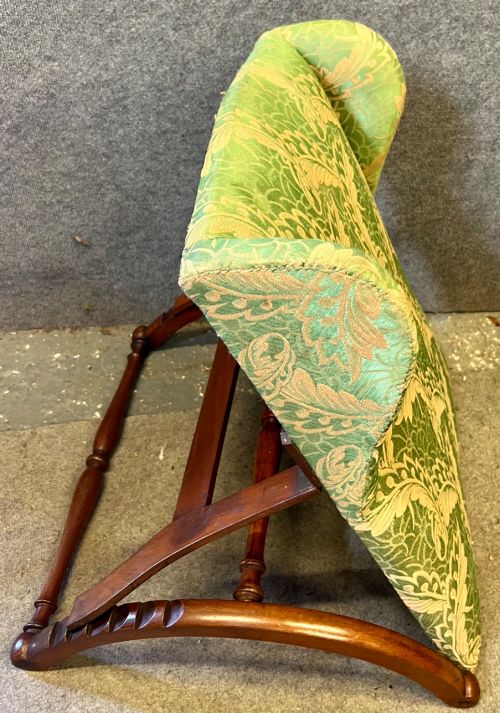
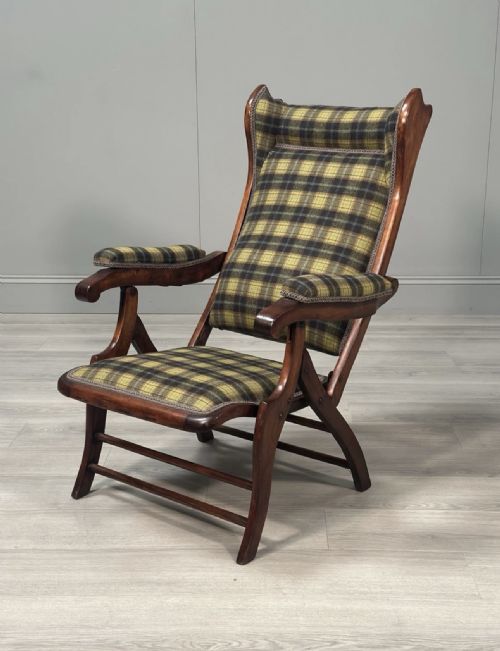
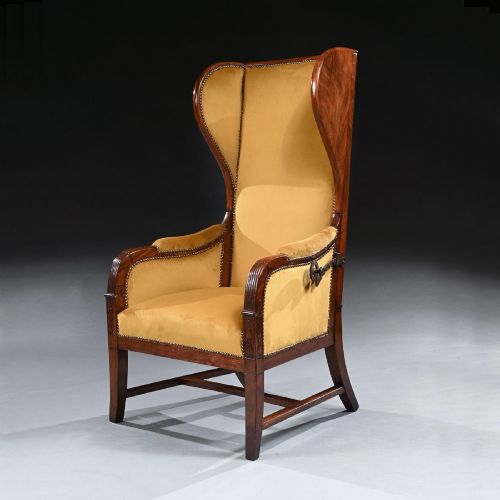
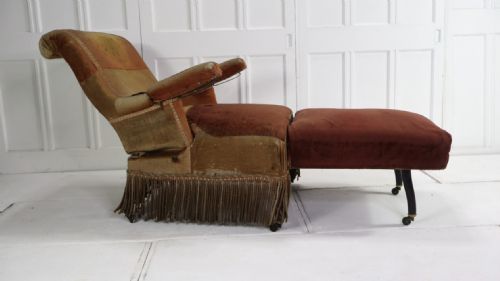
Antique Reclining Chair
An antique reclining chair offers adjustable comfort through mechanism or form, spanning library chairs, campaign designs and chaise longues.
Antique Reclining Chair
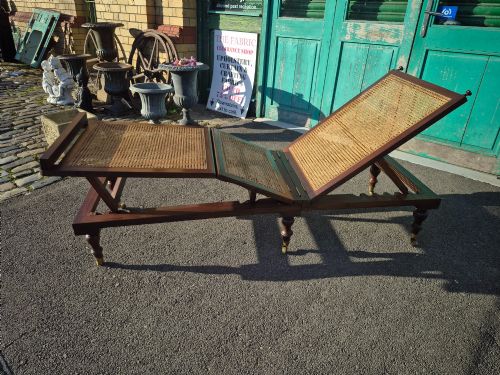
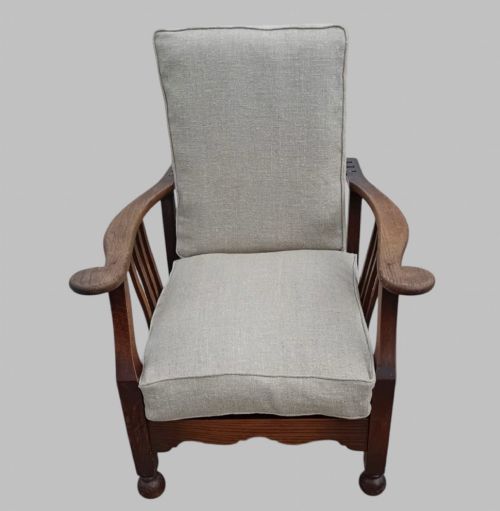
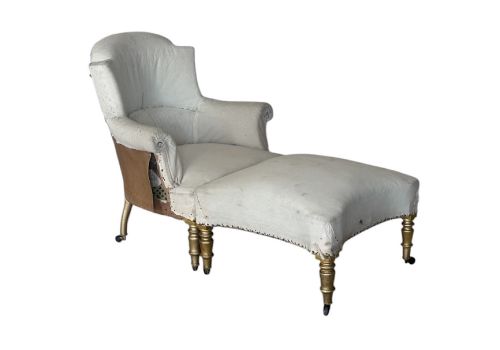
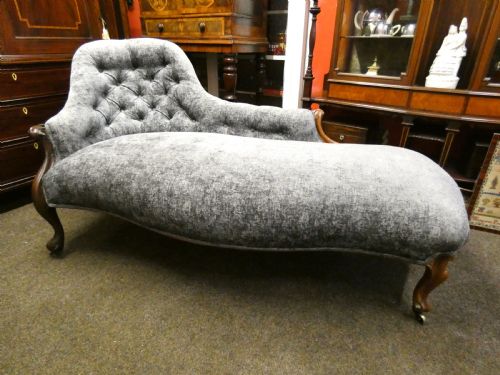
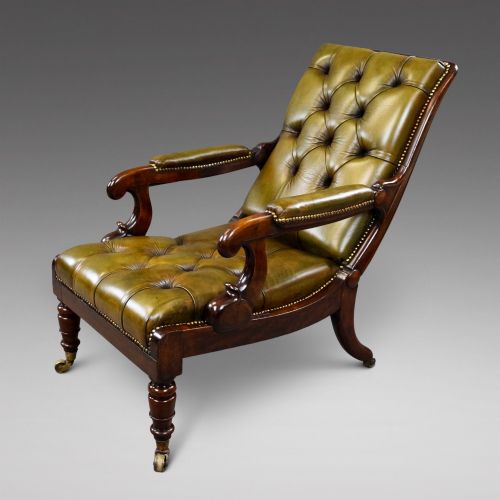
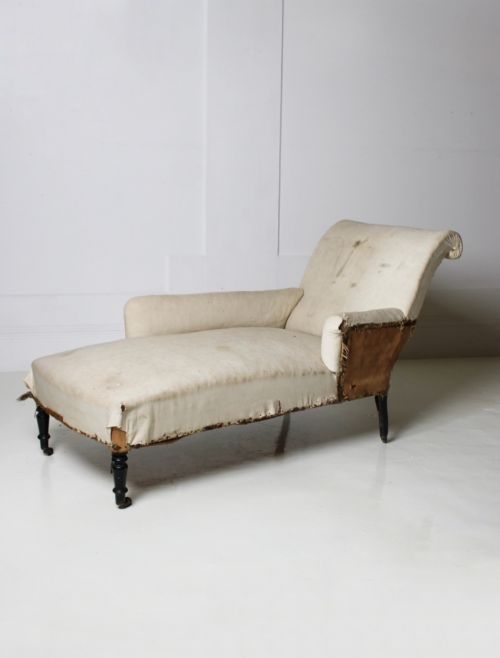
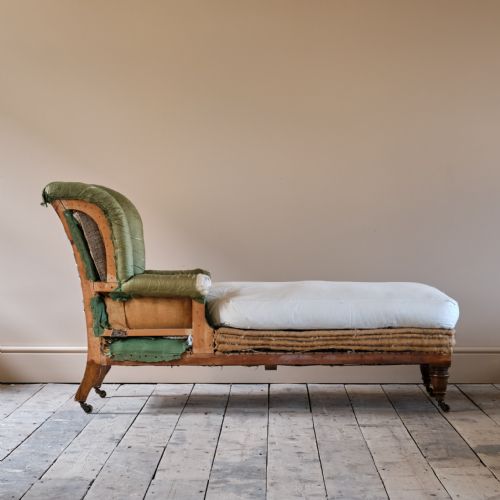
An antique reclining chair provides adjustable seating or lounging, taking forms such as library armchairs, campaign seats and daybeds. Buyers searching for an antique reclining chair encounter pieces designed for reading, resting or travel across the nineteenth and early twentieth centuries.
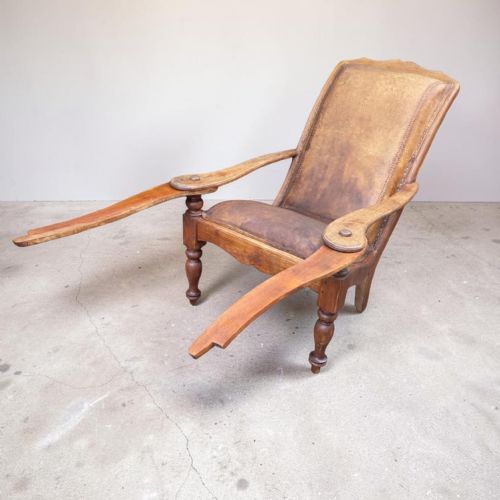
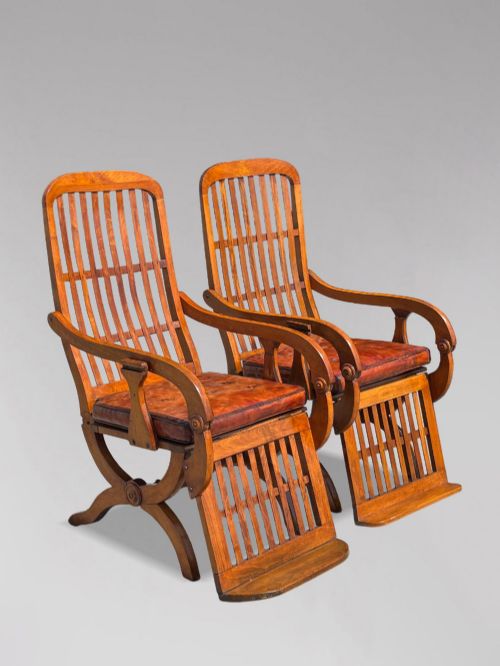
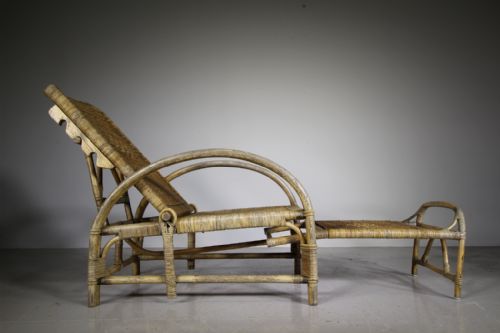
The Victorian and Edwardian periods supply many examples in oak, mahogany and walnut, alongside Regency library chairs and Arts and Crafts oak designs. Forms range from upright armchairs with adjustable backs to chaise longues and colonial planter chairs with extended leg rests.
Makers such as Howard and Sons, Morris and Co, and Heal of London appear alongside patented mechanisms by Daws and Minter. These pieces combine utilitarian adjustability with domestic comfort, utilising cane, leather, velvet and fabric upholstery.
How they were made
Timbers such as mahogany, oak, walnut, rosewood and teak form the structural frames of these seats, joined with traditional cabinet-making techniques. Solid woods provide the rigidity required for pivoting backs and extending leg supports.
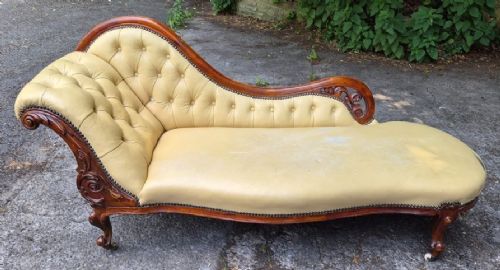
Mechanisms rely on brass ratchets, hinges and pivot rods concealed within the frame to alter the angle of the backrest. Upholstery utilises buttoned leather, suede, velvet, cane panels and woven fabric stuffed over webbed or sprung bases.
Antique Reclining Chair Retail Price Guide 2026
Typical asking prices for reclining chair among the pieces listed under this phrase on Sellingantiques today, from the lower quarter to the upper quarter. They describe what is for sale here now, not the wider market.
Listings feature oak, mahogany, walnut, rosewood and teak frames paired with brass, leather, velvet, cane and fabric.
What varies in quality
The integrity of the mechanical action dictates the caliber of a reclining seat, separating smooth, original brass ratchets from stiff or replaced hardware. Finely carved mahogany or oak frames with intact joinery outlast simpler constructions.
Original upholstery materials like aged leather, buttoning and hand-woven cane preserve historical value better than later replacements. Attributions to documented makers or specific patents elevate the standing of an individual piece.
Howard and Sons·Morris and Co·Heal of London·William Birch·Angraves of Leicester
The Antique Reclining Chair Glossary
- Campaign chair
- A folding or dismantlable seat designed for transport by military officers or travellers, often fitted with brass mounts.
- Chaise longue
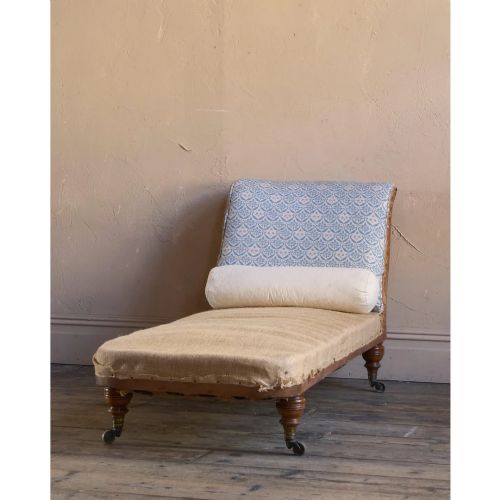
- An upholstered sofa shaped to allow the sitter to recline with legs supported, combining a chair and a footstool.
- Ratchet mechanism
- A notched metal bar and catch system that holds an adjustable chair back at various selected angles.
- Planter chair
- A colonial armchair featuring very long, flat arms designed for resting the legs during tropical afternoons.
- Library chair
- A heavy reading seat, often in mahogany or oak, frequently equipped with a writing tablet or adjustable back.
Antique Reclining Chair: Frequently Asked Questions
How do adjustable chair mechanisms work?
These seats use internal brass ratchets, hinged backrests or sliding supports that lock into specific notches. Users lift or tilt the back to the desired angle before securing the mechanism.
Such systems allowed nineteenth-century readers and travellers to shift between upright sitting and full reclining without detached footstools.
Were these chairs used outdoors?
Specific versions, particularly wicker garden armchairs from the early twentieth century, were built for veranda and lawn use. Teak and oak frames also endured sheltered outdoor conditions.
Indoor library and campaign chairs utilised fine woods and leather upholstery unsuited to damp environments.
How do I identify a patent reclining chair?
Makers stamped patented names, such as Daws or Minter, directly onto the brass mechanism plates or wooden frame edges. These marks reference specific mechanical designs registered during the Regency and Victorian eras.
Patented examples often reveal more complex pivoting hardware than standard commercial production models.