
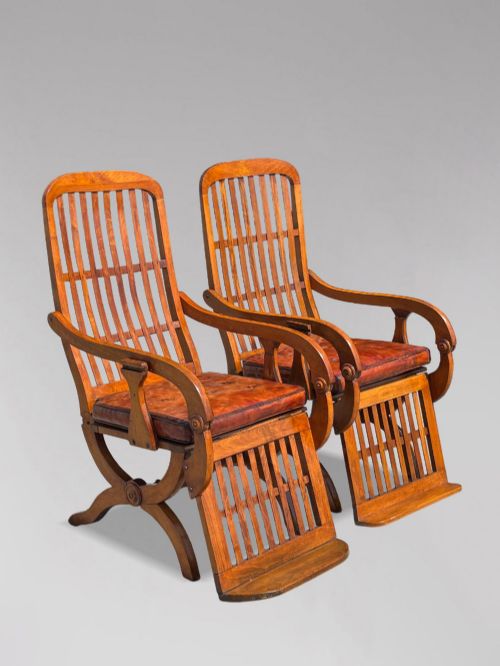
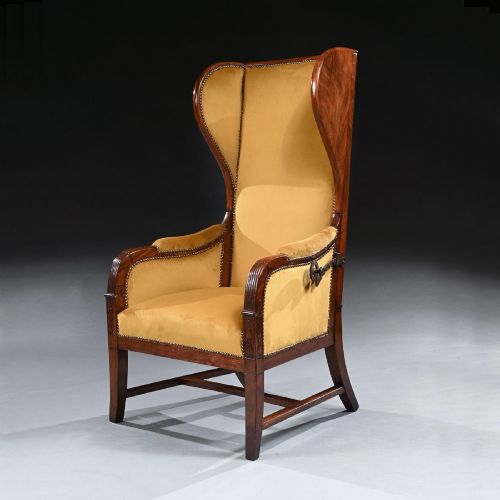
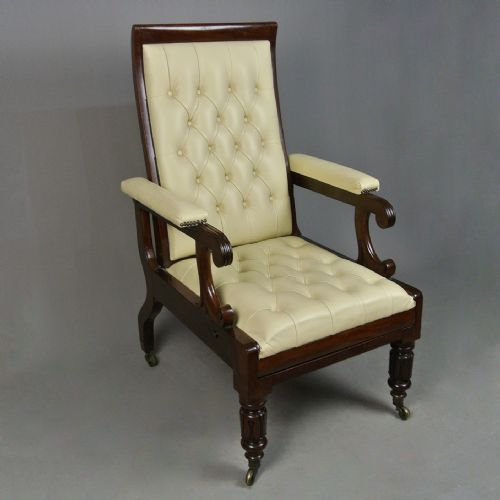


Adjustable Back Armchair
An adjustable back armchair offers a mechanical recline that lets you sit upright or lean right back with ease.
Adjustable Back Armchair
When you search for an adjustable back armchair, you find seating built to shift from a standard upright posture to a tilted rest. The examples seen here range from Georgian and Regency forms to Arts and Crafts and Edwardian designs.
You are most likely to meet oak and mahogany frames fitted with pivoting mechanisms or ratchets to alter the angle. These pieces span library chairs, office seats and domestic loungers intended for prolonged comfort.
The styles shift from formal French Empire and Regency models to sturdy Arts and Crafts oak frames and walnut reclining pairs. Each period brings its own joinery methods and silhouette to the adjustable mechanism.
How they were made
Frames rely on solid timbers such as oak, mahogany, walnut, teak and elm, shaped into sturdy armchairs and office chairs. Cabinet makers joined these woods using traditional mortise and tenon joints to withstand the stress of a moving back.
Metal components in brass and iron form the internal ratchets, hinges and pivoting pivots that hold the back at various angles. Upholstery materials like leather, velvet and fabric cover sprung or padded interiors.
Some pieces incorporate ebonised finishes or turned details alongside specialist patented mechanisms like those by Daws. The construction balances heavy timber framing with smooth mechanical action.
Adjustable Back Armchair Retail Price Guide 2026
Typical asking prices for adjustable back armchair among the pieces listed under this phrase on Sellingantiques today, from the lower quarter to the upper quarter. They describe what is for sale here now, not the wider market.
Listings feature oak, mahogany, walnut, teak, elm, brass and iron across periods spanning from Georgian to the 1930s.
What varies in quality
The sophistication of the reclining mechanism marks the difference between simple pivoting frames and patented designs. Smooth engagement of brass ratchets and iron pivots shows superior mechanical intent.
Timber selection and timber figure dictate the visual weight of the frame, alongside the crispness of turned members and carved details. Fine grain mahogany or figured walnut elevates the presence of a chair far beyond standard oak.
The integrity of the original upholstery platform and the precision of the joinery determine how well the chair holds its structure under repeated adjustment over centuries.
Heals of London·Daws
The Adjustable Back Armchair Glossary
- Reclining armchair
- A seat with a back that tilts backward from an upright position. These chairs use mechanical ratchets or pivots to alter the angle for the sitter.
- Ratchet mechanism
- A notched metal bar and catch system that holds a chair back at fixed angles. This hardware allows the user to select specific reclining positions.
- Patent chair
- A seating design registered by its inventor to protect a specific mechanical improvement. Names like Daws appear on these documented pieces.
- Wing back
- An armchair with side panels attached to the backrest to block drafts. This form often combines with reclining mechanisms in formal library settings.
- Ebonised
- Timber stained or painted black to imitate ebony. This dark finish appears on French seating of the nineteenth century.
Adjustable Back Armchair: Frequently Asked Questions
How do adjustable back mechanisms work?
These chairs typically rely on internal iron or brass ratchets concealed within the wooden arms and back uprights. Lifting or releasing the back allows it to settle into distinct notches.
Some patent designs use pivoting hinges or weight-shifted frames that lock into place when the user leans back. The metal components are built to bear considerable weight and pressure over repeated adjustments.
Where were these chairs used?
Library spaces, studies and domestic drawing rooms provided primary homes for adjustable seating throughout the eighteenth and nineteenth centuries. Office settings also adopted revolving variants for desk work.
Their ability to shift from an upright working posture to a relaxed tilt made them popular for reading and resting. Wealthy households valued them for private rooms and libraries.
How do I date an adjustable armchair?
Dating relies on the timber species, joinery methods, and the style of the frame ornament. Georgian and Regency pieces show classical proportions and fine mahogany or elm, while Arts and Crafts examples favour unadorned oak.
Mechanical hardware also offers clues, as earlier patents use hand-forged iron while later Edwardian and 1910 pieces feature standardised brass components. Comparing the silhouette to documented period furniture confirms the era.
Are these chairs comfortable for daily use?
Most pieces were built with generous proportions, padded armrests and deep seats designed for extended sitting. The adjustable back lets you find a supportive angle for reading or resting.
Modern comfort depends on the condition of the internal webbing, springs and upholstery padding. Many surviving pieces retain supportive sprung platforms beneath their leather or fabric covers.