
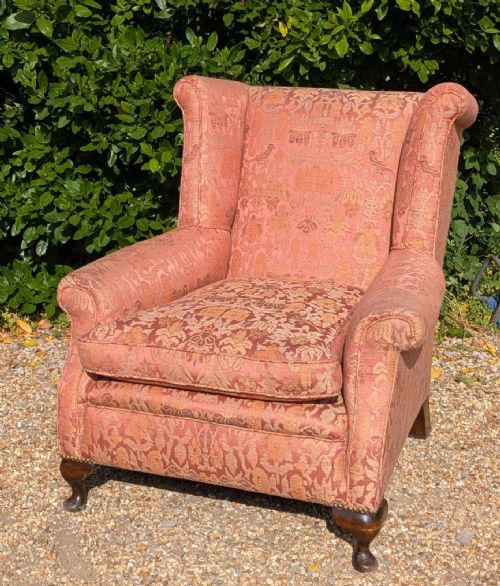


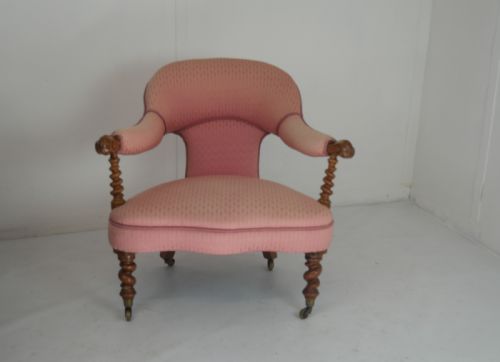


Pink Patterned Armchair
A pink patterned armchair brings immediate warmth and character to a room, offering comfortable seating wrapped in decorative textile upholstery.
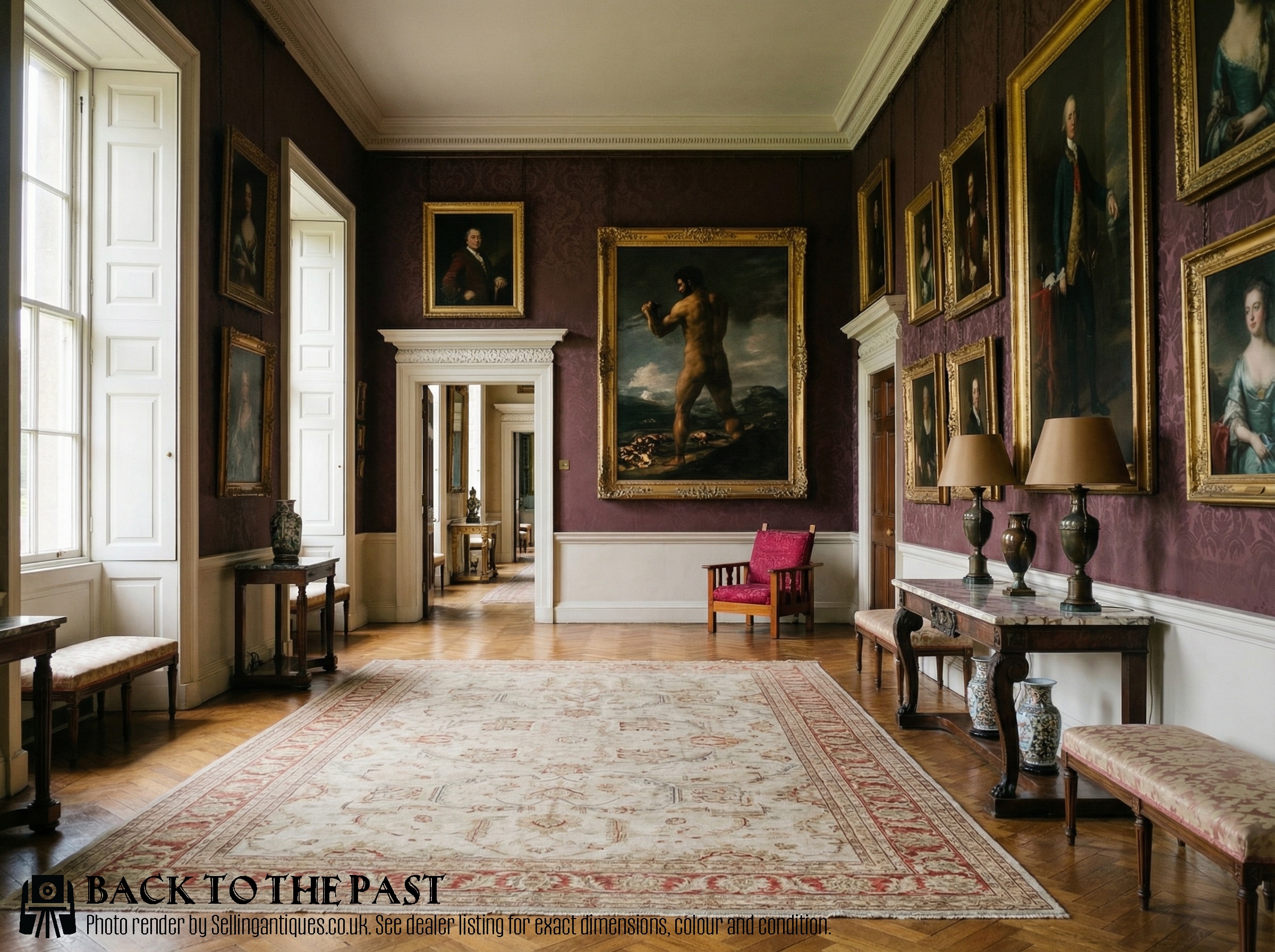
Pink Patterned Armchair
When you search for a pink patterned armchair, you encounter seating dressed in damask, cotton, and velvet textiles that range from Victorian carved walnut frames to Edwardian and 1930s designs. These pieces combine supportive upholstered structures with decorative patterned fabrics, drawing on English Country House, French Chateau, and Arts and Crafts traditions.
You are most likely to meet comfortable easy chairs, high-back wing armchairs, and reclining forms on this page. The upholstery varies from floral damasks to rich velvets, mounted on exposed timber frames of mahogany, walnut, teak, or hardwood.
Materials and construction
Makers built the structural frames using solid hardwoods like mahogany, walnut, teak, and general hardwood, often shaping the timber into carved cabriole legs or exposed arm supports. These frames provided the rigid skeleton necessary to support deep upholstery and heavy textile covers.
Upholsterers layered supportive fillings, including feather fillings and traditional stuffing, beneath top covers of cotton, damask, and velvet. Brass details sometimes supplemented the timber and fabric construction, securing the textiles to the frame.
Listings feature hardwood frames paired with cotton, damask, and velvet textiles across periods from the Victorian era to the 1930s.
Judging quality in upholstered seating
The sophistication of the timber frame carving and the choice of primary wood distinguish finer examples from simpler provincial seating. Walnut and mahogany frames display crisp shaping and joinery, whereas utility frames rely on simpler turned or plain supports.
The grade and integrity of the textile upholstery define the finished presence of the chair. Heavy woven damask, deep velvet, and traditional feather filling provide a different tactile and structural density compared to lighter cotton covers.
James Shoolbred·Howard and Sons
The Pink Patterned Armchair Glossary
- Damask
- A reversible figured fabric, often woven with floral or geometric patterns that catch the light. It provides a traditional decorative surface for formal seating.
- Wing Armchair
- An upholstered chair with side panels attached to the back, designed to shield the sitter from draughts. These high-back forms offer substantial presence.
- Walnut
- A dense hardwood prized for its rich grain and dark tone, frequently utilised for Victorian and Edwardian furniture frames. It accepts fine carving exceptionally well.
- Feather Filled
- Cushion interiors stuffed with natural down and feathers, providing a soft, yielding seat. This filling adapts to the sitter and returns to shape with plumping.
Pink Patterned Armchair: Frequently Asked Questions
What periods do these armchairs come from?
The listings span the nineteenth and twentieth centuries, including Victorian, Edwardian, and 1930s examples. Each era brings distinct proportions and decorative vocabulary to the upholstered frame.
Craftsmanship shifted subtly across these decades, moving from heavily carved walnut frames towards relaxed country house comfort and reclining mechanisms.
How are these armchairs upholstered?
Upholstery involves internal stuffing, often including feather fillings, enclosed by outer textile covers such as cotton, damask, and velvet. These materials provide both structural cushioning and decorative pattern.
Traditional methods secure the fabric tightly to the hardwood frame, sometimes using brass tacks or decorative gimp to finish the edges.
How do I style a patterned armchair?
A patterned textile seat serves as a focal point in a room, pairing well with neutral walls or contrasting textures like wood and brass. Position the chair beside a reading lamp or use a pair to balance a seating arrangement.
The pink tones and decorative patterns work naturally within traditional, country house, or eclectic interior schemes.
What wood types were used?
Frames utilise hardwoods including mahogany, walnut, teak, and general hardwood. These timbers supplied the structural strength needed for heavy daily use.
Exposed wooden elements often display polished surfaces, carved details, or simple turned legs depending on the stylistic period.