


French Wingback Armchair
A french wingback armchair brings deep upholstery and high protective sides into a room, offering both privacy and formal presence.
French Wingback Armchair
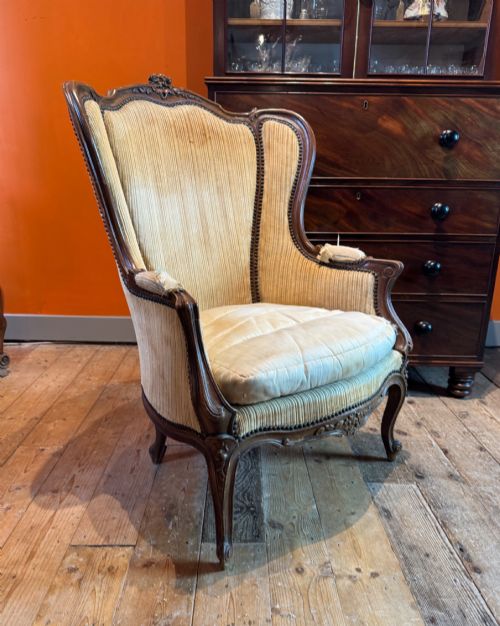
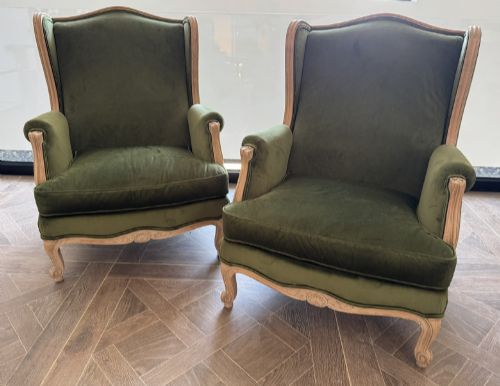
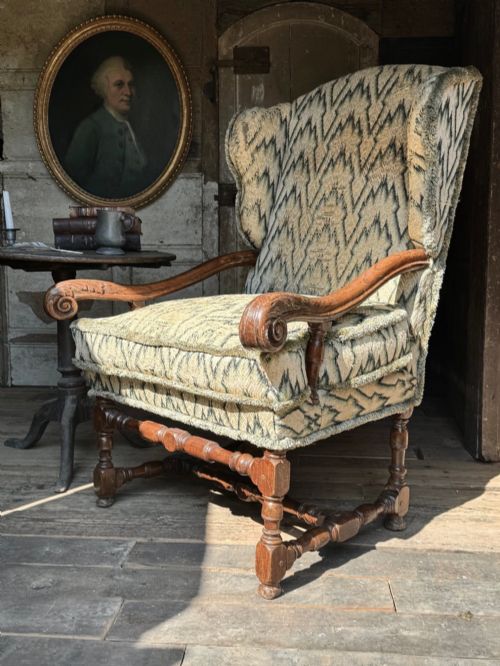
A french wingback armchair combines a high upholstered back with flanking wings designed originally to shield the sitter from drafts. These seats appear predominantly from the nineteenth century, alongside earlier eighteenth-century examples and later interpretations from the twentieth century.
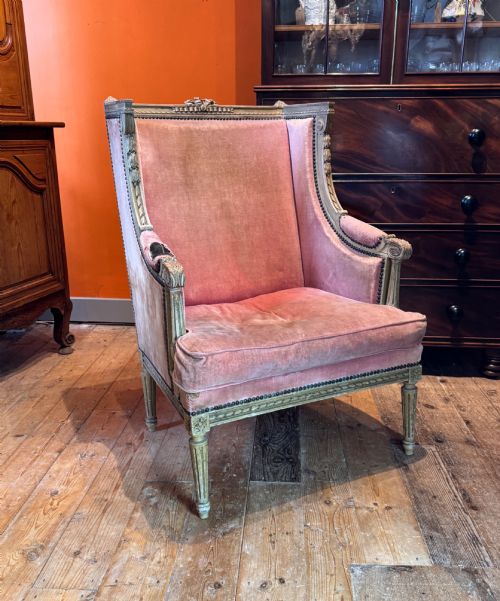
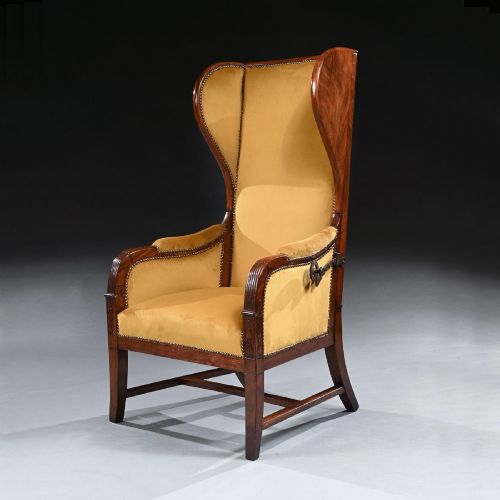
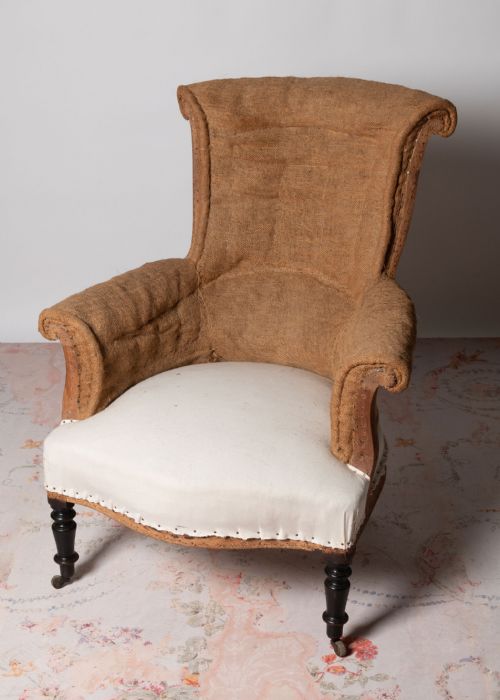
The silhouettes span specific regional and historical revivals, featuring Louis XV and Louis XVI profiles alongside provincial frames, chateau pieces, and empire designs. The construction relies on sturdy timber frameworks hidden beneath generous padding and fabric or leather covers.
Buyers encounter various timber frames including walnut, mahogany, oak, and giltwood, paired with diverse coverings such as velvet, linen, textile, and sheep's hide. Many retain traditional upholstery methods that emphasise deep comfort and generous proportions.
Assessing quality and craftsmanship
The integrity of the underlying timber frame dictates the fundamental soundness of the chair, separating robust joinery from compromised structures. Hand-carved ornamentation on walnut or mahogany exhibits varying degrees of crispness and depth.
The choice of covering material and the preservation of original paint or gilt surfaces contribute significantly to the character of each piece. Generous proportions and comfortable padding reflect the ambition of the original workshop.
Several examples include built-in reclining actions, proving that nineteenth-century sitters took their afternoon nap very seriously indeed.
The French Wingback Armchair Glossary
- Bergere
- An enclosed upholstered armchair with wooden sides and a built-in upholstered back, common in French seating. These pieces often feature exposed carved wood frames.
- Giltwood
- Timber treated with a thin layer of gold leaf applied over a prepared surface. This finish provides a bright metallic sheen to formal nineteenth-century frames.
- Louis XV Style
- A design movement characterised by asymmetric curves, cabriole legs, and naturalistic floral carvings. It draws inspiration from the mid-eighteenth-century French court.
- Louis XVI Style
- A neoclassical aesthetic defined by straight tapering legs, geometric symmetry, and classical motifs. This style emerged in the later eighteenth century and saw frequent nineteenth-century revivals.
French Wingback Armchair: Frequently Asked Questions
How do I date a french wingback armchair?
Dating relies upon examining the timber species, the style of the carved woodwork, and the construction methods used in the frame. Nineteenth-century examples frequently adopt earlier eighteenth-century revivals like Louis XV or Louis XVI.
Secondary indicators include the wear on the upholstery, the type of padding materials, and whether original paint or gilding remains intact on the wood.
Are these armchairs comfortable for daily use?
Most of these seats offer deep padding and high backs designed for relaxation, though comfort varies depending on the original interior stuffing. Reclining variants and generous club-style chairs provide particularly supportive seating.
Buyers often assess the seat depth and wing angle to match their personal preference for lounging or upright reading.
How should I care for leather and fabric upholstery?
Leather surfaces require regular conditioning with specialised balms to prevent drying and cracking over time. Fabric covers benefit from gentle vacuuming and professional cleaning when needed to protect delicate textiles like silk or velvet.
Keeping antique seating away from direct sunlight and strong heat sources preserves both the wood and the covering materials.