





Antique Mechanical Armchair
An antique mechanical armchair is a clever seating design that shifts from upright to reclined, offering comfort through ingenious nineteenth-century engineering.
Antique Mechanical Armchair
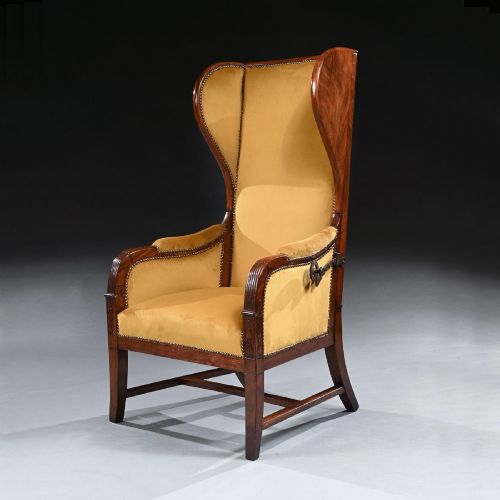
An antique mechanical armchair represents a sophisticated intersection of nineteenth-century domestic comfort and industrial innovation. When you search for an antique mechanical armchair, you are looking at seating engineered with adjustable mechanisms to alter the pitch of the back and seat.
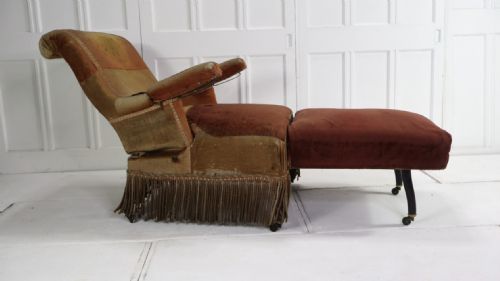
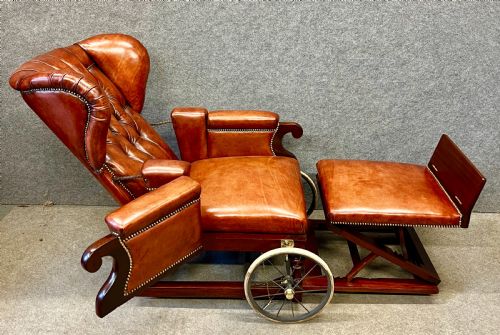
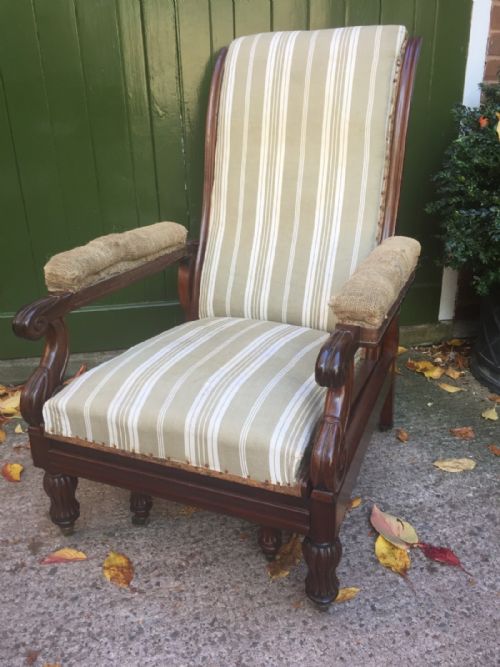
The examples gathered here span the Georgian, Victorian, and Edwardian eras, including specialised reading chairs, convalescing invalid chairs, and metamorphic daybeds. Most pieces you will encounter on this page date from the nineteenth century, utilising robust timbers like mahogany, oak, and elm.
Makers such as Minter, Foot and Son, and John Ward dominate the better-documented examples, bringing patented reclining actions to library and parlour settings. French designs also appear, showcasing ebonised finishes and Empire styling alongside British library chairs.
How they were made
Makers constructed the primary frames of these chairs in dense hardwoods such as mahogany, oak, and elm, ensuring structural integrity against the strain of moving parts. Concealed iron and brass mechanisms were integrated into the framework to facilitate smooth reclining and locking actions without compromising the exterior silhouette.
Upholstery traditionally involved supportive webbing and horsehair stuffing beneath top layers of brown or tan leather, velvet, and heavy woven fabric. Skilled cabinetmakers and upholsterers had to balance mechanical clearance with deep buttoning and padded armrests to maintain aesthetic elegance while housing gears or ratchets.
Materials recorded across the inventory include mahogany, oak, elm, brass, iron, leather, velvet, and standard upholstery fabric.
What varies in quality
The distinction between standard production and exceptional quality lies in the sophistication of the patent mechanism and the crispness of the timber carving. Superior examples feature stamped maker details, fluid adjustment systems that operate smoothly without binding, and substantial secondary woods.
Proportion and execution define the upper tier, where heavy mahogany or ebonised frames retain their original patination and cast brass fittings. Lesser pieces may feature replacement ironwork, sluggish mechanical actions, or poorly integrated adjustments that disrupt the classic wingback or library chair silhouette.
Minter·J Foot & Son·John Ward·Robert Daws
The Antique Mechanical Armchair Glossary
- Metamorphic
- Furniture designed to transform from one object type into another, such as an armchair converting into a daybed or step stool. This ingenuity defined much of nineteenth-century comfort engineering.
- Ratchet mechanism
- A notched wheel and pawl system allowing linear or rotational movement in only one direction. It is the primary mechanical component used to hold reclining chair backs in fixed positions.
- Wing back
- An armchair with flanking panels attached to the armrests and rising to the back, designed to shield the occupant from draughts. This traditional form was frequently adapted for nineteenth-century reclining reading chairs.
- Ebonised
- Timber treated with a dark stain or finish to imitate ebony. This technique was popular in French Empire and nineteenth-century designs to create a dramatic, formal appearance.
Antique Mechanical Armchair: Frequently Asked Questions
How do mechanical armchairs work?
These chairs utilise internal ratchets, hinges, or screw mechanisms operated by handles or shifting body weight to alter the angle of the backrest and seat. Users could lock the chair into various positions for reading, resting, or convalescing.
Many designs incorporate extendable footrests or fold-out components that transform a standard library armchair into a daybed or chaise longue.
Are these chairs comfortable for daily use?
They were originally built to provide ergonomic support for long hours of reading or for invalids requiring extended periods of convalescence. The deep cushioning and adjustable angles make them surprisingly accommodating for modern relaxation.
Properly restored webbing and sprung seats offer a firm yet supportive sit that rivals contemporary lounge furniture.
How do I identify a patent mechanism?
Makers often stamped their names and patent details onto the brass adjustment knobs, iron ratchet arms, or beneath the wooden seat rails. Recognising these stamps helps attribute the piece to notable nineteenth-century innovators like Minter or Foot and Son.
Examining the concealed hardware reveals whether the mechanism is an original patented design or a later adaptation.