
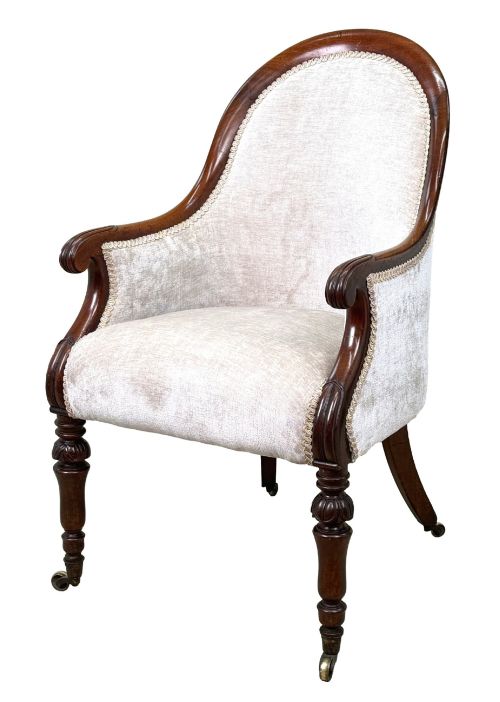
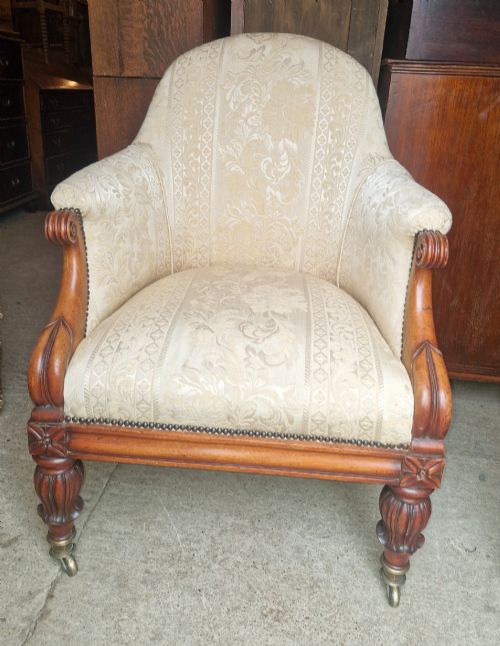
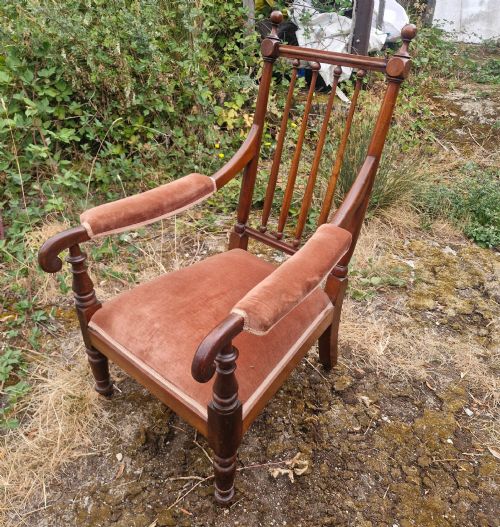
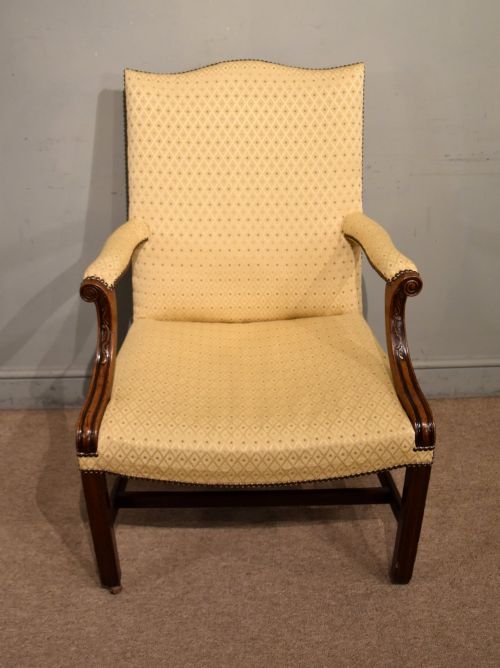
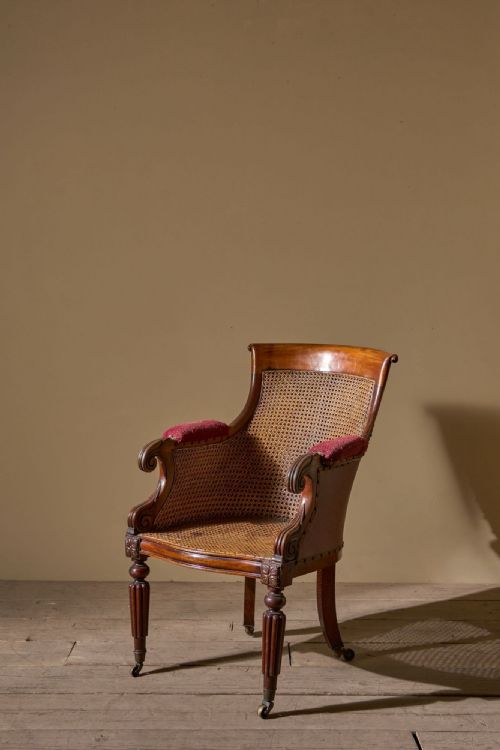
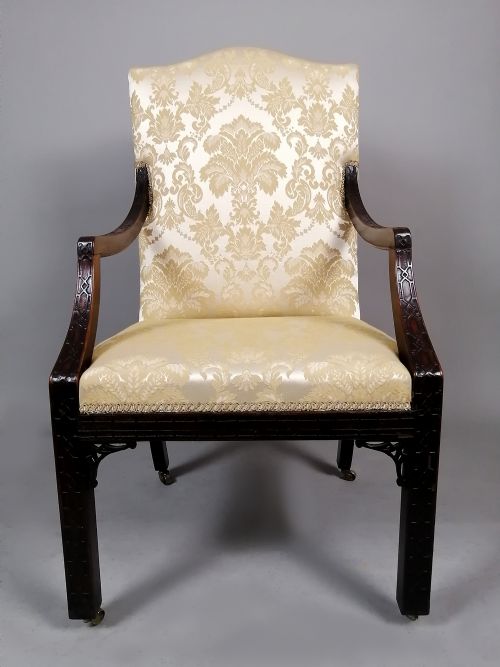
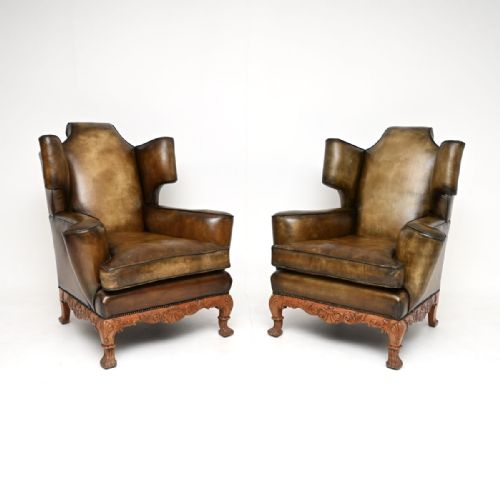
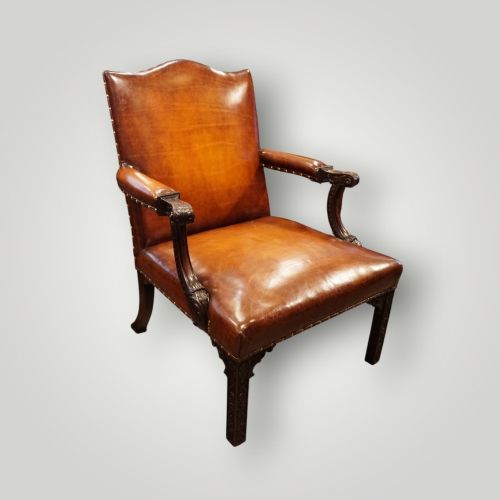
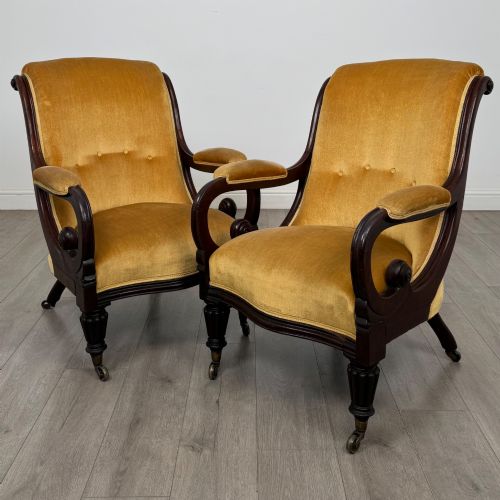
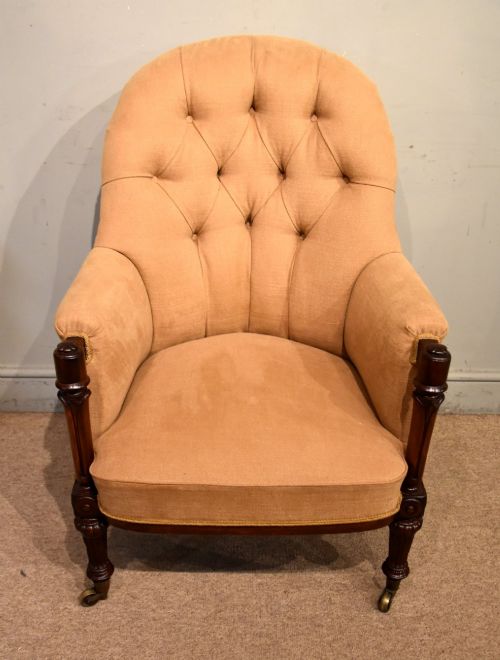

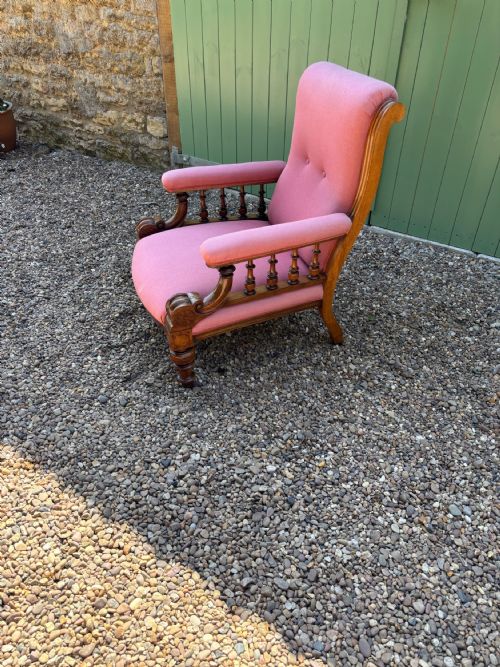
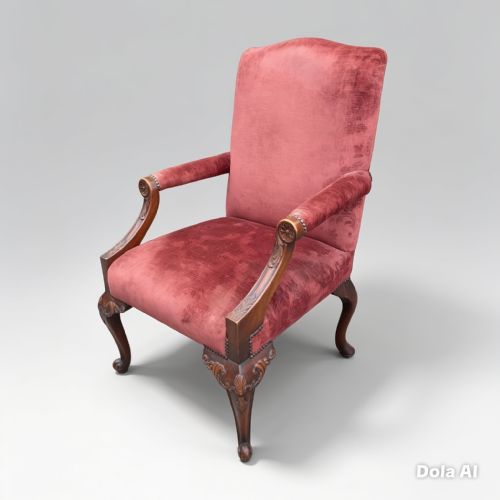
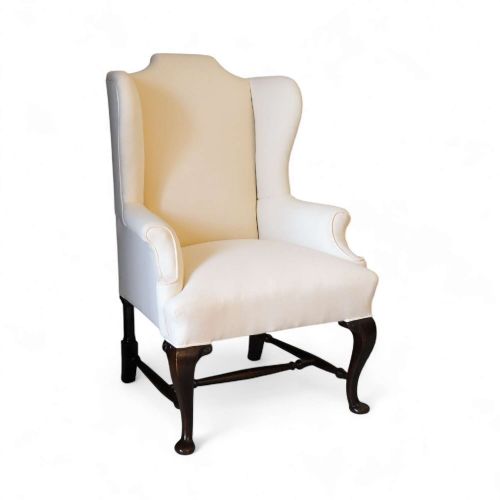
Carved Mahogany Reading Chair
A carved mahogany reading chair offers sturdy support and flexible comfort, making it a functional centrepiece for any study or library.
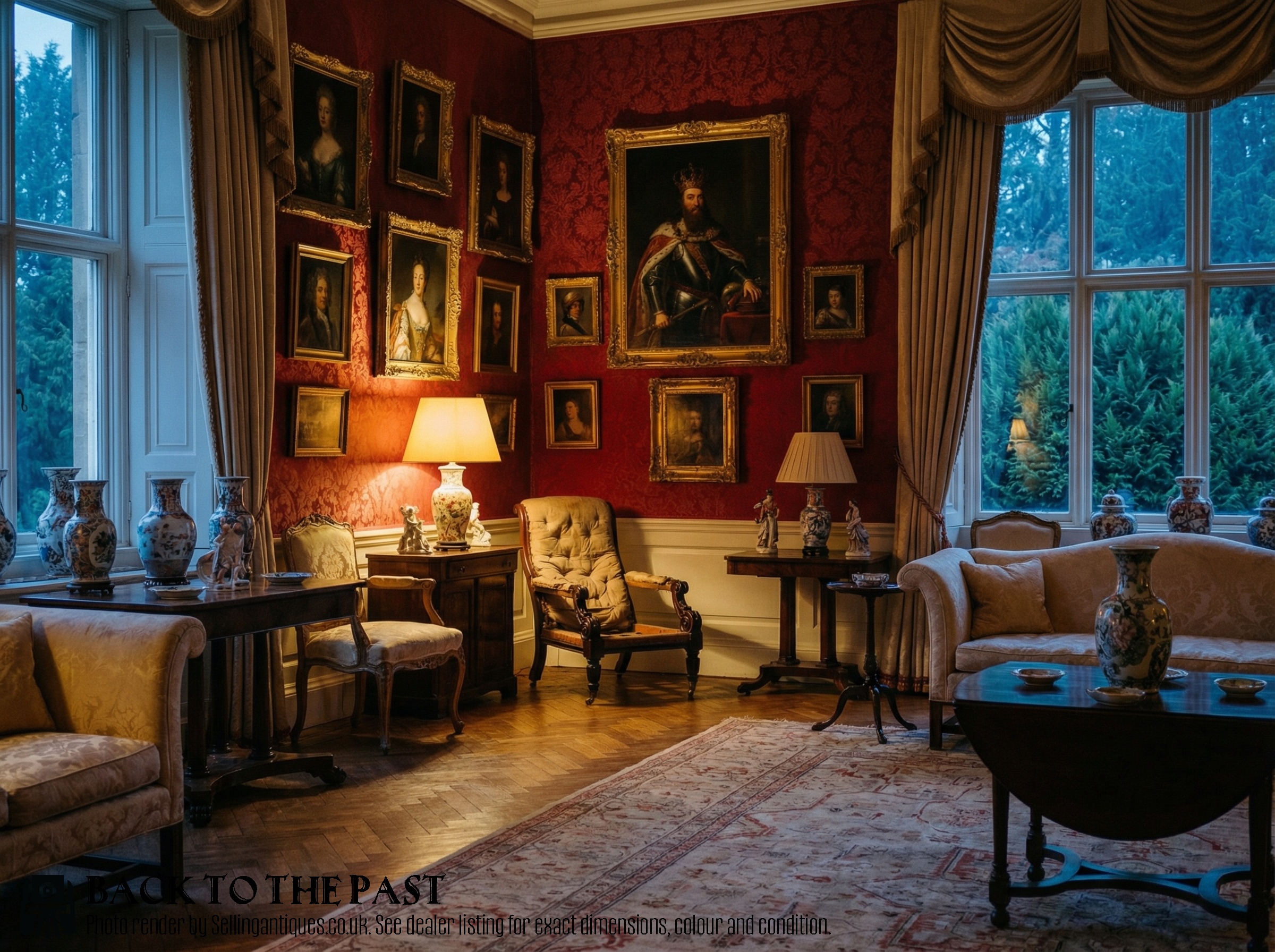
Understanding the carved mahogany reading chair
A carved mahogany reading chair is a dedicated seating form designed for prolonged study, often featuring adjustable elements or specialised armrests. These pieces appear across several periods, including the Regency, William IV, Edwardian, and mid-nineteenth century eras.
The inventory on this page spans library chairs, armchairs, and metamorphic designs that convert into steps. Buyers find both simple upholstered frames and patent designs associated with makers such as Morgan and Sanders or Robert Daws.
Materials and construction
Frames are constructed from solid wood, specifically mahogany, often shaped with carved details. Supporting structures integrate brass elements, particularly in hinges, castors, or patent mechanical fittings for reclining and metamorphic forms.
Traditional upholstery materials visible across the pieces include horsehair, calico, fabric, velvet, and leather. These materials provide the cushioning and surface finish suited to heavy domestic or library use.
Retail Price Guide 2026
Typical UK retail prices for carved mahogany reading chair, calculated from the Sellingantiques database of over a million retail prices indexed since 2003. This retail price guide relies exclusively on Sellingantiques data; no external sources or auction records are used, so the figures do not describe the wider market.
Some chairs double as steps, proving that nineteenth-century scholars were expected to do light athletics to reach the top shelf.
Judging quality and execution
Quality separates standard nineteenth-century frames from pieces featuring complex mechanical patents or sophisticated carver work. The precision of the joinery and the integrity of the timber dictate the overall stature of each arm chair.
The sophistication of the mechanism in metamorphic library chairs or reclining models elevates certain examples above simpler library chairs. Superior execution is also evident in the crispness of the carved details on the mahogany frame.
Morgan and Sanders·Robert Daws
The Carved Mahogany Reading Chair Glossary
- Regency
- A stylistic period dating from the early nineteenth century characterised by classical restraint and influence from antiquity. Pieces from this era often feature clean mahogany surfaces and restrained classical carvings.
- Metamorphic
- A descriptive term for furniture that transforms from one object into another, such as a chair that unfolds into library steps. This clever dual purpose reflects Regency ingenuity.
- Horsehair
- A traditional upholstery stuffing material woven from equine tail or mane hair. It provides firm, resilient padding beneath leather or fabric covers.
- Mahogany
- A durable tropical hardwood prized for its rich reddish-brown colour and stable grain. It served as the primary timber for fine seating throughout the nineteenth century.
Frequently Asked Questions
What is a metamorphic reading chair?
A metamorphic reading chair is a dual-purpose piece designed to transform from a seat into a set of library steps. This clever engineering allowed scholars to reach high bookshelves without fetching a separate ladder.
Such designs reflect the practical ingenuity of nineteenth-century cabinet makers who catered to private libraries. The mechanical joints require careful handling during conversion.
How do I identify a Regency reading chair?
Regency reading chairs typically exhibit classical lines, dark mahogany timber, and restrained decorative carving. They date from the early nineteenth century and emphasise structural clarity.
Makers of this era often incorporated brass castors and structural fittings that complement the rich red-brown tones of the wood. The overall aesthetic looks back to ancient Roman and Greek forms.
What upholstery materials were used?
Original upholstery schemes often relied on horsehair stuffing beneath outer coverings of leather, velvet, calico, or heavy fabric. Horsehair provided a dense, durable foundation that maintained its shape over years of heavy use.
Leather was particularly favoured for library and desk chairs due to its hard-wearing surface. Fabric choices varied according to the specific period and domestic fashion.
Are these chairs comfortable for daily use?
These chairs were specifically engineered to support prolonged periods of reading and study, often incorporating ergonomic armrests and reclining actions. The supportive horsehair padding offers a firmer sit than modern foam furniture.
Patented reclining designs allowed nineteenth-century readers to adjust their posture throughout the day. Their robust mahogany construction ensures lasting structural stability.