

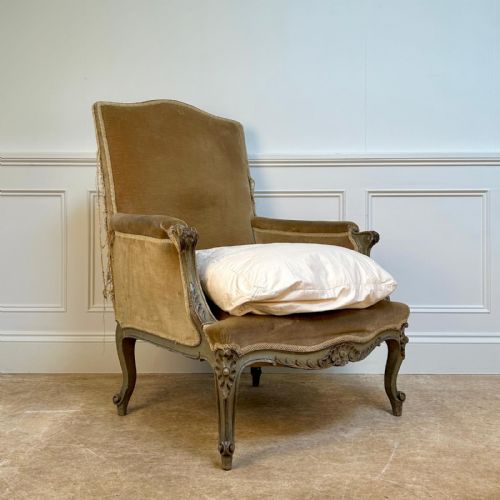


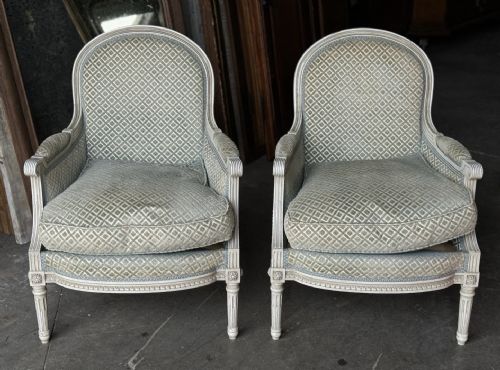

Grey Painted Bergere
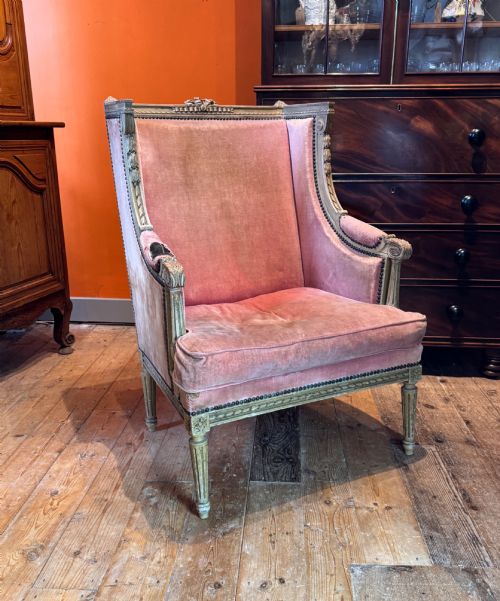
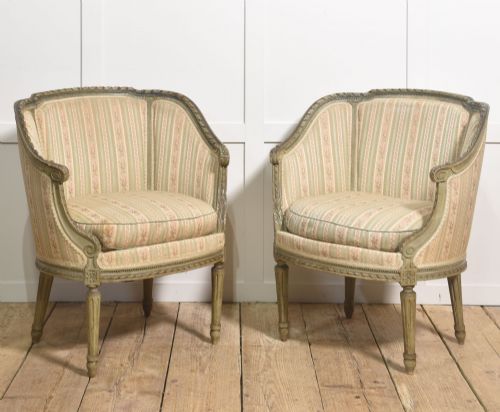
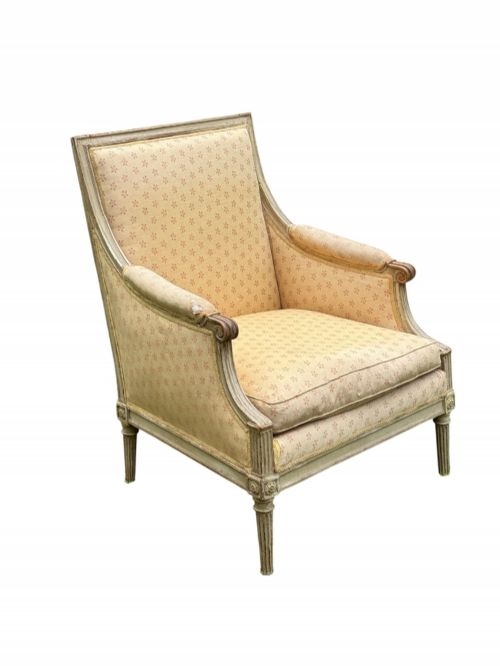
These grey painted bergere chairs bring French neoclassical elegance and comfortable seating into a room, spanning the eighteenth century to the early twentieth century.
Grey Painted Bergere
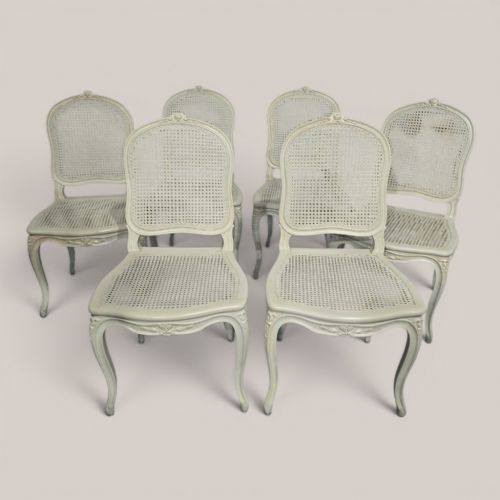
When you search for grey painted bergere, you are looking at French upholstered and cane armchairs, dining chairs, and sofas built in styles such as Louis XVI and Louis XV. The pieces on this page range from eighteenth-century examples to early twentieth-century revivals.
How they were made
Carpenters shaped frames primarily from beech, applying layers of paint to the wood surface to achieve the characteristic painted finish seen across these pieces. Caning was woven into the frames for seats and backs, alongside traditional upholstery methods.
Makers incorporated materials such as fabric, velvet, and upholstery fabric for cushioning, sometimes finished with brass details. Original paint surfaces remain preserved on several pieces originating from French chateaux.
Grey Painted Bergere Retail Price Guide 2026
Typical asking prices for grey painted bergere among the pieces listed under this phrase on Sellingantiques today, from the lower quarter to the upper quarter. They describe what is for sale here now, not the wider market.
Several armchairs on this page retain their original paint straight from French chateaux, having outlasted numerous interior design trends.
What varies in quality
The distinction between standard and superior pieces rests in the integrity of the original paint surface and the crispness of the carved woodwork. Period-correct frames from the eighteenth century demonstrate finer joinery and more refined proportions than later revivals.
The survival of intact cane panels and the authenticity of early paint layers rather than later repainting determine the standing of an individual chair or sofa.
Henri Jacob
The Grey Painted Bergere Glossary
- Bergere
- An enclosed upholstered French armchair with closed sides, typically featuring a loose cushion over a cane or upholstered seat. This form became popular during the eighteenth century.
- Louis XVI
- A French design style characterised by straight lines, classical symmetry, and rectilinear forms, prevalent in the eighteenth century and later revived. It contrasts with the earlier curved lines of the Louis XV style.
- Caning
- Woven rattan material used to form seat panels and backs on chairs, offering both flexibility and lightweight strength. It appears frequently on French revival seating.
- Beech
- A dense hardwood commonly utilised by French makers for structural chair frames because it accepts carving and paint well. It forms the foundation of many nineteenth-century pieces.
Grey Painted Bergere: Frequently Asked Questions
What is a grey painted bergere?
A grey painted bergere is a traditional French upholstered or caned armchair featuring a wooden frame finished in grey paint. These seating pieces draw on eighteenth-century designs like Louis XVI and Louis XV.
They offer deep, comfortable seating enclosed by upholstered or caned sides, making them a distinctive decorative element in a room.
How do I date a painted bergere?
Dating relies on examining the construction methods, the wood species, and the characteristics of the paint surface. Eighteenth-century pieces display hand-carved details and period joinery.
Twentieth-century examples often emulate these earlier Louis XV and Louis XVI styles while utilising machinery-cut timber and standardised components.
Where were these chairs used?
These seating pieces originated in French chateaux and salons as comfortable chairs for reading and conversation. Their refined painted frames suited formal reception rooms.
Today, they adapt easily to contemporary living rooms, bedrooms, and studies as occasional seating.